To avoid these ads, REGISTER NOW!

Garage Heater venting damper question

giantsean

Well-known member
Joined
Dec 8, 2014
Messages
61
Location
CT Shore
Hi All,

I am planning to install a Big Maxx 80k unit and luckily will be able to horizontal vent right out of my back wall (gable end). I am considering the Z-flex parts (the kit is a bit overkill) but from what is available, I will end up with two dampers / backflow preventers - one at the unit adapter (the short transition between until and main pipe) and one at the termination hood. I am in CT so any help reducing drafts is a plus, but is anyone aware of any code or safety concerns in having two dampers in line?

Thanks!
 
To avoid these ads, REGISTER NOW!

gmcgeo

Well-known member
Joined
Mar 11, 2019
Messages
3,701
If this is a power vented unit, the manual says not to add dampers
 
OP
G

giantsean

Well-known member
Joined
Dec 8, 2014
Messages
61
Location
CT Shore
If this is a power vented unit, the manual says not to add dampers
Respectfully, can you point me to where it mentions that (in the MHU50/80 manual at least?) The only time it mentions dampers is in regard to masonry installations, but maybe I am missing something (like maybe it's buried in a diagram that I'm not seeing).

What is the actual concern if any from the Mfg? Just that dampers create a restriction and impede performance? Or is it a safety thing like they are afraid it may freeze shut and create a CO hazard?
 

gmcgeo

Well-known member
Joined
Mar 11, 2019
Messages
3,701
unless you have a different manual? post it.

I have always been told from Modine not to add dampers in power vented systems. there are times you can, however safety precautions and safety switches need installed
 

finn

Well-known member
Joined
Mar 27, 2005
Messages
16,349
Location
The UP, God's country
Same with my Beacon Morris units. The power vent units generally caution against modifying the inlets or outlets. No add on filters or exhaust modifications other than shown in the installation diagrams.

Those dampers are for old gravity heaters, not power vented units common today.

What does the vent manufacturer say in his literature?
 

Jim greengo

Well-known member
Joined
Sep 3, 2018
Messages
7,415
Location
Behind my house
Same with my Beacon Morris units. The power vent units generally caution against modifying the inlets or outlets. No add on filters or exhaust modifications other than shown in the installation diagrams.

Those dampers are for old gravity heaters, not power vented units common today.

What does the vent manufacturer say in his literature?
I've seen plenty of old furnaces killed by stuck dampers.
The gas co in omaha wanted them installed on all furnaces back in the day till they found out how many problems they've caused,now they want them removed.
 
OP
G

giantsean

Well-known member
Joined
Dec 8, 2014
Messages
61
Location
CT Shore
Here is the latest manual link (hopefully doesn't get whacked) - https://www.mrheater.com/mwdownloads/download/link/id/30/

When we are talking dampers, does that include the typical backflow preventer? ie the flap that opens when under pressure but closes otherwise.

The pipe w/ this backflow preventer actually comes with the vent kit (Z-vent by Z-Flex) at the appliance adaptor (double female piece), so assuming the manufacturer has no issues with it. I think the kit's primary use is for wall hung water heaters (which should also be power vented if it's anything like mine). Worst case if it's going to cause problems I can nip the flap out before I install it.
 

gmcgeo

Well-known member
Joined
Mar 11, 2019
Messages
3,701
Here is the latest manual link (hopefully doesn't get whacked) - https://www.mrheater.com/mwdownloads/download/link/id/30/

When we are talking dampers, does that include the typical backflow preventer? ie the flap that opens when under pressure but closes otherwise.

The pipe w/ this backflow preventer actually comes with the vent kit (Z-vent by Z-Flex) at the appliance adaptor (double female piece), so assuming the manufacturer has no issues with it. I think the kit's primary use is for wall hung water heaters (which should also be power vented if it's anything like mine). Worst case if it's going to cause problems I can nip the flap out before I install it.
backflow preventers may not allow the pressure switch to open on the unit. then the unit will not fire

the pressure switch will see it as a blockage
 

thammel

Well-known member
Joined
Oct 3, 2005
Messages
2,245
Location
Maryland
When I installed my reznor UDAS, I used the z-flex (was it cat 3?) and first bought an appliance connector with a damper, thinking that was the way to go. The reznor kept shutting down. The damper was the problem. removed it and used a non -damper connector and all has been fine.
 
OP
G

giantsean

Well-known member
Joined
Dec 8, 2014
Messages
61
Location
CT Shore
Thanks all. I am a ways away from installation but I did get the first set of parts delivered today so had a chance to inspect. The flap on the adapter actually has a good amount of space around it and opens quite easily, but also can be removed just as easily if needed. I'll report back on how the unit performs once I have everything installed.
 

Jackfre

Well-known member
Joined
Dec 26, 2010
Messages
4,412
Location
N CA
“Do not install a manual damper, barometric draft regulator, or flue restrictor between the unit heater and the chimney.” This is out of the manual. Vent dampers were used on gas appliances, but were a service nightmare in the industry and were frequently disconnected when they failed. They interlocked with the burner and a failure of the vent damper caused a no heat situation. Don’t add anything to the clear vent that is not specifically called for in the manual.
 
To avoid these ads, REGISTER NOW!

thammel

Well-known member
Joined
Oct 3, 2005
Messages
2,245
Location
Maryland
As I said, I had a damper flap that also moved very easily, but the Reznor is very sensitive and did not work properly with this in place. You'll be very lucky if yours works with a damper flap in place.
 

Jackfre

Well-known member
Joined
Dec 26, 2010
Messages
4,412
Location
N CA
combustion by-products are a very hostile environment. Ph on gas flue condensate is about 3.2. Yours may not be a “condensing“ appliance, but you do get instantaneous condensation on start-up. It is called the “wet time”. The time it takes the HX/flue to heat up to dry off the internal components. IF the OP chooses to install this thing I believe he will find that it operation will deteriorate over time. Taht makes it a maintenance issue and given the location what generally happens is that folks look up and go, “gee, it looks ok… Next year.” I represented Dura-Vent, Selkirk, Z-Flex and Tjernlund over a 25 yrs period. I’m pretty squared away on this topic. I have to say that the BigMaxx manual is poorly written using confusing terms. ”Power venting“ represents a positive pressure flue. “Induced draft” represents a fan which is intended to assist in moving the flue gases across the HX, but the flue is a negative pressure vent. I guess they are looking at a Cat I and III listing, but I am confused by it in my reading. I think it is sloppy and I’m surprised they get away with calling it a “power flue.” I taught the pros on this and never heard that term. I WILL SAY THIS. GET MORE THAN ONE VERY GOOD CO DETECTOR IN THAT SPACE.
 
OP
G

giantsean

Well-known member
Joined
Dec 8, 2014
Messages
61
Location
CT Shore
combustion by-products are a very hostile environment. Ph on gas flue condensate is about 3.2. Yours may not be a “condensing“ appliance, but you do get instantaneous condensation on start-up. It is called the “wet time”. The time it takes the HX/flue to heat up to dry off the internal components. IF the OP chooses to install this thing I believe he will find that it operation will deteriorate over time. Taht makes it a maintenance issue and given the location what generally happens is that folks look up and go, “gee, it looks ok… Next year.” I represented Dura-Vent, Selkirk, Z-Flex and Tjernlund over a 25 yrs period. I’m pretty squared away on this topic. I have to say that the BigMaxx manual is poorly written using confusing terms. ”Power venting“ represents a positive pressure flue. “Induced draft” represents a fan which is intended to assist in moving the flue gases across the HX, but the flue is a negative pressure vent. I guess they are looking at a Cat I and III listing, but I am confused by it in my reading. I think it is sloppy and I’m surprised they get away with calling it a “power flue.” I taught the pros on this and never heard that term. I WILL SAY THIS. GET MORE THAN ONE VERY GOOD CO DETECTOR IN THAT SPACE.
Thank you, this is great information (not to say the rest is not equally great), and in fact I totally missed thammel's first reply that he had already tried using a flap. I agree about the Mr Heater manual and will extend that to manuals these days in general, hence my figuring there would be some trial and error involved. I also was actively wondering whether the term "damper" extended to the flap we both described, or the more traditional quarter turn, full seal damper (which I agree would be a serious hazard). I would LOVE if a damper flap did work for the sole reason that I want to avoid cold air entering as much as possible, but if it will mean a limited unit lifespan (or, you know... death), then out come the tin snips. The REAL reason I bought these pieces vs the standard was that the universal adapter was only available in that version (backorder on the no-flap) and the termination boot with the flap was much longer than the no-flap, the length saved me from buying another piece, and that part itself was cheaper to boot (no pun intended)

All that aside, what's your thoughts on the pitch for the vent pipe? The manual calls for 1/4 bubble up minimum, but I have read that others here pitch down so they drain out. Our winters (CT) are pretty dry but as you describe there is instant condensation. The residential install seems to allow you to omit the drain, which is good because I have not accounted for drainage at all.. it would end up in a bucket. Even at slight pitch up, is the heat sufficient to keep condensation under control?
 

TractorJeff

Well-known member
Joined
Dec 8, 2013
Messages
3,309
Location
Elkhorn, WI
I read that in the manual too when I installed mine!
I truthfully pitched mine down on the theory of run out.
I have never seen an Icicle hanging off from my pipe!
 

PoorUB

Well-known member
Joined
Mar 29, 2021
Messages
11,701
Location
Fargo, ND
I would slope it out. Have the bubble just touch the line, no need to over do it.

Keep in mind if you get it inspected, the inspector will expect you to follow the manual.
 

ripperd

Well-known member
Joined
Jul 2, 2014
Messages
2,048
Location
Twin Cities, MN
For what its worth...

I have a beacon Morris 40k with concentric sealed combustion, horizontally vented. Mine pitches down toward outside. When it is below zero the vent cap will drip and build about a 6" mound of frozen condensate.
 

outlander800

Well-known member
Joined
Dec 16, 2010
Messages
283
I have a reznor 45k btu power vented unit installed in my garage, horizontally vented out the west wall of the garage. That particular wall takes a lot of wind. I used the z vent
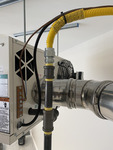
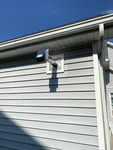
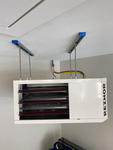
back flow appliance adapter and have had no problems, heater works fine. I have a carbon monoxide detector plugged in directly below the heater to be safe. When I got the CO2 detector I stuck it in my enclosed trailer with my 4 wheeler running and it went off after a minute so I know it works.tempImagecmtiuT.jpgtempImagea9kvZA.jpgtempImage9PBSPG.jpgtempImageOuLqGX.jpg
 
Last edited:

thammel

Well-known member
Joined
Oct 3, 2005
Messages
2,245
Location
Maryland
Perhaps my Reznor didn't work with the damper appliance connector because it's the UDAS separated combustion one....
 
OP
G

giantsean

Well-known member
Joined
Dec 8, 2014
Messages
61
Location
CT Shore
I have a reznor 45k btu power vented unit installed in my garage, horizontally vented out the west wall of the garage. That particular wall takes a lot of wind. I used the z vent
back flow appliance adapter and have had no problems, heater works fine. I have a carbon monoxide detector plugged in directly below the heater to be safe. When I got the CO2 detector I stuck it in my enclosed trailer with my 4 wheeler running and it went off after a minute so I know it works.tempImagecmtiuT.jpgtempImagea9kvZA.jpg
Nice install!
 
OP
G

giantsean

Well-known member
Joined
Dec 8, 2014
Messages
61
Location
CT Shore
For what its worth...

I have a beacon Morris 40k with concentric sealed combustion, horizontally vented. Mine pitches down toward outside. When it is below zero the vent cap will drip and build about a 6" mound of frozen condensate.
I am glad to hear that most people are pitching down... that was my #1 concern about the venting especially given that I didn't have a good drainage option. Here in CT it rarely drops below 0 so hopefully I'll be in good shape. Worst case my garage is built into a slope and has a 20-ish foot drop.. hopefully enough velocity to disperse nicely :D
 
To avoid these ads, REGISTER NOW!
Top Bottom