To avoid these ads, REGISTER NOW!

Garage Build Thread: DIY Questions

RossAustin

Well-known member
Joined
Oct 17, 2021
Messages
46
Location
El Campo Texas
Went ahead and made a dedicated thread for documenting my garage build. Mainly for questions about things I don't understand and to provide a place for others to find answers.

To start off, I am currently in the process of gathering quotes for concrete work. While waiting I am compiling a list of materials and prices. Which leads to the first "well that doesn't make sense"

The walls will be 9 foot in height, framing consists of a mud sill, precut stud and double top plate. The overall dimensions of this assembly is 109 1/8" a sheet of 4x9 osb sheathing measures 107 3/4" leaving it 1 3/8" short of covering the mud sill and both top plates. Side note, this sheathing is intended to be installed vertical. So is this normal to be 1 3/8" short? Basically the second top plate would not be covered.
 
To avoid these ads, REGISTER NOW!

BillK

Well-known member
Joined
Aug 24, 2006
Messages
9,321
Location
Beautiful Southern Maryland
The walls will be 9 foot in height, framing consists of a mud sill, precut stud and double top plate. The overall dimensions of this assembly is 109 1/8" a sheet of 4x9 osb sheathing measures 107 3/4"
Ross,
Not a pro but . . . . . .

You say that the walls will be 9 ft tall but 109 1/8 is actually 9 ft 1 1/8"

As far as I know 4 x 9 sheathing should measure 4 x 9 107 3/4 is 1/4" shy of 9 ft.
 

duneslider

Well-known member
Joined
Jan 20, 2013
Messages
2,262
Location
Riverton, Utah
4x8 wall sheathing is usually a little under the listed dimension because they expect you to leave a gap between sheets. I think usually close to 1/8" small.

I really don't see 9' sheets used very much. I usually see people just do the 8' and then add a smaller piece to fill. Most of the time on wood frame houses you will be covering the rim board also so that is going to add another foot to the assembly.
 
OP
R

RossAustin

Well-known member
Joined
Oct 17, 2021
Messages
46
Location
El Campo Texas
Ross,
Not a pro but . . . . . .

You say that the walls will be 9 ft tall but 109 1/8 is actually 9 ft 1 1/8"

As far as I know 4 x 9 sheathing should measure 4 x 9 107 3/4 is 1/4" shy of 9 ft.
The wall framing assembly consists of a slab on grade, 1.5" mud sill, 104 5/8" stud and two 1.5" top plates. Total length is 109 1/8, 4x9 sheathing measures 107 3/4 which leaves it short of covering the second top plate.
 
OP
R

RossAustin

Well-known member
Joined
Oct 17, 2021
Messages
46
Location
El Campo Texas
Most of the time on wood frame houses you will be covering the rim board also so that is going to add another foot to the assembly.
Slab on grade foundation, no rim board. I got a discount price on 4x9, $4 more than 4x8, and the labor savings of not having to rip sheets down to 1 foot wide around all 4 sides is my reasoning for the 4x9.
 

billconner

Well-known member
Joined
Jul 20, 2021
Messages
6,964
Location
Thousand Islands NYS
If interested in building to code, I believe the OSB needs to be nailed to top and bottom plates. There are other ways to laterally brace walls, though I suspect none as easy or less expensive than cutting your studs a little shorter.
 

Jeff C

Well-known member
Joined
May 22, 2021
Messages
638
Location
Durham, NC
Are you having a second floor? If not, when you box in your soffit it will cover below the top of the OSB and it won’t matter. 4x8 OSB is a pain because you have to rip all the filler pieces and put solid blocking in the wall behind all the joints. Doing a wall exactly 9’ is no good either. You have to cut all the studs which defeats the whole benefit of paying for PET studs. Also, assuming you Sheetrock the ceiling first, two pieces of 54” rock no longer fit on the walls without ripping 1/2” off every other piece.
 

firebirdparts

Well-known member
Joined
Jun 8, 2016
Messages
10,619
Location
Kingsport, TN
Then cut the studs.

precut studs are by design too long. Always have been. 8 foot stds have always been 92|5/8. You do the math, it’s over an inch heavy. In a house, you need a half inch (at least) on top for the ceiling, but you always end up with a gap at the floor too, and that gets covered with a baseboard.

mud covers the sins, this is fundamental to pre cut studs, always was. The dimensions are based on the interior of a house assuming use of a Sheetrock finished ceiling.
 
OP
R

RossAustin

Well-known member
Joined
Oct 17, 2021
Messages
46
Location
El Campo Texas
So why not actually make your walls 9 ft tall like you say they are going to be ???? 9 ft is 108 inches. That will just leave you 1/4" short on your sheathing.
Because pre cut studs.

Are you having a second floor? If not, when you box in your soffit it will cover below the top of the OSB and it won’t matter. 4x8 OSB is a pain because you have to rip all the filler pieces and put solid blocking in the wall behind all the joints. Doing a wall exactly 9’ is no good either. You have to cut all the studs which defeats the whole benefit of paying for PET studs. Also, assuming you Sheetrock the ceiling first, two pieces of 54” rock no longer fit on the walls without ripping 1/2” off every other piece.

No single floor only. Yeah the 4x8 horizontal would require 2 blocks per stud bay.
I guess cutting the precut studs wouldn't be all that bad, I got them at half the price of 10 footers. I could set up a stop block on my miter saw.
My main concern is if this was normal. From your comments it seems that pre cuts are always too long.
 

DPG

Well-known member
Joined
Feb 9, 2014
Messages
473
Location
Western Colorado
Stop over thinking it. It is perfectly normal. The responses above - take with a grain of salt. Leave the 9’ sheathing up an 1/8th or so up from the bottom plate and sheath the wall. When you nail the sheathing to the bottom plate and the lower of the two top plates, you will have your shear wall. You don’t need to fill in the in the last 1” or so.
 

Jeff C

Well-known member
Joined
May 22, 2021
Messages
638
Location
Durham, NC
My main concern is if this was normal. From your comments it seems that pre cuts are always too long.
PET studs typically come in 92-5/8” or 93” for 8’ walls, 104-5/8” or 105” for 9’ walls and 116-5/8” or 117” for 10’ walls. Big lumber yards bring in rail car loads at a time. The length you see is completely normal.
 

Skooterj

Well-known member
Joined
Mar 11, 2021
Messages
750
Location
Indiana
So your pre-cut 9 foot wall studs are precut for an INTERIOR wall height of 9 feet. 5/8th ceiling drywall brings the interior height to 9 feet so that a 4x9 sheet of drywall fits perfectly. 1/2 ceiling drywall leaves an 1/8th gap, covered by baseboard. On the exterior, you usually have a gap at the top. Most times this gap is covered by your overhangs. Most builders us 4x8 sheething and fill the top foot with thin strips of OSB because cutting 12-13 inch strips is much easier than trying to cut 1-2 inch strips. I wouldn't even try to fill the top 1 5/8th unless there were no overhangs at all. If the gap is behind an overhang, leave it. As long as you hit both top and bottom plate, you are fine structurally. I actually prefer using the small 1 foot strips because I cut them lengthwise (8') and use them at the top to span the seams on the horizontally ran 4 foot seams below. Probably doesn't do much, but might at a little shear strength.
 

firebirdparts

Well-known member
Joined
Jun 8, 2016
Messages
10,619
Location
Kingsport, TN
I kinda forgot also that precut studs, after you hang a 1/2" ceiling, some of that left over 5/8" gets consumed by interior floor finishes. The height of installed floors varies a ton and there's just no standard at all, but in any case they left you 5/8" short for whatever help that gives you.
 
OP
R

RossAustin

Well-known member
Joined
Oct 17, 2021
Messages
46
Location
El Campo Texas
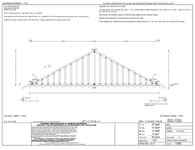
So I got an update from the truss company today. I have a few concerns.

First, I will need to have them increase the pitch, I am 6'3" and asked for at least enough room to walk up right, so 78".

Second, I am concerned about the L240 deflection rating and 20 lb/sqft live load rating, I don't know what all I'm going to store, but at 280 lbs just walking around I feel like the ceiling drywall is going to crack. The design shows the truss framed with 2x4's everywhere except the 6 foot of storage space which is 2x6.

They also came in over my estimated cost, which I fluffed to account for inflated lumber prices.

Any experience with attic truss load ratings and deflection or do these numbers look normal? South Texas so no snow loads to account for.

I thought about going from 24" on center to 19.2" but I think increasing the lumber size might be cheaper than 5 additional trusses.


UnitedTrussDesignRev01024_1.jpgUnitedTrussDesignRev01024_2.jpg
 
Last edited:

billconner

Well-known member
Joined
Jul 20, 2021
Messages
6,964
Location
Thousand Islands NYS
Don't understand why in schedule there is no live load on lower chord - just the structure and ceiling dead load. Top chord loads seem per code minimums as I would expect in Texas.
 

Skooterj

Well-known member
Joined
Mar 11, 2021
Messages
750
Location
Indiana
So I got an update from the truss company today. I have a few concerns.

First, I will need to have them increase the pitch, I am 6'3" and asked for at least enough room to walk up right, so 78".

Second, I am concerned about the L240 deflection rating and 20 lb/sqft live load rating, I don't know what all I'm going to store, but at 280 lbs just walking around I feel like the ceiling drywall is going to crack. The design shows the truss framed with 2x4's everywhere except the 6 foot of storage space which is 2x6.

They also came in over my estimated cost, which I fluffed to account for inflated lumber prices.

Any experience with attic truss load ratings and deflection or do these numbers look normal? South Texas so no snow loads to account for.

I thought about going from 24" on center to 19.2" but I think increasing the lumber size might be cheaper than 5 additional trusses.


UnitedTrussDesignRev01024_1.jpgUnitedTrussDesignRev01024_2.jpg
If you are worried about too much deflection, either have the engineer at the truss company change to L360 deflection, or change the bottom chord live load to 30 or 40 lb/sf. They should be able to design them to your specifications, not just to minimum code. If not, find a new truss company. 20 lb/sf is meets code, but you can always exceed code. It is just is going to add cost.
But, if I did my math right, as currently designed, you have a 40 foot long by 6 foot wide attic at 20 lb/sf, so the attic should support 4800 pounds. That's a lot of Christmas lights....
 

billconner

Well-known member
Joined
Jul 20, 2021
Messages
6,964
Location
Thousand Islands NYS
Agree with Skooterj. ( I missed the upper left special loads table - a problem of reviewing on a phone while on an airplane.) Generally 1:240 is acceptable for drywall.
 
To avoid these ads, REGISTER NOW!
OP
R

RossAustin

Well-known member
Joined
Oct 17, 2021
Messages
46
Location
El Campo Texas
If you are worried about too much deflection, either have the engineer at the truss company change to L360 deflection,
Im more concerned if this is a typical design, meets code sso... my worry is the uneasy feeling of the floor moving while I'm romping around up there, my house and shed both feel "mushy" when I'm in the attic.
you have a 40 foot long by 6 foot wide attic at 20 lb/sf, so the attic should support 4800 pounds. That's a lot of Christmas lights....
4800 lbs is a lot of stuff for sure, I don't like clutter (edit visible clutter) and I want to use my garage for its intended purpose, parking vehicles, not storage. 240 sqft in the attic goes along way, although I did ask for 8' wide. I am going to reply with changes and see what the cost difference is.

19 trusses and 2 gable ends came out to just over 8k with taxes. Seems a little high, but with prices on lumber right now I guess it's fitting.
 

billconner

Well-known member
Joined
Jul 20, 2021
Messages
6,964
Location
Thousand Islands NYS
It's not in the budget and I'm a one man band, would need to hire help to stick frame.
Funny, I'm not using trusses because I'm building solo. I can lift a rafter, I can't lift a truss. And should be easy to frame roof from attic floor.

PS - rafters and ceiling joists are less expensive for my build.
 

Skooterj

Well-known member
Joined
Mar 11, 2021
Messages
750
Location
Indiana
30 foot free span is going to require something like 16-18" deep I-Joist or similar LVL's. Probably will be just as expensive either way.
Im more concerned if this is a typical design, meets code sso... my worry is the uneasy feeling of the floor moving while I'm romping around up there, my house and shed both feel "mushy" when I'm in the attic. Typical attic code is L/240 at 20 lb/sf, so they are to code.

4800 lbs is a lot of stuff for sure, I don't like clutter (edit visible clutter) and I want to use my garage for its intended purpose, parking vehicles, not storage. 240 sqft in the attic goes along way, although I did ask for 8' wide. I am going to reply with changes and see what the cost difference is. You said the headroom was too low, so changing this should allow them to change the attic width on the truss. Assuming your fix is to increase roof pitch.

19 trusses and 2 gable ends came out to just over 8k with taxes. Seems a little high, but with prices on lumber right now I guess it's fitting.
Personally, I would want the bottom chord to all be the same lumber size. Talk with the truss engineer/salesperson and tell them what specs you want them designed too.
 
OP
R

RossAustin

Well-known member
Joined
Oct 17, 2021
Messages
46
Location
El Campo Texas
So slab pour will start in a few weeks. After many back and forth conversations with the city.... finally have permits approved. However...

I've run into two "issues" that I don't have answers for.

1) A 2" drain line for a sink in the garage that will tees into my main sewer, no problem, good slope and everything. Digging the trench and I realize that the drain will cross a buried pvc conduit that runs power to an outbuilding. I can't find a specific code that mentions drain pipe and owner power conduit crossing. Codes for trenches state 12" horizontal and 24" vertical for water supply and sewer. It seems silly to separate them when not 4 feet up they are in the same wall cavity...

2) I plan to put a 60 amp sub panel in the garage for power. Sub panel is not located on same wall where power will enter.

a. Should the feeder to this subpanel come up through the concrete in to the wall, up to attic over and down to sub panel.

b. Trench from exterior of slab over to where the sub will be and come up in the wall there.

c. Should I bring it up on the exterior wall and put a pull box L into the wall, go through and up into attic, then over and down into sub.
 
OP
R

RossAustin

Well-known member
Joined
Oct 17, 2021
Messages
46
Location
El Campo Texas
Update and Question.

I have answers for questions above.

However the contractor I had setup to pour the slab 3 weeks ago won't answer his phone...

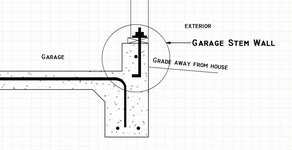
Got some more bids from different contractors and a new question has risen. The original concrete contractor was going to pour the slab flat with a slight slope towards the garage doors, first photo.

The new guy I had bid the job wants to put a 3.5" "stem wall" around the perimeter of the slab for the exterior walls to sit on, second photo. (Just to avoid confusion this is a monolithic slab, common here in the south, not a stem wall footing with floating slab as is common where it freezes.)

His thought process is that the "stem wall" (I don't know what else to call it) prevents any water that might leak or accumulate in the garage from sitting on the sill plate. I would have to agree with his logic, even though it costs more in labor.

What are the opinions of the hive mind?


2012_IRC_F_R403_1_3_2.jpg

garage detail.jpg
 

billconner

Well-known member
Joined
Jul 20, 2021
Messages
6,964
Location
Thousand Islands NYS
The question for me was slab elevation versus grade, and keeping wood 8" above grade. I didn't want much ramp in apron so going with stem wall.

Seems this could affect your stud height? Or add 3 1/2" to clear height inside.
 
OP
R

RossAustin

Well-known member
Joined
Oct 17, 2021
Messages
46
Location
El Campo Texas
Slab is already well above grade, I'll have to back fill on two sides.

It would add 3.5" to ceiling height and final roof ridge height, neither of which is a foreseeable issue.

Just wondering if it's necessary/standard/common/code etc.
 

Skooterj

Well-known member
Joined
Mar 11, 2021
Messages
750
Location
Indiana
Update and Question.

I have answers for questions above.

However the contractor I had setup to pour the slab 3 weeks ago won't answer his phone...

Got some more bids from different contractors and a new question has risen. The original concrete contractor was going to pour the slab flat with a slight slope towards the garage doors, first photo.

The new guy I had bid the job wants to put a 3.5" "stem wall" around the perimeter of the slab for the exterior walls to sit on, second photo. (Just to avoid confusion this is a monolithic slab, common here in the south, not a stem wall footing with floating slab as is common where it freezes.)

His thought process is that the "stem wall" (I don't know what else to call it) prevents any water that might leak or accumulate in the garage from sitting on the sill plate. I would have to agree with his logic, even though it costs more in labor.

What are the opinions of the hive mind?


2012_IRC_F_R403_1_3_2.jpg

garage detail.jpg
I have been wanting someone, anyone to pour my garage slab as option #2. And none of the contractors around me do this kind of monolithic pour. Most of them look at me like I have a 3rd eye in the middle of my head when I ask about it. I've even pulled up a picture like your to show them what I want, and they all say they have never seen that done. So instead, I have to have a single row of block laid on top of my slab. The one part pour, to me, is ideal. You can slope the floor however you want, but still have a level plane to build on. Can you ask your contractor if he wants to make a trip to Indiana?

Depending on costs, I would go with option #2. It will keep all the water away from your wood framing, interior and exterior. And having some extra height is always a good thing.
 

billconner

Well-known member
Joined
Jul 20, 2021
Messages
6,964
Location
Thousand Islands NYS
Some detail to work out around doors but it's been done. Just keep in mind. I think pt trimmers are in order and rough openings 3"+ wider for the trimmers.
 

WisJim

Well-known member
Joined
Dec 20, 2010
Messages
2,282
Location
Menomonie, WI
I had an 8" stem wall added to the slab, they poured it a couple of days after the slab. It means no leaks from the outside and I have an 8" higher ceiling with standard length studs and sheetrock.
 
OP
R

RossAustin

Well-known member
Joined
Oct 17, 2021
Messages
46
Location
El Campo Texas
So instead, I have to have a single row of block laid on top of my slab. The one part pour, to me, is ideal. You can slope the floor however you want, but still have a level plane to build on. Can you ask your contractor if he wants to make a trip to Indiana?

Depending on costs, I would go with option #2. It will keep all the water away from your wood framing, interior and exterior. And having some extra height is always a good thing.
I would hate to do blocks, but it is something I could do myself and save a little. Im sure for the right money they would make the trip :ROFLMAO:

Some detail to work out around doors but it's been done. Just keep in mind. I think pt trimmers are in order and rough openings 3"+ wider for the trimmers.
I assume your referring to the the garage doors? There will be two 36x80 doors, but I plan to pour the stem and then using a concrete saw cut the opening exactly where I want vs. them framing the opening and it not being exact.

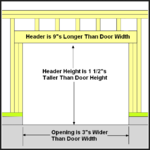
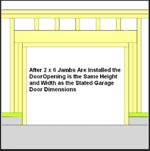
I would agree that the garage door opening should be wider to accommodate a trimmer for the garage door hardware, like this?

notrimmer.PNGtrimmer.PNG
 

billconner

Well-known member
Joined
Jul 20, 2021
Messages
6,964
Location
Thousand Islands NYS
yes, the 2x6 jambs you show. I'd probably use pt since it's in contact with concrete. Man doors I'd do similar.

With the jamb and trim on exterior, the rough concrete opening could easily be 1 to 2" oversized, and it's still all covered.
 

Hank11

Well-known member
Joined
Aug 19, 2019
Messages
1,152
Location
Tennessee
Your drawing works for garage doors.
I would not cut out the openings in the stem wall.
Have it formed correctly. They should know how to do this as you specify.
 

jcarapet

Well-known member
Joined
May 22, 2017
Messages
280
Location
Texas
Good luck on contractors. It's unfortunately the wrong time to be building if you want it all to go smoothly and cheaply. Speaking from four months of trying to wrangle people to take my money from me.
 
To avoid these ads, REGISTER NOW!
Top Bottom