
You are using an out of date browser. It may not display this or other websites correctly.
You should upgrade or use an alternative browser.
You should upgrade or use an alternative browser.
Why would a fridge require a non GFI circuit?
- Thread starter Davegvg
- Start date
fitter30
Well-known member
A battery Freezer alarm costs under $30 cheap insurance for piece of mind. Something might only get into it every few days. Just remember to change batteries with the smoke detectors.
Meursault74
Well-known member
I find these arguments about the code akin to something we can't discuss here.
While the OP is living in his home and using his fridge, if he does or does not have it on a GFCI circuit does it or does it not violate some "code" if it's not "inspected". So what?
I can tell you right now if I "had" to have my fridge on a GFCI outlet as per some inspector. I'd install it. Pass the inspection. Afterwards I'd swap it out. Better yet, if you want to inspect it, you move the damn fridge and look for yourself then put it back.
I put in GFCI outlets in my garage and in my laundry room. I didn't "need" to by "code" because it's old enough. I thought it was a good idea, so I did it. I think putting one on a fridge/freezer is a bad idea so I won't.
While the OP is living in his home and using his fridge, if he does or does not have it on a GFCI circuit does it or does it not violate some "code" if it's not "inspected". So what?
I can tell you right now if I "had" to have my fridge on a GFCI outlet as per some inspector. I'd install it. Pass the inspection. Afterwards I'd swap it out. Better yet, if you want to inspect it, you move the damn fridge and look for yourself then put it back.
I put in GFCI outlets in my garage and in my laundry room. I didn't "need" to by "code" because it's old enough. I thought it was a good idea, so I did it. I think putting one on a fridge/freezer is a bad idea so I won't.
sparky 1971
Well-known member
The standard voltage is 120/240. The nameplates still say 115 or 230 though. Here is the nameplate from my freezer that I bought two months ago. I'm not going to bother with my fridge, but it's the same 115 volt nameplate and I bought it in 2016.You peeked in my fridge?
Maybe not, but I just did. You are correct, it says 115v. However, it's old enough that it may have been the standard when it was made. Just checked the age on the fridge by looking up the serial number, but it's a little confusing. It's a GE Hotpoint. The serial number starts with "LL", which means it was made in June of 2018, 2006, 1994, 1982, 1970 or 1954. Just checked with my wife to see when we got it (we got it used), she said it came from her mother, so is not sure when it was purchased 'new'. Based on known timelines, it would be either 1994 or 1982, with 1982 being more likely.
Did another quick Google search and found this:
"The US electric power network began at 110 volts. By the 1930s the voltage had crept up to 115. By the early 1950s at least 75 percent of the light bulbs sold in the USA were rated at 120 volts. As of 1984 the official standard US voltage was 120."
Since our refrigerator was likely made in 1982, it's quite possible that 115 volts was the standard, so my fridge's data plate just MIGHT be right.
.


Attachments

msharley
Well-known member
Some of the new models?Woke up last night to find the new fridge shut off.
Saw it popped the GFI reset and while I was up pondering what was going on - looked at the manual as I was curious what the draw listed was.
Indeed it requires and call for a "dedicated" non GFI circuit.
This seems strange in a kitchen appliance to me and Im curious if anyone has any input on why this may be?
Thanks.
Dave
Might have an integral GF&CI thangy doo...
You can not run one GFCI through another! One is just right. Two is too many!
msharley
Well-known member
Hey 74,I would swap out the GFCI outlet to a normal one, plug your fridge back in and not worry about it.
What's odd is that the location for a fridge had a GFCI in the first place.
Lots of places? Kitchen & Bath & Laundry Room? Get/Must Have the GFCI receptacles.
Poor homeowner/rentor plugs in ReFrigidaire and on nice hot summer day? Comes home from work to a Fridge full of spoiled food...
I'm with you....change the plug & move on....
Later, Mark
sparky 1971
Well-known member
Possible, but not very probable at all. Where's the reset going to be and how is the typical homeowner going to have a clue as to what to do? The manufactures state not to put them on a GFCI circuit for one reason. Liability. In this age, everyone wants to hold someone else responsible for every little thing. Someone plugs a refrigerator or freezer into a GFCI protected circuit and that GFCI trips, whether or not that appliance was the reason for the tripping, everything inside spoils and the owner thinks the manufacturer is responsible for replacing everything. Now, all they have to do is ask if they read the owners manual because it states not to do that.Some of the new models?
Might have an integral GF&CI thangy doo...
You can not run one GFCI through another! One is just right. Two is too many!
msharley
Well-known member
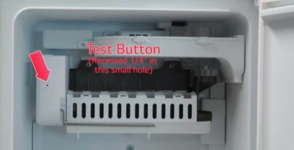
Sister in Law had one of these...Possible, but not very probable at all. Where's the reset going to be and how is the typical homeowner going to have a clue as to what to do? The manufactures state not to put them on a GFCI circuit for one reason. Liability. In this age, everyone wants to hold someone else responsible for every little thing. Someone plugs a refrigerator or freezer into a GFCI protected circuit and that GFCI trips, whether or not that appliance was the reason for the tripping, everything inside spoils and the owner thinks the manufacturer is responsible for replacing everything. Now, all they have to do is ask if they read the owners manual because it states not to do that.
PugetDude
ALLIANCE MEMBER
Refrigerators are on non-GFCI outlets so there will be food for your friends and family at the wake when it electrocutes you.
sparky 1971
Well-known member
What kind of appliance is that? Maybe it's because of the close up, but I can't say that I've ever seen anything like it before. Also, a test button and a reset button are two different things. If it's a GFCI, the test trips it. There has to be a reset to undo the damage that was just done.Sister in Law had one of these...
Meursault74
Well-known member
OK, I did a quick search. Nothing exhaustive. One source says about 48 people are killed per year by electrocution by consumer products. Another search said 20 people are killed per year by lightning strikes. I'll let those numbers speak for themselves. I actually thought it would have been more. If a lack of a GFCI on a fridge worries you, I'm envious, as I have much greater issues to deal with in my day-to-day life.Refrigerators are on non-GFCI outlets so there will be food for your friends and family at the wake when it electrocutes you.
msharley
Well-known member
This was the LG fridge she had at the old house....What kind of appliance is that? Maybe it's because of the close up, but I can't say that I've ever seen anything like it before. Also, a test button and a reset button are two different things. If it's a GFCI, the test trips it. There has to be a reset to undo the damage that was just done.
It never tripped on the "regular outlet"....when the nephew put new GFI's in her kitchen? Tripped all the time. (house was built in the Civil War)....Solution? Put regular outlet back in box.
Fixed...
sparky 1971
Well-known member
If people getting killed by electrocution on refrigerators were a "thing", they would have been gfci mandatory a long time ago. Fact is, if the fridge receptacle is more than 6' from the sink, it doesn't have to be on a gfci now. It's only been in the last few years that the single, non gfci protected receptacle in the garage for refrigerators, freezers, whole house vacuums has gone away. I think GFCI'd refrigerators are stupid, even if it's less than 6' from the sink, what are the odds of someone dropping the fridge in a sink full of water? Code says it's all about safety, but every year more aspects of safety get added to it. Maybe it's just a coincidence that the price to make things safer increases exponentially...OK, I did a quick search. Nothing exhaustive. One source says about 48 people are killed per year by electrocution by consumer products. Another search said 20 people are killed per year by lightning strikes. I'll let those numbers speak for themselves. I actually thought it would have been more. If a lack of a GFCI on a fridge worries you, I'm envious, as I have much greater issues to deal with in my day-to-day life.
sparky 1971
Well-known member
OK. So getting rid of the gfci solved the problem. I tried to find out what the test button on a LG refrigerator is for, especially since there is no reset button. All I could come up with is that there is a test button for the compressor. Not saying they don't have a built in GFCI, but I couldn't come up with anything.This was the LG fridge she had at the old house....
It never tripped on the "regular outlet"....when the nephew put new GFI's in her kitchen? Tripped all the time. (house was built in the Civil War)....Solution? Put regular outlet back in box.
Fixed...
There were two in the circuit - one 15 amp and one 20 amp- perhaps the fridge made it 3?Some of the new models?
Might have an integral GF&CI thangy doo...
You can not run one GFCI through another! One is just right. Two is too many!
Now there are none.
This circuit was 8 feet from the sink and its associated counter so based on what I gleaned here none were necessary to begin with.
Last edited:
alfredeneuman
Well-known member
Sure you can. There is no Code reason why not.You can not run one GFCI through another!
The question is which one will trip first
sparky 1971. Unfortunately, all their additional code requirements are in writing with the latest edition of NEC codes. When I first started the wiring, I forgot to review the amendments, but my electrician who wired the 150 amp service to the main panel told me about it. One item that was not in the amended code which my electrician thought may cause a problem with the inspector was that I had some old 12/2 wire that was white not yellow. Even though code didn't stipulate that the 12/2 must be yellow, he suggested I replace it before inspection. So 310' later and about 25 outlets and switches I swapped it all out. When the inspector came who was a good guy, I asked him about it and he said he would have probably failed me. He said it would have made his work more difficult to tell if I mixed 14/2 with 12/2 in a circuit.
sparky 1971
Well-known member
sparky 1971. Unfortunately, all their additional code requirements are in writing with the latest edition of NEC codes. When I first started the wiring, I forgot to review the amendments, but my electrician who wired the 150 amp service to the main panel told me about it. One item that was not in the amended code which my electrician thought may cause a problem with the inspector was that I had some old 12/2 wire that was white not yellow. Even though code didn't stipulate that the 12/2 must be yellow, he suggested I replace it before inspection. So 310' later and about 25 outlets and switches I swapped it all out. When the inspector came who was a good guy, I asked him about it and he said he would have probably failed me. He said it would have made his work more difficult to tell if I mixed 14/2 with 12/2 in a circuit.
That's a crock, especially the AFCI's. The white 12/2 probably wouldn't have passed, not because the inspector was too lazy to walk over and feel it, but because it was probably TW wire instead of THHN,. That's another load of ****. I had two rolls of old white 12/2 that had Type TW printed on the jacket given to me last summer. I just made sure to use it on jobs where there was no permit.
Last edited:
Firebrick43
Well-known member
Can anyone find an electrocution (in a house) of someone because their fridge outlet wasn't gfci?
Its romex, nm-b, therefore it isn't THHN or TW wire.That's a crock, especially the AFCI's. The white 12/2 probably wouldn't have passed, not because the inspector was too lazy to walk over and feel it, but because it was probably TW wire instead of THHN,. That's another load of ****. I had two rolls of old white 12/2 given to me last summer. I just made sure to use it on jobs where there was no permit.
sparky 1971
Well-known member
Its romex, nm-b, therefore it isn't THHN or TW wire.
You're kind of right. But in reference to the actual wire inside the jacket 334.112 States that the insulation has to be one of the types listed in Table 310.4(A) and be rated at 90° C. The most cost effective type is THHN. The insulation used to have to be 60° C, which would have been TW. I think it was when the color was changed from white to yellow is when that happened.
Last edited:
rlitman
Well-known member
The times don't really overlap. What matters is that the cable is NM-B, as opposed to NM. The yellow was Romex brand's way of differentiating themselves, but many brands made NM-B in white, and that would be acceptable.You're kind of right. But in reference to the actual wire inside the jacket 334.112 States that the insulation has to be one of the types listed in Table 310.4(A) and be rated at 90° C. The most cost effective type is THHN. The insulation used to have to be 60° C, which would have been TW. I think it was when the color was changed from white to yellow is when that happened.
sparky 1971
Well-known member
That's why I stated "I think". I haven't seen white #12 nm in over 20 years. I'm not sure how many brands I have purchased in the time frame, but it seems like it's usually Southwire, but I don't do very many romex jobs. When I do need some, I usually just go to the box store and grab what I need and am on my not so merry way. Next time I get a roll, I am going to pay attention to the package and look for the NM-B. I looked in 334, and it only lists NM and NMC. I don't think I've ever seen or heard of NM with a corrosion resistant jacket (NMC).The times don't really overlap. What matters is that the cable is NM-B, as opposed to NM. The yellow was Romex brand's way of differentiating themselves, but many brands made NM-B in white, and that would be acceptable.
I have to admit that I don't do a very good job of keeping up with all of the code changes, just the important ones that I can remember when trying to stay awake during through the update classes. I get mad enough about the changes I remember, if I paid attention to everything, I would probably have an aneurism. It's only been in the last 15 years or so that I found out it used to be TW and is now THHN, and had been that way for a long time by then.
rlitman
Well-known member
NM has been out of stores for decades. As for NMC, that's just another name for UF-B.That's why I stated "I think". I haven't seen white #12 nm in over 20 years. I'm not sure how many brands I have purchased in the time frame, but it seems like it's usually Southwire, but I don't do very many romex jobs. When I do need some, I usually just go to the box store and grab what I need and am on my not so merry way. Next time I get a roll, I am going to pay attention to the package and look for the NM-B. I looked in 334, and it only lists NM and NMC. I don't think I've ever seen or heard of NM with a corrosion resistant jacket (NMC).
I have to admit that I don't do a very good job of keeping up with all of the code changes, just the important ones that I can remember when trying to stay awake during through the update classes. I get mad enough about the changes I remember, if I paid attention to everything, I would probably have an aneurism. It's only been in the last 15 years or so that I found out it used to be TW and is now THHN, and had been that way for a long time by then.
edited: correction, UF should read UF-B
Last edited:
sparky 1971
Well-known member
I can live with NM being out of the stores, but 334 still refers to it as NM. As far as NMC being UF, I'm not so sure. UF is article 340. It may be the same and wouldn't surprise me the least. The code book writers should have some input from the people that are expected to use it every day.NM has been out of stores for decades. As for NMC, that's just another name for UF.
There is no code requirement for 12 AWG NM cable to be yellow, ever since around the mid 1980's it has been required to have 90°C conductors, and being marked as NM-B is your assurance it is compliant, the yellow sheathing is just marketing, although I say it was at the behest of trailer manufacturers that it was done, if the same crew they use to pull wire in MH's were laying sod, the crew leader would be yelling "green side up, green side up".
I call white 12/2 NM-B "bootleg wire" as it's good for it. Any NOS NM marked cable cannot be used as it contains 60°C conductors, it's just scrap metal.
I call white 12/2 NM-B "bootleg wire" as it's good for it. Any NOS NM marked cable cannot be used as it contains 60°C conductors, it's just scrap metal.
wyliesdiesels
Well-known member
Huh?The times don't really overlap. What matters is that the cable is NM-B, as opposed to NM. The yellow was Romex brand's way of differentiating themselves, but many brands made NM-B in white, and that would be acceptable.
Southwire did and still makes white NM-b. Its 14ga and yellow is 12ga. 10ga is orange. Anything larger is black jacketed.
rlitman
Well-known member
Southwire owns the Romex brand. They started the yellow thing for 12 AWG and orange for 10AWG back in 2001. But NM jacket color is not specific to any code, which is why they sell blue Romex too.Huh?
Southwire did and still makes white NM-b. Its 14ga and yellow is 12ga. 10ga is orange. Anything larger is black jacketed.

My point was specifically that Romex started this whole jacket color thing back in 2001, and while other companies like Cerrowire have followed suit, they took a few years to catch up.
SlappyWhite
Well-known member
Not sure for the poster you quoted (their location).... but Canadian codes require a dedicated circuit for the fridge (only a kitchen clock is permitted to be on the same circuit). I will have to double check on the very latest codes but the circuit was also exempt from a arc and ground fault.Where are you that a refrigerator is required to be on a dedicated circuit? Every receptacle in a garage requires GFCI protection, but I have never heard of a mandatory dedicated fridge circuit. Modern refrigerators only draw four or five amps.
I just took a look at mine. It's an LG French door with the pull out freezer. 5.2 amps.
In general, we also do not have all the GFCI requirements (basement, garage etc.).
wyliesdiesels
Well-known member
NMD90 is a canadian specific product and therefore Ive never seen it before especially the blue versionSouthwire owns the Romex brand. They started the yellow thing for 12 AWG and orange for 10AWG back in 2001. But NM jacket color is not specific to any code, which is why they sell blue Romex too.
My point was specifically that Romex started this whole jacket color thing back in 2001, and while other companies like Cerrowire have followed suit, they took a few years to catch up.
PelicanPines
ALLIANCE MEMBER
Sounds good by design (pun) but... I am not likely to hear it. Plus I would have to replace the existing GFCI circuit that I wired around already.a GFCI with an audible alarm wouldve alerted you to the GFCI being tripped and possibly prevented the loss of meat
A better solution is a two pronged approach.
1. Have temperature Monitors with alarms that are centrally located (so I would hear it, and visually SEE the current temp)
2. Don't plug a seldom checked deep freezer in on a GFCI circuit.
On my kitchen fridge... I have Dual Temp displays showing the Kitchen Refridge/Freezer both temps. The second display shows the deep freezer and my bedroom fridge. So 4 key temps... at a glance.
SlappyWhite
Well-known member
Some had an "idea" here not long after arc fault came out (it was bedrooms only) that AFCI circuits would be blue cable.... Never code in any province (AFAIK).NMD90 is a canadian specific product and therefore Ive never seen it before especially the blue version
Moot point as almost everything (20a and under) is arc fault now by code (with a few exceptions).
exranger06
Well-known member
I have a fridge in my basement that's plugged into a GFCI. I used a GFCI with the built-in alarm, so if/when it trips, I'll hopefully hear it before any food goes bad. But it hasn't tripped once in the 4 years I've had it. I replaced the fridge a few months ago and the replacement fridge doesn't trip it either. (old fridge - circa early '80s, "new" (used) fridge - circa early '00s)
TractorJeff
Well-known member
Didn't read all the Posts!
Last Summer or Fall, this same exact Thread was started.
Eventually the guy found a nicked wire at the outlet or something simple like that?
Can't remember if it was the new Freezer in the Basement or a Fridge??
Last Summer or Fall, this same exact Thread was started.
Eventually the guy found a nicked wire at the outlet or something simple like that?
Can't remember if it was the new Freezer in the Basement or a Fridge??
csp
Well-known member
What kind of appliance is that? Maybe it's because of the close up, but I can't say that I've ever seen anything like it before. Also, a test button and a reset button are two different things. If it's a GFCI, the test trips it. There has to be a reset to undo the damage that was just done.
To be more specific, that looks like an icemaker in the LG fridge.This was the LG fridge she had at the old house....
sparky 1971
Well-known member
And the odds of it being a GFCI are slim to none.To be more specific, that looks like an icemaker in the LG fridge.
supratreo
Well-known member
wish i saw this post about 3 months ago. my brother in law put a new fridge in the garage of his new houses as a temp while remodeling was going on. the next day we find that its off. went through all sorts of troubleshooting and wire tracing to find out why this could be. there was no GFCI in the garage but at the same time there were random outlets in the house that also shut off. made no sense. i didnt even know that a overload could cause a GFI to trip. figure that was only for ground faults and an over load should have tripped the breaker. come to find out there there was a GFI outlet on the 2nd floor bathroom on the opposite side of the house. the main panel is about 2' away from the garage outlet but they, for some reason, ran a run to that bathroom and worked their way down to the garage. i've seen a lot of goofy **** before, just just added one more.
That was not "goofy ****" it really was a good idea if the garage & bathroom were sharing the GFCI to install it in the bathroom, but current & previous recent NEC editions no longer allow that, although bathrooms & garages on the same circuit would be cutting corners, which is to be expected with tract homes, they are built as cheap as they can get away with.wish i saw this post about 3 months ago. my brother in law put a new fridge in the garage of his new houses as a temp while remodeling was going on. the next day we find that its off. went through all sorts of troubleshooting and wire tracing to find out why this could be. there was no GFCI in the garage but at the same time there were random outlets in the house that also shut off. made no sense. i didnt even know that a overload could cause a GFI to trip. figure that was only for ground faults and an over load should have tripped the breaker. come to find out there there was a GFI outlet on the 2nd floor bathroom on the opposite side of the house. the main panel is about 2' away from the garage outlet but they, for some reason, ran a run to that bathroom and worked their way down to the garage. i've seen a lot of goofy **** before, just just added one more.
wyliesdiesels
Well-known member
Actually thats not true. A GFCI will not trip due to an overload. It is NOT an OCPD. It doesnt have that functionality.wish i saw this post about 3 months ago. my brother in law put a new fridge in the garage of his new houses as a temp while remodeling was going on. the next day we find that its off. went through all sorts of troubleshooting and wire tracing to find out why this could be. there was no GFCI in the garage but at the same time there were random outlets in the house that also shut off. made no sense. i didnt even know that a overload could cause a GFI to trip. figure that was only for ground faults and an over load should have tripped the breaker. come to find out there there was a GFI outlet on the 2nd floor bathroom on the opposite side of the house. the main panel is about 2' away from the garage outlet but they, for some reason, ran a run to that bathroom and worked their way down to the garage. i've seen a lot of goofy **** before, just just added one more.
How do you even know the circuit was overloaded? Did you put a clamp meter on the ungrounded conductor in the panel?
exranger06
Well-known member
wish i saw this post about 3 months ago. my brother in law put a new fridge in the garage of his new houses as a temp while remodeling was going on. the next day we find that its off. went through all sorts of troubleshooting and wire tracing to find out why this could be. there was no GFCI in the garage but at the same time there were random outlets in the house that also shut off. made no sense. i didnt even know that a overload could cause a GFI to trip. figure that was only for ground faults and an over load should have tripped the breaker. come to find out there there was a GFI outlet on the 2nd floor bathroom on the opposite side of the house. the main panel is about 2' away from the garage outlet but they, for some reason, ran a run to that bathroom and worked their way down to the garage. i've seen a lot of goofy **** before, just just added one more.
My mom's house was built in 1981. It has 3 bathrooms, and one outlet in each bathroom. All 3 outlets are on the same circuit. Also on that circuit is an outlet on the back deck (the only outside outlet on the house), and the three garage outlets. It's fed by a 15A GFCI breaker. That's the only GFCI in the entire house (no GFCI outlets anywhere). I'm assuming that those are the only locations that required GFCI at the time, and feeding them all with a single GFCI was the easiest/cheapest way to do it.
My house was built in 1979 and is very similar: Both bathroom outlets are on the same circuit, and the exterior outlet on the back deck is also on that circuit, fed by a GFCI breaker. The garage is on a different circuit though and wasn't GFCI. Since then, more GFCIs have been added to bring everything up to current code.