Welcome to the newly Updated (May 2023) Craftsman Drill Press “go to thread”.
If you have one of these types of drill presses, this thread is for you. Bookmark, subscribe, whatever; so that you can find it when you need it.

This thread is primarily targeted at new owners of vintage Craftsman Drill Presses built from 1946-1984. Most of this information is generalized and where it is specific, a model number will be noted. If you need v-belts, ball bearings, Jaocob’s Chucks, or Chuck Keys, this thread has that information for you. Before you can get the stuff you need, you must know what model drill press you have.
Note: as we learn more about these drill presses, I will attempt to update this thread. Please post in the thread or message me if you see something that is incorrect or you have something to add to the information.
This thread will cover all American made Craftsman 15.5” drill presses from 1946-1984. During this period, we saw the 100 series, the 150 series, and the Emerson Generations 1-4.5. All of the 15.5” drill presses during this time frame were manufactured by King Seeley or Emerson. The 100 series, 150 series and the Emerson Gen 1 series are all considered the Classic Craftsman Drill Press with that art deco look.

Although, many of these drill presses were advertised as 15” drill presses, all of them are 15.5” drill presses. During this same time frame there were also 12.5” and 13.5” and some other sizes. Many of these were called the 80 series and one year a 12.5” was also called a 100 series but this thread will stick with the 15.5” drill presses.
So how do you measure a drill press?
The size is determined by measuring the distance from the column to the center of the chuck. On all of these drill presses, the measurement is 7 ¾”. This means you can drill to the center of a 15 ½” circle.

I own several of these machines from a wide spectrum of the time span; however, I am not an expert of these machines. I have a good amount of experience using and rebuilding these machines and I owe a special thanks to FrankLee, Hoorn, JoCoSawdust, and the many others that have helped me to acquire the knowledge I have of these machines.
I welcome any additional information to this thread, and I hope this thread helps the new owners of these amazing machines.
Which machine do you have?
You need to know a few things about your drill press. If you are confident, you know what series and year of production your drill press is and you are here to get information about bearings and other parts then skip to here:
 www.garagejournal.com
If you are not sure what series or year of production of Drill Press you have then sit back and start your education here:
www.garagejournal.com
If you are not sure what series or year of production of Drill Press you have then sit back and start your education here:
Getting to know your Drill Press
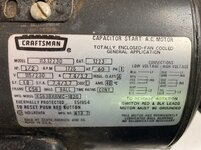
The quickest and most reliable method to determine the year of your drill press is to look at the motor data panel. This assumes that your motor is the original Craftsman motor partnered with your drill press at the time it was sold. There are some exceptions, and I will go over them as we progress.
Step 1 Motor Data
Although most of these drill presses were available without motors, most were sold with a motor, or the purchaser bought a motor at the same time and installed it on the drill press. For this reason, if you have a Craftsman motor on the drill press, somewhere on the motor data panel there should be a numerical date code sometimes listed as the MFG. No. It will likely look like “F4 50”. To the best of my knowledge this is a date code for June 4th, 1950.

The date code should have a letter associated with a two-digit year that falls within the time frame of the drill press series. The letters equate to months and the letter “I” is omitted:
A=January
B=February
C=March
D=April
E=May
F=June
G=July
H=August
J=September
K=October
L=November
M=December
So, if you have a Craftsman King Seeley 100 series and the date code is F4 50, the “50” indicates 1950 and the 100 series was produced between 1946 and 1957. 1950 fits within this window and the “F4” indicates June 4th. This simple process lets you somewhat date your drill press, assuming that the motor was purchased with or at the same time as the drill press. If the motor is missing the data panel, then another possible source for a date is the capacitor. This is especially true if the motor is a Craftsman 115.6962. The 6962 is the most common motor for the 100 series and most of the 150 series. The 6962 is a capacitor start motor that uses a flat “sardine can” capacitor. Of all the 6962 motors I have worked on, I have only had to replace the capacitor on one motor. All the other 6962 motors I have worked on dating back to 1946 are still running like new with the original capacitor.
NOTE- these capacitors are no longer produced and replacing one today means you will need to alter the motor base with a spacer or some other method because today’s capacitors are round and thicker than the base of the motor. Regardless, the original capacitors will likely have a date stamped on them and most of the time you can still read the date on them.

If you do not have an original craftsman motor or all attempts to date the motor have failed there are some design features within each drill press series that can help narrow down the year. The following is a roll up of each series and its subsets:
Step 2 Determine which series you drill press have.
Craftsman King Seeley 100 series (1946-1957)
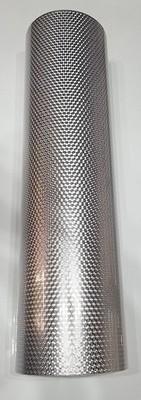
The King Seeley era 100 series was manufactured from 1946 to 1957 and were sold in both a bench top and floor standing model with or without motors. The 100 series is most recognizable by the “engine turned” headband panel and separate Craftsman logo panel above the headband.


Craftsman King Seeley 100 Series Subsets
1946 through early 1951
The Jacob’s Chuck # 6A-33 (AKA Jacob’s Model 34 Chuck) was included on all 100s
May 1951 through 1957
The Jacob’s “Safe-Lock” Chuck Model 633C (AKA 34B) (with the paneled sleeve) was included on all 100s. The plane sleeve 633C was introduced with the 150 in 1958.

Mid 1951 through 1953
Sometime in mid-1951 the engine turned headband panel was omitted. All 1952 and most 1953 100s were shipped without headbands. In addition to the missing headband, some of these drill presses came with all the chrome parts (feed stop bracket, quill lock, feed return spring tension knob, pinion hub, and feed return rods) painted gray regardless of the color of the drill press. Also, some of these models came with bakelite black feed handle knobs instead of the red bakelite knobs.

Additionally, there were two styles of engine turned headbands. One type is embossed and the other is engine turning that was less pronounced. It is unclear what years these two types collate with.

Tilting Table
1946-1955
All 100’s came with a tilting table until sometime in 1955 when the tilting table was replaced with a static table.

1956-1957
100 series sold in 1956 and 1957 came with static (non-tilting tables)

Floor Standing Column Height
1946-1955
All 100 floor standing columns were 67” tall.
1956-1957
All 100 floor standing columns were shortened to 62” tall.

Lock Screw Handles
Early 100s came with Chrome 2-piece lock handles.

Mid production 100s came with Atlas type ball end 1-piece lock handles.

Late production 100s (Probably 1957) came with 150 type 1-piece lock handles.

Lock Handle Nut & Sleeve
Early 100s came with Zamak cast lock sleeves and nuts and used a nut insert. It is unclear when the transition took place but later lock sleeves and lock nuts were made of hardened steel and the nut was threaded omitting the additional nut.

Feed Stop Rods
Early 100s came with feed stop rods that were 5/8-18 thread pitch. Later models came with 5/8-12 ACME thread pitch.

Feed Stop Bracket
Early 100s came with feed stop brackets that were not slotted all the way to the end of the stop rod hole. Later models came with a feed stop bracket that was slotted all the way.

Paint Color
The 100 series drill press was produced in two different colors. Early models were a machine blue gray; however, sometime between 1956 and 1957 the color was changed to power bronze.

Base Casting
Early 100 series base castings for both the benchtop and floor standing drill presses had recessed bolt holes for mounting. Sometime in 1957 the base for both the benchtop and the floor standing models was changed and the mounting holes were only slightly recessed.

Third Quill Support
It is unknow what years correspond but there was a period where 100s came with a third quill support inside the head casting.

Craftsman Logo Panels
The Craftsman Logo Panels that sit above the headband panel changed of the years and there are four distinct panels. These dates range beyond the production dates of the 100 series because they are used on other tools sold by Craftsman. There are some smaller variations, like the font size changed some during the versions but information is limited.
1945-1949
Pointy A in Craftsman, US Pat Office, Guaranteed Highest Quality

1949-1951
The blocky/rectangular badge

1951-1957
Flat top A in Craftsman, US Pat Office markings

1957-1961
Flat top A in Craftsman, Reg. Trade Mark

Model numbers by year based on Tool Catalogs/ Owners Manuals
1946-1955
103.23130
103.23131
103.23140
103.23141
1956-1957
103.24811
103.24812
103.24821
103.14820
103.24810
NOTE- some late 1957 100s came with many 150 parts such as the increased size of threads for the hub and feed handle rods (from 3/8-16tp to 1/2-13tp) , tilting motor mounts, and 150 type lock handles.
That should help in narrowing down the year of your Craftsman King Seeley 100 Series.
Craftsman King Seeley 150 series (1958-1964)
The 150 series is very similar to the 100 series in appearance and features. The King Seeley era 150 series was manufactured from 1958 to 1964 and were sold in both a bench top and floor standing model with or without motors. The 150 series has several improvements that make it a different model, but the most recognizable feature is the one-piece headband panel with “150” printed on it. The 150 combined the Craftsman Logo into the headband panel and Craftsman dropped the engine turned panel for a colored graphics panel.


Other obvious changes from the 100 series were a tilting motor mount and a quick adjusting feed stop.

A quill stop retaining ring.

The Jacob’s Safe Lock Chuck was changed from a paneled sleeve to a plain sleeve.

In 1964 Emerson took over production so during 1964 there were 150s made by both King Seeley and Emerson. We will cover the Emerson 150 in the next section. Just keep in mind that if your drill press model number has a prefix of 103 it was produced by King Seeley and if the prefix is 113 it was produced by Emerson.


Craftsman King Seeley 150 Series Subsets
Motor Types
1958-1959
Based on pictures in the tool catalogs, 150s sold from 1958 through 1959 were partnered with the Craftsman ½ HP 1750 RPM capacitor-start motor model 115.6962.

1960-1964
Again, based on catalog pictures, it looks like several different motors were partnered with the 150s from 1960 until Emerson took over production in 1964.
Feed Return Spring Tension Knob
1958-1963
All 150s sold between 1958 and 1963 were produced with the same feed retention spring system that was used in the 100 series. All of these drill presses will have the chrome external spring tension knob on the left side of the head casting. These 150s will also have the tension knob lock screw, the pinion lock screw and fibre washer, the pinion will have a channel cut out for the dog point of the lock screw to ride in. The feed retention spring will be the same spring as the 100s, a dog leg one end and double loop other end 51 coil torsion spring.


1964
In 1964 and probably associated with Emerson assuming production, the feed return spring system was changed. The new feed return spring system included a roll pin inside the head casting that anchored the left side of the spring.

The tension was adjusted with the Hub, Pinion, & Spring Assembly. A thin fibre washer was added to the pinion and the chrome tension knob, tension knob lock screw, pinion lock screw and fibre washer were omitted. The feed retention spring was changed to a double loop “both ends” 51 coil torsion spring.

Tilting Motor Mount Brackets
There were three types of tilting motor mount brackets, and it is unclear when each type was used.
The early type tilting motor mount bracket had a hole at the bottom that used a screw with nuts on both side of the bracket to fix the screw. There was a rubber bumper on the end of the screw where it rested on the backside of the head casting.

The next type included a spot-welded threaded boss (sleeve) on the bottom that the screw was threaded into and a rubber bumper on the screw where is rested on the back side of the head casting.

The later type had a clip at the bottom. The bottom support of the head casting was beefed up and a threaded hole on the back of the head casting has a threaded screw that protruded from the head and snapped into the clip on the motor mount bracket.

Drill Press Paint Colors
Again it is unclear what years correspond with paint colors but the 150 was sold in both Power Bronze and a Dark Gray (almost charcoal) color.

Model numbers by year based on Tool Catalogs/ Owners Manuals
1958-1963
103.24520
103.24521
103.24531
103.24530
1964-1966
103.24500
103.24501
103.24511
103.24510
Craftsman Emerson 150 series (AKA Emerson Generation 1) (1964-1966)
The Emerson Gen 1 is identical to the 1964 King Seeley 150. The new feed retention spring system was used on all Emerson 150s and they were sold in both a bench top and floor standing model with or without motors.

NOTE- Similar to the King Seeley 150 series, there was some variations in the Emerson 150 series. All three types of tilting motor mounts and both the Atlas style ball end lock handles and the 150 style lock handles have been seen on Emerson 150s.
Model Number Panels
One of the advantaged to the Emerson era drill presses was that most if not all of them included a year of production on the model number panel.

In this example you can see the “CODE” K65. This is likely indicating that this drill press was manufactured in October of 1965.
Model numbers by year based on Tool Catalogs/ Owners Manuals
1964-1966
113.24501
113.24511
Craftsman Emerson Generation 2 (1967-1969)
The Emerson Gen 2 drill press was a completely redesigned headstock 15.5” drill press. Although the headstock and table look very different, many of the internal parts and functions are generally the same as the 150 series. The largest change in this drill press was the longer spindle and quill which resulted in a longer spindle travel from the 4" travel of the Gen 1 to a 6" spindle travel in this Gen 2. The most recognizable feature of the Emerson Gen 2 is the large open gap in the headstock.

The floor base and column are the same as the Gen 1 but the headstock and table were new designs.

The Gen 2 was available in both the bench top and floor standing models with or without motors.


Panels
The front of the belt cover had a transparent spindle speed diagram.

The front nose of the head casting had a color coded drill press function diagram.

Variations
Over the three-year run of the Gen 2, there were some slight differences in the thickness of the tables. Also, there were variations in the guard plate.

And the belt cover pivot shaft, but I am unable to identify what years these variations took place.
Model numbers by year based on Tool Catalogs/ Owners Manuals
1967-1969
113.24540
113.24560
113.245601
Craftsman Emerson Generation 3 & 3.5 (1970-1972)
The Emerson Gen 3 was a complete redesign of the headstock and floor base. Additionally, Craftsman marketed a standard version and a beefed-up commercial version of the Emerson Gen 3 drill press. Internally, the largest change is the pulley system. The Gen 3 introduced the 6” 8-step pulley that would continue across later generations. The v-belt was changed from ½” to 3/16” wide belt to accommodate the new pulley size.

The table and head casting lock handles were changed to a straight handle with vinyl covers. The vinyl lock handle covers were a red/orange color.

The feed stop rod and feed stop collar were changed and the depth gauge scale was moved from the feed stop rod to the side of the head casting.

All Gen 3 and Commercial Gen 3 came with a plastic belt cover. The model number was moved from the base casting to the back side of the head casting. Again, the model number plate included a date code. The Gen 3 was available in both the bench top and floor standing models with or without motors.

The Gen 3 can be easily identified by the table which was a single plane milled surface similar to the Gen 2.

Panels
The front of the belt cover had a spindle speed diagram.

The side panels were also unique, the left side had a color coded drill press function diagram.

And the right side was blank.

Switch Design
1970-1971
With the newly designed head casting came a two-switch design. There was a black rocker type switch to operate the light and a red rocker type switch to operate the motor.

1972 Generation 3.5
In 1972 the red rocker type switch that operated the motor was changed to a red safety lock out switch with a removable yellow key.

Model numbers by year based on Tool Catalogs/ Owners Manuals
1970-1972
113.24580
113.24581
113.24590
113.24591
Craftsman Emerson Commercial Generation 3 & 3.5 (1971-1972)
The Gen 3 Commercial model ran concurrently with the standard Gen 3 model.
The Gen 3 Commercial model has a split head. Literally, there is a gap on the front of the headstock nose from the bottom and running vertically up ¾ of the head. There are 3 set screws on the left side of the headstock to adjust take-up in the quill backlash.

Additionally, the table was a larger table with T-nut slots and a coolant trough so looking for the split head and/or the T-slot table are the easiest way to identify a commercial model.

There is also an eccentric bearing on the pinion to adjust the feed backlash. Many of the internal parts look similar to the standard Gen 3 but are thicker or beefier. The vinyl lock handle covers were a yellow color.

The Gen 3 Commercial was available as a floor standing model only with or without motors.
Switch Design
1971
The Gen 3 Commercial was equipped with a single (horizontally mounted) red rocker type switch to operate the motor. The Gen 3 Commercial drill press did not include a light.

1972 Generation 3.5
Similar to the standard Gen 3, in 1972 the red rocker type switch that operated the motor was changed to a red safety lock out switch with a removable yellow key, again the Gen 3.5 did not include a light.

Panels
The front of the belt cover had a Commercial panel
The left side panel

The right side panel

Model numbers by year based on Tool Catalogs/ Owners Manuals
1971 Commercial Gen 3
113.24630
113.24631
1972 Commercial Gen 3.5
113.24611
113.24612
If you have one of these types of drill presses, this thread is for you. Bookmark, subscribe, whatever; so that you can find it when you need it.
This thread is primarily targeted at new owners of vintage Craftsman Drill Presses built from 1946-1984. Most of this information is generalized and where it is specific, a model number will be noted. If you need v-belts, ball bearings, Jaocob’s Chucks, or Chuck Keys, this thread has that information for you. Before you can get the stuff you need, you must know what model drill press you have.
Note: as we learn more about these drill presses, I will attempt to update this thread. Please post in the thread or message me if you see something that is incorrect or you have something to add to the information.
This thread will cover all American made Craftsman 15.5” drill presses from 1946-1984. During this period, we saw the 100 series, the 150 series, and the Emerson Generations 1-4.5. All of the 15.5” drill presses during this time frame were manufactured by King Seeley or Emerson. The 100 series, 150 series and the Emerson Gen 1 series are all considered the Classic Craftsman Drill Press with that art deco look.
Although, many of these drill presses were advertised as 15” drill presses, all of them are 15.5” drill presses. During this same time frame there were also 12.5” and 13.5” and some other sizes. Many of these were called the 80 series and one year a 12.5” was also called a 100 series but this thread will stick with the 15.5” drill presses.
So how do you measure a drill press?
The size is determined by measuring the distance from the column to the center of the chuck. On all of these drill presses, the measurement is 7 ¾”. This means you can drill to the center of a 15 ½” circle.
I own several of these machines from a wide spectrum of the time span; however, I am not an expert of these machines. I have a good amount of experience using and rebuilding these machines and I owe a special thanks to FrankLee, Hoorn, JoCoSawdust, and the many others that have helped me to acquire the knowledge I have of these machines.
I welcome any additional information to this thread, and I hope this thread helps the new owners of these amazing machines.
Which machine do you have?
You need to know a few things about your drill press. If you are confident, you know what series and year of production your drill press is and you are here to get information about bearings and other parts then skip to here:
Craftsman Drill Press Information Belts, Bearings, Chucks, Keys, etc…1946-1984
Welcome to the newly Updated (May 2023) Craftsman Drill Press “go to thread”. If you have one of these types of drill presses, this thread is for you. Bookmark, subscribe, whatever; so that you can find it when you need it. This thread is primarily targeted at new owners of vintage Craftsman...
www.garagejournal.com
Getting to know your Drill Press
The quickest and most reliable method to determine the year of your drill press is to look at the motor data panel. This assumes that your motor is the original Craftsman motor partnered with your drill press at the time it was sold. There are some exceptions, and I will go over them as we progress.
Step 1 Motor Data
Although most of these drill presses were available without motors, most were sold with a motor, or the purchaser bought a motor at the same time and installed it on the drill press. For this reason, if you have a Craftsman motor on the drill press, somewhere on the motor data panel there should be a numerical date code sometimes listed as the MFG. No. It will likely look like “F4 50”. To the best of my knowledge this is a date code for June 4th, 1950.
The date code should have a letter associated with a two-digit year that falls within the time frame of the drill press series. The letters equate to months and the letter “I” is omitted:
A=January
B=February
C=March
D=April
E=May
F=June
G=July
H=August
J=September
K=October
L=November
M=December
So, if you have a Craftsman King Seeley 100 series and the date code is F4 50, the “50” indicates 1950 and the 100 series was produced between 1946 and 1957. 1950 fits within this window and the “F4” indicates June 4th. This simple process lets you somewhat date your drill press, assuming that the motor was purchased with or at the same time as the drill press. If the motor is missing the data panel, then another possible source for a date is the capacitor. This is especially true if the motor is a Craftsman 115.6962. The 6962 is the most common motor for the 100 series and most of the 150 series. The 6962 is a capacitor start motor that uses a flat “sardine can” capacitor. Of all the 6962 motors I have worked on, I have only had to replace the capacitor on one motor. All the other 6962 motors I have worked on dating back to 1946 are still running like new with the original capacitor.
NOTE- these capacitors are no longer produced and replacing one today means you will need to alter the motor base with a spacer or some other method because today’s capacitors are round and thicker than the base of the motor. Regardless, the original capacitors will likely have a date stamped on them and most of the time you can still read the date on them.
If you do not have an original craftsman motor or all attempts to date the motor have failed there are some design features within each drill press series that can help narrow down the year. The following is a roll up of each series and its subsets:
Step 2 Determine which series you drill press have.
- Craftsman King Seeley 100 Series (1946-1957)
- Craftsman King Seeley 150 Series (1958-1964)
- Craftsman Emerson 150 Series (AKA Generation 1) (1964-1966)
- Craftsman Emerson Gen 2 Series (1967-1969)
- Craftsman Emerson Gen 3 Standard Series (1970-1972)
- Craftsman Emerson Gen 3 Commercial Series (1971-1972)
- Craftsman Emerson Gen 4 Standard Series (1973-1984)
- Craftsman Emerson Gen 4 Commercial Series (1975-1983)
Craftsman King Seeley 100 series (1946-1957)
The King Seeley era 100 series was manufactured from 1946 to 1957 and were sold in both a bench top and floor standing model with or without motors. The 100 series is most recognizable by the “engine turned” headband panel and separate Craftsman logo panel above the headband.
Craftsman King Seeley 100 Series Subsets
1946 through early 1951
The Jacob’s Chuck # 6A-33 (AKA Jacob’s Model 34 Chuck) was included on all 100s
May 1951 through 1957
The Jacob’s “Safe-Lock” Chuck Model 633C (AKA 34B) (with the paneled sleeve) was included on all 100s. The plane sleeve 633C was introduced with the 150 in 1958.
Mid 1951 through 1953
Sometime in mid-1951 the engine turned headband panel was omitted. All 1952 and most 1953 100s were shipped without headbands. In addition to the missing headband, some of these drill presses came with all the chrome parts (feed stop bracket, quill lock, feed return spring tension knob, pinion hub, and feed return rods) painted gray regardless of the color of the drill press. Also, some of these models came with bakelite black feed handle knobs instead of the red bakelite knobs.
Additionally, there were two styles of engine turned headbands. One type is embossed and the other is engine turning that was less pronounced. It is unclear what years these two types collate with.
Tilting Table
1946-1955
All 100’s came with a tilting table until sometime in 1955 when the tilting table was replaced with a static table.
1956-1957
100 series sold in 1956 and 1957 came with static (non-tilting tables)
Floor Standing Column Height
1946-1955
All 100 floor standing columns were 67” tall.
1956-1957
All 100 floor standing columns were shortened to 62” tall.
Lock Screw Handles
Early 100s came with Chrome 2-piece lock handles.
Mid production 100s came with Atlas type ball end 1-piece lock handles.
Late production 100s (Probably 1957) came with 150 type 1-piece lock handles.
Lock Handle Nut & Sleeve
Early 100s came with Zamak cast lock sleeves and nuts and used a nut insert. It is unclear when the transition took place but later lock sleeves and lock nuts were made of hardened steel and the nut was threaded omitting the additional nut.
Feed Stop Rods
Early 100s came with feed stop rods that were 5/8-18 thread pitch. Later models came with 5/8-12 ACME thread pitch.
Feed Stop Bracket
Early 100s came with feed stop brackets that were not slotted all the way to the end of the stop rod hole. Later models came with a feed stop bracket that was slotted all the way.
Paint Color
The 100 series drill press was produced in two different colors. Early models were a machine blue gray; however, sometime between 1956 and 1957 the color was changed to power bronze.
Base Casting
Early 100 series base castings for both the benchtop and floor standing drill presses had recessed bolt holes for mounting. Sometime in 1957 the base for both the benchtop and the floor standing models was changed and the mounting holes were only slightly recessed.
Third Quill Support
It is unknow what years correspond but there was a period where 100s came with a third quill support inside the head casting.
Craftsman Logo Panels
The Craftsman Logo Panels that sit above the headband panel changed of the years and there are four distinct panels. These dates range beyond the production dates of the 100 series because they are used on other tools sold by Craftsman. There are some smaller variations, like the font size changed some during the versions but information is limited.
1945-1949
Pointy A in Craftsman, US Pat Office, Guaranteed Highest Quality
1949-1951
The blocky/rectangular badge
1951-1957
Flat top A in Craftsman, US Pat Office markings
1957-1961
Flat top A in Craftsman, Reg. Trade Mark
Model numbers by year based on Tool Catalogs/ Owners Manuals
1946-1955
103.23130
103.23131
103.23140
103.23141
1956-1957
103.24811
103.24812
103.24821
103.14820
103.24810
NOTE- some late 1957 100s came with many 150 parts such as the increased size of threads for the hub and feed handle rods (from 3/8-16tp to 1/2-13tp) , tilting motor mounts, and 150 type lock handles.
That should help in narrowing down the year of your Craftsman King Seeley 100 Series.
Craftsman King Seeley 150 series (1958-1964)
The 150 series is very similar to the 100 series in appearance and features. The King Seeley era 150 series was manufactured from 1958 to 1964 and were sold in both a bench top and floor standing model with or without motors. The 150 series has several improvements that make it a different model, but the most recognizable feature is the one-piece headband panel with “150” printed on it. The 150 combined the Craftsman Logo into the headband panel and Craftsman dropped the engine turned panel for a colored graphics panel.
Other obvious changes from the 100 series were a tilting motor mount and a quick adjusting feed stop.
A quill stop retaining ring.
The Jacob’s Safe Lock Chuck was changed from a paneled sleeve to a plain sleeve.
In 1964 Emerson took over production so during 1964 there were 150s made by both King Seeley and Emerson. We will cover the Emerson 150 in the next section. Just keep in mind that if your drill press model number has a prefix of 103 it was produced by King Seeley and if the prefix is 113 it was produced by Emerson.
Craftsman King Seeley 150 Series Subsets
Motor Types
1958-1959
Based on pictures in the tool catalogs, 150s sold from 1958 through 1959 were partnered with the Craftsman ½ HP 1750 RPM capacitor-start motor model 115.6962.
1960-1964
Again, based on catalog pictures, it looks like several different motors were partnered with the 150s from 1960 until Emerson took over production in 1964.
Feed Return Spring Tension Knob
1958-1963
All 150s sold between 1958 and 1963 were produced with the same feed retention spring system that was used in the 100 series. All of these drill presses will have the chrome external spring tension knob on the left side of the head casting. These 150s will also have the tension knob lock screw, the pinion lock screw and fibre washer, the pinion will have a channel cut out for the dog point of the lock screw to ride in. The feed retention spring will be the same spring as the 100s, a dog leg one end and double loop other end 51 coil torsion spring.
1964
In 1964 and probably associated with Emerson assuming production, the feed return spring system was changed. The new feed return spring system included a roll pin inside the head casting that anchored the left side of the spring.
The tension was adjusted with the Hub, Pinion, & Spring Assembly. A thin fibre washer was added to the pinion and the chrome tension knob, tension knob lock screw, pinion lock screw and fibre washer were omitted. The feed retention spring was changed to a double loop “both ends” 51 coil torsion spring.
Tilting Motor Mount Brackets
There were three types of tilting motor mount brackets, and it is unclear when each type was used.
The early type tilting motor mount bracket had a hole at the bottom that used a screw with nuts on both side of the bracket to fix the screw. There was a rubber bumper on the end of the screw where it rested on the backside of the head casting.
The next type included a spot-welded threaded boss (sleeve) on the bottom that the screw was threaded into and a rubber bumper on the screw where is rested on the back side of the head casting.
The later type had a clip at the bottom. The bottom support of the head casting was beefed up and a threaded hole on the back of the head casting has a threaded screw that protruded from the head and snapped into the clip on the motor mount bracket.
Drill Press Paint Colors
Again it is unclear what years correspond with paint colors but the 150 was sold in both Power Bronze and a Dark Gray (almost charcoal) color.
Model numbers by year based on Tool Catalogs/ Owners Manuals
1958-1963
103.24520
103.24521
103.24531
103.24530
1964-1966
103.24500
103.24501
103.24511
103.24510
Craftsman Emerson 150 series (AKA Emerson Generation 1) (1964-1966)
The Emerson Gen 1 is identical to the 1964 King Seeley 150. The new feed retention spring system was used on all Emerson 150s and they were sold in both a bench top and floor standing model with or without motors.
NOTE- Similar to the King Seeley 150 series, there was some variations in the Emerson 150 series. All three types of tilting motor mounts and both the Atlas style ball end lock handles and the 150 style lock handles have been seen on Emerson 150s.
Model Number Panels
One of the advantaged to the Emerson era drill presses was that most if not all of them included a year of production on the model number panel.
In this example you can see the “CODE” K65. This is likely indicating that this drill press was manufactured in October of 1965.
Model numbers by year based on Tool Catalogs/ Owners Manuals
1964-1966
113.24501
113.24511
Craftsman Emerson Generation 2 (1967-1969)
The Emerson Gen 2 drill press was a completely redesigned headstock 15.5” drill press. Although the headstock and table look very different, many of the internal parts and functions are generally the same as the 150 series. The largest change in this drill press was the longer spindle and quill which resulted in a longer spindle travel from the 4" travel of the Gen 1 to a 6" spindle travel in this Gen 2. The most recognizable feature of the Emerson Gen 2 is the large open gap in the headstock.
The floor base and column are the same as the Gen 1 but the headstock and table were new designs.
The Gen 2 was available in both the bench top and floor standing models with or without motors.
Panels
The front of the belt cover had a transparent spindle speed diagram.
The front nose of the head casting had a color coded drill press function diagram.
Variations
Over the three-year run of the Gen 2, there were some slight differences in the thickness of the tables. Also, there were variations in the guard plate.
And the belt cover pivot shaft, but I am unable to identify what years these variations took place.
Model numbers by year based on Tool Catalogs/ Owners Manuals
1967-1969
113.24540
113.24560
113.245601
Craftsman Emerson Generation 3 & 3.5 (1970-1972)
The Emerson Gen 3 was a complete redesign of the headstock and floor base. Additionally, Craftsman marketed a standard version and a beefed-up commercial version of the Emerson Gen 3 drill press. Internally, the largest change is the pulley system. The Gen 3 introduced the 6” 8-step pulley that would continue across later generations. The v-belt was changed from ½” to 3/16” wide belt to accommodate the new pulley size.
The table and head casting lock handles were changed to a straight handle with vinyl covers. The vinyl lock handle covers were a red/orange color.
The feed stop rod and feed stop collar were changed and the depth gauge scale was moved from the feed stop rod to the side of the head casting.
All Gen 3 and Commercial Gen 3 came with a plastic belt cover. The model number was moved from the base casting to the back side of the head casting. Again, the model number plate included a date code. The Gen 3 was available in both the bench top and floor standing models with or without motors.
The Gen 3 can be easily identified by the table which was a single plane milled surface similar to the Gen 2.
Panels
The front of the belt cover had a spindle speed diagram.
The side panels were also unique, the left side had a color coded drill press function diagram.
And the right side was blank.
Switch Design
1970-1971
With the newly designed head casting came a two-switch design. There was a black rocker type switch to operate the light and a red rocker type switch to operate the motor.
1972 Generation 3.5
In 1972 the red rocker type switch that operated the motor was changed to a red safety lock out switch with a removable yellow key.
Model numbers by year based on Tool Catalogs/ Owners Manuals
1970-1972
113.24580
113.24581
113.24590
113.24591
Craftsman Emerson Commercial Generation 3 & 3.5 (1971-1972)
The Gen 3 Commercial model ran concurrently with the standard Gen 3 model.
The Gen 3 Commercial model has a split head. Literally, there is a gap on the front of the headstock nose from the bottom and running vertically up ¾ of the head. There are 3 set screws on the left side of the headstock to adjust take-up in the quill backlash.
Additionally, the table was a larger table with T-nut slots and a coolant trough so looking for the split head and/or the T-slot table are the easiest way to identify a commercial model.
There is also an eccentric bearing on the pinion to adjust the feed backlash. Many of the internal parts look similar to the standard Gen 3 but are thicker or beefier. The vinyl lock handle covers were a yellow color.
The Gen 3 Commercial was available as a floor standing model only with or without motors.
Switch Design
1971
The Gen 3 Commercial was equipped with a single (horizontally mounted) red rocker type switch to operate the motor. The Gen 3 Commercial drill press did not include a light.
1972 Generation 3.5
Similar to the standard Gen 3, in 1972 the red rocker type switch that operated the motor was changed to a red safety lock out switch with a removable yellow key, again the Gen 3.5 did not include a light.
Panels
The front of the belt cover had a Commercial panel
The left side panel
The right side panel
Model numbers by year based on Tool Catalogs/ Owners Manuals
1971 Commercial Gen 3
113.24630
113.24631
1972 Commercial Gen 3.5
113.24611
113.24612
Last edited: