To avoid these ads, REGISTER NOW!

Seeking wire pulling advise

Donttouchthat

Well-known member
Joined
Apr 11, 2021
Messages
147
Location
CONNECTICUT
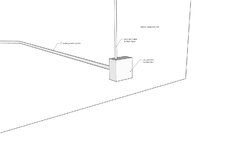
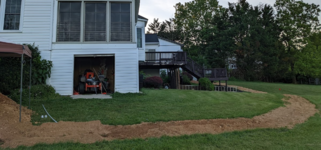
Hi. I've never pulled any major wires before and was seeking some tips and advise. Will be pulling 4 wires (3@ 1/0 xhhw-2 AL and 1@ #4 awg xhhw-2 AL) though a 2" conduit. The new Barn subpanel is uphill (about 6-7ft in elevation from the House) if that matters. I have a drawing to scale (attached) showing my rum and planned conduit bodies. Once in House basement I am transitioning to a 1/0,1/0,1/0,#2 ground SER AL cable to my main panel.

Where would you start the pull? Would it be done in phases then hand fed in places? What kind of pulling implements? etc. Thanks!Wire Pull-1.jpgWire Pull-2.jpg
 
To avoid these ads, REGISTER NOW!

mike93lx

ALLIANCE MEMBER
Joined
Dec 9, 2013
Messages
37,642
Location
Richmond, VA
Your pull direction should be following the bell ends of the conduit. Pull in the direction that will minimize chances of snags.

Use lube. Lots of lube

Use a shop vac to **** a small plastic bag tied to a lightweight string/pull rope.

Have someone pushing and someone pulling. Maybe even a third to focus on unspooling and organizing the wire
 

inphx

Well-known member
Joined
Feb 23, 2012
Messages
1,282
Location
Phoenix/Scottsdale AZ
I did something similar, at the barn end i left off the final conduit bends and pulled cable. Then i assembled the final twisties threaded over the final run section.

For the pull cable, i stepped it up with first a fishing line and some scrap foam and a vacuum cleaner, then I pulled some harbor freight nylon rope and then i used a spool of stainless steel wire cable (google for "aircraft wire") and pulled that through. That cable got sistered /tied and hose clamped, duct taped to the aluminum mhf cable . I am a hack , i'm sure someone will say the wire cable may saw through the conduit.. but i feel the tension of pull and speed done all is fine.
 
OP
D

Donttouchthat

Well-known member
Joined
Apr 11, 2021
Messages
147
Location
CONNECTICUT
Thanks Mike. So if my bell end of the conduit is on the right then my pull would be from left to right? Also I have not laid the pipe yet. Based on my plan, what would be best, should I lay the pipe with bell ends on left or right for the run? Also I there a particular tool to actually pull the wires? Rental availability for this? Thanks
 
OP
D

Donttouchthat

Well-known member
Joined
Apr 11, 2021
Messages
147
Location
CONNECTICUT
I did something similar, at the barn end i left off the final conduit bends and pulled cable. Then i assembled the final twisties threaded over the final run section.

For the pull cable, i stepped it up with first a fishing line and some scrap foam and a vacuum cleaner, then I pulled some harbor freight nylon rope and then i used a spool of stainless steel wire cable (google for "aircraft wire") and pulled that through. That cable got sistered /tied and hose clamped, duct taped to the aluminum mhf cable . I am a hack , i'm sure someone will say the wire cable may saw through the conduit.. but i feel the tension of pull and speed done all is fine.
Thanks Inphx. Hack minds think alike. Good points for me to consider
 
OP
D

Donttouchthat

Well-known member
Joined
Apr 11, 2021
Messages
147
Location
CONNECTICUT
Your pull direction should be following the bell ends of the conduit. Pull in the direction that will minimize chances of snags.

Use lube. Lots of lube

Use a shop vac to **** a small plastic bag tied to a lightweight string/pull rope.

Have someone pushing and someone pulling. Maybe even a third to focus on unspooling and organizing the wire
Thanks Mike. So if my bell end of the conduit is on the right then my pull would be from left to right? Also I have not laid the pipe yet. Based on my plan, what would be best, should I lay the pipe with bell ends on left or right for the run? Also I there a particular tool to actually pull the wires? Rental availability for this? Thanks
 

larry4406

Well-known member
Joined
Jan 27, 2006
Messages
19,347
Location
Northern Virginia
Mule tape. It’s a flat “rope” for pulling. It won’t cut your conduit. It even has footage marks on it so you can quickly measure the wire cuts you need. Rope, cable, etc might damage/cut your conduit.

I pulled my barn feed thru ~100’ conduit with 3 guys. One pulling, one pushing, and one managing the cable feed.

I measured the length of the wire cuts needed. Before pulling I placed all the conductors side by side on the ground and used electricians tape to bundle the 4 together. Taped them like every 10’ or so. Pulled them all at once.

I used Klein spray foam lube. Comes in a can with a plastic hose.
 

mike93lx

ALLIANCE MEMBER
Joined
Dec 9, 2013
Messages
37,642
Location
Richmond, VA
I did something similar, at the barn end i left off the final conduit bends and pulled cable. Then i assembled the final twisties threaded over the final run section.

For the pull cable, i stepped it up with first a fishing line and some scrap foam and a vacuum cleaner, then I pulled some harbor freight nylon rope and then i used a spool of stainless steel wire cable (google for "aircraft wire") and pulled that through. That cable got sistered /tied and hose clamped, duct taped to the aluminum mhf cable . I am a hack , i'm sure someone will say the wire cable may saw through the conduit.. but i feel the tension of pull and speed done all is fine.
Dont pull wire in incomplete conduit. It is a code violation and you will damage the wire with the pvc glue
 

mike93lx

ALLIANCE MEMBER
Joined
Dec 9, 2013
Messages
37,642
Location
Richmond, VA
Thanks Mike. So if my bell end of the conduit is on the right then my pull would be from left to right? Also I have not laid the pipe yet. Based on my plan, what would be best, should I lay the pipe with bell ends on left or right for the run? Also I there a particular tool to actually pull the wires? Rental availability for this? Thanks
Pull into the end with the bell so there is nothing to catch on.

If one side of the pull will have more room for dealing with the spools, plan on that. Otherwise, I don't think it will matter

Maybe check a place like sunbelt for a puller rental? If you have someone pushing and someone pulling and use lube, I probably won't be that bad. If you need help at points, maybe a come along hooked to something on the destination side
 
Last edited:
OP
D

Donttouchthat

Well-known member
Joined
Apr 11, 2021
Messages
147
Location
CONNECTICUT
Mule tape. It’s a flat “rope” for pulling. It won’t cut your conduit. It even has footage marks on it so you can quickly measure the wire cuts you need. Rope, cable, etc might damage/cut your conduit.

I pulled my barn feed thru ~100’ conduit with 3 guys. One pulling, one pushing, and one managing the cable feed.

I measured the length of the wire cuts needed. Before pulling I placed all the conductors side by side on the ground and used electricians tape to bundle the 4 together. Taped them like every 10’ or so. Pulled them all at once.

I used Klein spray foam lube. Comes in a can with a plastic hose.
OK Thanks. I'll look into the mule tape etc
 

sparky 1971

Well-known member
Joined
Oct 9, 2018
Messages
7,974
Location
Central Iowa
**** a string through with a shop vac, use the string to pull a rope. Pull from the house, feeding from the LB. When there is enough wire in the house, pull it from the B to the sub.
 
OP
D

Donttouchthat

Well-known member
Joined
Apr 11, 2021
Messages
147
Location
CONNECTICUT
Pull into the bell so there is nothing to catch on.

If one side of the pull will have more room for dealing with the spools, plan on that. Otherwise, I don't think it will matter

Maybe check a place like sunbelt for a puller rental? If you have someone pushing and someone pulling and use lube, I probably won't be that bad. If you need help at points, maybe a come along hooked to something on the destination side
Got it. So I think if I have my spools in the basement, might be best as it's a straight shot into the conduit. Then would I be pulling 1st through the screw cover of the 1st conduit body outside Barn? Then hand feed/pull the last 20' into the panel box? in a couple of phases? Thanks!
 

Attachments

  • Wire Pull-2a.jpg
    Wire Pull-2a.jpg
    48.9 KB · Views: 42
OP
D

Donttouchthat

Well-known member
Joined
Apr 11, 2021
Messages
147
Location
CONNECTICUT
**** a string through with a shop vac, use the string to pull a rope. Pull from the house, feeding from the LB. When there is enough wire in the house, pull it from the B to the sub.
Do you mean when there is enough "rope" in the house then attach wires and pull back through the 1st barn LB ? Thanks.
 

mike93lx

ALLIANCE MEMBER
Joined
Dec 9, 2013
Messages
37,642
Location
Richmond, VA
Pulling the wire out of that LB and then feeding it back through is going to ****, especially with an LB right on the other side of the wall. You may have to unbundle them for that.

I would definitely not tape the bundle up along the run. You will want to be able to pull on an individual wire at times and that will prevent it.
 
OP
D

Donttouchthat

Well-known member
Joined
Apr 11, 2021
Messages
147
Location
CONNECTICUT
Pulling the wire out of that LB and then feeding it back through is going to ****, especially with an LB right on the other side of the wall. You may have to unbundle them for that.

I would definitely not tape the bundle up along the run. You will want to be able to pull on an individual wire at times and that will prevent it.
So how would you pull this? Thanks
 

mike93lx

ALLIANCE MEMBER
Joined
Dec 9, 2013
Messages
37,642
Location
Richmond, VA
Instead of a LB, do you have room for a junction box on the inside? It would have to be big.

The reality is that I would probably do the run the same as you and just swear my way through it.
 
OP
D

Donttouchthat

Well-known member
Joined
Apr 11, 2021
Messages
147
Location
CONNECTICUT
Instead of a LB, do you have room for a junction box on the inside? It would have to be big.

The reality is that I would probably do the run the same as you and just swear my way through it.
LOL. Yes I have room. I already have a 12x12x6 box for my basement transition from individual wire to the SER cable. But how difficult would be to push each wire though the 2nd barn interior CB then maybe snake and pull individual wires separately into the panel box. It's only 20'. Rather than pulling all 4 at the same time the last run into the panel box?
 
To avoid these ads, REGISTER NOW!

Innovate1

Well-known member
Joined
Jul 28, 2014
Messages
4,289
Location
Illinois near St. Louis, Missouri
I would feed from the barn end as that is slightly higher. Although with the slight difference in elevation if won't make a lot of difference so there may be other factors. Long sweeps for the bends will help a lot and 24" radius sweeps in 2" conduit should be fairly easy to find from local electrical supplies. The pipe will bend quite a bit so you may be able to eliminate a couple bends in the long run and just use long curves. Get rid of one of the bends at the base of the riser at the barn - should just go directly toward the riser and then bend up. If you can't because of obstructions the next choice would be a long sweeping bend in the pipe.

I would knock the inside edge off the male ends - they make tools with swinging blades that make this quick and easy and then your pull direction isn't quite such an issue or if you need to pull it out. But going in the direction of entering the bells is best as others have noted.

Think about which end will be easiest to pull. The basement is a horizontal pull so would be easier than pulling the wire up at the barn end. Seems like you need a high support on one end or the other. I needed them on both ends for mine. My barn end came up inside the building so I put the wire spools on a pipe and lifted them up to the rafters. Then used 3 long 2 x 4s for a tripod on the other end for a pulley for the pull rope/tape. Much easier to pull down than trying to pull up when on a ladder.

Try to minimize the size of the joint between the pull tape and the wire. You can strip several inches and then split the strands and fold half one way and half the other through the eye of the pull rope/tape.

Pull the main long run first. Then pull the short runs at each end. You don't want to feed all the wire through the LBs. Line up the pull and feed as close to straight so it doesn't have a big bend at the entry or exit point. Run a string through the shorter runs to get the length you need to have to make the secondary pulls and you won't have to adjust the main run after it's pulled.

If you set things up well two people could do this quite easily. Lube is available at HD, Lowes, etc.
 

Innovate1

Well-known member
Joined
Jul 28, 2014
Messages
4,289
Location
Illinois near St. Louis, Missouri
Got it. So I think if I have my spools in the basement, might be best as it's a straight shot into the conduit. Then would I be pulling 1st through the screw cover of the 1st conduit body outside Barn? Then hand feed/pull the last 20' into the panel box? in a couple of phases? Thanks!
Yep. That's a good plan. No way to avoid putting the wire through the LBs but at least you only have 20' to do. One person feeding and one pulling and it will not be that bad. It's just the last bit that has to be bent tightly that is a bit extra work. Pull a string through the 20' section to figure out exactly how much you need to have so you don't have to readjust it after doing the 20' part - that will be a lot of extra trouble.
 
OP
D

Donttouchthat

Well-known member
Joined
Apr 11, 2021
Messages
147
Location
CONNECTICUT
I would feed from the barn end as that is slightly higher. Although with the slight difference in elevation if won't make a lot of difference so there may be other factors. Long sweeps for the bends will help a lot and 24" radius sweeps in 2" conduit should be fairly easy to find from local electrical supplies. The pipe will bend quite a bit so you may be able to eliminate a couple bends in the long run and just use long curves. Get rid of one of the bends at the base of the riser at the barn - should just go directly toward the riser and then bend up. If you can't because of obstructions the next choice would be a long sweeping bend in the pipe.

I would knock the inside edge off the male ends - they make tools with swinging blades that make this quick and easy and then your pull direction isn't quite such an issue or if you need to pull it out. But going in the direction of entering the bells is best as others have noted.

Think about which end will be easiest to pull. The basement is a horizontal pull so would be easier than pulling the wire up at the barn end. Seems like you need a high support on one end or the other. I needed them on both ends for mine. My barn end came up inside the building so I put the wire spools on a pipe and lifted them up to the rafters. Then used 3 long 2 x 4s for a tripod on the other end for a pulley for the pull rope/tape. Much easier to pull down than trying to pull up when on a ladder.

Try to minimize the size of the joint between the pull tape and the wire. You can strip several inches and then split the strands and fold half one way and half the other through the eye of the pull rope/tape.

Pull the main long run first. Then pull the short runs at each end. You don't want to feed all the wire through the LBs. Line up the pull and feed as close to straight so it doesn't have a big bend at the entry or exit point. Run a string through the shorter runs to get the length you need to have to make the secondary pulls and you won't have to adjust the main run after it's pulled.

If you set things up well two people could do this quite easily. Lube is available at HD, Lowes, etc.
Thanks. Makes sense to pull from the basement. I want to digest this and get back with a pic and question I have for my basement junction box.
 

sparky 1971

Well-known member
Joined
Oct 9, 2018
Messages
7,974
Location
Central Iowa
Do you mean when there is enough "rope" in the house then attach wires and pull back through the 1st barn LB ? Thanks.
No. Pull the rope from the house to the LB. Tie the wire to the rope at the LB and pull it back to the house until you have enough inside. The pull the remaining wire from the LB to the sub panel.

Edit. I just noticed the second LB inside. That's going to make it a *****, but still doable. After it gets to the house, shove everything from outside through the first LB and out the second. and put the cover on the outside so no wire sneaks back outside without you realizing it. Now pull another rope from the sub to the second LB and pull away. This is where it's going to be tough, the natural direction to go through an LB is the other way. Make sure the wires aren't twisted and use lots of lube. When the wires come out at the panel you will probably have to tug on them one at a time.
 
Last edited:
OP
D

Donttouchthat

Well-known member
Joined
Apr 11, 2021
Messages
147
Location
CONNECTICUT
I would feed from the barn end as that is slightly higher. Although with the slight difference in elevation if won't make a lot of difference so there may be other factors. Long sweeps for the bends will help a lot and 24" radius sweeps in 2" conduit should be fairly easy to find from local electrical supplies. The pipe will bend quite a bit so you may be able to eliminate a couple bends in the long run and just use long curves. Get rid of one of the bends at the base of the riser at the barn - should just go directly toward the riser and then bend up. If you can't because of obstructions the next choice would be a long sweeping bend in the pipe.

I would knock the inside edge off the male ends - they make tools with swinging blades that make this quick and easy and then your pull direction isn't quite such an issue or if you need to pull it out. But going in the direction of entering the bells is best as others have noted.

Think about which end will be easiest to pull. The basement is a horizontal pull so would be easier than pulling the wire up at the barn end. Seems like you need a high support on one end or the other. I needed them on both ends for mine. My barn end came up inside the building so I put the wire spools on a pipe and lifted them up to the rafters. Then used 3 long 2 x 4s for a tripod on the other end for a pulley for the pull rope/tape. Much easier to pull down than trying to pull up when on a ladder.

Try to minimize the size of the joint between the pull tape and the wire. You can strip several inches and then split the strands and fold half one way and half the other through the eye of the pull rope/tape.

Pull the main long run first. Then pull the short runs at each end. You don't want to feed all the wire through the LBs. Line up the pull and feed as close to straight so it doesn't have a big bend at the entry or exit point. Run a string through the shorter runs to get the length you need to have to make the secondary pulls and you won't have to adjust the main run after it's pulled.

If you set things up well two people could do this quite easily. Lube is available at HD, Lowes, etc.
Should/can I situate my junction box, as in my drawing, and have the 2" conduit run directly into it? I am going to have a 3" PVC sleeve through the foundation wall, maybe I'll need to padout the back of the box so that the sleeve can protrude into/past the wall abit. Then put a terminal adapter for the conduit to connect into the junction box.
 

Attachments

  • Wire Pull-3.jpg
    Wire Pull-3.jpg
    32.7 KB · Views: 42

Innovate1

Well-known member
Joined
Jul 28, 2014
Messages
4,289
Location
Illinois near St. Louis, Missouri
I drew in where you can probably eliminate some bends and just do a long bend with the pipe. You can lay the conduit on the ground and get an idea of the bend that you can easily do and then trench that path. I used 1.5" conduit with slightly smaller wire so could be bent more than 2". Eliminating sharper bends will make the pull easier but you will have to see what seems reasonable for your run given what you have to work around.
Wire pull less bends.jpg
 
OP
D

Donttouchthat

Well-known member
Joined
Apr 11, 2021
Messages
147
Location
CONNECTICUT
I get your point. But I'm going to dig this trench (54" deep, water at bottom) myself. Never done this before but I have an old sizable backhoe. Not sure if either of us are up for the task. Was going to start the other day but my starter finally went. Hopefully a replacement is coming tomorrow and praying it jives with my tractor and works good. Getting back to your drawing, I might find it difficult to dig the trench in "not straight" sections. Otherwise it makes sense. Thanks
 
OP
D

Donttouchthat

Well-known member
Joined
Apr 11, 2021
Messages
147
Location
CONNECTICUT
Even the 2" pipe is pretty flexible. I made this entire curve in a 4" wide trench without using a single 45 or 90
1655137793056.png
Nice. but given the dynamics involved i.e. me as the operator, 24" wide bucket, 54" deep. I think I need to make straight sections with distinct angles.
 

mike93lx

ALLIANCE MEMBER
Joined
Dec 9, 2013
Messages
37,642
Location
Richmond, VA
Nice. but given the dynamics involved i.e. me as the operator, 24" wide bucket, 54" deep. I think I need to make straight sections with distinct angles.
Just digging out a corner a little more may be enough.

This stuff helps make pulls a lot easier.

Plus the electrical doesn't need to be anywhere near that deep. Drop the electrical in once you have most of it back filled and it will make it easy to widen certain areas
 

Innovate1

Well-known member
Joined
Jul 28, 2014
Messages
4,289
Location
Illinois near St. Louis, Missouri
I get your point. But I'm going to dig this trench (54" deep, water at bottom) myself. Never done this before but I have an old sizable backhoe. Not sure if either of us are up for the task. Was going to start the other day but my starter finally went. Hopefully a replacement is coming tomorrow and praying it jives with my tractor and works good. Getting back to your drawing, I might find it difficult to dig the trench in "not straight" sections. Otherwise it makes sense. Thanks
I think you are putting a water line in the same trench and not saying you expect to have some ground water in the trench (I have worked in some areas with very high water table). If you plan to fill the trench part way and then lay the conduit you should be careful - the fill will settle a lot and may break the conduit, especially at the ends where it has a hard connection that isn't going to settle. On the barn side you can do a slip coupling but not on the basement side. Better to do a ledge on the side of the trench to support the conduit but that will be more difficult than making a curved trench. With a 24" wide bucket you have a lot of room for bends even with abrupt corners. A trencher would make quick work of this and might be worth the rental. Unless you have a lot of big rock the whole thing could be done in a couple hours easy.
 

nadogail

Well-known member
Joined
Jan 23, 2009
Messages
31,979
Location
Coronado, CA
I would not tape the bundle of conductors together at intermediate points, only at the end you are pulling from.

Any wire pull through a conduit longer than you can reach both ends simultaneously is a job requiring at least two people.

Wire lube, also known as "boy butter", is not only extremely helpful; it can be purchased where you buy your wire.
 
OP
D

Donttouchthat

Well-known member
Joined
Apr 11, 2021
Messages
147
Location
CONNECTICUT
I think you are putting a water line in the same trench and not saying you expect to have some ground water in the trench (I have worked in some areas with very high water table). If you plan to fill the trench part way and then lay the conduit you should be careful - the fill will settle a lot and may break the conduit, especially at the ends where it has a hard connection that isn't going to settle. On the barn side you can do a slip coupling but not on the basement side. Better to do a ledge on the side of the trench to support the conduit but that will be more difficult than making a curved trench. With a 24" wide bucket you have a lot of room for bends even with abrupt corners. A trencher would make quick work of this and might be worth the rental. Unless you have a lot of big rock the whole thing could be done in a couple hours easy.
I'll look into the slip coupling, but point about settling noted. I could not find a trencher in my area that went deeper than 4'. But might be a moot point cause there are a lot of rocks here. It's going to be a challenge with bedding sand and all for sure. Planning on getting multiple 1 ton bulk bags filled 1/2 way (1/2 ton) where I can get my loader bucket fork attachment to lift over the trench and I'll release the sand, hand spread it, move the tractor and repeat along the length of the trench. Just don't want to have delivered a big pile of sand to deal with.
 
OP
D

Donttouchthat

Well-known member
Joined
Apr 11, 2021
Messages
147
Location
CONNECTICUT
I would not tape the bundle of conductors together at intermediate points, only at the end you are pulling from.

Any wire pull through a conduit longer than you can reach both ends simultaneously is a job requiring at least two people.

Wire lube, also known as "boy butter", is not only extremely helpful; it can be purchased where you buy your wire.
Thanks. Regarding the boy butter, do you just slop as much on the pulling head and also stuff as much down the conduit before pulling?
 

mike93lx

ALLIANCE MEMBER
Joined
Dec 9, 2013
Messages
37,642
Location
Richmond, VA
Thanks. Regarding the boy butter, do you just slop as much on the pulling head and also stuff as much down the conduit before pulling?
I have had good luck with the clear Ideal lube. Put the wire in the conduit a little and dump a bunch in. Don't skimp. Plan to use the entire bottle for this pull

Having the intermediate points may make it less fun that normal as you may be wiping off some lube to get a grip. Just apply more in the conduit
 

larry4406

Well-known member
Joined
Jan 27, 2006
Messages
19,347
Location
Northern Virginia
Interesting comments advising on not taping the conductors together.

My master electrician friend that helped me advised me to do so and the pull worked like a charm.

Also made it quite easy to remove the wire bundle 1-2 years later when I had to redo the conduit for the kitchen extension. The taping together made it easy to coil up the conductors and store the wire until it was ready to repull again.
 
To avoid these ads, REGISTER NOW!
Top Bottom