To avoid these ads, REGISTER NOW!

Aluminum welding AC or DC

theoldwizard1

Well-known member
Joined
Feb 22, 2011
Messages
43,198
Location
SE MI
So I thinking about buying a welder and I have ZERO experience. I know MIG is easier to learn and TIG gives nicer precision welds. I would really like a Miller Multimatic but I can't justify the cost.

One question I have is what are pluses and minuses of aluminum welding DC vs AC ?
 
To avoid these ads, REGISTER NOW!

dr_clyde

Well-known member
Joined
Jan 7, 2009
Messages
6,449
Location
Holland, MI
What do you really want to do with it? This will inform what machine you'll buy. We also need to know a REAL budget. You can weld steel CHEAP. You need to loosen up the wallet a little if you want to weld aluminum, especially if you want to weld it well.

If you want to just weld some brackets occasionally, repair aluminum docks or the odd rowboat or whatever a spoolgun on a decent 200 or 250 amp MIG welder will probably be the best bang for the buck. This will be the right call for MOST home shop aluminum welding. You can handle a lot of different thicknesses, you only need to buy 1 pound spools, and you can buy a small cylinder of argon to use when you need the spool gun.

If you're looking to make a LOT of welds on things thicker than 1/8" or 3/16", like make a dock or raft, maybe make a product or something that requires more than a few feet of weld, I'd get a push/pull gun on a 250 class or bigger machine. You will get real tired of swapping out the tiny spools on a spoolgun if you need to make more than the occasional weld. It'll set you back a few grand brand new, but it is 10x the machinery that a spoolie on a small hobby welder is. I'm NOT recommending you do this to fix aluminum bike frames or the occasional bracket. This option is best if you have a LOT of welding to do.

If you're going to do finer work like sheet metal repair, tank work, radiators, anything involving performance motorsports, you're gonna probably want to skew toward a decent TIG machine. You will need an AC/DC machine if you go this route. While it IS possible to TIG weld aluminum on DC, it requires a large machine, straight helium and it is more intended for thick aluminum. I personally HIGHLY recommend everyone who welds more than just occasionally get an AC/DC 200 amp TIG. They're the most versatile, useful welders out there. If I could only keep one, it would be my Dynasty 200. A great budget machine is the Lincoln SW TIG 200.

I wouldn't go smaller than a 200 amp machine, no matter the process.

You're gonna have a bad time if you try to cheap charlie weld aluminum, especially with wire welding. I have some of the nicest aluminum welding equipment available and it still can be a royal pain in the ***. You MUST have a good working knowledge of how aluminum welding works or you're going to be very frustrated with less than ideal machinery. A newbie with bottom of the barrel gear and no budget for the right tools is a recipe for failure. Experience can make up for a LOT of machine shortcomings, but no amount of experience will let you weld 1/2" aluminum with a 130 amp welder from HF. It doesn't work like stick welding on steel where you can make lots of passes. You NEED the amperage to get good welds.
 

gearhead1

Well-known member
Joined
Oct 14, 2013
Messages
1,935
Location
NC
I bought a Hobart Ironman 240 with spool gun so I had the amps for thicker aluminum. I had a Miller 180 with spool gun. MIG is going to handle most of it, but depends on what you want to do like Dr_Clyde says.

Traditionally, AC TIG is used for aluminum. DC TIG can be used, but AC TIG allows for more control. The AC current going in one direction is for cleaning and the AC current going the other direction is for penetration. Not all AC TIG welders allow for that AC balance adjustment, specifically entry level machines such as Miller Econotig, Miller Diversion, or Hobart EZ-TIG. But most AC TIG welders do have the AC balance. Some of these adjustments make it to where DC TIG is not suitable for welding as many types of aluminum as AC TIG.

I don’t weld for a living, and am not an expert by any means but I have Stick, MIG, and TIG welders and have welded aluminum with both MIG and AC TIG. Unless you really plan to do a lot of aluminum, consider a MIG. You don’t have to go Miller, Lincoln, ESAB, or Fronius (higher end) nor do you have to go completely on the low end and get a no name import. Consider Hobart for a US based company, also PrimeWeld, Longevity, Everlast, and AHP. All of them have MIG welders.
 
OP
T

theoldwizard1

Well-known member
Joined
Feb 22, 2011
Messages
43,198
Location
SE MI
I am leaning toward getting a MIG rig in the 200A-250A range. Most of the welding will be brackets, small project, (1/4" or less), etc. I am willing to live with a spool gun for aluminum, even with those tiny spools. Very few MIG rigs can do AC TIG.

I am trying to understand what I am giving up by NOT having AC for aluminum welding, or should I just go TIG (like AlphaTIG) ?
 

dnschmidt

Well-known member
Joined
Oct 3, 2014
Messages
7,282
Location
Phoenix, AZ
HTP Propulse 220 is the nuts for aluminum MIG 3/16" or thicker and can do this easily without the need for a spool gun. For thin stuff you just about have to go AC TIG. I have never even hear of anybody trying to do DC TIG as it has no cleaning action which is mandatory since aluminum has it's native oxide that must be dynamically removed.
 

dr_clyde

Well-known member
Joined
Jan 7, 2009
Messages
6,449
Location
Holland, MI
I am leaning toward getting a MIG rig in the 200A-250A range. Most of the welding will be brackets, small project, (1/4" or less), etc. I am willing to live with a spool gun for aluminum, even with those tiny spools. Very few MIG rigs can do AC TIG.

I am trying to understand what I am giving up by NOT having AC for aluminum welding, or should I just go TIG (like AlphaTIG) ?
The reality is they are two very different processes with different strengths and weaknesses. They compliment each other. MIG welding is a DC process, constant voltage. TIG and stick are constant CURRENT, and can be ran on AC or DC.

While all in one machines exist, you are almost always better served by having two separate machines.

By giving up AC you are basically giving up aluminum tig. You will struggle doing finer more delicate work with a spool gun. Wire welding is designed for speed and generally is more appropriate for thicker metals. With TIG you have more control over the arc and the heat input, allowing you to work on more thin, small, delicate or sensitive parts. TIG also excels in being versatile. You don't need spools of wire and special gases to weld with tig. Just a few sticks of the appropriate rod and argon gas.

There really isn't such a thing as a full blown "all in one" welder. There are so many metals, joint designs, base metal thicknesses and processes, you need to figure out WHAT you are welding, and then HOW you want to weld it. While technically possible to weld 2" steel thick plate with a Lincoln buzz box, the proper welder for that is probably a DC-1000 powering a submerged arc wire welder. Same with aluminum. You need to match the machine to the work you're doing.

I think you want to have your cake and eat it too. You really cannot purchase a cheap welder and have it do both spool gun work and decent AC/DC TIG. They exist, but you probably won't want to spend the money if you're this concerned with the price.

If you don't see yourself welding thin, small parts then the MIG is all you need. If you want to do more small or thin metals, you really would be better off with a TIG machine.

Metalworking is not cheap. You WILL be sacrificing something unless you want to buy industrial grade equipment, and even then, there's compromises.

If you want a nice home shop welding setup, get a 250 class mig with a spoolgun and a 200 amp AC/DC tig machine. That will allow you to weld most anything a home shop will need. But if you're unwilling to spend the money, you need to accept that there isn't a solution that will allow you to weld anything you want with no drawbacks.

I own 7 high quality industrial welding machines, ranging from a little Maxstar 151 up to an Invision 400 MPa with all the trimmings and there still are drawbacks and gaps in my setups. I don't have the ability to weld "anything". We can weld most things, but if you asked me to do certain jobs, I would have to decline based on my setup not being optimized.

Find out WHAT you want to weld, then figure out what machine is best suited to that. If you just want a welder to putter with, then just get whatever you can find. You'll find the limits soon enough.
 

rlitman

Well-known member
Joined
Oct 18, 2010
Messages
24,618
Location
Long Island
HTP Propulse 220 is the nuts for aluminum MIG 3/16" or thicker and can do this easily without the need for a spool gun. For thin stuff you just about have to go AC TIG. I have never even hear of anybody trying to do DC TIG as it has no cleaning action which is mandatory since aluminum has it's native oxide that must be dynamically removed.
DCEN has no cleaning action. DCEP does. It's the EP half of the cycle that cleans. I cannot imagine TIG welding aluminum with DCEN, and with DCEP and argon you'd need a tungsten as thick as a pencil to keep from melting it, even while welding thin sheet. For the OP, TC TIG is aluminum is just not the right answer. Give it up.
 

dr_clyde

Well-known member
Joined
Jan 7, 2009
Messages
6,449
Location
Holland, MI
HTP Propulse 220 is the nuts for aluminum MIG 3/16" or thicker and can do this easily without the need for a spool gun. For thin stuff you just about have to go AC TIG. I have never even hear of anybody trying to do DC TIG as it has no cleaning action which is mandatory since aluminum has it's native oxide that must be dynamically removed.

It's not common outside the tool and die world, but DC tig on aluminum is a pretty common method of welding THICK aluminum. It is VERY different than AC aluminum welding, but it IS possible. Not only is it possible, its the correct way to do this kind of work. You use pure helium gas and the puddle doesn't behave the same way or clear the oxides.

I've worked with two guys very experienced in the field, and have witnessed this work first hand. One fella who has been welding longer than I've been alive does it all the time at tool shop I work with. This guy worked with my grandpa back in the 80's and was fixing cutter blemishes in a 5' diameter aluminum carbon fiber layup tool with a Syncro 250 on DC with pure helium.
 

dr_clyde

Well-known member
Joined
Jan 7, 2009
Messages
6,449
Location
Holland, MI
I should also point out that DC alum. TIG work is NOT the standard, and is a pretty specialized form of welding.

I do NOT recommend it for general shop work, as you will be very frustrated trying to weld most things this way. It is designed for 1" thick and up.
 

Jswain

Well-known member
Joined
Apr 26, 2013
Messages
2,463
Location
Calgary, AB
Lots of info so far just be honest with yourself on what you will be MOST welding and things you will occasionally weld versus the once every 5 year welds. Once youve decided that then research some welders in your price range and look up their door charts. If things you mostly weld end up on the lowest or highest setting on the door chart you might consider going up or down a class. If it ends up smack in the middle you will have lots of room for adjustment.

Hard to beat a mig for learning on, and even if you want to go Tig in the future the mig is all sorts of useful to compliment it.
 
OP
T

theoldwizard1

Well-known member
Joined
Feb 22, 2011
Messages
43,198
Location
SE MI
The reality is they are two very different processes with different strengths and weaknesses. They compliment each other. MIG welding is a DC process, constant voltage. TIG and stick are constant CURRENT, and can be ran on AC or DC.
I understand this.

By giving up AC you are basically giving up aluminum tig. You will struggle doing finer more delicate work with a spool gun. Wire welding is designed for speed and generally is more appropriate for thicker metals.
I think that sums it up ! I won't be doing any thicker metal and I won't be laying down feet of weld at a time.

Any opinion on AlphaTIG ?
 
To avoid these ads, REGISTER NOW!

fastev

Well-known member
Joined
May 28, 2013
Messages
97
Location
Portland, OR
Echoing everything said above. Be honest with yourself about the actual usage, not what the machine may be capable of. Buy the absolute top of your price range, and stretch a bit more if possible. I’ve never met someone who wishes they had a smaller machine. Buy good consumables, but most of all, practice as much as you possibly can. Weld anything and everything together, then cut it apart and look at every part of your weld.

I have pretty much the smallest true “multi-process” machine you can get, and it isn’t really multi-process. Miller Dynasty 280dx. The mig arrangement is an add-on suitcase, and without a lift gate it isn’t really a portable machine. That said, 99% of what I do is tig and it’s a wonderful machine for that.
 

gearhead1

Well-known member
Joined
Oct 14, 2013
Messages
1,935
Location
NC
I am trying to understand what I am giving up by NOT having AC for aluminum welding, or should I just go TIG (like AlphaTIG) ?

I think you’d be giving up ability to do thin aluminum and as many types of aluminum because you won’t have the control. Unless you plan on doing a lot of aluminum, consider a MIG. If you plan on doing more aluminum and less steel, lean more toward the AC TIG.

Thick aluminum requires a lot of amps. It may be cheaper to get the amps via MIG for thick aluminum.
 

gearhead1

Well-known member
Joined
Oct 14, 2013
Messages
1,935
Location
NC
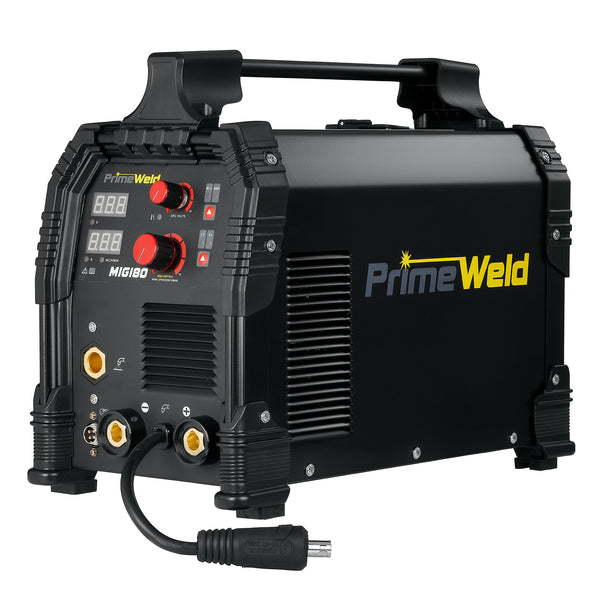
I’ve never used the AHP AlphaTIG, but many good reviews on it. The same people own Everlast. I ended up with a PrimeWeld for many reasons. A guy at work (pro welder) bought an Everlast at home as he’s trying to get a side thing going. He said he couldn‘t tell the difference between the Everlast and the Miller he uses at work.
 

gearhead1

Well-known member
Joined
Oct 14, 2013
Messages
1,935
Location
NC
This is what I have and I ended up getting the cooler also.


dnschmidt

Well-known member
Joined
Oct 3, 2014
Messages
7,282
Location
Phoenix, AZ
I would go with the Primeweld over the AHP and I own the AHP and am happy with it. The Primweld has preflow and postflow whereas the AHP only has postflow. The Primeweld also seems to have more adjustments. I'm basing this recommendation on several reviews commenting on both machines. The guy at the Fabrication Series prefers the Primeweld. Since they're about the same money that's the way I'd go.
 

BigMike782

Well-known member
Joined
Dec 19, 2008
Messages
1,867
Location
49120
DC TIG on aluminum is possible with argon but......there is no cathodic action to break up the oxide layer so it's like trying to poke a stick in a swimming pool with the cover on. I have done a small amount of DC TIG on aluminum with helium and it works well enough but requires 4043 filler.
The biggest issue at this point in time is that helium is on allocation and is likely not going to be available unless you have an contract to buy it.
 

speed bump

Well-known member
Joined
May 28, 2008
Messages
6,317
Location
Butte Montana
I would say you probably want a MIG welder. Why spend hours learning to use 3 appendages simultaneously, one in 3 dimensions, 1 sometimes in 3 dimensions, and 1 based on what roughly the other 2 are doing for what I'm guessing is less than a spool of wire worth of work?
 

dnschmidt

Well-known member
Joined
Oct 3, 2014
Messages
7,282
Location
Phoenix, AZ
Gentlemen: It's the Old Wizard a man who always wants everything for the cheapest possible price. He'd have a heart attack if he found out what a bottle of helium cost so stop with that nonsense. I stick with my recommendation for the Primeweld. TIG is a ***** to learn unless you just have a natural talent for it which few do whereas a trained monkey can do MIG. It's with aluminum that you're sort of stuck actually learning how to weld with TIG.
 
To avoid these ads, REGISTER NOW!
Top Bottom