To avoid these ads, REGISTER NOW!

LED Turn Signal “hyper flashing” 2011 Jeep

LSU

Well-known member
Joined
Dec 4, 2011
Messages
703
2011 Jeep Grand Cherokee.

Replaced the brake/signal lights With LEDs.

when signaling a turn the lights “hyperflash” with the engine running. With just ignition on but engine not running - no hyper flash?

1. Any idea why the lights hyper flash with engine running? But don’t hyper flash when just the ignition is on?

—-

2. Is changing the signal/flasher relay the solotion? If yes - suggestions/hints.

this is on my daughter‘s car, I’m visiting and my tools are 900 miles away.

I’m not much of a 12v electrician so amy tips or tricks are welcome.

thanks.
 
Last edited:
To avoid these ads, REGISTER NOW!

tak1313

Well-known member
Joined
Feb 4, 2018
Messages
652
I don't know about a 2011 Jeep specifically, but most modern cars don't use relays for the flasher anymore. They're just controlled by the BCM module. In fact, in most cars, the "tick, tick" sound is artificial because manufacturers found that consumers found it too weird to not hear the sound, formerly caused by the relay, with the flasher.

It may have to do with the LED driver on the bulb. LED bulbs sold to replace standard bulbs (as opposed to cars designed for LED bulbs from the beginning) have to have an LED driver built into the bulb unit. Some aren't designed so well, especially if it's a no-name type, with some just throwing a plain resistor in series with the bulb. The normal flash speed compared to speed with the engine running is likely because the bulb gets 14v plus with the engine running, but only battery voltage with just KOEO (key on/enging off).

So the increased voltage with engine running may be throwing the BCM off - especially because of the unexpected resistance value with poorly designed LED drivers in many "replacement" LED bulbs. This is especially true if it's just a simple resistor in series. As the feed voltage varies, so does the resistance, voltage, and current the BCM receives as "feedback."

That's my theory, and I'm sticking to it.
 

American Locomotive

Well-known member
Joined
Jan 8, 2017
Messages
10,959
Location
Rhode Island
There is no flasher to replace in a 2011 Grand Cherokee. All computer controlled.

The body computer measures the current going through the bulbs. If it doesn't detect enough current, it assumes a bulb is bad and causes them to flash fast to alert the driver. The LED bulbs do not draw enough current to keep the body computer happy. Who knows why it works with the engine off.

My recommendation: Put normal turn signal bulbs back in. They're cheap and last like 8-10 years. Just replace them all.
 

darkzero

Well-known member
Joined
Oct 20, 2011
Messages
3,326
Location
SoCal
They sell resistor "modules" that you can add to the vehicles wiring to add load to "fix" this. A fix for a problem that wouldn't have been a problem but I get it, people like to modify their vehicles, me included (I don't have LED turn signals though).

I wouldn't add them resistors to my car though. They sell "canbus LEDs" for this very reason. Everything is built into the bulb, no modifications to the vehicle necessary. Yeah they cost more but ya gotta pay. Me personally, for turn signals I'd just go with whatever bulb the car was designed for/came stock with.
 
OP
L

LSU

Well-known member
Joined
Dec 4, 2011
Messages
703
Yes, you need to add a resistor. Solves the problem

Go on Ebay or Amazon, super cheap. Use Wago style connectors for a quick fix.
She has the resistors. We wired one in, “solved” the problem but the resistor got to 214f. We decided way too hot to be near the tail light housing, etc.
 

RTM

Well-known member
Joined
May 13, 2019
Messages
13,176
Location
SF Bay Area
Get the bulb w built in resistor as noted above. Usually a better design, doesn’t get as hot.
 
  • Like
Reactions: LSU

mrvm

Well-known member
Joined
Feb 12, 2014
Messages
3,840
Location
PA
Installed canbus LED replacement bulbs on an older vehicle with no issues in the interior, head lights, tail lights and parking lights. Skip the turn signals and avoid all the extra work.
 

tak1313

Well-known member
Joined
Feb 4, 2018
Messages
652
She has the resistors. We wired one in, “solved” the problem but the resistor got to 214f. We decided way too hot to be near the tail light housing, etc.
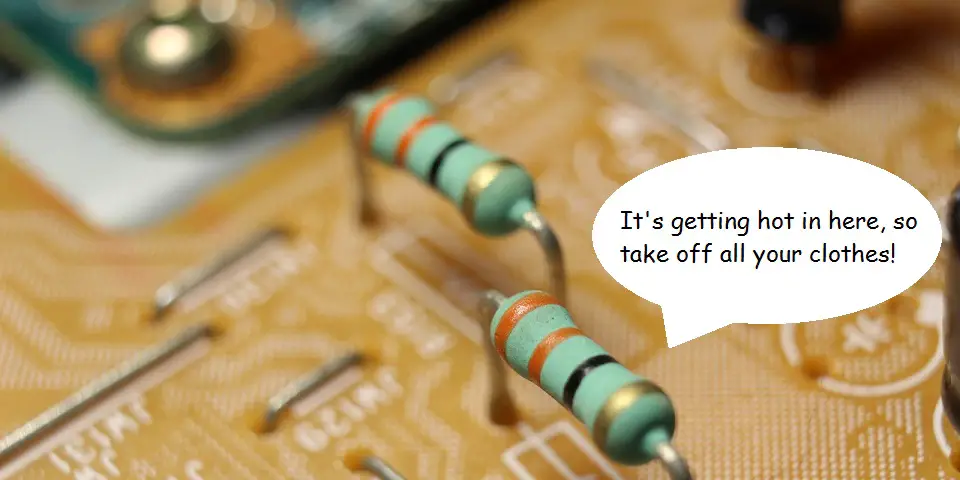
If a resistor is getting hot, it generally means the power rating is exceeded. For example, using a 1/4 watt resistor when the circuit needs a 1/2 watt (or more) resistor.

 
To avoid these ads, REGISTER NOW!

tak1313

Well-known member
Joined
Feb 4, 2018
Messages
652
Personally, I would just stick with regular bulbs in a car not made for LEDs unless it was an EV car/truck or MAYBE Hybrid (to save on drain), but most of those types are already designed with LEDs in mind (other than stuff like older Priuses (Prii, whatever).

Something like this may work if you really want to stick to LEDs

 
  • Like
Reactions: LSU

billford

Well-known member
Joined
Dec 26, 2016
Messages
81
Some years ago, I had something similar with a combination led signal/brake bulbs. They were also setting a trouble code in the engine computer and a transmission shift issue because of the high resistance in the brake light circuit.

I didn't want to spend too much time on it and wanted that vehicle out of the shop.

I just added small 194 incandescent bulbs in parallel to the led bulbs and hid the 194 bulbs behind the bumper where they could not be seen. This added enough load to the circuit.

Its a mickey mouse repair but it fixed the trouble code and the fast flashing signal light.

I know the leds should have been replaced with the stock bulbs, but the owner wanted to keep the leds because they looked cool.
 

VolvoRyan

Well-known member
Joined
Dec 29, 2019
Messages
1,339
Location
Kentuckiana, USA
Problem with resistors is that they do get stupid hot.

Does the Jeep use a dual filament bulb for the corners? If so, you're just going to melt housings.

-Ryan
 

Xcursion88

Well-known member
Joined
Apr 18, 2013
Messages
785
We've fixed these...finicky bastards
I'm not anywhere near the shop at present to look at notes and won't be for a couple days but...

Certain diodes and resistors is what we use and it functions exactly like the non LED bulb.

Moreover we've seen all kinds of weird ****. Your issue to having the dash indicators stay illuminated if not flashing...to fast flashing to no flashing whatsoever.
 
  • Like
Reactions: LSU

no704

Well-known member
Joined
Apr 27, 2016
Messages
5,221
I replaced the turn/brake bulbs on my ‘59 Dodge. Ran standard relays to control them.
 
OP
L

LSU

Well-known member
Joined
Dec 4, 2011
Messages
703
Problem with resistors is that they do get stupid hot.

Does the Jeep use a dual filament bulb for the corners? If so, you're just going to melt housings.

-Ryan
We installed them away from all plastic material.
 
To avoid these ads, REGISTER NOW!
Top Bottom