To avoid these ads, REGISTER NOW!

Garage Deck Stair Fasteners

mrvm

Well-known member
Joined
Feb 12, 2014
Messages
3,884
Location
PA
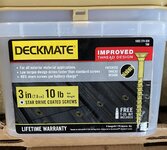
Have an old deck stair case off the side of the garage built 25 years ago. Replaced the treads and risers a few years ago and looks like they will need to be replaced again. Seems todays pressure treated (PT) lumber ain't as long lasting as the PT lumber from the old days probably due to less toxic chemicals. Anyway my question is focused on the fasteners, namely Star Drive Coated Screws that state for "Exterior Material Applications". The attached pictures show the condition of these screws that rusted away from either the environment or the chemicals in the new PT wood or the chemicals in the old PT stringers. The deterioration is so bad that removal is impossible and there will be loose treads.

Any recommendations for a better longer lasting fasteners? Galvanized lag screws or galvanized bolts or galvanized nails?
 
To avoid these ads, REGISTER NOW!

Hank11

Well-known member
Joined
Aug 19, 2019
Messages
1,173
Location
Tennessee
Stainless steel.
They cost more but will solve your problem.

Second choice are screws rated by the manufacturer for use in pressure treated wood. Not just any exterior screw will work as you have discovered.
 

gsmith22

Well-known member
Joined
Jul 14, 2015
Messages
337
Location
Central NJ
Stainless steel.
They cost more but will solve your problem.

Second choice are screws rated by the manufacturer for use in pressure treated wood. Not just any exterior screw will work as you have discovered.
this is the solution. today's pt wood is just as good as the ~ pre2003 pt wood. but while the chemical is better for the environment, it is more coroisve to steel fasteners. coatings wear off, galvanization/zinc gets preferentially corroded, and then the steel gets corroded. Hilti won't even warrant their pt rated fasteners for more then 10 years (same is true of their G90 metal connector plates)! use stainless fasteners and never think about it again. 304 (18-8) works for most situations. 316 if you are near an ocean/salt water body. order online. only use the coated stuff for things you don't plan on keeping for more than a decade
 

K'ledgeBldr

Well-known member
Joined
Aug 22, 2011
Messages
1,925
Location
Johns Creek, GA
Regardless of material used for fasteners, their placement can also be a large determining factor. Those that are exposed to direct Sun and rain will fail faster than does that aren’t.

When building decks; rails, caps, treads, and sometimes the decking itself is secured/fastened from below/underneath. Whenever there is a penetration in wood that is directly exposed to the elements- water works it way inside and starts to deteriorate not only the wood but also the fastener.

You can also retard that deterioration with a good maintenance program of an oil based penetrating sealer.
 
To avoid these ads, REGISTER NOW!

Sumboodie

Well-known member
Joined
Mar 20, 2021
Messages
11,041
Location
AK

Sumboodie

Well-known member
Joined
Mar 20, 2021
Messages
11,041
Location
AK
Regardless of material used for fasteners, their placement can also be a large determining factor. Those that are exposed to direct Sun and rain will fail faster than does that aren’t.

When building decks; rails, caps, treads, and sometimes the decking itself is secured/fastened from below/underneath. Whenever there is a penetration in wood that is directly exposed to the elements- water works it way inside and starts to deteriorate not only the wood but also the fastener.

You can also retard that deterioration with a good maintenance program of an oil based penetrating sealer.
Maybe worth caulking over the screw tops?
 

gsmith22

Well-known member
Joined
Jul 14, 2015
Messages
337
Location
Central NJ
with all due respect to the last few posts/posters, the issue with the OP's corroded screws is almost certainly not due to direct contact with precipitation (rain, snow, ice, etc.). These screws are embedded in the lumber and as you can see in the OP's picture (post 2), the corrosion is across all of the screw's surfaces from bottom to top and not just corrosion of the screw heads (the only part potentially exposed to the atmosphere). That is galvanic corrosion which is the primary means of corrosion for fasteners used with pressure treated lumber. Before 2003, the pressure treatment was Chromated Copper Arsenate (CCA) which contained chromated arsenicals (chemical compounds of chromium and arsenic). Although the EPA mainly wanted the arsenic gone, the chromium got removed too (since they were chromated arsenicals after all). The chromium provided protection from galvanic corrosion of embedded fasteners. Without the chromium, galvanic corrosion took off and initially fasteners were failing at very high rates in short time periods. So extra heavy zinc/galvanizing compunds were developed for exterior use with pressure treated lumber as well as these coated fasteners.

The primary thing to keep in mind is galvanic corrosion occurs based on the galvanic series. Exterior lumber will always have some moisture content (your electolyte) and pressure treated lumber is always going to have a copper based solution (because bugs hate it and its relatively cheap). To prevent galvanic corrosion, you either have to seperate your steel faster from the copper (your coated screws do this), provide a material that is more noble so the galvanic corrosion preferentially destroys it instead of the fastener (this is your zinc galvanizing), or make the fastener our of a material that is either more anodic than copper or barely more noble than copper so the corrosion rate is extremely slow. Things that are more anodic than copper are gold, platinum, silver, nickel, titanium - no one is making/using these for pressure treated lumber fastenres. Stainless steel is just slightly more noble than copper so while there will be some galvanic action, the rate of corrosion is so slow as to create no practical corrosion to be concearned about.

If you want the fasteners to last in pressure treated lumber, use stainless steel. Coatings come off, galvanizing (eventually) is corroded away and once the coating is scratched or galvanizing corroded away, you have a plain steel screw. The only reason to use 316 SS would be if your electrolyte has chlorides (ie salt from the oceans). otherwise 304 is fine.
 

240sxguy

Well-known member
Joined
Jan 6, 2009
Messages
1,158
Location
Madison, wi
I agree with the stainless sentiment. I built some decking with PT wood for our pier in northern WI that sees all sorts of weather and not too surprisingly three years later it still looks great. I'd recommend it so you don't have to do it again in the future.
 

MoonRise

Well-known member
Joined
Nov 5, 2010
Messages
4,045
Location
NJ
Couple of points.

First, PT lumber.

Yes, the 'new' PT lumber does not seem to last like the old CCA PT lumber did. Part of that IMNSHO is that the old CCA PT lumber was all pretty much treated to a PT level rated for ground contact or burial (0.40 lb per ft3) because the CCA was not too expensive by itself and most of the treatment cost was the processing and not the CCA raw cost. And if you wanted/needed a higher protection level (wood foundation, utility poles, docks and piling, etc) you could get that higher level of treatment and protection.

The 'new' PT treatment chemicals are more expensive than the old CCA was. So most of the new PT lumber is treated to a lower level of treatment chemicals and most of what I've seen in the lumber yards is only rated for 'above ground use' and NOT rated for ground contact or for burial conditions (like a fence post in the ground, or a board placed on the ground but not buried).


You CAN get the new PT lumber rated for ground contact or for burial, but you have to look for it and probably order it and read the labels.

Next, fasteners and hardware.

Like gsmith22 mentioned, the 'new' PT chemicals usually contain more copper. The new treatment chemicals are thus usually way more corrosive to metals used for fasteners and brackets and metal flashing (do NOT use aluminum flashing with the new PT lumber, copper flashing $$$$ or non-metallic flashing only!). So much more corrosive that companies like Simpson (Strong-Tie) had to try and educate their customers (aka contractors AND end customers) about the issue and that they couldn't just use the old style/type coated hardware with the new PT lumber.

How corrosive was/is the new PT lumber to hardware? IIRC, brackets and fasteners that Simpson tested were failing in about 6 months!

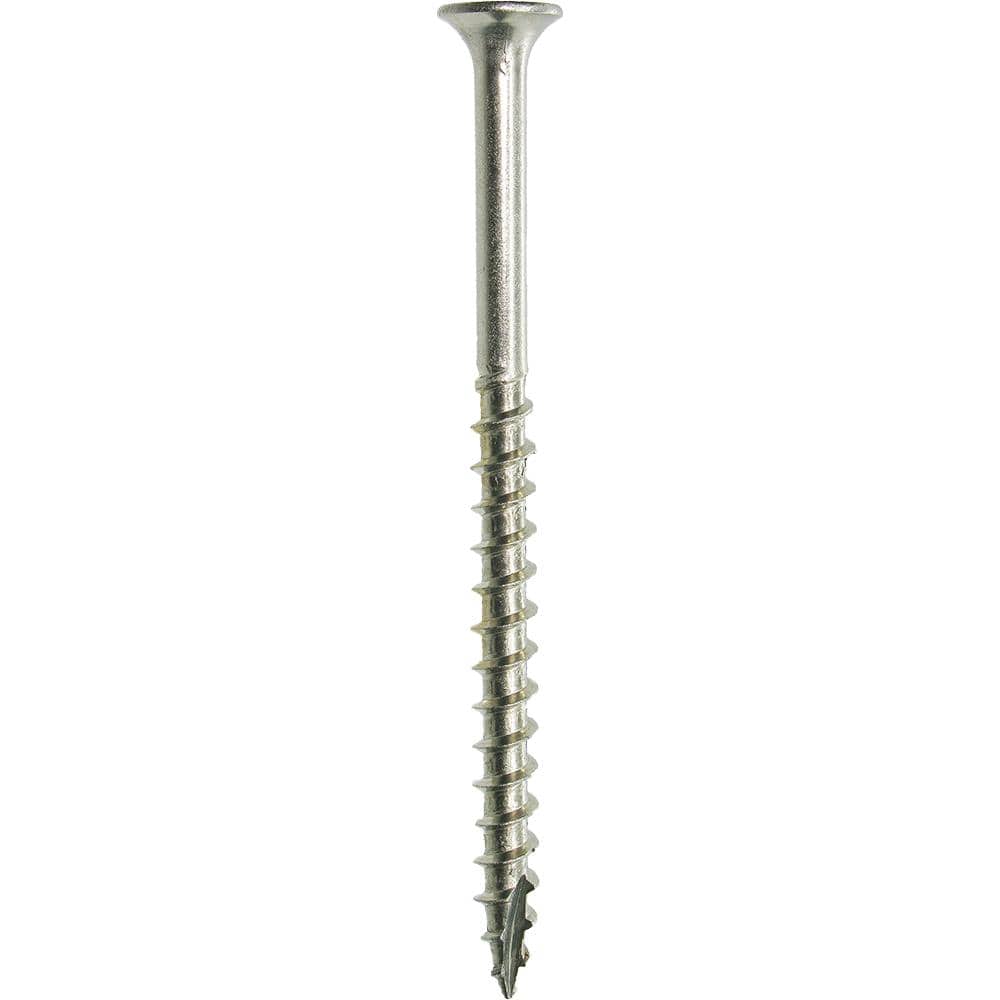
Short answer to what fasteners to use with the new PT lumber is stainless steel. 304 for most use cases, but 316 if within ~5 miles of the coast.

Do NOT mix stainless fasteners and galvanized hardware/brackets (or vice versa). Use all stainless or all HDG/G185 galvanized, don't mix the different materials. Even galvanized hardware will corrode with the new PT lumber, but the heavy coatings (G185 or HDG) -may- last just long enough to give an 'acceptable' life.


SUMMARY: Use stainless hardware (brackets, fasteners, etc) to make it last.


A deck construction guide from Simpson:


You may (should?) contact your local building Code department and find out what the requirements and recommendations are for your project. Decks and stairs are NOT something to just wing it. Some AHJ are just looking for the permits fees, others will be helpful to varying degrees to help you and your project succeed.
 
OP
M

mrvm

Well-known member
Joined
Feb 12, 2014
Messages
3,884
Location
PA
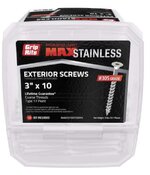
Thanks for everyones input. Got some 305 stainless screws. Expecting much longer life for the stairs. I’m not close to any ocean air so the 305s should be the ticket. Will probably repurpose the old Deckmate screws for some interior repairs as they definitely don’t last with new PT lumber and hope this post helps others too B420E291-7FED-4AE1-B6C2-58AB8B060CD8.jpeg
 

Zeke

Well-known member
Joined
Aug 13, 2009
Messages
17,176
Location
Long Beach CA, the sewer by the sea.
You may (should?) contact your local building Code department and find out what the requirements and recommendations are for your project. Decks and stairs are NOT something to just wing it. Some AHJ are just looking for the permits fees, others will be helpful to varying degrees to help you and your project succeed.
Where do you find these 'helpful' inspectors?
 
To avoid these ads, REGISTER NOW!
Top Bottom