To avoid these ads, REGISTER NOW!

Please educate me on car battery testing

toolenthusiast

Well-known member
Joined
Jan 21, 2017
Messages
723
There are a lot of highly knowledgeable people in this thread, and it’s great to read all these details about the theory and practice of battery testing.

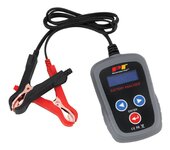
That being said, I’m not going to start dragging out my oscilloscope for battery tests. I can report that I’ve been very satisfied with this cheap tester from O’Reilly:
F0E52813-2417-4073-AB42-B1E52BB7C071.jpeg

I think that my experience with battery testing is much different than most people. DIYers get a chance to monitor vehicles over a long period of time, but they only work on a handful of vehicles. Mechanics work on all sorts of cars, but they generally only have their hands on the vehicles for hours or days. I work in a body shop, which is much different. We routinely have possession of customer vehicles for 2 months or more (especially with today’s supply chain issues). I can use my inexpensive tester when the car comes in the shop and have a very good idea of a battery’s real, functional level of health: will it be OK if the car sits for 2 weeks waiting on parts? Will it die if I need to keep the car at KOEO for a while? Was the battery internally damaged by the collision?

It’s never given me a false positive or a false negative that I’ve been able to identify. The thing has a charging system test built in, too. And it’s only $40.
 
To avoid these ads, REGISTER NOW!

theoldwizard1

Well-known member
Joined
Feb 22, 2011
Messages
43,204
Location
SE MI
Over 10 years is impressive. Last week a customer brought a pair of group 31s out of his Deere tractor that finally gave up......the date scratched in them was almost exactly 10 years to the date. I about fell over. If I see 7-8 years out of a battery around here I am impressed, 10 years is an act of God.
Keep it CLEAN ! Check the fluid level. That is all I ever did !
 

F-22

Well-known member
Joined
Jan 23, 2022
Messages
1,830
Over 10 years is impressive. Last week a customer brought a pair of group 31s out of his Deere tractor that finally gave up......the date scratched in them was almost exactly 10 years to the date. I about fell over. If I see 7-8 years out of a battery around here I am impressed, 10 years is an act of God.
Replaced the battery in our Renault Clio in 2018 and it had the original battery from 2006. Similar with our Mercedes Sprinter van, replaced the original 2008 battery in 2020 (just before the lockdowns). OEM batteries just usually seem to be much better, and I don't buy cheap ones (OEM mercedes one was varta, I bought another varta... I'll see if it lasts as long).
 

johninct

Well-known member
Joined
Dec 21, 2010
Messages
2,596
Does anyone use a hydrometer anymore?
I used one a few years ago before replacing a fairly new battery that just went out of warranty to just be sure. It was my fault that I did not use the machine for a year after installation and should have discovered it sooner.
 

Mr_B

Well-known member
Joined
Nov 21, 2016
Messages
5,378
Location
Reading
Big issue today with batteries is quality not what is was 10 years ago & engineered sleeep parasitc draw not great and gives batteries hard life on many vehicle models, aftermarket has some awful junk and OEM pretty hit & miss for the top dollar price tags .
From testing perspective I don't see any method as a best method for all scenarios, you kind of best mixing old and new test tools to fit requirements and using good old gumption along with battery age/brand to make informative decisions .
I had customers batteries pass on midtronics but battery age and real world conditions the battery could have issues starting vehicle & using bit of gumption you know what likely best thing do .
Midtronics tools are useful in pro environment as fast and give good initial indication with only 10 15 minutes invested.
Personally I don't waste too much resources diagnosing battery, I rather check charging system, cables and initial parasitic draw seems acceptable and if customer keen on reliability battery gets replaced if health state suspect enough of hindering on the reliability.
Money better spent on new quality battery than prolonged diagnosis, when junky cheap battery brand or it 4+ years old even more so .
A knowledgable on the ball vehicle owner should be able conclude battery viability purely on issues age and basic tests, potential low cost of replacent vs in depth diagnosis makes path you follow fairly simple unless more complex scenario like a 2nd new battery seems also likely faulty !
 

nbpt100

Well-known member
Joined
Oct 19, 2016
Messages
2,301
Location
Massachusetts
This is a long thread and did not read everything. so I apologies if I am being repetative. If all you have is a DVM you can still do a lot of testing in terms of battery and alternator testing. I went throught this a few years back and did not want to purchase a specific piece of equipment. Look at Chris Fix or Eric the Car guy for good videos on YouTube for clear instructions. I am not sure if you wanted to buy a specific tool to do this or you just wanted some quick answers.
 
OP
C

cout

New member
Joined
Oct 10, 2022
Messages
3
First off, Midtronics and the like do not test capacitance. It's a shame you don't understand how they work or what they do, but they actually draw higher currents than carbon testers, while doing less damage to your batteries.

Second, testing a battery after the headlights are on is woefully out of date advice, and tells you little about the readiness of a battery to start a vehicle. Modern cars are getting smaller and smaller batteries every year, for cost savings, to cut weight for better fuel economy, to save space under the hood and to increase battery sales at dealerships. Carbon and drawdown testing of smaller batteries goes a long way to shortening their lifetimes, particularly when modern batteries are optimized for high CCA but low reserve capacity.


A hydrometer tells you nothing for certain about the condition of a battery other than its state of charge. You can get that more safely from a voltmeter. They're also pretty finicky about temperature. I own and use ATC refractometers in places where hydrometers used to be appreciated (for automotive purposes, I use a refractometer on antifreeze).

I was wondering about capacitive vs conductive, because I've read so many old posts that mention capacitance that I even started to get the two terms mixed up in my head. I understand that in conductive testers "a specified AC voltage is capacitively coupled to the test cell or battery and the resulting AC current flowing through the unit under test is measured" (https://cdtechno.com/wp-content/uploads/2020/04/41_7271_0512.pdf). But an impedance tester also drives current through a capacitor coupled to the battery. Does that mean that "capacitive tester" is a misnomer, or is there really such a thing as capacitive testing?

EDIT: forgot to include a link to the pdf I was reading
 

mervyn

Well-known member
Joined
Apr 5, 2019
Messages
909
Location
Missouri
I don't think I have ever owned a battery tester. Years ago I would just let em die a natural death. Last 10 years or so I replace em at about the five year mark. Had one last six years in Texas. Current battery in pickup is 4 years old so it may croak any day.
 
To avoid these ads, REGISTER NOW!

engineer2

Well-known member
Joined
Dec 13, 2009
Messages
11,811
Location
Chicago burbs
^ failed is failed in my book, whether low on charge or a bad cell.
Keep in mind they got pallets of used batteries from retail stores. A tech sometimes tries to sell the customer a new battery and a new alternator if they find the battery is partially discharged. Makes money, saves time, customer's car is now reliable (in theory).
 
Last edited:

2ndGearRubber

Well-known member
Joined
Mar 24, 2014
Messages
14,185
Location
Pittsburgh
Keep in mind they got pallets of used batteries from retail stores. A tech sometimes try to sell the customer a new battery and a new alternator if they find the battery is partially discharged. Makes money, saves time, customer's car is now reliable (in theory).

Uh, why would you sell an alternator if it's working? To put on a junk reman you'll eat under warranty? The LAST thing I want to do is replace a perfectly good OE part.

I don't **** around with charging nonsense because the batteries invariably die soon after anyways and now they're bitching about it. Batteries die. When unable to do their job,I replace them.
 

Max

ALLIANCE MEMBER
Joined
Jun 16, 2018
Messages
3,340
Location
Georgia
I was wondering about capacitive vs conductive, because I've read so many old posts that mention capacitance that I even started to get the two terms mixed up in my head. I understand that in conductive testers "a specified AC voltage is capacitively coupled to the test cell or battery and the resulting AC current flowing through the unit under test is measured" (https://cdtechno.com/wp-content/uploads/2020/04/41_7271_0512.pdf). But an impedance tester also drives current through a capacitor coupled to the battery. Does that mean that "capacitive tester" is a misnomer, or is there really such a thing as capacitive testing?

EDIT: forgot to include a link to the pdf I was reading
Conductance is how well something carries current and is the inverse of resistance. Every battery has an internal resistance that limits current, so the tester is measuring conductance and inverting it for resistance, or measuring resistance and inverting to get conductance.

Capacitors/capacitance is the ability to store charge. So for example, in HS shop class we’d charge up capacitors to 100V and then leave them on a friends bench. When the friend picked up the cap if they touched both leads they’d get a shock. Anyway, when hooked up to DC a cap charges and that is it - it conducts current as it charges but once it charges there is no current flow. If you do the same with an AC signal (assuming frequency is ok) the cap will alternately charge and discharge - effectively passing the AC signal.

What they are telling you about the tester is that they are using an AC signal for the test. As the battery is a DC “signal”, they are using a capacitor to isolate the DC from the AC. That capacitor is completely separate from the conductance/resistance they are trying to measure…
 

engineer2

Well-known member
Joined
Dec 13, 2009
Messages
11,811
Location
Chicago burbs
Uh, why would you sell an alternator if it's working?
Dishonest shops. Plenty of them around here. Go in with a low battery because you left your interior lights on, come out with all new parts.

Also some alternators have a fairly predictable lifetime. Recently replaced a good alternator in a 130k mile CR-V the at the owner's insistence because they wanted future reliability. I objected, but was overruled.

The original question came about as to why some replaced batteries were actually good but low in charge. Back then they didn't have a way to test a partially discharged battery, so it got replaced.
 

richfinn

Well-known member
Joined
Jan 29, 2011
Messages
4,817
Location
Leeds, Yorkshire, England
The biggest problem with battery testing is that batteries can fail in different ways for different reasons, and it can be time consuming/frustrating to figure out exactly what has gone wrong inside a sealed plastic box. Add in the various types of battery chemistry and construction available and it becomes more of a science to accurately diagnose them.

Luckily we don't really have to as somebody designed a range of tools to do it for us.
(Obviously nothing is 100% accurate and they can be misleading occasionally but generally if the procedure is followed correctly/common sense is applied they can identify most faults or serviceable batteries suitable for recharge)

I know this because over the years I have seen the data for reattending flat battery jobs and warranty replacement (we are one of the UKs largest battery retailers amongst other things) and I spent three months training staff to use them.

Midtronics testers (or at least the expensive models with current clamps and temperature compensation) take all this data and the various failure modes into account and analyse quite a few different things to make an informed decision (which is really what we all do using other methods anyway)

Internal resistance (a calculation based on battery spec/temp. entered by user)

Rest/cranking Voltage

Cranking speed/current

AC ripple/charging voltage

Battery current absorption (over a 5 minute sample period)

Parasitic drain current

The algorithm it uses to calculate the results can also be upgraded to take into account trends they spot in the data

Not really a DIY tool as your never going to sell enough batteries to recoup your cost, they exist purely for high volume battery testing and warranty purposes (they can also monitor performance of the technicians BTW for review by managers)

But if you like performance data and the science behind test equipment they are quite interesting tools.
 

joel63

Well-known member
Joined
Oct 9, 2012
Messages
1,909
Location
Central FL
I have found this thread of high interest to me.
I have read all the posts and reread some of them twice.

For many years automotive batteries or rather how to reliably test them have sent me on a quest to find "The One" that would do it all. I lusted after the Sun VAT's, definitely had no $$$$$ for one of those. I never knew what one would cost and I never asked.

Here's a short history of battery service tester that I've I owned and used through the years.

As I pursued learning how to maintain and fix my cars, as needed I first relied on the United Delco Tester. But still I wasn't fully satisfied; I still felt that I wasn't getting the full picture. (Sun VAT still hangin around in my mind)

1. United Delco MO-451 Tune-Up Tester. Tach and Dwell with a 16 volt and TVRS CABLE tester (Purchased new 1968 $45)
From the Instruction Manual: A fully charged 12 volt battery should not drop below 9.5 volts and a 6 volt batter should not drop below 4.75 volts when cranking. Readings below these figures indicate trouble in the battery or starting circuit, and the battery and starting circuit should be checked carefully to determine the cause.

Somewhere along the way AMP HOURS gave way to CCA.

2. Snap-on YA271 Battery/Alternator Tester 125 amp load which I refer to as the toaster. Hand held tester shown in post. ((probably by Assciated). (Purchased new 1989)

The YA271 tester looked promising, but I still had some doubts since it only imposed a 125 amp load on the battery. Well, I thought, it would probably work for a quick check. (Not really taking into account the role of completely charged battery)

3. Snap-on MT1426 Multimeter with MT1427 Portable Load Control Carbon Pile Capacity 500 amps


When I saw number 3, I just had to have it. And I got it and all the thoughts of the Sun VAT faded away. I'd finally arrived and was ready to test batteries professionally. Got it mounted on a matching cart for a nice set up. Got busy with life and moving and all that stuff and never really used it much.

4. Snap-on EECS304B1 MicroVat Tester Complete automotive battery, alternator, and starter system tester. Impedance type tester (Purchased new 2003 Was gifted to me.)

I had high hopes for number 4. I used a few times, but for some nagging reason, I just didn't have faith in it. Don't really know why. (Maybe operator brain block) Too many AA batteries.

Afterwards I kept reading and searching around still looking for "THE ONE." I looked at Medtronic's. They had some many models that I became thoroughly confused. Easy for me. So I stopped looking at them.

5. Also used a Snap-on Vantage scope. (don't have it anymore)
I ran tests like the Pico Battery Tester does, but without the amps measurement.

From what I have gathered from talking to equipment dealers, the industry standard for testing automotive batteries has changed radically. Not sure exactly when, but everything seems to depend and be focused on battery voltage alone. CCA, SOH, STATE OF CHARGE, Bat temp, mOhms, etc. Pass / Fail doesn't always tell the whole story.

6. Snap-on EECS350 Battery System Tester Enhanced (Purchased new 2021)

Just as I have done in the past, I thought I'd take a look at the new stuff.

Is number 6 "THE ONE"? Who knows? Is there really is a tester that would fit the bill as "THE ONE)?
My stepson works for Firestone and uses one by Autel, and it frequently comes up with good CCA and Battery Good Recharge.

While we're at it, there some huge changes coming soon, but that's another story.

With all that said, I wish the OP the best of luck in finding "THE ONE" that will meet his needs.

I want to finish this post by giving credit to 2ndGearRubber, bwinger, zmotorsports for their input. I fully subscribe to their approach on testing and replacement Those who mentioned replacing the battery if there's any doubt, hat's off to you. Avoiding being stranded is what we after here. Right?
 

2ndGearRubber

Well-known member
Joined
Mar 24, 2014
Messages
14,185
Location
Pittsburgh
I have found this thread of high interest to me.
I have read all the posts and reread some of them twice.

For many years automotive batteries or rather how to reliably test them have sent me on a quest to find "The One" that would do it all. I lusted after the Sun VAT's, definitely had no $$$$$ for one of those. I never knew what one would cost and I never asked.

Here's a short history of battery service tester that I've I owned and used through the years.

As I pursued learning how to maintain and fix my cars, as needed I first relied on the United Delco Tester. But still I wasn't fully satisfied; I still felt that I wasn't getting the full picture. (Sun VAT still hangin around in my mind)

1. United Delco MO-451 Tune-Up Tester. Tach and Dwell with a 16 volt and TVRS CABLE tester (Purchased new 1968 $45)
From the Instruction Manual: A fully charged 12 volt battery should not drop below 9.5 volts and a 6 volt batter should not drop below 4.75 volts when cranking. Readings below these figures indicate trouble in the battery or starting circuit, and the battery and starting circuit should be checked carefully to determine the cause.

Somewhere along the way AMP HOURS gave way to CCA.

2. Snap-on YA271 Battery/Alternator Tester 125 amp load which I refer to as the toaster. Hand held tester shown in post. ((probably by Assciated). (Purchased new 1989)

The YA271 tester looked promising, but I still had some doubts since it only imposed a 125 amp load on the battery. Well, I thought, it would probably work for a quick check. (Not really taking into account the role of completely charged battery)

3. Snap-on MT1426 Multimeter with MT1427 Portable Load Control Carbon Pile Capacity 500 amps


When I saw number 3, I just had to have it. And I got it and all the thoughts of the Sun VAT faded away. I'd finally arrived and was ready to test batteries professionally. Got it mounted on a matching cart for a nice set up. Got busy with life and moving and all that stuff and never really used it much.

4. Snap-on EECS304B1 MicroVat Tester Complete automotive battery, alternator, and starter system tester. Impedance type tester (Purchased new 2003 Was gifted to me.)

I had high hopes for number 4. I used a few times, but for some nagging reason, I just didn't have faith in it. Don't really know why. (Maybe operator brain block) Too many AA batteries.

Afterwards I kept reading and searching around still looking for "THE ONE." I looked at Medtronic's. They had some many models that I became thoroughly confused. Easy for me. So I stopped looking at them.

5. Also used a Snap-on Vantage scope. (don't have it anymore)
I ran tests like the Pico Battery Tester does, but without the amps measurement.

From what I have gathered from talking to equipment dealers, the industry standard for testing automotive batteries has changed radically. Not sure exactly when, but everything seems to depend and be focused on battery voltage alone. CCA, SOH, STATE OF CHARGE, Bat temp, mOhms, etc. Pass / Fail doesn't always tell the whole story.

6. Snap-on EECS350 Battery System Tester Enhanced (Purchased new 2021)

Just as I have done in the past, I thought I'd take a look at the new stuff.

Is number 6 "THE ONE"? Who knows? Is there really is a tester that would fit the bill as "THE ONE)?
My stepson works for Firestone and uses one by Autel, and it frequently comes up with good CCA and Battery Good Recharge.

While we're at it, there some huge changes coming soon, but that's another story.

With all that said, I wish the OP the best of luck in finding "THE ONE" that will meet his needs.

I want to finish this post by giving credit to 2ndGearRubber, bwinger, zmotorsports for their input. I fully subscribe to their approach on testing and replacement Those who mentioned replacing the battery if there's any doubt, hat's off to you. Avoiding being stranded is what we after here. Right?

Ugh, "good/recharge" and "recharge/retest" are some of the most frustrating words.

Generally speaking, for the home user, the lowest voltage during a cranking event using min/max on a meter is likely the best method. For the cost and efficiency of the test. Downside is it doesn't test "loose" batteries. So they need to be installed in a suitable vehicle. For instance using the battery for a 6.0L V8 strapped into a 1.5L Honda fit isn't going to give an accurate load from which to test.

The main issue with using a basic digital storage lab scope is experience. I don't test enough batteries to remember what a minimum voltage under cranking spec is. I recall a member here telling me any battery that goes under 9.5 or something under cranking was junk. Well, that's a decent rule of thumb with a meter sampling maybe 4 times a second? I believe my pico 4425 is in the 400 million of samples per second range. Not hard to drop below 9.5 for .000001 seconds. The same way a battery can briefly produce over 1000amps cranking over a 4cyl Honda accord. Without prior testing and notes, this system has problems.

Now if you have a guided test? With temp, CCA, etc as values to enter? Then the software can make sense of the subtleties for you. If one is not going to test some known good batteries with a scope prior, testing a questionable battery will produce little value. That said, if one wants to nerd-out? Dude a lab scope will blow your mind. And putting in the homework on some known good cars will pay dividends for future questionable batteries and starters. Alternators? Well that's a scan tool required job on a lot of cars, in addition to the lab scope. Our midtronics loves to say "no alternator output". Well, target voltage is being met, the alt and pcm are talking fine on their data line, so actually the output is just peachy. STFU midtronics.


I recall reading a thread on the picoscope forums, prior to buying my 4425. I had some experience with a 4 channel modis, but was running into design limitations of that tool vs what I wanted to do. A battery test, relative compression, power balance, all as guided tests were of major interest to me. One of the admins or similar, a rep of pico, stated something to the effect of "there will never be a diffinitive single point test which can accurately predict battery service life". I have been very impressed with their tool for battery testing. Although it has also said "no alt output". They are smart enough to put in a disclaimer about "smart" charging systems and due diligence.

When in doubt, swap it out.
 

joel63

Well-known member
Joined
Oct 9, 2012
Messages
1,909
Location
Central FL
Ugh, "good/recharge" and "recharge/retest" are some of the most frustrating words.

Generally speaking, for the home user, the lowest voltage during a cranking event using min/max on a meter is likely the best method. For the cost and efficiency of the test. Downside is it doesn't test "loose" batteries. So they need to be installed in a suitable vehicle. For instance using the battery for a 6.0L V8 strapped into a 1.5L Honda fit isn't going to give an accurate load from which to test.

The main issue with using a basic digital storage lab scope is experience. I don't test enough batteries to remember what a minimum voltage under cranking spec is. I recall a member here telling me any battery that goes under 9.5 or something under cranking was junk. Well, that's a decent rule of thumb with a meter sampling maybe 4 times a second? I believe my pico 4425 is in the 400 million of samples per second range. Not hard to drop below 9.5 for .000001 seconds. The same way a battery can briefly produce over 1000amps cranking over a 4cyl Honda accord. Without prior testing and notes, this system has problems.

Now if you have a guided test? With temp, CCA, etc as values to enter? Then the software can make sense of the subtleties for you. If one is not going to test some known good batteries with a scope prior, testing a questionable battery will produce little value. That said, if one wants to nerd-out? Dude a lab scope will blow your mind. And putting in the homework on some known good cars will pay dividends for future questionable batteries and starters. Alternators? Well that's a scan tool required job on a lot of cars, in addition to the lab scope. Our midtronics loves to say "no alternator output". Well, target voltage is being met, the alt and pcm are talking fine on their data line, so actually the output is just peachy. STFU midtronics.


I recall reading a thread on the picoscope forums, prior to buying my 4425. I had some experience with a 4 channel modis, but was running into design limitations of that tool vs what I wanted to do. A battery test, relative compression, power balance, all as guided tests were of major interest to me. One of the admins or similar, a rep of pico, stated something to the effect of "there will never be a diffinitive single point test which can accurately predict battery service life". I have been very impressed with their tool for battery testing. Although it has also said "no alt output". They are smart enough to put in a disclaimer about "smart" charging systems and due diligence.

When in doubt, swap it out.
This YT might help clear up some questions for those who still in the dark.
2ndgearRubber I use the scope test that starts at 7 minute mark.
Here's another one with the scope test.
 

richfinn

Well-known member
Joined
Jan 29, 2011
Messages
4,817
Location
Leeds, Yorkshire, England
Some pics of my midtronics tester today
 

Attachments

  • 20221014_134010.jpg
    20221014_134010.jpg
    853.4 KB · Views: 25
  • 20221014_134137.jpg
    20221014_134137.jpg
    689.9 KB · Views: 26
  • 20221014_135623.jpg
    20221014_135623.jpg
    754.8 KB · Views: 26
To avoid these ads, REGISTER NOW!
Top Bottom