To avoid these ads, REGISTER NOW!

broken off exhaust flange stud

stickshift

Well-known member
Joined
Nov 16, 2011
Messages
1,236
Location
northeastern US
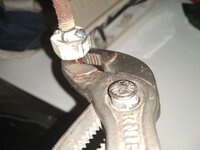
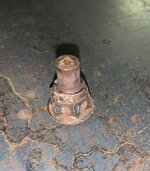
On a 5th gen (2002-2006) Camry, I have a small exhaust leak at the flanges where the exhaust manifold and catalytic converter assembly mates to the down pipe assembly. I had replaced the gasket between those two flanges last year, and I figured tightening up the flange nuts a little bit would get a good seal. Well, as you can tell from the thread title, one of the studs snapped. Pics below. The broken off piece of stud + the nut are from underneath the car (on the side of the down pipe flange). The threaded stud is a pic taken from the top, where the stud comes through the flange of the exhaust manifold/catalytic converter assembly.

Also below are diagrams of down pipe assembly (#17410) and manifold/cat, as well as a pic of what an intact stud looks like - I don't have the tool to install it (though I guess if there was enough room on the end it's installed from, I could put two nuts on it and use that to install it). But since there is nothing but a threaded stud on the top side (i.e., no bolt head or nut), I assume the threads are sufficient to achieve the required compression of the two flanges. So once I get this broken off stud out, I guess I can replace it from below with the proper size metric bolt and not have to fuss w/ installing a replacement stud?

As for getting the stud out, I'm thinking of welding a nut onto the threaded stud sticking out on the top. I've got a 120v flux core welder, and I'm a newb welder. I can probably get the gun down in there to weld without removing the catalytic converter's heat shield or the cat itself. And then maybe with extensions and a wobble bit, I can get a socket on the nut (not enough room down there to turn a wrench without removing the cat).

And if that fails, I guess try to use a bolt extractor from below (the broken off side). I have M42 cobalt drill bits - are these hard enough to drill exhaust flange bolts?
 

Attachments
  • 2022-11-12 18.31.06.jpg
    2022-11-12 18.31.06.jpg
    1.5 MB · Views: 212
  • 2022-11-12 18.33.24.jpg
    2022-11-12 18.33.24.jpg
    457.6 KB · Views: 203
  • a1_172985K.jpg
    a1_172985K.jpg
    93.8 KB · Views: 193
  • a1_173522G.jpg
    a1_173522G.jpg
    90.8 KB · Views: 159
  • 0b611a284039439608a1873b36f59976.jpg
    0b611a284039439608a1873b36f59976.jpg
    13.2 KB · Views: 155
Last edited:
To avoid these ads, REGISTER NOW!

joel_400

Well-known member
Joined
Oct 16, 2022
Messages
405
Location
Nw ohio
Before you weld a nut on top make sure there isn't a non threaded portion of the stud on the other side! Sometimes studs will have a stop in the middle so they can be snuggled up prior to installation of the other part and nut. If you weld a nut to the top and try getting it out it may not come out due to that. If you don't want to drop the whole flange I would try to drill it out...worst case just drill it out and through bolt it. I would assume if it's leaking though you may want to replace the gasket as well though. Hopefully if you do the others don't break as well trying to get them off. The best luck I've had welding nuts on them is first weld a washer to the stud so you make sure you penetrator into the stud well. Then weld the nut to the washer and stud. You can weld inside the center of the nut then put a few small welds at the corners of the nut and washer where they meet. Just not too big of welds there so you can still get the socket on. Let the welds cool then heat the ear of the manifold with a torch to get the manifold expanded enough to let the studs back out. Good luck!
Joel
 
OP
S

stickshift

Well-known member
Joined
Nov 16, 2011
Messages
1,236
Location
northeastern US
Before you weld a nut on top make sure there isn't a non threaded portion of the stud on the other side! Sometimes studs will have a stop in the middle so they can be snuggled up prior to installation of the other part and nut. If you weld a nut to the top and try getting it out it may not come out due to that.
I included a pic in the OP of what the stud is supposed to look like. Seems that this gets installed from the top side (and nut gets put on from underneath, which is where the stud has the narrowed smooth section), so it seems it should be able to be removed the same way?

If you don't want to drop the whole flange
I could remove the entire down pipe assembly, but that would involve torching some very rusty fasteners and hoping they don't break. So if I can just get this stud out and replace it and get these flanges tight enough that there's no leak, that would be ideal.

The best luck I've had welding nuts on them is first weld a washer to the stud so you make sure you penetrator into the stud well. Then weld the nut to the washer and stud. You can weld inside the center of the nut then put a few small welds at the corners of the nut and washer where they meet. Just not too big of welds there so you can still get the socket on.
Cool tip regarding the washer, thanks.
 

joel_400

Well-known member
Joined
Oct 16, 2022
Messages
405
Location
Nw ohio
Looking at the stud in the pic I would believe the center is not threaded therefore wouldn't come through the top. The stud would thread in from the bottom of the manifold just as a bolt would then snug up, the shoulder keeps it from turning through as you tighten the nut on the bottom side of the flange. These projects can definitely test patience but can be done without too much frustration if you have a good weld and heat it up just right!
Joel
 

whateg01

Well-known member
Joined
Mar 13, 2006
Messages
11,231
Location
doo dah, kansas, usa
I included a pic in the OP of what the stud is supposed to look like. Seems that this gets installed from the top side (and nut gets put on from underneath, which is where the stud has the narrowed smooth section), so it seems it should be able to be removed the same way?

...
No, the stud is installed from the bottom. How would the thicker, unthreaded section have gotten through the manifold???
 
OP
S

stickshift

Well-known member
Joined
Nov 16, 2011
Messages
1,236
Location
northeastern US
Looking at the stud in the pic I would believe the center is not threaded therefore wouldn't come through the top. The stud would thread in from the bottom of the manifold just as a bolt would then snug up, the shoulder keeps it from turning through as you tighten the nut on the bottom side of the flange. These projects can definitely test patience but can be done without too much frustration if you have a good weld and heat it up just right!
Joel

Agree with above.
So weld a nut on top just barely started on the threads. Then TIGHTEN the nut to run the stud down. Cut or grind off the unthreaded portion, then loosen from the top to remove.

No, the stud is installed from the bottom. How would the thicker, unthreaded section have gotten through the manifold???

OK, you guys are all seeing the same thing, so I must be wrong. Just to make sure I'm on the same page, you guys are saying the stud is inserted from the bottom in the direction of the arrow in the pic below? Because the unthreaded end (which is narrower than the threaded part - or at least it seems narrower to me) is on the bottom, i.e., underside of flange (you can see it and some portion of the broken off threaded rod in the pic with the nut in the OP).
 

Attachments

  • 0b611a284039439608a1873b36f59976 (1).jpg
    0b611a284039439608a1873b36f59976 (1).jpg
    15.7 KB · Views: 145

andys

Well-known member
Joined
Apr 14, 2010
Messages
1,663
Location
Bucks County, PA
You may be able to get a stud extractor on the top side and run it down and out the way it is meant to go. The may require heat to get it going. Get it nice and hot, then soak with penetrating oil. Time can be your friend, if you have it.

Failing that, I'd love on to cutting a slot in the flange and through the stud. This will create a Pac-Man shape in the stud, releasing the bond on the stud. You can rotate the remaining portion of the stud or knock it out in two halves. I've made a crude drawing of the cut on your picture.

Screenshot_20221112-220306-056.png
 

strutaeng

Well-known member
Joined
Dec 12, 2011
Messages
2,264
Location
Dallas, TX
I was messing around with this GM 8.1 I have laying around and one of the exhaust manifold bolts broke. It's kinda common on the GM LS engines, and I'm sure in other makes as well.

I bought a Century Inverter Flux core welder last year for these kinda jobs. I've got a larger MIG/Flux core welder w/ gas setup and a stick welder. But the little inverter is so light and portable. So anyways, I welded a nut to the broken stud and out she came. The heat from the welding helps break the threads too. That was like 2 months ago.

A few weeks ago my brother had 2 broken exhaust manifold bolts on a 6.0 LS he's swapping into an older truck. So I went over and I used the little welder and it worked. 2 tries on one and 4 tries on the other. I prefer larger nuts, but I didn't take have any except a can of old rusty smaller nuts my brother pulled from his shed. I welded a washer and then the nut. You gotta do with what you have sometimes. 🤷

2 years ago I had to weld a nut on my transmission drain plug I was pulling out of my truck. Tried those spiral extractors. After losing time and patience, I drug out the stick welder and welded a big 'ol 3/4" nut...That was way more challenging under the truck welding overhead. But at that point I wasn't asking the drain plug if it wanted to come out!

As long as you have space in there, give it a try. Just disconnect the battery so you don't fry anything by accident.
 

Attachments

  • IMG_20220819_200722874.jpg
    IMG_20220819_200722874.jpg
    371.9 KB · Views: 172
Last edited:

dogdog

Well-known member
Joined
Nov 15, 2011
Messages
12,711
it’s a stud not a bolt. There won’t be stops on both end. Measure the length of the stud, and thread pitch buy a replacement. Remove old what ever method works for you. O/A or weld a nut. Install with double nut method.

Have done plenty of times in the civic or Jetta , that is in even more weird in accessible position.
 
To avoid these ads, REGISTER NOW!

rsanter

Well-known member
Joined
Dec 22, 2007
Messages
18,506
Location
visalia ca
I would drill it. Start small with a right hand drill then when you go up a sYep you want to go to a left hand drill
Try an extractor to grab it and back it out. If that does not work I would keep drilling bigger and bigger till there is almost nothing left of that stud. You have the advantage that this in not a blind hole.
At some point you may just be able to peel out whatever left with a pick or grab it with pliers from the top to collapse it.
Worse case is if you ness the threads you can tap to the next size up (which may be an SAE size) or you can use a bolt and a nut to hold it
 

supratreo

Well-known member
Joined
Sep 4, 2020
Messages
354
Location
elk grove, CA
that stud def wont come out the top. i worked on toyotas for 10 years and every exhaust stud i saw had the stop in the center. its needs to come out the same way it went in and thats from the side that the nut was on. if you can weld a nut to it then that would be great otherwise id start drilling. get a set of left and bits, sometimes you get lucky and it will grab and unscrew the stud. if thats the cat to down pipe section then i believe you have a decent amount of room to work in.
 

supratreo

Well-known member
Joined
Sep 4, 2020
Messages
354
Location
elk grove, CA
actually i just realized, if you still have the pipe on, try to get it off, this will give you access to about 1/4" of stud that you can grab with some vice grips or make it easier to weld a nut. also spray some penetrating lube on it, cant hurt.
 

pbon

Well-known member
Joined
May 14, 2017
Messages
3,498
I have drilled out pressed in rusted broken exhaust studs on my BMWs. Cobalt nuts are the best but usually I have to start small and go up one size at a time. It’s not quick or easy. Then I typically use a bolt in place of the stud. If a bolt is not possible then drill and tap for the next size.
 

Wrench97

Well-known member
Joined
Jun 23, 2018
Messages
12,081
Location
Southeastern Pa
That stud will not come out the top, the center is meant to tighten against the manifold, you can try drilling it out and using a easy out or just blow through it with a torch and use a bolt and nut.
 

2ndGearRubber

Well-known member
Joined
Mar 24, 2014
Messages
14,185
Location
Pittsburgh
Those are stainless. They'll gall coming out and shred the threads. I just drill them out, cobalt stubbies or astro spiral point. Heating only works if you can get a great grab on them. The cast surface around them will melt before you can easily blow out the stud. I don't even bother with toyota studs and a torch anymore. They're locking nuts and heating them doesn't help much. They'll stall coming off and spin on the stud.

Gun them off, if they fight just drill them. With real bits it just takes a couple minutes.
 

K'ledgeBldr

Well-known member
Joined
Aug 22, 2011
Messages
1,925
Location
Johns Creek, GA
Oh yeah! BTDT!!!

Sometimes, it was remove the manifold. Other times, I could use a drill extension to reach the culprit and lfthd bits could grab and extract. But a lot of penetrating oil (the day before) and some heat on the manifold itself would usually get the sheared bolt/stud out. And there's always the extractor itself with the heat and oil.

I too have gone the "buy headers" route a couple of times. Was it more money? sure. But, there's no excuse for more HP's!!!
 

Lofty

Member
Joined
Nov 8, 2022
Messages
23
Location
Wisconsin
Lot's of overcomplications going on in this thread.
That stud threads in the same way the nut goes on the stud. tapered end out, and screw into the flange.


If it wasn't rusted to hell, you'd be able to just unscrew it.
You can try to weld a nut to it and just unscrew it. If not, just drill it out and put a hardened bolt with 2 washers and a nut on it (maybe a lock washer) and call it a day.
 

bubinga

Well-known member
Joined
Jul 26, 2014
Messages
12,744
Location
Bridgeport Ohio. (Across River From Wheeling WV)
OK, you guys are all seeing the same thing, so I must be wrong. Just to make sure I'm on the same page, you guys are saying the stud is inserted from the bottom in the direction of the arrow in the pic below? Because the unthreaded end (which is narrower than the threaded part - or at least it seems narrower to me) is on the bottom, i.e., underside of flange (you can see it and some portion of the broken off threaded rod in the pic with the nut in the OP).
Yes!
 

ZRX61

Well-known member
Joined
Aug 15, 2006
Messages
28,716
Location
Solar Blight Valley, SoCal
3 min to remove manifold, 4 minutes to remove all broken bolts
Torch is your friend
Years ago I removed all the exhaust bolts on the FE390 in my '64 500XL Galaxie without breaking a single one. Just gave em a squirt of AeroKroil every day for a week or so & then just took them out.
I later found out that "it's impossible to remove all the bolts from an FE exhaust manifold without breaking at least some of them".. However, I didn't know I was expected to break some of them at the time, so I didn't.

Recently bought a can of the Free All stuff which is supposed to rival Kroil AND dissolve rust...
 
To avoid these ads, REGISTER NOW!
Top Bottom