Project 2501
Well-known member
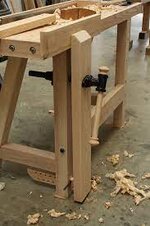
Found this in my grandfather's garage. I know it's the drive screw for a woodworking vise but I can't figure out if it's a shoulder vise or tail vise. Can anyone shed some light please


This is definitely designed to squeeze togetherI don't think shoulder. They usually push AWAY vs pull. The way the two fittings are set up in that, I see it pulling.

 www.leevalley.com
OK. Whilst we're at it here, and if you know about this subject please could you enlighten me and explain a bit about these thread names?Difficult to tell for sure from those photos, but those look like square threads, not acme.

Thanks very much. Nice clear explanation, once again the breadth of knowledge and kindness of members on GJ to share it amazes me.Some thread info here
Understanding Screw Threading | ManufacturingTomorrow
While threading is used in multiple industries from large turbine shafts down to small precision metric threads for custom machining projects, each thread type is tooled, both internally and externally, to provide functions for specific applications.www.manufacturingtomorrow.com

Really great video explanation here:OK. Whilst we're at it here, and if you know about this subject please could you enlighten me and explain a bit about these thread names?
I have a vague notion that what is called 'acme' threads are square shaped and not pointed, so are stronger because they don't try and force the nut apart. I have had a few tries at looking up information but never managed to find facts and with no formal engineering training it's a mystery to me. What does 'acme' mean anyway when used in this sense?
Thank you. I will watch that later after work, for some reason Mrs Farmer J finds it odd if I play videos about threads at 3am.Really great video explanation here:

It's called a Woodworking Tail-Vise. I just bought one from Woodcraft. Can be used any number of ways, I've even seen two of them used in tandem.Found this in my grandfather's garage. I know it's the drive screw for a woodworking vise but I can't figure out if it's a shoulder vise or tail vise. Can anyone shed some light please