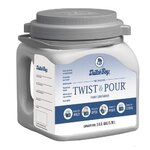
Once I've finished a particular color I put the remaining amount into a new quart sized can with all the info written on it and the computer label if possible. If a gallon can has a bunch of dead airspace in it the paint will go to **** faster. The quart cans are basically there for touch ups if needed and if more than that was needed the whole room would just get a repaint. Whatever paint will not condense into one or two quart cans gets left in the open gallon can to dry and then trashed once solid as required by the trash company.
Recently moved and I repainted the entire inside of the house, outside of the house and workshop. We ended up with 11 colors just for the inside plus the ceiling, the quart cans take up way less space than the gallon cans. The outside was just 4 colors and I did condense two of the colors from 5 gallon buckets into 1 gallon pails.
I do something similar. Once I'm done with a job, I put some of the remaining paint in pint-sized Mason jars. They're fully labeled with manufacturer, name, color, and sheen, and I store them in the rarely-used cabinet above my kitchen refrigerator along with wood putty, plumber's putty, and liquor (for marinades, of course

). They're just for touch-ups. I can drop off paint at our local trash/recycling center where it's either disposed of or recycled by someone who takes it home with them.
But if you have to store paint in their original containers, don't store them upside down to avoid rusting the lid. Make sure they're well-sealed. I am meticulous about cleaning the groove where the lid seats, and I use a paint can opener, since screwdrivers sometimes mess up the seal.
Oils will get a skin on top. You can peel the skin off, toss it in the trash, stir and strain what's left, and it should be fine. I've done that multiple times with oil paint and a 20-year-old can of el-cheapo polyurethane my dad bought from Big Lots for $19.99.
I've had 10-year-old cans of water-based house paint that I've successfully stirred and strained as well. Sometimes the settled components are stiff like clay (and actually is mostly clay, in most cases), but I've been able to either stir it enough to work, or I've taken it to my local Ace where they'll spin it for free even if I didn't buy it there.