To avoid these ads, REGISTER NOW!

Garage wiring advise

mike93lx

ALLIANCE MEMBER
Joined
Dec 9, 2013
Messages
37,597
Location
Richmond, VA
I have 2 "mains" off a split meter.
The house currently has 5 panels.
The shop has 5 panels.
ATS, generator, and solar, and RV panels... So you end up with a lot of electrical. We've expanded the shop twice.

Sounds excessive, but quite a few of these panels are Siemens Talon panels that have the receptacles that I use commonly - they allow future expand-ability downstream.

I absolutely have moved breakers around and reconfigured things over the years... There's a big advantage for me to keep all the breaker types the same.. I have a box of spare dual pole breakers as well as 20A single poles.
I shouldn't have used an absolute. That's my mistake.

Almost no one is moving breakers around. There are always exceptions and it certainly isn't a bad idea to have matching panels (assuming they are high quality). It's just far from a necessity
 
To avoid these ads, REGISTER NOW!
OP
P

Poppypop04

Member
Joined
Nov 15, 2022
Messages
19
If it is in a detached structure, the rods are required. Your wiring proposal looks fine for a main panel since that is the only place neutrals and grounds can be connected
One last question. Can I then not connect the ground in the main panel and instead connect that wire to my new ground rods and my new sub panel ground bar?
 

mike93lx

ALLIANCE MEMBER
Joined
Dec 9, 2013
Messages
37,597
Location
Richmond, VA
The detached needs two rods or proving 25ohms resistance (expensive equipment). Just knock in two rods and hook it up to the sub. If you have the trench open, us that to get you a couple feet of free depth.
 

u2slow

Well-known member
Joined
Nov 20, 2011
Messages
3,597
Location
BC
NEC may require the rods, but the electrical system is fully and safely operable with the main alone being the grounding point (as we do in Canada).

Decide if you want to be NEC compliant or not.
 
OP
P

Poppypop04

Member
Joined
Nov 15, 2022
Messages
19
NEC may require the rods, but the electrical system is fully and safely operable with the main alone being the grounding point (as we do in Canada).

Decide if you want to be NEC compliant or not.
That's what I was looking for. I am not worried about being compliant necessarily but more so functional and safely.
 

wyliesdiesels

Well-known member
Joined
Aug 14, 2012
Messages
20,023
Location
Modesto, CA
NEC may require the rods, but the electrical system is fully and safely operable with the main alone being the grounding point (as we do in Canada).

Decide if you want to be NEC compliant or not.

canadian code makes no sense. you dont want the lightning traveling back to the main. you want it shunted to earth as close as possibly to point of origion/strike.... directing it back to the main is just asking for trouble
 
  • Like
Reactions: Max
OP
P

Poppypop04

Member
Joined
Nov 15, 2022
Messages
19
canadian code makes no sense. you dont want the lightning traveling back to the main. you want it shunted to earth as close as possibly to point of origion/strike.... directing it back to the main is just asking for trouble
OK, why is there a need for 2 rods on the new or is one ok?
 

Mzungu

Well-known member
Joined
Sep 3, 2022
Messages
176
canadian code makes no sense. you dont want the lightning traveling back to the main. you want it shunted to earth as close as possibly to point of origion/strike.... directing it back to the main is just asking for trouble
Lightning doesn't care. Most houses are not adequately grounded/protected to survive a direct or even indirect lightning strike. The main reason I can see for having the extra ground rods is to facilitate the shortest path to ground in the case of an actual electrical fault. Up here in Canada the only time we put in extra grounding rods on a detached structure is when its a barn housing live stock. Mostly because of the amount of moisture that can be present in those environments.
 

wyliesdiesels

Well-known member
Joined
Aug 14, 2012
Messages
20,023
Location
Modesto, CA
Lightning doesn't care. Most houses are not adequately grounded/protected to survive a direct or even indirect lightning strike. The main reason I can see for having the extra ground rods is to facilitate the shortest path to ground in the case of an actual electrical fault. Up here in Canada the only time we put in extra grounding rods on a detached structure is when its a barn housing live stock. Mostly because of the amount of moisture that can be present in those environments.
ummm ground rods have absolutely nothing to do with electrical faults and a breaker's ability to clear them. the fault current doesnt even go to the rods. many people think that fault current goes to earth. it doesnt!

the way a breaker clears fault current is via the neutral to ground bond in the main service panel. without this bond, breakers would not be able to clear the fault (open the circuit) regardless of rods being connected to the panel. Again, the grounding rods have no part in this.

the current doesnt magically travel to the rods into the earth and then back to the neutral at the bond. when someone makes this claim, it shows they dont have a basic understanding of electrical system principles and theory

the purpose of grounding rods is to shunt lightning to earth, have the neutral at the same potential as the earth, and shunt high voltage electricity when primary conductors contact secondary conductors.
 

Mzungu

Well-known member
Joined
Sep 3, 2022
Messages
176
ummm ground rods have absolutely nothing to do with electrical faults and a breaker's ability to clear them. the fault current doesnt even go to the rods. many people think that fault current goes to earth. it doesnt!

the way a breaker clears fault current is via the neutral to ground bond in the main service panel. without this bond, breakers would not be able to clear the fault (open the circuit) regardless of rods being connected to the panel. Again, the grounding rods have no part in this.

the current doesnt magically travel to the rods into the earth and then back to the neutral at the bond. when someone makes this claim, it shows they dont have a basic understanding of electrical system principles and theory

the purpose of grounding rods is to shunt lightning to earth, have the neutral at the same potential as the earth, and shunt high voltage electricity when primary conductors contact secondary conductors.
I'm not doubting the point of a neutral and how it interacts with a breaker tripping. I'm talking about ground faults, you know when stray voltage is going down to earth. The grounding system will takes the stray voltage and the current that goes with it safely to earth. That's why we install earth rods, ground wires and bonding. Pretty simple concept. That stray voltage could be lightning, a surge, a dead short to ground, an appliance or motor with weak insulation that is finding a path through its casing to ground etc.
 

wyliesdiesels

Well-known member
Joined
Aug 14, 2012
Messages
20,023
Location
Modesto, CA
I'm not doubting the point of a neutral and how it interacts with a breaker tripping. I'm talking about ground faults, you know when stray voltage is going down to earth. The grounding system will takes the stray voltage and the current that goes with it safely to earth. That's why we install earth rods, ground wires and bonding. Pretty simple concept. That stray voltage could be lightning, a surge, a dead short to ground, an appliance or motor with weak insulation that is finding a path through its casing to ground etc.
this is wrong. electricity DOESNT go to earth. it goes back to the source. the dead short is only a short because of the neutral to ground bond. it doesnt go to earth.

lightning would be the only thing going to earth.....
 

Mzungu

Well-known member
Joined
Sep 3, 2022
Messages
176
this is wrong. electricity DOESNT go to earth. it goes back to the source. the dead short is only a short because of the neutral to ground bond. it doesnt go to earth.

lightning would be the only thing going to earth.....
In a perfect world electricity does go back to source. I dont need to even argue this point anymore. I set up zero sequence ground fault relays all the time, I know how they work and they definitely are not looking at the neutral.
 

wyliesdiesels

Well-known member
Joined
Aug 14, 2012
Messages
20,023
Location
Modesto, CA
again if you think a grounding rod plays a role in a circuit breaker clearing fault current then you lack a basic understanding of split phase electrical systems....
 

Mzungu

Well-known member
Joined
Sep 3, 2022
Messages
176
again if you think a grounding rod plays a role in a circuit breaker clearing fault current then you lack a basic understanding of split phase electrical systems....
Certainly your reading comprehension is not the best. We could have a discussion on how grounding systems and breakers interact, but that should be a separate post. So just to repeat myself, The grounding system will take the stray voltage and the current that goes with it safely to earth. That's why we install earth rods, ground wires and bonding. Pretty simple concept. That stray voltage could be lightning, a surge, a dead short to ground, an appliance or motor with weak insulation that is finding a path through its casing to ground etc. The idea is for a the ground fault to take the path of the lowest impedance directly to the ground, and yes, that would be the earth electrodes, that is one of the reasons why they are there. Anyway to each their own, have a good weekend.
 
Last edited:

pattenp

Well-known member
Joined
Jun 4, 2008
Messages
10,175
Location
Virginia - USA
Certainly your reading comprehension is not the best. We could have a discussion on how grounding systems and breakers interact, but that should be a separate post. So just to repeat myself, The grounding system will take the stray voltage and the current that goes with it safely to earth. That's why we install earth rods, ground wires and bonding. Pretty simple concept. That stray voltage could be lightning, a surge, a dead short to ground, an appliance or motor with weak insulation that is finding a path through its casing to ground etc. The idea is for a the ground fault to take the path of the lowest impedance directly to the ground, and yes, that would be the earth electrodes, that is one of the reasons why they are there. Anyway to each their own, have a good weekend.
Your understanding of equipment grounding system vs. earth grounding system, is incorrect. The equipment grounding system is for clearing ground faults, it provides the path of least resistance back to the source. Earth grounding has high resistance and is a poor ground for clearing current faults. Earth ground rods are for providing some protection from lighting strikes. What Wylie stated is 100% correct. Read NEC 250.4 (A)(1) & (5).
 
Last edited:
To avoid these ads, REGISTER NOW!

Norcal

Well-known member
Joined
Mar 16, 2008
Messages
13,758
Certainly your reading comprehension is not the best. We could have a discussion on how grounding systems and breakers interact, but that should be a separate post. So just to repeat myself, The grounding system will take the stray voltage and the current that goes with it safely to earth. That's why we install earth rods, ground wires and bonding. Pretty simple concept. That stray voltage could be lightning, a surge, a dead short to ground, an appliance or motor with weak insulation that is finding a path through its casing to ground etc. The idea is for a the ground fault to take the path of the lowest impedance directly to the ground, and yes, that would be the earth electrodes, that is one of the reasons why they are there. Anyway to each their own, have a good weekend.
Electricity is not trying to return to ground, it is trying to return to it's source which is the transformer, in it's quest to return to it's source, it takes all available paths, the earth is one of those paths. If you want to kill someone just rely on a ground rod to clear a fault, there will not be enough resistance to trip a breaker or clear a fuse.
 

wyliesdiesels

Well-known member
Joined
Aug 14, 2012
Messages
20,023
Location
Modesto, CA
Certainly your reading comprehension is not the best. We could have a discussion on how grounding systems and breakers interact, but that should be a separate post. So just to repeat myself, The grounding system will take the stray voltage and the current that goes with it safely to earth. That's why we install earth rods, ground wires and bonding. Pretty simple concept. That stray voltage could be lightning, a surge, a dead short to ground, an appliance or motor with weak insulation that is finding a path through its casing to ground etc. The idea is for a the ground fault to take the path of the lowest impedance directly to the ground, and yes, that would be the earth electrodes, that is one of the reasons why they are there. Anyway to each their own, have a good weekend.
stray voltage from what? a ground fault? no, that goes back on grounded metal pathways such as the low impedance pathway established by the EGC or metallic conduit and goes directly to the neutral bond, which then creates a dead short and allows the breaker to clear the fault by opening the circuit.

no reading comprehension issues here but you definitely have issues understanding the fault current pathway....

also electricity returns to its source which is the transformer NOT the earth, though it does take all pathways to get there one of which may be the earth. the earth is not the source of the stray voltage which you keep claiming. the only voltage that will go to earth is that from lightning...
 
OP
P

Poppypop04

Member
Joined
Nov 15, 2022
Messages
19
So got the main panel wired today. Does it look correct (right side)?
BTW I know it's a mess, lol
 

Attachments

  • 7619.jpeg
    7619.jpeg
    684.8 KB · Views: 27

mike93lx

ALLIANCE MEMBER
Joined
Dec 9, 2013
Messages
37,597
Location
Richmond, VA
What's up with the 2 30's? Those should be a two pole breaker with a handle tie.

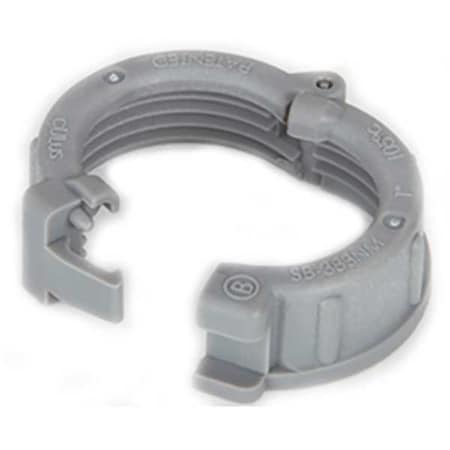
The new fitting needs a bushing
 

mike93lx

ALLIANCE MEMBER
Joined
Dec 9, 2013
Messages
37,597
Location
Richmond, VA
The 30s are for my well pump (240). Also there is a Bushing.
You need to replace the 30's with a dual.pole.

There is no bushing. The bushing goes on the inside, on the threaded part of the fitting

What's up with the wire going to that 20? Are the red and black both landed on the breaker? That line does have a bushing
 
OP
P

Poppypop04

Member
Joined
Nov 15, 2022
Messages
19
You need to replace the 30's with a dual.pole.

There is no bushing. The bushing goes on the inside, on the threaded part of the fitting

What's up with the wire going to that 20? Are the red and black both landed on the breaker? That line does have a bushing
Sorry I was thinking about the locknut.
So is my wiring correct though?
 

sparky 1971

Well-known member
Joined
Oct 9, 2018
Messages
7,973
Location
Central Iowa
What's up with the 2 30's? Those should be a two pole breaker with a handle tie.

The new fitting needs a bushing
I'm the one that points out missing bushings. Probably because it makes me feel better since I forget to put the damned things on once in a while. I love getting everything made up and find a bushing sitting on top of the panel or on the floor under it.
The 30s are for my well pump (240). Also there is a Bushing.
The two 2" conduits need bushings on the end. The one pipe that has a bushing doesn't need it, but it's ok to have. The two single pole 30's need to be replaced with a two pole 30, a handle tie doesn't give common trip. And the riser for the service entrance conductors is pulling apart. You might be able to pull it up and re-glue it.
 

mike93lx

ALLIANCE MEMBER
Joined
Dec 9, 2013
Messages
37,597
Location
Richmond, VA
I'm the one that points out missing bushings. Probably because it makes me feel better since I forget to put the damned things on once in a while. I love getting everything made up and find a bushing sitting on top of the panel or on the floor under it.

The two 2" conduits need bushings on the end. The one pipe that has a bushing doesn't need it, but it's ok to have. The two single pole 30's need to be replaced with a two pole 30, a handle tie doesn't give common trip. And the riser for the service entrance conductors is pulling apart. You might be able to pull it up and re-glue it. The wiring is correct.
I just wanted to beat you do it

I bet you cut the bushings and slip it around, don't you
 

sparky 1971

Well-known member
Joined
Oct 9, 2018
Messages
7,973
Location
Central Iowa
I just wanted to beat you do it

I bet you cut the bushings and slip it around, don't you
I plead the 5th so as not to incriminate myself. There are also bushings made that are two pieces.

 
OP
P

Poppypop04

Member
Joined
Nov 15, 2022
Messages
19
I'm the one that points out missing bushings. Probably because it makes me feel better since I forget to put the damned things on once in a while. I love getting everything made up and find a bushing sitting on top of the panel or on the floor under it.

The two 2" conduits need bushings on the end. The one pipe that has a bushing doesn't need it, but it's ok to have. The two single pole 30's need to be replaced with a two pole 30, a handle tie doesn't give common trip. And the riser for the service entrance conductors is pulling apart. You might be able to pull it up and re-glue it.
The well company that put the well in 15 years ago did the 30 breakers and the guy the did the initial wiring of my house 15 years ago left the bushing off and obviously didn't glue the conduit.
But yes I forgot the bushing on my install but I can fix that.
 

mike93lx

ALLIANCE MEMBER
Joined
Dec 9, 2013
Messages
37,597
Location
Richmond, VA
The well company that put the well in 15 years ago did the 30 breakers and the guy the did the initial wiring of my house 15 years ago left the bushing off and obviously didn't glue the conduit.
But yes I forgot the bushing on my install but I can fix that.
So it's been wrong for 15 years. You really should swap it. As is, one line could trip and still be feeding power making it unsafe or damaging the pump. A dual pole 30 is like 12ish bucks
 

mike93lx

ALLIANCE MEMBER
Joined
Dec 9, 2013
Messages
37,597
Location
Richmond, VA
I get that these discussions can feel like nit picking by code fanatics. If that was mine, I wouldn't worry at all about the bushings on existing work. Those big wires aren't moving around and chafing on the threads. But I would swap that 30 out, no question. Regardless of how long its worked for, it only needs to not work right just once.
 
Last edited:

sparky 1971

Well-known member
Joined
Oct 9, 2018
Messages
7,973
Location
Central Iowa
I get that these discussions can feel like not picking by code fanatics. If that was mine, I wouldn't worry at all about the bushings on existing work. Those big wires aren't moving around and chafing on the threads. But I would swap that 30 out, no question. Regardless of how long its worked for, it only needs to not work right just once.
I wouldn't worry about them either, unless it's getting inspected. If there is an inspection in the near future, a hacksaw might come in handy, especially on the bottom 2". The new wires could be taken off easy enough. It's not like the wires are, or ever will be, bent tight over the ends of the adapters.

Those two single pole 30's are asking for trouble in the future though.
 
To avoid these ads, REGISTER NOW!
Top Bottom