To avoid these ads, REGISTER NOW!

Battery Cable Crimper

JWC86

Well-known member
Joined
Sep 4, 2021
Messages
270
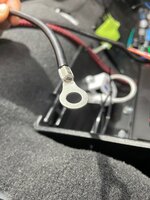
I do a lot of electrical and own probably a dozen sets of crimpers. However I’m not set up to crimp anything bigger than 10ga.

When ever I need to have a heavy gauge crimp done I just go to the local car audio place and have them do it for me. It’s only a coupes times a year at most.

I figure it’s about time I get the tooling to do this myself but I have no idea where to start and did t find much searching here.

I have 6 crimps to do with 8ga cable right away but I would like something that can do battery cables if(when) needed.

Searching Amazon I see some units with swappable octagon shaped dies. Some hydraulic and some just hand operated.

Looking for a middle ground in price/quality. Don’t use it enough to justify going with the best but don’t want junk either.

Thanks in advance for any insight.
 
To avoid these ads, REGISTER NOW!

kabinenroller

Well-known member
Joined
Sep 14, 2013
Messages
898
Location
S.E. Wisconsin USA
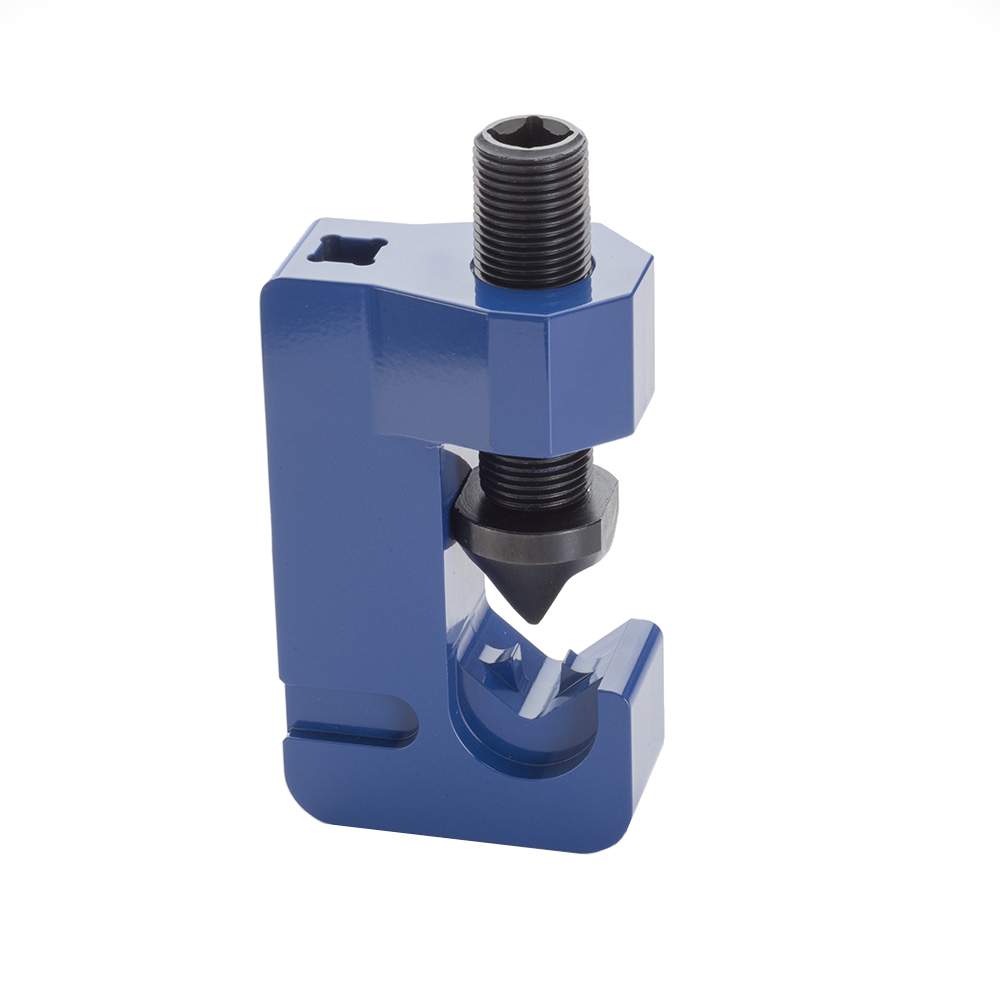
For battery cables I use this tool. I do not use a hammer, I use the tool in my press, it works better and I can control the amount of compression easier.
 

finn

Well-known member
Joined
Mar 27, 2005
Messages
16,228
Location
The UP, God's country
I use a hammer crimper. I wanted a hydraulic tool, then reality set in and I returned to my senses and realized that for the amount of crimps I will make in the rest of my life, the $12 (at the time) hammer tool would be perfectly adequate.

I have used it maybe 8 or 10 times in the past ten years.

It works fine.
 

Walkers

Well-known member
Joined
May 17, 2021
Messages
3,912
Location
Cave Creek Az
Don’t waste your time with the HF hydraulic tool. Unless, of course, you like hydraulics that leak after a short time, and dies made out of unhardened(able) alloys.
I have one like the Lemco, works great with a hammer or vise. I buy bags of eyelets off eBay.
Avoid doing battery cable with solder. It ends up being a high resistance connection and will fail. I learned this when I started my welding company, took about a years for 20 of them to fail and need to get cut out in the field.
 

blazemaster83

Well-known member
Joined
Oct 8, 2009
Messages
604
Location
Lacey, Wa.
I install battery systems in big boats and use these at least once a week. I like them because you can dial in the setting you want, if your lugs are sligtly smaller or bigger than they should be (two 4/0 lugs from two manufacturers will be slightly different sized). Also, in tight spaces like a boats bilge, I can work my way up to the size I need in a few strokes rather than 1 hard stroke. These do 8 awg up to 4/0 awg.


You can buy the same ones from lots of electrical stores, but they are twice the cost for literally the same thing. Also, yes the harbor freight hydraulic crimper *****. You need to change out dies, and they dont last.
 

AdAstra

Well-known member
Joined
Aug 27, 2021
Messages
195
These big cables are probably the most important, since they are more likely to start fires if they fail.

Pick a good UL listed lug that you can get easily and at a fair price, and then get the official crimp tool.

Unlike the other big guys, FTZ makes top tier lugs and also sells an official tool for ~$130, if that’s in budget. Can also look for used tools.

Greenlee might be only exception to my "manufacturer’s tool only" rec, because Greenlee does the legwork to be UL Classified with almost all the major quality lug makers.
 
Last edited:

mogandave

Well-known member
Joined
Nov 4, 2021
Messages
3,052
Location
Bangkok
Don’t waste your time with the HF hydraulic tool. Unless, of course, you like hydraulics that leak after a short time, and dies made out of unhardened(able) alloys.
I have one like the Lemco, works great with a hammer or vise. I buy bags of eyelets off eBay.
Avoid doing battery cable with solder. It ends up being a high resistance connection and will fail. I learned this when I started my welding company, took about a years for 20 of them to fail and need to get cut out in the field.
I took over managing a fleet of about twenty-five trucks (mostly R-Models) and about ten pieces of gas and diesel powered equipment back in the ‘80s, about half of which would not start.

Replaced all the suspect clamps with solder-on clamps and 90% of the problems went away. Never had one go bad.

Crimps have become more popular than soldering because it’s faster, easier and low/no skill, not because they’re better.

That said, I’ve only ever crimped/clamped welding cables, primarily because corrosion is not a significant issue the way it is with batteries.
 

Jack_K

Well-known member
Joined
Aug 7, 2021
Messages
336
Location
Australia
The problem with the cheap hydraulic crimpers like the harbour freight one is that the dies are basically random sizes which do not suit any terminals correctly.
 

pbon

Well-known member
Joined
May 14, 2017
Messages
3,498
I am just a DIYer, but have found solder works for battery cables. I try to put a dent in the terminal and then flow a lot of solder. But these cables would not be yanked on — they would be carefully routed by me. I might try compression fittings — much more expensive but easy to use and I don’t do this very often.
 

dnschmidt

Well-known member
Joined
Oct 3, 2014
Messages
7,271
Location
Phoenix, AZ
For battery cables I use this tool. I do not use a hammer, I use the tool in my press, it works better and I can control the amount of compression easier.
This is the one I've got as well. If used with a hammer the trick is to give it a really good solid wack once. Put the crimper on a concrete floor and take about a 24oz ball peen hammer and give it a very solid wack. As others have stated a press of vice works better but the hammer method isn't that bad. Just don't do a Happy Gilmore tappy, tap.
 

wandrur

ALLIANCE MEMBER
Joined
Dec 13, 2021
Messages
1,202
Location
Fredericksburg, VA
For battery cables I use this tool. I do not use a hammer, I use the tool in my press, it works better and I can control the amount of compression easier.
This is what I have, and I am impressed with how securely it crimps and how easy it is to use.
 
To avoid these ads, REGISTER NOW!

jpaw

Well-known member
Joined
Dec 23, 2018
Messages
525
Location
Michigan
On the bench I use an inexpensive hammer die in a vice.
In tight area repairs I have always just put the lug in a pair of channel locks heated and filled it just past half way with solder, made sure it was nice and hot, put the wire in and squeezed. In 30+ years I have never had an issue doing it this way.
If I was building cables even semi regularly I would invest in the proper tooling.
 

finn

Well-known member
Joined
Mar 27, 2005
Messages
16,228
Location
The UP, God's country
I took over managing a fleet of about twenty-five trucks (mostly R-Models) and about ten pieces of gas and diesel powered equipment back in the ‘80s, about half of which would not start.

Replaced all the suspect clamps with solder-on clamps and 90% of the problems went away. Never had one go bad.

Crimps have become more popular than soldering because it’s faster, easier and low/no skill, not because they’re better.

That said, I’ve only ever crimped/clamped welding cables, primarily because corrosion is not a significant issue the way it is with batteries.
I worked in Product Development for a major engine and truck manufacturer. When the discussion inevitably turned to soldered vs crimped connections, the answer from the sparkies was always to go with crimping. it’s a lower resistance connection because the cold weld created in the crimping process smashes through the oxide layer that forms on the outside of the wire strands. Soldering just bridges the wires, creating a higher resistance joint.

Crimping also reduces wire fatigue at the end of a solder joint, and is faster and more controllable in production.
 

laser3kw

Well-known member
Joined
Nov 17, 2012
Messages
7,276
Location
northen IL
I am getting ready to do some battery cable work. I am looking at the 16 ton, long handle, blue colored import on Ebay. You can get the whole kit with 13 dies for $50~. The dies will hex crimp from 8 awg up to 4/0awg(?)
This will have the giddy-up to do more than you need. I looked at custom cable builders and the brag about using 10 ton units.
Be careful what cable you use. The "welding cable" type jacket is not good in oil or petroleum environments - no matter what they say.
 

Retired dozer fixer

Well-known member
Joined
Aug 6, 2022
Messages
331
Location
Leesburg Indiana
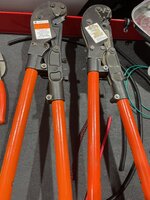
I have 2 different crimper tools. One is the hammer type and a bolt cutter type tool with rotating dies. Both will do 8ga to 4/0. Got the bolt cutter type from Caterpillar tools years ago
 

laser3kw

Well-known member
Joined
Nov 17, 2012
Messages
7,276
Location
northen IL
it’s a lower resistance connection because the cold weld created in the crimping process smashes through the oxide layer that forms on the outside of the wire strands
another reason to have big tonnage - better ability to compress wire and lug into an almost solid form.
PS use "tinned" lugs - they offer another degree of corrosion resistance. After assembly of battery cable and connection terminal, smear on a coat of NoAlOx / Noalox (Ideal industries). Again, another layer of corrosion resistance. And, yes, NoAlOx is approved / recommended for copper use - I checked after hearing about it's use on copper.
 
OP
J

JWC86

Well-known member
Joined
Sep 4, 2021
Messages
270
Thanks everyone! Way more response than I expected. I will sort through it all.

And yes after many years of being a “pro solder” I’m now in the camp that believes soldered connections don’t belong anywhere on automotive or motorsports applications unless a couple inches of the wire from the solder joint can be potted.
 

blue-5

Well-known member
Joined
Mar 26, 2017
Messages
112
I bought one from amazon a few weeks ago. It was by gfstop. Hydraulic w dies for $49. I did the job fine. I was crimping 4ga and did about a dozen crimps w no problem
 

WisJim

Well-known member
Joined
Dec 20, 2010
Messages
2,274
Location
Menomonie, WI
I've done a bunch of crimping of heavier cables #4 to 4/0 for solar and small wind installations and for electric vehicle conversions, and did research on soldered vs crimped connections. Soldered connections aren't recommended for most non-electronic situations, especially for large cables carrying lots of current. As previously mentioned a proper crimp will cold fuse the connection which will conduct and hold up better than a soldered connection.
 

lugnut71

Well-known member
Joined
Feb 14, 2013
Messages
1,898
Location
Wyoming
It works amazing, just used it on some 8ga. Lawson demonIMG_9444.jpgstrated it years ago by crimping a 1/0 battery cable end and then cutting it in half to show just how well of a connection it makes.
 

rlitman

Well-known member
Joined
Oct 18, 2010
Messages
24,596
Location
Long Island
Don’t waste your time with the HF hydraulic tool. Unless, of course, you like hydraulics that leak after a short time, and dies made out of unhardened(able) alloys...
I bought my no-name (same as HF) 10 ton hydraulic crimper for $15 (shipped) on eBay in 2017 (I just pulled up the invoice). I've done about 30 crimps on wires from 6AWG through 2/0, and it hasn't started leaking yet. The dies have a chrome finish that's ugly as sin, but that same chrome would show up even the slightest deformation, and they're clearly unblemished.

As for the incorrect comments about die sizes, charts that match metric to AWG cross sectional areas are easy to find.

...Unlike the other big guys, FTZ makes top tier lugs and also sells an official tool for $100-200, if that’s in budget. Can also look for used tools...
+100 to FTZ Powerlugs! These have a wider contact area so you can double crimp them, have a closed front end so they're weather-tight, have the best plating I've seen, and are beefier than anything else out there. I cannot find anything better (and I've looked quite a bit).

I am getting ready to do some battery cable work. I am looking at the 16 ton, long handle, blue colored import on Ebay. You can get the whole kit with 13 dies for $50~. The dies will hex crimp from 8 awg up to 4/0awg(?)
This will have the giddy-up to do more than you need. I looked at custom cable builders and the brag about using 10 ton units.
Be careful what cable you use. The "welding cable" type jacket is not good in oil or petroleum environments - no matter what they say.
I bought the 16 ton hydraulic crimper for $32 in 2019, because I had the need to have 4/0 capacity on-hand. But the 16 ton is just more unwieldy to use, so I hardly use it. If you're sure you won't need more than 2/0, stick with the 10 ton that has the C jaw instead of the 16 ton that has the cross pin.

Skip the grease or no-alox and use marine grade double wall heat shrink. Any grease will interfere with the adhesive shrink liner's bond to the insulation, so if you do grease don't waste you money on the better heat shrink. And (I'm sure you know this, but just for others reading), NEVER apply ANYTHING to the strands before crimping. The crimp MUST start out DRY.

Also, don't try to finish a hex (or square) crimp in a single crush. Hex dies will pinch off ears on each side, giving you something that looks like lugnut71's post above mine (his aren't that bad, but a hydraulic die can crush that down to foil). The right way to hex (or square) crimp is to close the jaws until the fitting has spread to the point it is about to be (but isn't yet) pinched. Then release and rotate the hex jaws one face and finish. You'll get a perfect hexagon with no crushed ears sticking out. Those ears are a weakness in the crimp, and will cut into your heat shrink. More modern crimping systems use oval crimps to compress in a single step, but they're more sensitive to die sizes.
 

cannuck

Well-known member
Joined
Nov 30, 2021
Messages
4,614
Location
Rural SK
I use a Greenlee set because there are a few on the shelf at "Day Job" shop most of the time.
 

1320

Well-known member
Joined
Jan 3, 2018
Messages
900
Location
Arizona
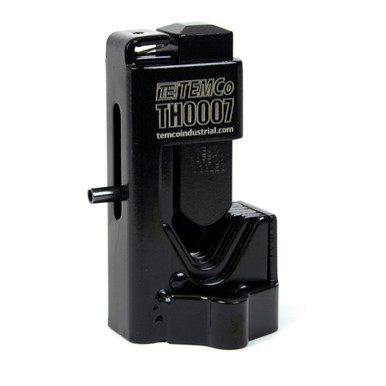
I have one of these and have used it half a dozen times with good success.

I paid $25ish for it a few years ago and would probably skip it if I had to pay the $63 it seems to cost now.


mogandave

Well-known member
Joined
Nov 4, 2021
Messages
3,052
Location
Bangkok
I worked in Product Development for a major engine and truck manufacturer. When the discussion inevitably turned to soldered vs crimped connections, the answer from the sparkies was always to go with crimping. it’s a lower resistance connection because the cold weld created in the crimping process smashes through the oxide layer that forms on the outside of the wire strands. Soldering just bridges the wires, creating a higher resistance joint.

Crimping also reduces wire fatigue at the end of a solder joint, and is faster and more controllable in production.
That’s hilarious. A good solder joint connects at the molecular level, and is corrosion resistant.

Crimps would be better for aluminum, and in high heat applications.
 

AdAstra

Well-known member
Joined
Aug 27, 2021
Messages
195
That’s hilarious. A good solder joint connects at the molecular level, and is corrosion resistant.

Crimps would be better for aluminum, and in high heat applications.
You're at odds with the overwhelming consensus of engineers across every industry.

Industries with no cost concerns (nuclear, military, aircraft, spacecraft) absolutely crimp all of their connections whenever they can. Solder only when crimping isn't an option for another process-related reason.
 
Last edited:
To avoid these ads, REGISTER NOW!
Top Bottom