You are using an out of date browser. It may not display this or other websites correctly.
You should upgrade or use an alternative browser.
You should upgrade or use an alternative browser.
Pneumatic spindexer and Collet ID
- Thread starter no704
- Start date

RoninB4
Well-known member
You're not very descriptive about function, purpose, or price limit.
Holds and spins a little 3/16”x2” capsule and spins it while another stepper motor drives a tube cutter to open it. Im currently using a manual spindexer modified with a solionid to lock the draw tube while another stepper the same one that does the rotation can tighten or release the 5C collet. It’s kind of overly complicated and difficult to get a positive confirmation of the state of the collet. The pneumatic closer could simplify this a bunch.
RoninB4
Well-known member
-How many of the capsules need to be done per batch? There's several makers of spin fixtures (doesn't sound like you need indexing) that range from multi-thousands (Newbould) to relatively cheap (Chi-Wan), some are motorized. What does narrow the field is your wish for pneumatic actuation. That's going to drive the price up, as all things in the world of automation are. The mechanical tightening is far more simple/inexpensive. If I understand your application you really don't need the concentricity the first 4 makers below are capable of. You can always shop E-vil Bay for a used one at a greatly reduced price, I bough 2-3 of them in good working condition. A motorized attachment could be easily rigged or purchased. I'll leave it to you that know what will work to research the names below.
Newbould
Harig
Suburban
Schmidt
Chi-Wan (some of them have a collet closer
Newbould
Harig
Suburban
Schmidt
Chi-Wan (some of them have a collet closer
Thanks for the reply! Sounds like you have some experience with this sort of thing. Im always interested in of the shelf options! The challenge with this one is the tube being opened will be highly radioactive. So this needs to work, reliably with at least 50’ between it and any person. Can and will have cameras on the subject. This initial stage would only be for test runs and one radioactive sample. But what is learned will be applied to later production runs.-How many of the capsules need to be done per batch? There's several makers of spin fixtures (doesn't sound like you need indexing) that range from multi-thousands (Newbould) to relatively cheap (Chi-Wan), some are motorized. What does narrow the field is your wish for pneumatic actuation. That's going to drive the price up, as all things in the world of automation are. The mechanical tightening is far more simple/inexpensive. If I understand your application you really don't need the concentricity the first 4 makers below are capable of. You can always shop E-vil Bay for a used one at a greatly reduced price, I bough 2-3 of them in good working condition. A motorized attachment could be easily rigged or purchased. I'll leave it to you that know what will work to research the names below.
Newbould
Harig
Suburban
Schmidt
Chi-Wan (some of them have a collet closer
We are just a little start up company, but we have a great team of very talented people. If you would like to consult I would certainly be open to that! Working in a space that is pretty much brand new we have to be creative to find soulitions to our challenges.
RoninB4
Well-known member
-With spin fixtures and indexing fixtures, yes. On the job I used them daily and sometimes all day long. Both are pretty much a standard piece of tooling in die shops that gets used a LOT.Thanks for the reply! Sounds like you have some experience with this sort of thing.
-A large criteria for these is concentricity, you don't seem to need that so very much. With all of the most common models I've mentioned (except the Chi-Wan models) you'd be paying a lot for something you won't even use.Im always interested in of the shelf options!
-Something I should have expected to show up with you. Won't this make the fixture radioactive as well? Pneumatic driven rotation may not have enough torque for a parting tool or tube cutter. What is the capsule made from?The challenge with this one is the tube being opened will be highly radioactive.
-Which is why you asked for pneumatic actuation. Will electric work? I'm at the end of my radioactive knowledge.So this needs to work, reliably with at least 50’ between it and any person.
-If the fixture will become radioactive this is all the more reason to hold the expense down, no point in making an expensive spin fixture untouchable for further use.Can and will have cameras on the subject. This initial stage would only be for test runs and one radioactive sample.
-Interesting applicationBut what is learned will be applied to later production runs.
Last edited:
RoninB4
Well-known member
-I could be open to consulting.f you would like to consult I would certainly be open to that! Working in a space that is pretty much brand new we have to be creative to find soulitions to our challenges.
Rotation is handled by a stepper motor. Fixture should not get (very) radioactive! Cuts a 3/16”dia 0.019” wall Ti tube.-With spin fixtures and indexing fixtures, yes. On the job I used them daily and sometimes all day long. Both are pretty much a standard piece of tooling in die shops that gets used a LOT.
-A large criteria for these is concentricity, you don't seem to need that so very much. With all of the most common models I've mentioned (except the Chi-Wan models) you'd be paying a lot for something you won't even use.
-Something I should have expected to show up with you. Won't this make the fixture radioactive as well? Pneumatic driven rotation may not have enough torque for a parting tool or tube cutter. What is the capsule made from?
-Which is why you asked for pneumatic actuation. Will electric work? I'm at the end of my radioactive knowledge.
-If the fixture will become radioactive this is all the more reason to hold the expense down, no point in making an expensive spin fixture untouchable for further use.
-Interesting application
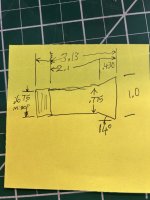
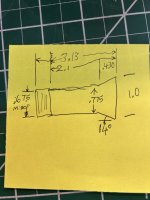
Is the above any help?
RoninB4
Well-known member
...
alfadan
Well-known member
Why on earth would the chicoms use such an obscure collet? Somethings amiss.
alfadan
Well-known member
Type YB-15 collets
alfadan
Well-known member
Type YB-15 collets.
RoninB4
Well-known member
-Thread OD, body OD (less critical), and head angle are wrong.Type YB-15 collets.

-32S may not match the OP supplied drawing. Thread designation important to determine (inch/metric) but not on OP drawing
RoninB4
Well-known member
-Thread is way undersize for a 3AT, so is body OD, overall length isn't nearly long enough either for threads to engage IF the OP drawing is correct and those are external threads. If internal threads then the OP needs to work on making a better drawing.I know nothing about collets, but the latest AI model says 3AT?


alfadan
Well-known member
I was mostly going off that the ad he has in the other thread, says it's a type 15 collet closer and that appears to be a common size in some places. I do think some more measurement is called for.-Thread OD, body OD (less critical), and head angle are wrong.
-32S may not match the OP supplied drawing. Thread designation important to determine (inch/metric) but not on OP drawing
Cruzan80
Well-known member
I am reading it as he is claiming "A" is .775, "C" is .675" and "B" is 3.13. Which post to more of a chance of being a 3AM (if he accidentally measured the root of the thread as .675 (essentially D, but I know that is for an internal thread), vs the outside of the thread). Especially if he was using something like a ruler vs a caliper/micrometer.-Thread is way undersize for a 3AT, so is body OD, overall length isn't nearly long enough either for threads to engage IF the OP drawing is correct and those are external threads. If internal threads then the OP needs to work on making a better drawing.
I used a caliper and a telescope gauge to make these measurements. I wish i was with in mic measurements!I am reading it as he is claiming "A" is .775, "C" is .675" and "B" is 3.13. Which post to more of a chance of being a 3AM (if he accidentally measured the root of the thread as .675 (essentially D, but I know that is for an internal thread), vs the outside of the thread). Especially if he was using something like a ruler vs a caliper/micrometer.
Please keep in mind that that i am measuring the holder, not an actual collet. So i would expect a little slop in that.I used a caliper and a telescope gauge to make these measurements. I wish i was with in mic measurements!
RoninB4
Well-known member
-That was not made clear in this thread but you drew the collet. Hazard of two separate postings on the same subject.Please keep in mind that that i am measuring the holder, not an actual collet.
-Not to be a d*ck about it but I would expect:So i would expect a little slop in that.
1) More/better detailed info from someone doing nuclear work
2) A more clear explanation of what/where the dimensions came from
3) Some standard markings/symbols on the drawing like (ID/OD, TPI, major/minor diameter, etc.) for clarity on dimensions
4) A far better drawing than what was submitted. I took 3 minutes to sketch what you posted, it's far more legible and none of my lines are straight. If it was important enough to post this wasn't it important enough for the rest of us to decipher it? The multiple replies, besides mine, displayed confusion and warranted better info.
-This should not be construed as a personal attack.
RoninB4
Well-known member
-Do the math, converts to a nominal metric size.Turned to .695”’and threaded it into the the closer. Came out .710 od
-Also converts (nearly) to a common metric thread pitchand 24 tpi
-Geez all that expensive equipment and you don't even have thread pitch gauges?near as i can tell wasn’t even close to any meter piitch.
-In light of more info it probably isn't a "new" collet size.Why anyone even the Chinese would ivent a new collet size is a mystery to me?
-Ordering equipment from Chi-Wan and expecting what is commonly used in America? The domestic market here no longer dictates what they make/sell. They have developed their own market over the decades that demands we all dance to their tune for the most part. There are several reasons for them to use proprietary components, this instance just happens to be outside of those reasons. JMOI was fully expecting a 5c.
Sorry im not up to your standards! Was just the sketch i made while on a zoom meeting. I wasn’t expecting anyone to build a part off of it. Just some general dimensions if someone was aware of something close. And ive had a rough week. Dad got a pacemaker inserted after passing out during breakfast, and they are installing a new gas line in my backyard.-Do the math, converts to a nominal metric size.
-Also converts (nearly) to a common metric thread pitch
-Geez all that expensive equipment and you don't even have thread pitch gauges?
-In light of more info it probably isn't a "new" collet size.
-Ordering equipment from Chi-Wan and expecting what is commonly used in America? The domestic market here no longer dictates what they make/sell. They have developed their own market over the decades that demands we all dance to their tune for the most part. There are several reasons for them to use proprietary components, this instance just happens to be outside of those reasons. JMO
RoninB4
Well-known member
-I don't have standards for anybody to live up to and mentioned that this wasn't a personal attack.Sorry im not up to your standards!
-Hope your father recoversAnd ive had a rough week. Dad got a pacemaker inserted after passing out during breakfast,
-Hope you recover too.and they are installing a new gas line in my backyard.
Ebay seller replied its takes a 25 Type closer. Have not had anu luck finding such an item. Waiting on reply on where to purchase?
I'm confused, are you looking for a collet or a closer?
These threads are very unclear
Cruzan80
Well-known member
So you are measuring a holder, need a collet, and the seller (who sold you the holder?) told you it takes a "type 25 closer". Is all that right? If so, why did you buy a holder for collets you don't have, without knowing what it takes?
Looking for a collet. That was the sellers reply.
So the seller is selling a collet closer that takes a 25 type closer?

Cruzan80
Well-known member
So, in the picture of what you purchased, it says 25 Type. So not sure why you are asking us.