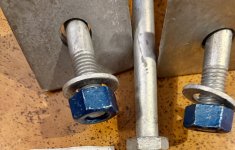
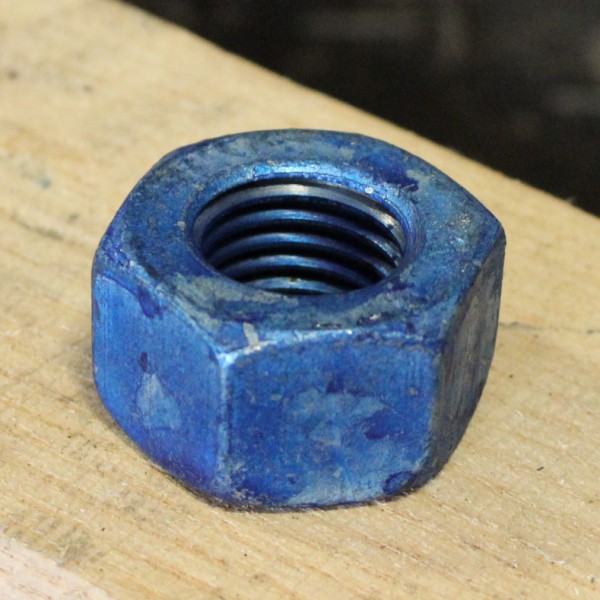
“Hot-dip and mechanically deposited zinc-coated Grade DH nuts shall be provided with an additional lubricant which shall be clean to the touch”
Believe its because the galvanization process adds a thick and sometimes rough coating to threads that can interfere with obtaining proper torque specification and/or cause galling.I thought, lubrication and torque values were mutually exclusive. That is, I vaguely recall reading that mating surfaces should be clean and dry.
Depends on whether they were electro-plated or hot dip galvanized. I'd ASSUME automotive parts would only be electroplate. Hot dip is used on things like sign and light poles, etc. Maybe(?) that process would be used for heavy machinery?Believe its because the galvanization process adds a thick and sometimes rough coating to threads that can interfere with obtaining proper torque specification and/or cause galling.
Says on receipt they are hot dipped.Depends on whether they were electro-plated or hot dip galvanized. I'd ASSUME automotive parts would only be electroplate. Hot dip is used on things like sign and light poles, etc. Maybe(?) that process would be used for heavy machinery?
Ok, a bit surprising but my experience is that hot dip is a thicker coating. Granted my experience is in decades of heavy civil construction, not automotive parts.Says on receipt they are hot dipped.
I'm just referring to fasteners that OP posted no idea what he's using them for.Ok, a bit surprising but my experience is that hot dip is a thicker coating. Granted my experience is in decades of heavy civil construction, not automotive parts.
There aren't for an automotive applicationOk, a bit surprising but my experience is that hot dip is a thicker coating. Granted my experience is in decades of heavy civil construction, not automotive parts.