
You are using an out of date browser. It may not display this or other websites correctly.
You should upgrade or use an alternative browser.
You should upgrade or use an alternative browser.
Plumbing Drum Trap - How and Why would this be used?
- Thread starter larry4406
- Start date

mike93lx
ALLIANCE MEMBER
Clearance, as far as I know, but I think they were really only used up til the 70's ish and I don't know if they are compliant anymore. . I had one in my last house for one of the showers (1970 build), although it was brass and smaller than that pvc one. P traps are much better as they self clear
When I renovated one bath, I went back with a p trap, but I changed the drain location. I bet the only time they would get used today is to replace an existing one, by someone that probably shouldn't be plumbing
When I renovated one bath, I went back with a p trap, but I changed the drain location. I bet the only time they would get used today is to replace an existing one, by someone that probably shouldn't be plumbing
Last edited:
In general, they are not allowed in new installations. Replacing existing ones is generally allowed, because extensive reworking is often necessary to get rid of one. As you note, they are not self scouring, so they clog easily. There are some places where they are allowed where the lack of self scouring is desirable. The sinks attached to dental chairs have one, or similar, so when someone spits out a crown or something, it can be retrieved.Clearance, as far as I know, but I think they were really only used up til the 70's ish and I don't know if they are compliant anymore. . I had one in my last house for one of the showers (1970 build), although it was brass and smaller than that pvc one. P traps are much better as they self clear
When I renovated one bath, I went back with a p trap, but I changed the drain location. I bet the only time they would get used today is to replace an existing one, by someone that probably shouldn't be plumbing
Drum traps are mostly an older design, usually found in older homes or specific tub setups where a standard P-trap doesn't fit. They are rarely used in modern builds because they clog easily.Was in the orange box store the other day in the plumbing isle.
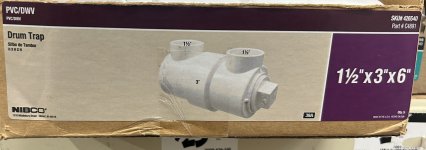
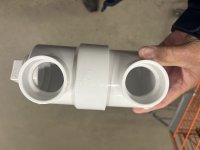
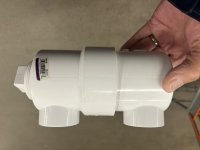
Saw a PVC "Drum Trap" and was curious what the hell it was and how it would be used.
Quick google did not tell me why someone would use this over a conventional trap.
Any plumbers here to explain why and how this would be preferred?
not sure they are code compliant around here, but they get used when space is tight, on handicap situations for wheelchair clearances etc.
I cut one out of a lab at Cornell in about ‘72-3. This back in the day of mercury thermometers for temp..Had a hand on the bottom of it. When it came loose it took me to the floor. It was filled with Mercury from decades of broken t-moms. We then went to the basement with a bucket and about filled it when draining the building trap.
fitter30
Well-known member
Mercury will eat copper after the oxidation layer is removed
Mercury will eat copper after the oxidation layer is removed
Not sure what that has to do with PVC but interesting...
I seem to recall drum traps in the art room at school (clay and paint) and I know I had installed something similar in the hand wash sinks at the boatyard. Was easy to unscrew and dump the sludge...
TOWLC
Well-known member
I've seen something similar used outside in basement entry stairwells to drain rain water where you might also get debris like gravel and sand in them. You actually want the trap to catch that stuff so you can clean it out instead of having it go down the drain.