Briggs & Stratton DOV / Vanguard
Back in the late 2000s, I was shopping for a new mower for my business. After a series of Victas and a dud Honda riddled with problems and far too heavy, I wanted to give Masport a try. I also decided to switch from aluminium to steel for the deck construction, primarily because stamped steel is lighter than cast aluminium.

The models in question were the 600ST and 750ST from the silver Platinum series, pared-back mulch-and-catch units with a 19-inch cut and I/C engines. In the end, I went for the 750ST with the big-block 850. I was coming from an older 190cc Briggs Quantum XTS60 and an 187cc Honda GSV190, so I really didn’t want to go backwards on capacity. Sadly, that mower lasted less than 12 months — the supposed "heavy-duty steel chassis" ended up with flogged-out axle mountings, rendering it fit only for the scrap pile. The engine, on the other hand, got repurposed. I learnt a lesson with that mower: never buy a steel chassis for commercial use, and always get the biggest engine possible.

Going back to that choice between the 600ST and 750ST, the main difference was the engine, both of which were brand designs. The first being the one I went with, the 190cc Briggs & Stratton 850-Series OHV I/C, which effectively replaced the Intek Edge. The second, which the salesman seemed very interested in, was the totally new and different 161cc Briggs & Stratton 750 DOV I/C. Being Industrial Commercial (I/C) engines, both had a cast iron bore for longevity. While I went for the bigger option, I was still curious about that new DOV engine. A few years later, I bought a Victa Mustang with the DOV engine.

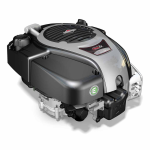

DOV stands for Direct Overhead Valve. This wasn't the usual pushrod OHV design, instead it used lever arms that were operated by a single lobe camshaft. Briggs made lofty claims of improved performance, increased efficiency, lower oil consumption, lower operating temperatures, 10% less vibration, and 60% less high frequency noise. Some came with a primer, while others had the ReadyStart automatic choke, the first Briggs to get that system. This engine was initially sold with a cast iron bore and marketed under the I/C banner, but an alloy bore and a smaller 140cc version came later, as well the InStart system.
A period brochure I collected at the time –

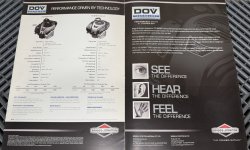


On paper, this all-new engine sounded like a breakthrough for Briggs & Stratton. Keep in mind that their bread-and-butter lawn mower engines, the L-Head side valve, could trace their roots back to the 1960s. And yet...
I hated this engine. The smaller 161cc capacity just couldn't match the power and torque of the 190cc 850-Series. Power was around 5.0hp with 10.8 Nm of torque for the DOV, and 6.5hp and 11.5 Nm for the 850. In heavy cutting conditions, the DOV would bog down and run out of puff long before the 850. I also found as the engine laboured, it tended to make more noise, a clattery sound that didn't really live up to the claims of lower noise.

The thing I never understood about the DOV was its role within the range. It lacked balls to be a commercial option, and the price premium it carried over other Briggs engines didn't really suit the cost-conscious domestic market. Then Briggs replaced the L-Head engines with their new small-block conventional OHV E-Series, which was a completely different design to the DOV and came in similar 140cc and 163cc sizes. So what purpose did the DOV serve? It was too expensive for the homeowner market, and too weak for commercial use.
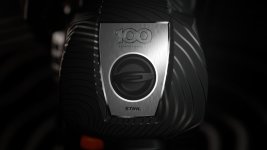
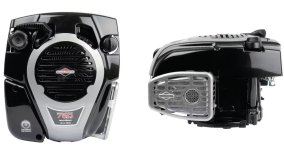
Clearly Briggs struggled to find homes for the DOV, so in the mid 2010's they rebranded it as a Vanguard. While the regular DOV remained in production, the Vanguard DOV was based on the 161cc version with a cast iron bore and presumably intended as an alternative to the Honda GXV160. Compared to "real" Vanguard's, which were improvements over the regular Briggs (or totally different), the Vanguard DOV was exactly the same as the regular DOV, just with a different top cover and fan shroud, an all-black design, muffler cover and gold badging.


In Victa's case, which were still owned by Briggs & Stratton at the time, they replaced or supplemented their commercial models with the Vanguard. That included the Commercial 19 and 21 models, the Mulchmaster, and MasterCut 600. Victa also designed a snorkel adaptor for the air filter cover, the only modern Briggs to get a snorkel. At one point, they sold it alongside the GXV160 and the last of the Powertorque engines.


Can you spot the mistake with this image?

And yet, despite the name change, the Vanguard suffered the same drawbacks as the regular DOV. Gutless, noisy and prone to valvetrain failures. I've never been a Honda diehard, but the similar capacity Honda GXV160 felt stronger and smoother..........if not quieter. Again, the DOV and Vanguard just didn't have the balls, no matter what market it was aimed at.
From what I can see, the DOV and Vanguard were discontinued late last year, early this year. Overall, the valvetrain looked innovative, but in reality, didn't really do anything over and above a traditional OHV setup. And it's silly product decisions like the DOV that most likely contributed to their bankruptcy a few years ago........spending money on stuff that didn't serve a defined purpose. And yet, look at Honda and they only make a handful of different engines, instead of countless different variations on a theme that aren't fully supported in the market.
If you’ve read this far, well done! If you’ve scrolled this far, well this is where the interesting part is, well interesting to me at least…………….
The following information is from an ex-Briggs & Stratton Australia employee who kindly took the time to answer a couple of questions regarding the DOV engine and Briggs manufacturing in recent years.
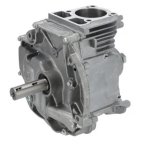
“The DOV was launched to dealers around 2010, believe it or not, they were/are made in China. The first of the small verticals to be made there. At the time everything from the 148 cc L heads up was made in the USA. Early examples even had Torch brand spark plugs. It was the first appearance of the Ready Start system and started easier than anything else B&S had at the time. The air filter housing and element were both huge improvements over the old Intek 55. The 850 series (made in USA) was released shortly after.”

In regard to the Vanguard branding –
“We really wanted Vanguard on the 850 commercial engine but, of the two engines, it was only the I/C version of the DOV that met the very strict requirements to wear the Vanguard name. Other upgrades were made to the piston and rings from memory. Emissions killed the snorkel, and from memory EU V standards killed the I/C and Vanguard versions. Emissions also affects where the word ‘commercial’ can be used so the 850 commercial engine ended up as the 850 PXi series.”
In regard to manufacturing locations –
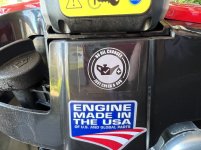
“Pre-covid, the small vertical engines for Australia (excluding DOV) were all made in the USA, that includes all Classic, Sprint, Quattro, and Quantum L-head engines, as well as the new E, EX, and EXi 140cc, 150cc, 163cc OHV engines. Manufacturing began in China around 2020 and the local Victa business chose to continue sourcing from the USA at this stage as the price difference was negligible. However, supply chain challenges during covid (and chapter 11) blew out the lead times from US plants to over a year for some engine models and left Victa with the choice of Chinese built engines, or no engines. At that point, Victa started using Chinese built engines. That stabilised somewhat and as of the sale to Roy Gripske & Sons, it was a dual source model for vertical shaft engines under 190cc. Meaning on the day you might get a Chinese one or an American one.
Quality was, for all intents and purposes, identical. The 190-223cc 850 & 1000 series on commercial mowers and small ride-ons are all still made in the USA though. Incidentally, most of the ‘global’ parts they reference are less important ones like blower housings. Internals and castings were mostly US produced even if assembled in China.”
In regard to OEM parts –
“Whenever people would try to save a couple of bucks on aftermarket parts I always went back to the time I had a customer DOV on a Masport that was dusted. Looking at the filter element, a small section of the paper hadn’t bonded with the foam gasket in production. It was a genuine filter so I approved a brand-new engine straight away, no further questions. Nobody’s perfect and the fact the filter was genuine meant the customer got a new engine. If an aftermarket filter had done the same thing they’d have been SOL.”

So there you go, the failure that was the DOV and DOV Vanguard engines. A waste of resources that no doubt contributed to the chapter 11 bankruptcy in July 2020.