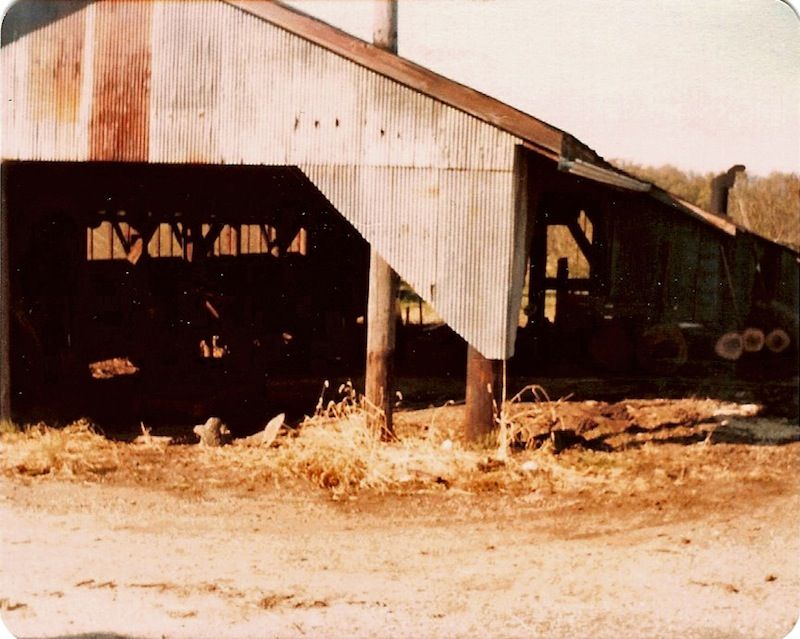
Here are some photographs of Bob's Saw Mill circa 1980. This is the mill where, over the years, I use to have all my timber sawn into lumber. Pretty unassuming when you drive up to it for the first time. You can see some logs to the far right.
It was operated by one, older gentleman by the name of Bob Valentine, commonly referred to locally as "The Apple Man" since he lived on several acres that contained his apple orchard and saw mill. His age was in his late 70's when we first met and I don't believe he ever married, a confirmed lifelong bachelor and he like it that way. He could be a bit gruff when you first met him but he was, in reality, a teddybear of a guy. His philosophy when asked if he was concerned about kids stealing apples from his trees was, "if I thought they were taking that many apples I'd just plant another tree." Pretty mellow fellow really once you got to know him.

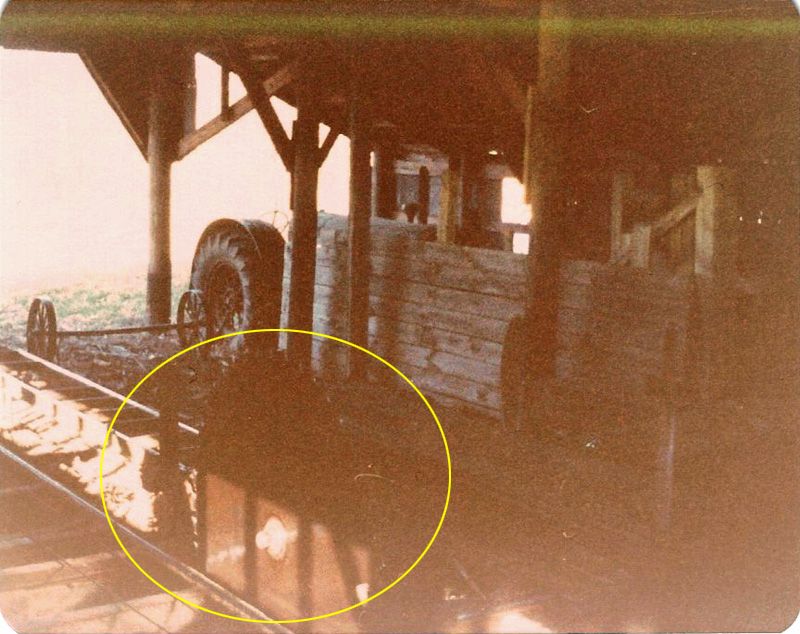
Moving around to the back or business end of the mill reveals on the left the old green mid-1930's Oliver tractor he powered the mill with via the tractors PTO (power take off) and about a 30' (9.1 m) long flat belt. He used a hand crank to start the old Oliver and could usually get it started with just a couple of cranks. Circled is the carriage where the logs will be placed and the saw. In the foreground are boards stacked that have already been sawn.
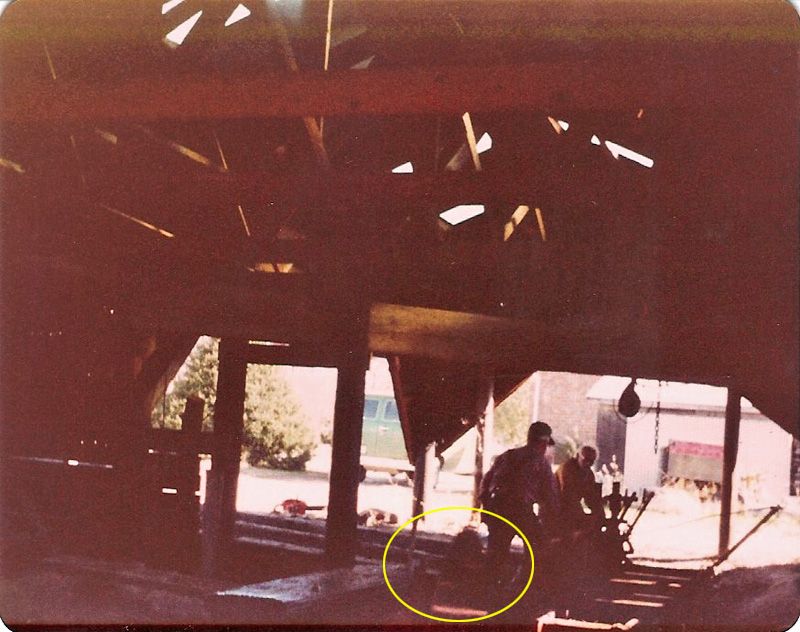
Here's a view inside the mill (I was photography challenged back then to say the least, sorry) Circled is the saw blade about 5' (1.5 m) in diameter. In the background is the Oliver tractor.
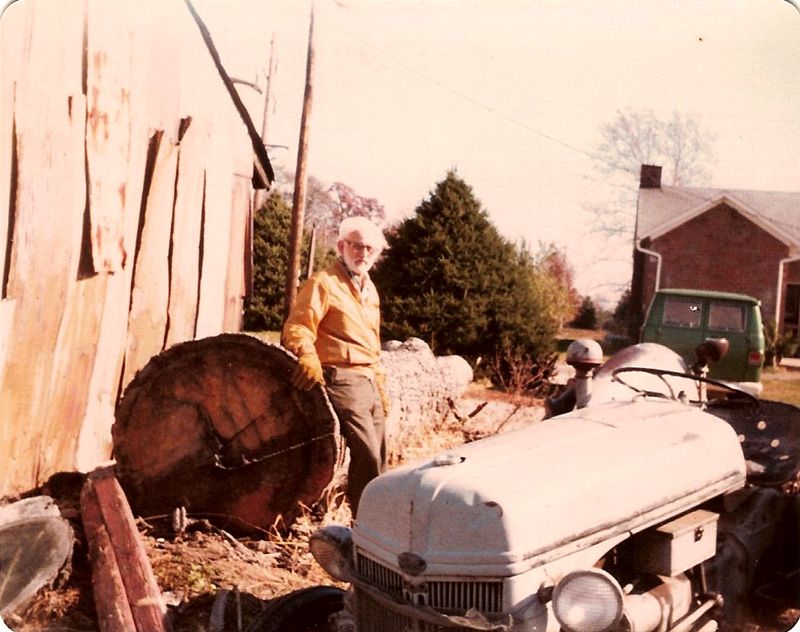
Here's Dad standing by an oak log to give you an idea how large material Bob could handle. He used that Ford 8N tractor around the mill to move the larger logs. In the back is Bob's small brick house, just steps away from the mill and our green Chevy van that we used to move the lumber once it was sawn.
First thing Bob asked was if the logs came from trees in the city or the country. He didn't like city trees, "too much hidden hardware in them". He meant nails, screws, porcelain wire insulators, Terraplane steering wheels

, that sort of hardware. Saws and metal don't get along well. Hit a nail with the saw and you risk at the very least instantly dulling it and at worst breaking a saw tooth or teeth. His policy was, if your log results in breakage, you get to pay for a replacement tooth or teeth. Fair enough. He always looked the logs over
very carefully and here he's using this metal detector (yellow circle) examining the logs before he did any sawing. Background in the green circle are the handles of cant hooks. A cant is what a log is called after it's been squared and these tools helped turn the cant when it's on the carriage. Here's a link for some background information on peaveys and cant hooks.
http://www.ruralheritage.com/logging_camp/peavey.htm
Bob's the one who taught me all about his mill and all the correct terminology for everything. "If you'er going to help me out here at least pretend you'er intelligent." Remember I said he could be a bit gruff?

Dad and I instantly liked him. Circled in red is a old wood bodied pulley or block positioned right over the carriage to help with larger logs.
Whenever Dad and I brought logs to Bob he always let us help him saw them. That's the saw blade circled in the picture above and below. No guards of any kind around it - respect the blade! We first started to use Bob's services because he had a reputation of maintaining his equipment and cutting straight boards. That's pretty important in a saw mill, they don't all do that.
Dad helped position the logs onto the carriage and help Bob decide how each log should be sawn to maximize yield based on the grain. He also helped turn the cants when needed to get the best looking grain patterns. They both would study each cant as it was being cut. I remember how excited they both would get when a particularly nice log was cut into for the first time. It was like unwrapping a present with each cut. My job was the off bearer removing the boards from the off-feed rollers and piling them in stacks. I had to almost run to keep up with those two. Here's a link to see an old saw mill in action:
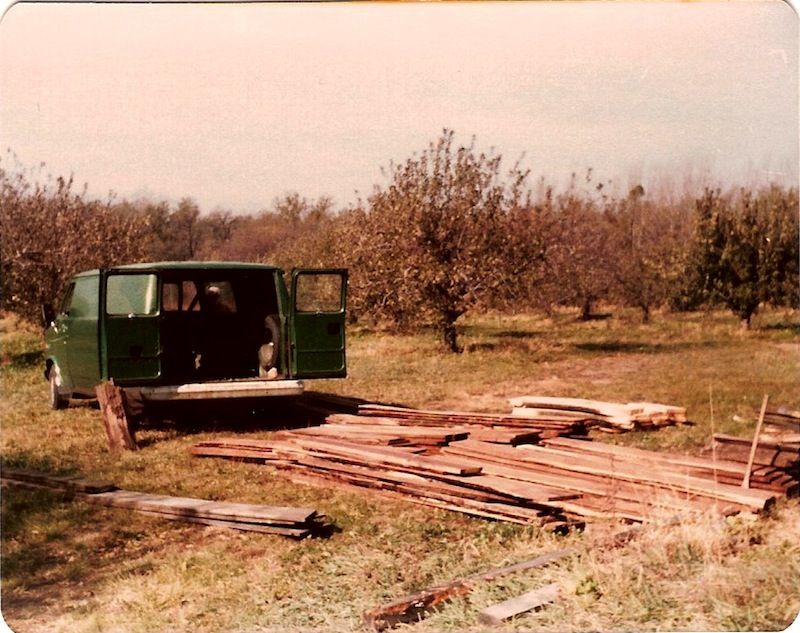
Here's a few hours work worth of Walnut boards. When it was first cut, some of the Walnut boards were almost purple in color, slowly changing to chocolate brown as they dried. With this batch it took more than 1 trip with the van to move them all.
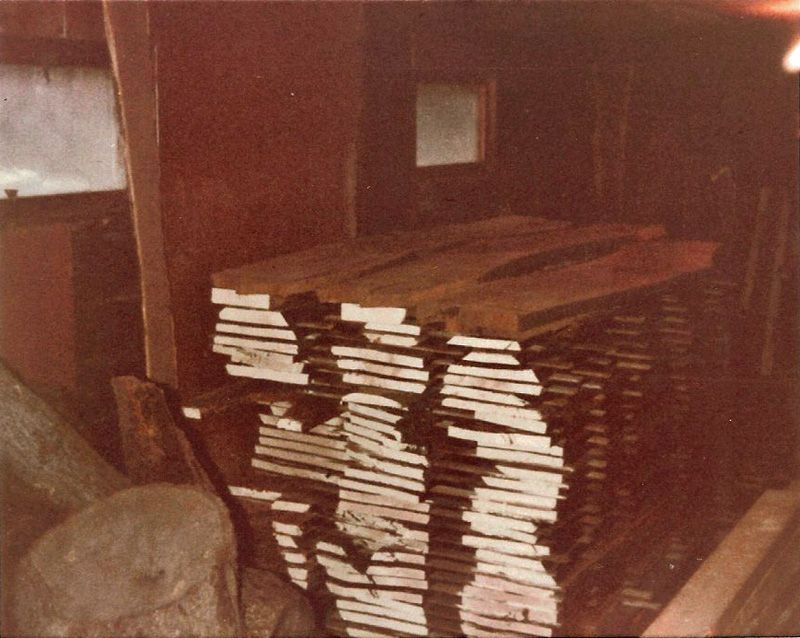
Here's one of my first batches of Walnut stacked in the same order that they came out of the log with stickers and starting to dry. This was before I learned to paint ends with white glue, here using white paint.
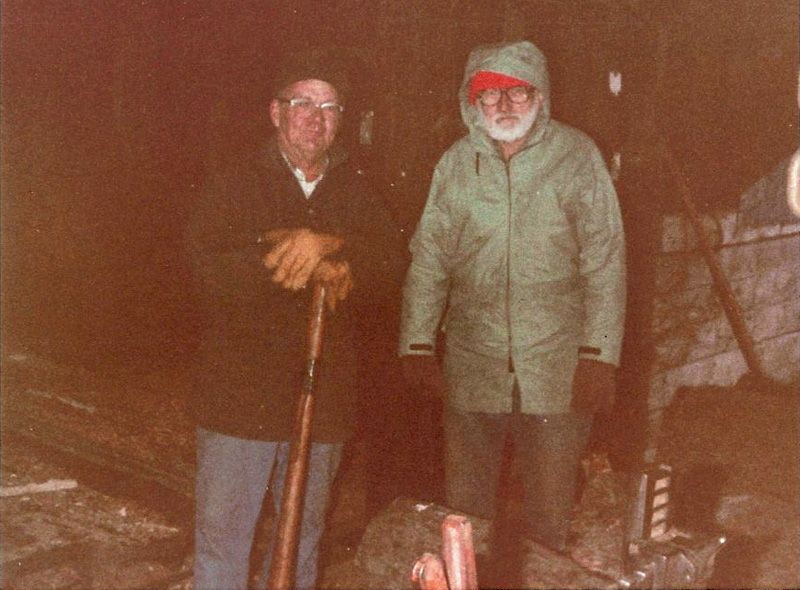
This was one of the last times we were out to see Bob, seen here leaning on his cant hook along with Dad. He preferred to saw furniture grade lumber in the winter to minimize checking and warping.
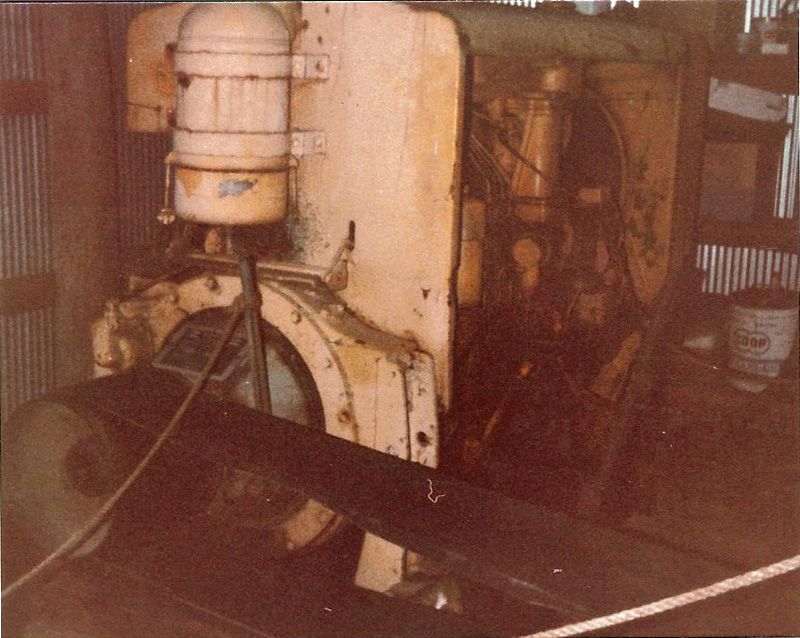
He had replaced the old Oliver tractor with this Caterpillar 4 cylinder diesel he bought surplus. He still used a flat 10" (3.9 cm) wide belt, seen on the bottom, left to right, to power the saw. To start the diesel you first started a small gasoline engine and then that gas engine was used to turn the big, old Cat over. In cold weather it turned over slowly when being started but always barked to life. Bob was awfully proud of his Cat. He said he was "getting too damn old to fool with that old Oliver"
Bob is no longer with us and I'm sorry to say I don't know what became of his mill. He was one of a kind much like Mr. Johnson. I consider the time spent with both Dad and him over the years a gift.
Thomas