Hello all, I'm a new member with a question about finishing a vise as bare metal. The vise is a 5-inch Craftsman 506-51810, made by Columbian (in 1960? to 1975?). I got it at a Mid-West Tool Collectors meet a couple weekends ago.
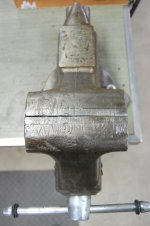
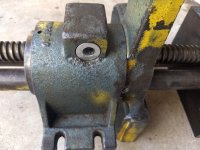
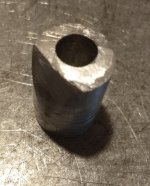
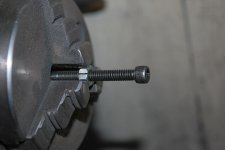
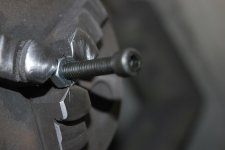
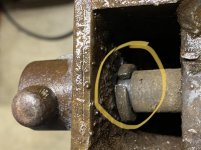
The four images below show the vise as bought, its two sides cleaned of paint, and the state of the jaws.
Yep, hacksaw cuts on them plus a small, less than 1 mm, out-of-parallel error in seating the right side of the fixed jaw insert. (Clogged and damaged slots on the screws promise lots of fun loosening them.) So far neither the cut marks nor the insert misalignment are a problem for me in use.
I'll probably tackle loosening the inserts and seating them properly as the next project with this vise, but there's no hurry as it works well enough as is. The vise is not going to see action beyond basic home handyman projects.
However after I stripped off the gray paint then the Craftsman red below it, I got to liking the bare metal finish. My original plan was to strip it down then repaint in dark blue with the make, model number, and chevrons picked out in silver. I may still do that.
For now however I'm leaving it bare. But to protect it from rust, I've painted the casting parts with a coat of shellac (Zinnser's bulls-eye clear shellac).
So my question, after all this preamble, is why isn't shellac used more often in cases like this? It's easy to apply and dries fast. It can also be removed with denatured alcohol.
Numerous restorers in this thread and others at GJ have spoken of wiped-on BLO in one or more coats and waiting perhaps a day between coats for it to harden. With the shellac, one coat covers it and dries in about 30 minutes or less, depending on conditions. (It darkens the metal a little, but so does BLO it seems.)
Is there a reason NOT to use shellac as a bare metal finish? I'm hoping to hear from people who know a whole lot more than I about this —