AngryBeaver
Well-known member
With the extensive research on my reed thread, I figure it’s time to put together a Reedsman thread after seeing a lot of wrong information on the social media platforms. This will apply only to reed made craftsman’s from 1943 to 1948/49
There are no tool catalogs from 1943 or 1944 that I can find. If anyone has any that list the vises, please, by all means post them up. This will be an ongoing updated thread. As if right now, an august of 1943 dated craftsman is the earliest on record and am early 1949 is the latest. I’m guessing that one was a leftover as 1948 brought the introduction of the rock island made 0519X series.
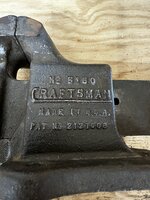
The only craftsman’s made were a 3”, 3-1/2”, 4”, 4-1/2” and 5” in both stationary and swivel models. The model numbers are as follows. There were all R series reeds.
5179 3” four bolt stationary base same as a 103R
5180 3.5” four bolt stationary base same as a 103-1/2R
5181 4” four bolt stationary base same as a 104R
5182 4-1/2” four bolt stationary base same as a 104-1/2R
5183 5” four bolt stationary base. Same as a 105R
5184 3” swivel base same as a 203R
5185 3.5” swivel base, same as a 293-1/2R
5186 4” swivel base, same as a 204R
5187 4.5” swivel base, same as a reed 204-1/2R
5188. 5” swivel, same as a reed 205R
Like most brands, the largest and smallest are hardest to find. As far as I know, the 5188 is the only 5” swivel base to surface in the last 3-4 years of searching. Quite a few 5183’s have surfaced. The 5184 (3” swivel base) is one of the more common ones, yet the 5179 seems to be pretty elusive also. None are “easy” to find. I would love to know the actual production numbers, as they were only produced for 5 years, and half of that during the war.
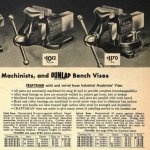
This was from a 1945 catalog. The 5179 is not listed.

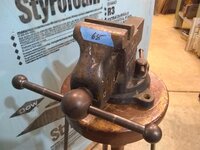
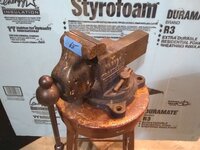
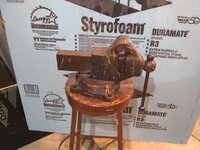
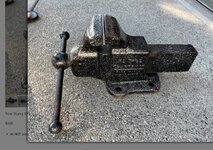
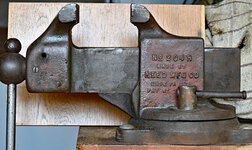
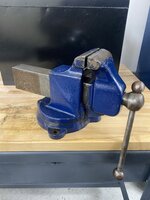
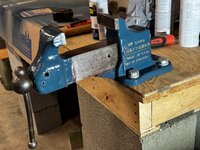
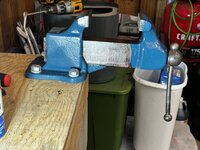
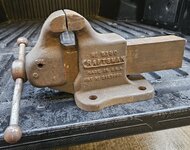
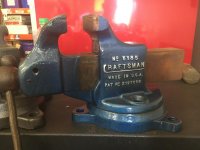
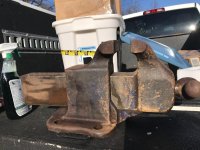
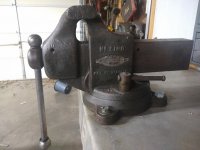
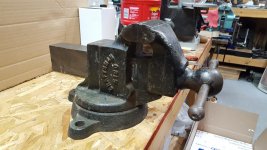
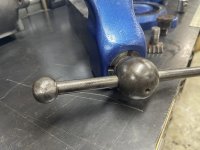
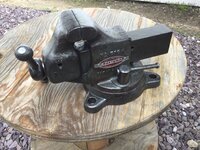
There were a few changes from the introduction to the end. 1943 to 1947 models will have a meatball spindle and original color is a deep blue with a hint of violet. Starting sometime in 1947, they switched to a hockey puck spindle. With this introduction, the underline cast in logo was replaced with a metal heritage badge attached with brass drive screws. The color was change as well, to the 1940’s greenish grey. The hockey puck spindles are approximately 1/2” longer that the same model meatball spindle. Reed made this change sometime in 1947 and offered better stability, as the longer spindle would offer full thread engagement of the nut when the back of the slide was flush with the back of the static jaw. The meatball spindles only had half the nut engaged when the slide was flush with the back of the spindle.
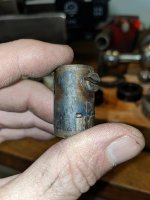
The 1943 and 1944 models will have a cast nut. Sometime in 1944 they switched to a steel nut. I’ve had quite a few 1944 models, both with cast nuts and steel nuts with date stamps all over the place. I assume this was a running change based on using old stock first.
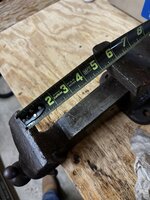
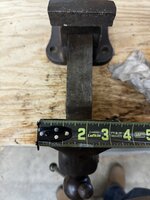
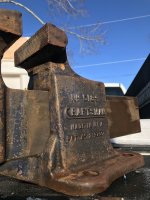
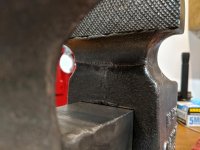
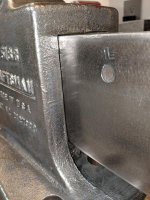
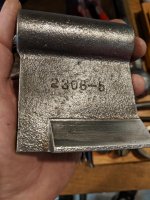
This is the earliest dated reedsman on file so far. 8/43. This 5180 (103-1/2R) had been repainted when I got it and the marks were very lightly stamped. This one had 1/4” stamps, where as most of the 1944 and 1945 stamps are smaller 1/8” or 3/16” stamps. I assume this was to help disguise them as I have never seen the smaller stamps on any reed branded vise. Every reedsman I’ve had has had the date stamp on the non logo side. Both on the static and dynamic jaw. This was done for warranty purposes. It’s either 3/43 or 8/43, but I believe it to be an 8.


There are no tool catalogs from 1943 or 1944 that I can find. If anyone has any that list the vises, please, by all means post them up. This will be an ongoing updated thread. As if right now, an august of 1943 dated craftsman is the earliest on record and am early 1949 is the latest. I’m guessing that one was a leftover as 1948 brought the introduction of the rock island made 0519X series.
The only craftsman’s made were a 3”, 3-1/2”, 4”, 4-1/2” and 5” in both stationary and swivel models. The model numbers are as follows. There were all R series reeds.
5179 3” four bolt stationary base same as a 103R
5180 3.5” four bolt stationary base same as a 103-1/2R
5181 4” four bolt stationary base same as a 104R
5182 4-1/2” four bolt stationary base same as a 104-1/2R
5183 5” four bolt stationary base. Same as a 105R
5184 3” swivel base same as a 203R
5185 3.5” swivel base, same as a 293-1/2R
5186 4” swivel base, same as a 204R
5187 4.5” swivel base, same as a reed 204-1/2R
5188. 5” swivel, same as a reed 205R
Like most brands, the largest and smallest are hardest to find. As far as I know, the 5188 is the only 5” swivel base to surface in the last 3-4 years of searching. Quite a few 5183’s have surfaced. The 5184 (3” swivel base) is one of the more common ones, yet the 5179 seems to be pretty elusive also. None are “easy” to find. I would love to know the actual production numbers, as they were only produced for 5 years, and half of that during the war.
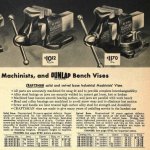
This was from a 1945 catalog. The 5179 is not listed.
There were a few changes from the introduction to the end. 1943 to 1947 models will have a meatball spindle and original color is a deep blue with a hint of violet. Starting sometime in 1947, they switched to a hockey puck spindle. With this introduction, the underline cast in logo was replaced with a metal heritage badge attached with brass drive screws. The color was change as well, to the 1940’s greenish grey. The hockey puck spindles are approximately 1/2” longer that the same model meatball spindle. Reed made this change sometime in 1947 and offered better stability, as the longer spindle would offer full thread engagement of the nut when the back of the slide was flush with the back of the static jaw. The meatball spindles only had half the nut engaged when the slide was flush with the back of the spindle.
The 1943 and 1944 models will have a cast nut. Sometime in 1944 they switched to a steel nut. I’ve had quite a few 1944 models, both with cast nuts and steel nuts with date stamps all over the place. I assume this was a running change based on using old stock first.
This is the earliest dated reedsman on file so far. 8/43. This 5180 (103-1/2R) had been repainted when I got it and the marks were very lightly stamped. This one had 1/4” stamps, where as most of the 1944 and 1945 stamps are smaller 1/8” or 3/16” stamps. I assume this was to help disguise them as I have never seen the smaller stamps on any reed branded vise. Every reedsman I’ve had has had the date stamp on the non logo side. Both on the static and dynamic jaw. This was done for warranty purposes. It’s either 3/43 or 8/43, but I believe it to be an 8.
Last edited:










 .
.