traumadoc2b
Well-known member
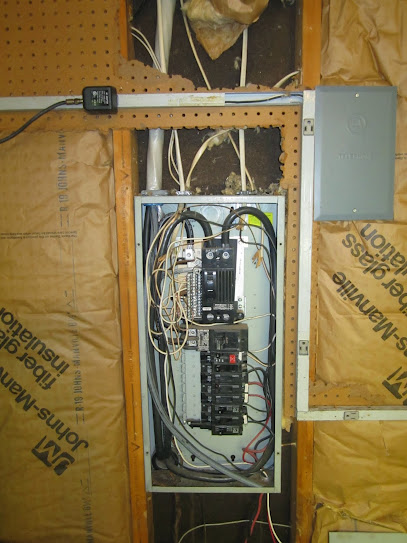
I have had a few electricians out about rewiring my house, built in 1969 with aluminum wiring. The house had a lateral service entering a detached garage where there is currently a 200 amp main panel. There is a 150 amp breaker from the main feeding a sub panel in the attached garage - this sub supplies the house.
In addition to the branch circuits being aluminum without the correct connections to each device, some of the circuits are overloaded (12 AWG Al on 20 amp breakers), there are some open splices in the attic and garage, and the cables are not protected with bushings as they enter the panel through the knockouts.
Back to the electricians - I don't think anyone seems to be too interested because they probably don't want to fish all that cable through the walls. It's a big job, one that I'm certainly not too excited about doing myself. I do however feel that I need to start making progress to update the electrical and make things safer. One suggestion had been to upgrade to 400 amp service and have 2 separate 200 amp mains, since the house and garages are detached from one another. Then have a 100 amp sub in the basement, to allow for shorter home runs on the re-wire within the basement and to the first floor receptacles.
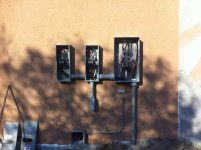
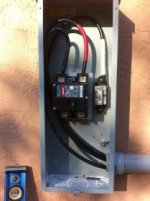
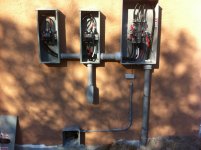
Since the feeder for the existing sub runs through the structure of the detached garage, then outside and underground to the attached garage and house, I'm certain that there will need to be grouped disconnects for the new main in the detached garage and feeder to the house/attached garage. Even if it wasn't required, I would want the feeder to have overcurrent protection. One of my questions is about the required size of this cable and grounding for the main in the house/attached garage. The main for the house will be separate, beginning at the 320 meter socket, there will be a disconnect and overcurrent device, and this will supply the entire load for that structure (house and attached garage), yet it's still supplied by a feeder, not a service conductor because of the disconnect just inside the detached garage from the meter, next to the other main, right? So, what size do the conductors need to be to the 200 amp main in the house? Is 4/0 Al enough?
Since the structures are separate, do I ground the service to the house at the disconnect in the detached garage (that's where service conductor ends and feeder begins), or I have to install a separate grounding electrode conductor at the house, at that main panel? My inclination would be to have the GEC set up at the OCP in the detached and use an equipment grounding connector within the feeder to the main in the house, keeping the neutral and ground separated within that main panel.
In addition to the branch circuits being aluminum without the correct connections to each device, some of the circuits are overloaded (12 AWG Al on 20 amp breakers), there are some open splices in the attic and garage, and the cables are not protected with bushings as they enter the panel through the knockouts.
Back to the electricians - I don't think anyone seems to be too interested because they probably don't want to fish all that cable through the walls. It's a big job, one that I'm certainly not too excited about doing myself. I do however feel that I need to start making progress to update the electrical and make things safer. One suggestion had been to upgrade to 400 amp service and have 2 separate 200 amp mains, since the house and garages are detached from one another. Then have a 100 amp sub in the basement, to allow for shorter home runs on the re-wire within the basement and to the first floor receptacles.
Since the feeder for the existing sub runs through the structure of the detached garage, then outside and underground to the attached garage and house, I'm certain that there will need to be grouped disconnects for the new main in the detached garage and feeder to the house/attached garage. Even if it wasn't required, I would want the feeder to have overcurrent protection. One of my questions is about the required size of this cable and grounding for the main in the house/attached garage. The main for the house will be separate, beginning at the 320 meter socket, there will be a disconnect and overcurrent device, and this will supply the entire load for that structure (house and attached garage), yet it's still supplied by a feeder, not a service conductor because of the disconnect just inside the detached garage from the meter, next to the other main, right? So, what size do the conductors need to be to the 200 amp main in the house? Is 4/0 Al enough?
Since the structures are separate, do I ground the service to the house at the disconnect in the detached garage (that's where service conductor ends and feeder begins), or I have to install a separate grounding electrode conductor at the house, at that main panel? My inclination would be to have the GEC set up at the OCP in the detached and use an equipment grounding connector within the feeder to the main in the house, keeping the neutral and ground separated within that main panel.
Last edited: