To avoid these ads, REGISTER NOW!

Cree LS4 4' LED un-boxing and review

e36jon

Well-known member
Joined
May 2, 2013
Messages
237
Location
San Francisco CA
Greetings all

I've really appreciated all of the amazing advice here on garage lighting. I am in need of lights for my own garage and was interested in LED, but couldn't find any fixtures at Lowes / HD / Costco that had a good color rendering index (CRI), so I expanded my search and ended up finding the Cree LS4 (or LS8) fixtures.

They come in 4' or 8' lengths, have a 90+ CRI, are rated for 4000 lumens per 4' fixture, and come in 3 different color temperatures, 3500, 4000, and 5000K. They aren't cheap, at ~$125 ea, but there aren't any less expensive options at these specs that I could find.

I bought mine from earthled.com (I am not associated in any way with them.), and the units were drop shipped from Cree to my house ~2 weeks after ordering. You may get a better deal from a local electrical / lighting supply, or in bulk (I bought two units to test the waters. I'll need 20 more to get to 100 lumens / ft^2).

So, in addition to the unboxing pictures, my first impressions were:

-Wow, these are heavier than I thought they would be! The lens / emitter assembly is where all the weight is, and I'll hazard that it's a good sign for the heat-sinking of the LED's. Also, the lens feels quite thick / tough, another good thing as I always forget to look up and bash things into the ceiling all the time...

-I really like the way the units look. They are very compact (~2" lower than a comparable T8 fixture, which matters for the 7' ceilings I have in my shop.), with no nooks / crannies to collect dust on the exteriors.

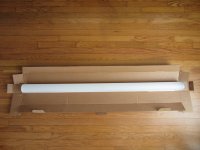
I'll post back with installed photos when I have them, but here are the unboxing shots.

Cheers,

Jon
 

Attachments

  • IMG_0630.jpg
    IMG_0630.jpg
    143.9 KB · Views: 277
  • IMG_0640.jpg
    IMG_0640.jpg
    133.6 KB · Views: 329
  • IMG_0635.jpg
    IMG_0635.jpg
    141.3 KB · Views: 383
  • IMG_0634.jpg
    IMG_0634.jpg
    135 KB · Views: 308
  • IMG_0633.jpg
    IMG_0633.jpg
    140.5 KB · Views: 264
  • IMG_0632.jpg
    IMG_0632.jpg
    138.9 KB · Views: 256
  • IMG_0631.jpg
    IMG_0631.jpg
    140.8 KB · Views: 286
To avoid these ads, REGISTER NOW!

Jere

Well-known member
Joined
Oct 26, 2011
Messages
708
Interesting, I havent seen these before. What kind of leds does this use? How many emitters does your model have under the light diffuser?
 
OP
E

e36jon

Well-known member
Joined
May 2, 2013
Messages
237
Location
San Francisco CA
Here are a few more shots (Hit my limit on that last post.).

-As has been mentioned elsewhere on this sub-forum, LED's don't have a ballast, but they do have power-supplies. Here's a pic of the guts for anyone that might know what they are looking at...

-This fixture, and most of the commercial grade ones I looked at, have a provision for low-voltage dimming. I have no experience with it, but here are the leads.

Let me know if you want additional views and I'll get on it...

Also, I didn't post the rest of the specs (From the earthLED website)


•Cree TrueWhite® Technology
• Delivered light output: 4000
• Input power: 44 watts
• LPW: 90
• CRI: 92
• CCT: 3500K, 4000K, 5000K
• Input voltage: 120 – 277 VAC; 60 Hz

• Limited Warranty: 10 years


• Dimensions: L 48.0" (1219mm) x W 2.5" (64mm) x H 3.0" (77mm)

•Designed to last 50,000 hours
• Mounting: Surface, suspended, pendant, cove


The Cree website (http://www.cree.com/Lighting/Products/Indoor/Surface-Ambient/LS-Series) shows some other interesting accessories / versions as well. They have an 'emergency light' option that comes with an onboard battery that powers some of the LEDs (you don't get 4000 lumens) for some amount of time if there's a power outage. Cool.

I am in no way associated with Cree. (Started sounding a little rah-rah! there...)

Cheers,

Jon
 

Attachments

  • IMG_0637.jpg
    IMG_0637.jpg
    140 KB · Views: 264
  • IMG_0639.jpg
    IMG_0639.jpg
    126 KB · Views: 234
OP
E

e36jon

Well-known member
Joined
May 2, 2013
Messages
237
Location
San Francisco CA
Wow, you snuck a post in before I could even finish fully getting all my original info up!

The lens is 'permanently attached' to the emitter array, so I'm afraid I can' tell you what is happening under the hood. I'm confident that I, or others on this website, could gain access to said array without breaking a sweat, but I am not confident I could do it with also breaking the fixture. (Hopefully I won't be booted for my lack of gusto at tearing into my shiny new toy...)

I'm going to guess that the unit uses Cree LED's, since they are an actual manufacturer. I would further guess that part of their achieving a 92CRI is their having access to the cream of their own LED crop. There are some folks on here that work in the industry and I suspect you'll get better answers from them shortly...

Cheers,

Jon
 

Electric_Light

Well-known member
Joined
Jan 3, 2015
Messages
74
Do the Triscuit test. Details are in the other thread. Most LEDs fail that test.

You said your own garage?

The tag says 47 CFR part 15 Class A, which means that installing them at home is an FCC violation. LED drivers operate in such a way that they generally produce far more interference than fluorescent. Class A means it's approved only for commercial properties and they make way too much interference to comply with residential use standards.

With the quantity you have installed, the RF interference can be sufficient to interfere with a licensed radio service such as 4G LTE, ham operator, public safety VHF and such. It just means that if a neighbor complains about mysterious reception issues on his TV, radio or noise on ham radio and complains to FCC and the noise source is traced to your house, you'll get don't turn it on anymore or $**/day fine going forward. All of these are licensed services. Manufacturer is not likely to help you out since the fixtures are installed where they're not allowed. Fluorescent ballasts rated for both residential and commercial use are properly rated as Class B residential use. For example: http://genet.gelighting.com/LightProducts/Dispatcher?REQUEST=BALLASTSPECPAGE&PRODUCTCODE=74472

One example was a car wash equipment. A driver complained about interference on his AM radio. It triggered a visit and an order from the FCC. I'm just saying that the "louder" class A commercial use only products used in a quantity have a much higher chance of causing a complaint triggering interference and installation where they shouldn't be installed will likely not get you help from the manufacturer.
 
Last edited:
OP
E

e36jon

Well-known member
Joined
May 2, 2013
Messages
237
Location
San Francisco CA
Wow, you got me on the FCC noise rating...

I'll have to do some looking of my own to validate that I'm in trouble using these at home (Yes, "my garage" is at home, in a residential neighborhood.). Ditto for checking out what the 'triscuit test' is.

Can't say I was expecting a spanking when I posted this here...
 

machsnell

Well-known member
Joined
Jun 12, 2010
Messages
942
Location
Northern Virginia
not too worried about the fcc showing up because i have a large property but if these were installed in my garage it would affect my cell or internet? i thought only flourescents jammed phones or radio up a bit??
 

Electric_Light

Well-known member
Joined
Jan 3, 2015
Messages
74
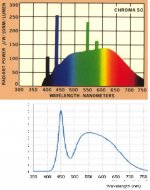
Here's the triscuit test i talked about. You'll see a terrible deficiency in spectrum in between 450-550 nm, and in the 370-450 nm. These are a signature LED spectrum flaw. In the attachment photo, bottom picture is the spectrum of a 5000K LED. The top picture is an industry standard color matching fluorescent lamp.

All current production LED lights are missing anything shorter than the blue LED's spectrum which means that its completely missing UVA and violet spectrum. This prevents currently available LED lighting products from correctly rendering anything that have fluorescence or colors sensitive to proper spectral power distribution.

Go buy a box of the same kind of Triscuit I am showing you here. Everything about this item is spectrum sensitive. The crackers themselves, the picture of the crackers and the blue-green to golden yellow transition all show color shifts under different lighting. It's in the gamut range that's very difficult for my camera to capture or the monitor to display so I can't really display what I am seeing on the screen. I told the camera to white balance to a neutral gray card before taking each picture rather than using the "preset" daylight.

Visually very close to the way it looks under natural daylight. It should look bluish cyan. This is under 5000K color matching fluorescent lamps with CRI spec of 90. Under natural sunlight, incandescent, or wide spectrum fluorescent lighting you will see bright, deep, greenish marine blue. To me, almost sickeningly vibrant. Ironically, it looks just the opposite in these pictures. It looks almost the same under incandescent once you give your eyes the chance to adjust to color temperature difference.

jVZbknT.jpg


Philips brand 5000K LED bulb. Note the peculiar color shift of printed crackers towards yellow. To my eyes, the green tint on the box was lost. It looks like shades of blue under a 5000K 90 CRI CREE/Eco Smart downlight as well. I believe it has to do with the interaction of the pigments with the spectral range between green and blue where LEDs have a spectral defect.

jDXgNCV.jpg


Pigments and colored transparent plastics showed the biggest skew. Things look very close between sunlight and colormatch 5000K fluorescent lamps, but not so with 5000K 90 CRI LED.
If everything shifted in color at the same time, it's just a matter of viewing pleasure. Unfortunately, they don't. The worst is when you try to get two sections to have the same color and they match up under defective light spectrum like LED, then have it show up as two different colors in the sun light.

It's convenient to play with words to pitch the absence of ultraviolet as a benefit for the LED industry simply because it's extremely difficult for affordable LED products to produce it. You'll find that different materials have different fluorescence. Light up with a black light. Soda bottles and such glow dim orange or yellowish. Some white plastics don't glow. Some glow brightly. So why does it matter? The binder or clear coat from different brands or batch may have different levels or color of fluorescence. This means that sources with inherent spectral defects like :lol_hitti LEDs may show a good color match with rest of the vehicle, but you see a clear difference once you look at it in the sun light in the morning.
 

Attachments

  • chroma_50.jpg
    chroma_50.jpg
    64.3 KB · Views: 62

cybrdyke

Well-known member
Joined
Sep 9, 2014
Messages
3,442
Location
USA
Jon,
Please dont worry about the drivers. In the very worst case scenario, you might notice that your FM boom box will get some static on certain stations. That's it. It's certainly not "illegal" in any fashion to use these fixtures and the FCC police aren't gonna raid your house with a swat team. There are millions and millions of LED drivers installed out there. The fixtures you bought are SWEET! You will really love them. Install them and dont worry about it.
Good luck.
CD
 
OP
E

e36jon

Well-known member
Joined
May 2, 2013
Messages
237
Location
San Francisco CA
Thanks Cybrdyke!

The Triscuit Test guy caught me off guard with his comment(s). I sent a question about this issue to customer service at EarthLED and I'm sure they'll come back with the same response. (I'll report back if/when I get a response.)

As a cautionary measure I'm going to limit my Triscuit intake going forward (especially with Wasabe), and maybe dial back my penchant for 80's fluorescent clothing. Hopefully it will be enough...

Peace,

Jon
 

Electric_Light

Well-known member
Joined
Jan 3, 2015
Messages
74
About the matter of radio interference:

If you can get EarthLED to a written agreement that they will refund the full purchase price without time limitations in the event you're ordered by the FCC to stop using them, you're golden.

http://www.arrl.org/news/am-broadcasters-hams-have-common-interest-in-cleaning-up-noise-sources

http://forum.allaboutcircuits.com/threads/led-lights-and-rf-interference.62966/


It's difficult to visualize it as you can't see RF, but noise adds up. If you run a shop vac in your garage, you're probably ok. If you make it a habit to run ten of them all at once, the chance of getting a noise complaint will go up substantially. Things like passenger vehicles are intended to be used where high noise levels will annoy people, so they're quietened accordingly. Similar concepts with RFI producing devices. Devices meant for residential area are muffled to make RFI noise a lot quieter.

There is no grandfathering for RFI generating devices like LED. If a cell phone antenna gets put up next to your property next year and they say your LED lighting is degrading their signal performance and complain to the FCC, you will be ordered to stop using it or you face substantially fines. Using a lighting device prone to producing interference and rated only for commercial use... and 20 of them in a home just increases the likelihood.

From CREE:

This device has been tested and found to comply with the limits for a Class A digital device, pursuant
to Part 15 of the FCC Rules. These limits are designed to provide reasonable protection against harmful
interference when the device is operated in a commercial environment. This device generates, uses,
and can radiate radio frequency energy and, if not installed and used in accordance with the instruction
manual, may cause harmful interference to radio communications. Operation of this device in a
residential area is likely to cause harmful interference in which case the user will be required to correct
the interference at his own expense.
 
Last edited:
OP
E

e36jon

Well-known member
Joined
May 2, 2013
Messages
237
Location
San Francisco CA
About the matter of radio interference:

If you can get EarthLED to a written agreement that they will refund the full purchase price without time limitations in the event you're ordered by the FCC to stop using them, you're golden.

http://www.arrl.org/news/am-broadcasters-hams-have-common-interest-in-cleaning-up-noise-sources

http://forum.allaboutcircuits.com/threads/led-lights-and-rf-interference.62966/


It's difficult to visualize it as you can't see RF, but noise adds up. If you run a shop vac in your garage, you're probably ok. If you make it a habit to run ten of them all at once, the chance of getting a noise complaint will go up substantially. Things like passenger vehicles are intended to be used where high noise levels will annoy people, so they're quietened accordingly. Similar concepts with RFI producing devices. Devices meant for residential area are muffled to make RFI noise a lot quieter.

There is no grandfathering for RFI generating devices like LED. If a cell phone antenna gets put up next to your property next year and they say your LED lighting is degrading their signal performance and complain to the FCC, you will be ordered to stop using it or you face substantially fines. Using a lighting device prone to producing interference and rated only for commercial use... and 20 of them in a home just increases the likelihood.

From CREE:

This device has been tested and found to comply with the limits for a Class A digital device, pursuant
to Part 15 of the FCC Rules. These limits are designed to provide reasonable protection against harmful
interference when the device is operated in a commercial environment. This device generates, uses,
and can radiate radio frequency energy and, if not installed and used in accordance with the instruction
manual, may cause harmful interference to radio communications. Operation of this device in a
residential area is likely to cause harmful interference in which case the user will be required to correct
the interference at his own expense.

Hey again

Who are you? I see you've only posted here 6 times and just joined. Do you have a digital footprint elsewhere?

I kind of doubt that EarthLED is going to be that gracious with any sort of warranty. Have you ever heard of a reseller doing such a thing?

Would you please provide a link to the Cree quote you embedded above? I tried to find something on their site and struck out, so I'm curious as to how I missed it.

I'm only a mechanical engineer, not an EE, so my ability to gut-check your post is limited. I do wonder how Cree plans to sell these into offices (I believe the target environment for this fixture.) where wireless is ubiquitous, and not get their *** handed to them.

Cheers,

Jon (Still in the dark, considering burying my contraband fixtures so the jackbooted FCC thugs won't come for me...)
 

cybrdyke

Well-known member
Joined
Sep 9, 2014
Messages
3,442
Location
USA
Jon, copy the phrase that's in bold and paste it into google. You'll see that its standard legal boilerplate jargon for almost anything electronic that has a small amount of RFI. Damn near every electronic ballast in every garage in every country in the world is a commercial class A ballast. Same is true with LED drivers. Any RFI issue will be low energy and will travel about 5 feet. This is a non-issue.
CD
 
OP
E

e36jon

Well-known member
Joined
May 2, 2013
Messages
237
Location
San Francisco CA
Jon, copy the phrase that's in bold and paste it into google. You'll see that its standard legal boilerplate jargon for almost anything electronic that has a small amount of RFI. Damn near every electronic ballast in every garage in every country in the world is a commercial class A ballast. Same is true with LED drivers. Any RFI issue will be low energy and will travel about 5 feet. This is a non-issue.
CD

Thanks, again, Cybrdyke

I went looking around the house and, as you say, lots of things I own and use are labeled as FCC A, or have a "may cause radio interference" label (CFI bulbs, and several Edison base LED's I have on hand.).

Maybe you can come up with some better graphics involving food packaging? It would make you so much more credible... :p
 
OP
E

e36jon

Well-known member
Joined
May 2, 2013
Messages
237
Location
San Francisco CA
e36jon, do you have the ability to measure the driver output?

Hey

I was hoping you would weigh in.

It seems easy enough to measure at the plug that connects to the driver array, if that is what you mean (Please confirm.). I'm assuming it's a DC output and that I could wire the fixture up and then measure at the plug. If you mean measuring actual RFI output, I wouldn't know how...

Cheers,

Jon
 

Electric_Light

Well-known member
Joined
Jan 3, 2015
Messages
74
Jon, copy the phrase that's in bold and paste it into google. You'll see that its standard legal boilerplate jargon for almost anything electronic that has a small amount of RFI. Damn near every electronic ballast in every garage in every country in the world is a commercial class A ballast. Same is true with LED drivers. Any RFI issue will be low energy and will travel about 5 feet. This is a non-issue.
CD

The hard switching PWM method often used in LEDs produce a very different pattern of RFIs than fluorescent lamps which are not controlled that way.

Both electronic fluorescent ballasts and LEDs intended for residential use are rated FCC Class B, residential use. All Energy Star rated LED bulbs must also have a FCC Class B rating in order to get the Energy Star rating. A requirement that was established due to issues experienced from products that do not have FCC B rating. The permitted RFI levels for A rated ones are about a magnitude higher than B rated ones. Personal computers, big screen TVs and such are rated for class B, residential or commercial use. A welding robot or fixtures strictly intended for non-consumer use would be rated A. Noisy LED lights can especially cause problems because of the possibly high levels of RFI and the extended hours of use. (analogous to probability of complaints for a motorcycle vs an extremely loud air conditioners that make noise many hours on the end)

Improper marketing of commercial use only ballasts and fixtures have been brought up as issues.

See here:
http://www.arrl.org/files/file/About ARRL/Committee Reports/2014/July/Doc_20b.pdf


Hey
I was hoping you would weigh in.
It seems easy enough to measure at the plug that connects to the driver array, if that is what you mean (Please confirm.). I'm assuming it's a DC output and that I could wire the fixture up and then measure at the plug. If you mean measuring actual RFI output, I wouldn't know how...
Cheers,
Jon

You'd need an oscilloscope to see the current pattern. Many LED products use a lot of LEDs in a series and they maybe operating at 200-300v, so be careful. To regulate current, many of them uses PWM which rapidly switches the LED on and off and changing the ratio of on and off time to regulate current or provide dimming. Electronic fluorescent lights do operate at 40KHz or so, but they don't use this method of control.

Here's CREE's warning on residential use on their non-residential products:

https://www.creelink.com/exLink.asp?22420892OH74S83I39183884
 
Last edited:

Jere

Well-known member
Joined
Oct 26, 2011
Messages
708
I wouldn't worry the slightest about the FCC coming to your residence. There are thousands of products that cause rf interference. The FCC couldn't track down the rf interference from all the devices if they wanted to. They have a hard enough time with bigger fish like illegal radio stations and giving fines to disc jockies. If they were doing their jobs rf interfering products wouldn't be entering the market place.
 

cybrdyke

Well-known member
Joined
Sep 9, 2014
Messages
3,442
Location
USA
Jon,
Enjoy your lights. One day you'll look back on this thread and have a good laugh...
FYI- I prefer Wheat Thins.
CD
 
To avoid these ads, REGISTER NOW!

Electric_Light

Well-known member
Joined
Jan 3, 2015
Messages
74
Maybe you can come up with some better graphics involving food packaging? It would make you so much more credible... :p

I just used that box as an example, because it is sensitive to spectrum flaw LEDs have and it's easy enough for anyone to get. If I referenced to some specific pigment samples, they're not readily or economically available to everyone.

In all honesty, if by color rendition, you mean the ability to have color vision better than what you get in a typical high pressure sodium warehouse lighting, just about anything will do. You mentioned good color rendition, so I believed that accurate color rendition is important to you. The quality of light from LED or general purpose fluorescent lamps are acceptable where you just need average quality light such as a Walmart sales floor or a school corridor. Compare LEDs with shop or store lights, which are 741 and 841 spec grade fluorescent lamps. They do not compare well against high color rendition lamps like Philips TL950 or Colortone 50.

Avoiding Triscuit won't avoid your LED lighting from interfering with distorting colors for art work, auto body paint, wood finishing, and such. It's not as important if you're painting an entire piece of furniture that will be used on its own, but its more important when different materials or paints are used in different sections. For example, trim handle for drawer and door from different vendors. If they have different fluorescence characteristics, :willy_nil LED can hide mismatch that would be visible under natural light coming in from windows.

Printed materials, fabrics and auto paint work are especially susceptible to flawed spectrum, because the pigments, clear coat, different paper media interact differently to LED lighting and not render color accurately.

LED lights can be crafted to have a high CRI, which only portrays average accuracy of color rendition of eight sample colors, none of which has a color like the Triscuit box. A vehicle of various shades of metallic green and metallic blue would have the same exact issue under spectrally inferior lighting like LEDs.

Call CREE and ask if the LED product you bought meets the ISO 3664 standard for color rendition like the fairly inexpensive 5000K >90 CRI fluorescent lamps used in auto body shops and graphic arts industry. Standards like this exist, so the same print proof or paint work looks almost the same regardless of which shop you are in.

Book about auto body paint technology:
https://books.google.com/books?id=d6LvAwAAQBAJ&pg=PA936&lpg=PA936

Sherwin-Williams
http://www.sherwin-williams.com/home-builders/color/education/sw-article-pro-themword.html

and... others
http://en.wikipedia.org/wiki/Metamerism_(color)

http://www.wonderfulcolors.org/blog/metamerism-and-why-does-paint-color-shift/
 
Last edited:

Norcal

Well-known member
Joined
Mar 16, 2008
Messages
13,752
I wouldn't worry the slightest about the FCC coming to your residence. There are thousands of products that cause rf interference. The FCC couldn't track down the rf interference from all the devices if they wanted to. They have a hard enough time with bigger fish like illegal radio stations and giving fines to disc jockies. If they were doing their jobs rf interfering products wouldn't be entering the market place.

The FCC is not looking for interference, they are going to respond to a complaint then the problems start if that were to happen.
 

Electric_Light

Well-known member
Joined
Jan 3, 2015
Messages
74
From the web:

"Welcome all. Figured it was time to start a page like this. Got the idea when I investigated a problem for my neighbor who was complaining that she could not open her garage door anymore unless she got right up to the door and even at time had to hold the transmitter out the car window. Investigations brought it to the source of her new LED lighting she spent over $3000 in upgrades around the house to "save energy and money"
Well to my amazement, her LED lights put out enough RFI to squash her garage door's receiver sensitivity, and I am not talking about one light here. She has several all over the house. As many of you know, I am an Engineer for a wireless company and we also have seen plenty of issues of RFI and one that I recall are lights that are being installed in department stores that also cause harmful interference. So if you have anything examples you would like to share, or are having issues of your own, you found the right place. Ask, present away. 73 KA4EPS"


The FCC is not looking for interference, they are going to respond to a complaint then the problems start if that were to happen.

That's right, but it's not like the new neighbor who moves-in next to a frat house. If there's a complaint by a cell phone carrier about LEDs interfering with their 4G LTE(which is especially sensitive) on their newly installed tower, or someone saying they hear buzzing in their AM radio or their VHF channel TV signal dropping out and they complain to the FCC whenever your lights are on, you can't blow them off. It will be an expensive fix-it-or-ticket. If it involves one or two screw-in LEDs or shop lights, it's not a hard pill to swallow to try a different brand or discontinue using. But, two dozen highly expensive LED fixtures which the manufacturer isn't obligated to do anything because of improper installation? :eek:wned2: There are FCC Class B rated fixtures. So, it's just a good idea to use those, especially since you haven't installed them yet.

Cell phone carriers have engineers and equipment to trace and analyze interference, so they're much more likely to able to locate the source.
 
Last edited:

Platonic Solid

Well-known member
Joined
Nov 29, 2014
Messages
3,587
Location
CT-USA
Hey

I was hoping you would weigh in.

It seems easy enough to measure at the plug that connects to the driver array, if that is what you mean (Please confirm.). I'm assuming it's a DC output and that I could wire the fixture up and then measure at the plug. If you mean measuring actual RFI output, I wouldn't know how...

Cheers,

Jon
Yes, the DC output Voltage. Amps too if possible. Should be measured under load. Can you take a close-up picture of the driver to lamp connectors? I might be able to help provide a jumper to make taking these measurements easier. It would be quite unusual if the output is higher than 45VDC. I want to see if there is a class B driver available to convert this fixture should EMI/RFI be an issue for you. I think I see a ferrite bead in one of your pictures in an attempt to reduce EMI.

As for the EMI/RFI debate. I keep picturing people wandering around NY city with their cell phones standing between several highrises containing 1,000s of what I assume to be Class A ballasts. Though there certainly may be rules for sky scrapers that I'm unaware of. I have no inclination to research FCC regulations for cities.

My house is wired with a blend of Class A and B fluorescent and LED. I have 1 budget fluorescent ballast that causes issues with my garage radio that I will be changing out some time in the near future. The FCC police have not knocked on my door yet as I believe they would have to stop at every house in the neighborhood.

On the flip side, we make our own custom Drivers for military fixtures which have to comply to MIL-STD-461F and MIL-STD-1399-300B. This comes at a significant price (the driver costs as much as your whole fixture). The only other customers that understandably demand low radiated and conducted EMI are Hospitals.
 
OP
E

e36jon

Well-known member
Joined
May 2, 2013
Messages
237
Location
San Francisco CA
Greetings all

Here's the reply from customer service at EarthLED, which is hardly definitive, but supports Cybrdykes (& others) POV:

Good Morning Mr. e36jon

Thank you for your business, we appreciate the opportunity you have provided EarthLED. We are unaware of any issue(s) with placing CREE LS4 fixtures within a residential application. In fact, this is the first we have heard of any violation of FCC rules and regulations. We continue to supply many different CREE products in residential applications and have not come across any code violations for those who are required to pull permits.

Thank you for your time today Mr. e36jon,

EarthLED Sales


So, now what? I think I'll go ahead and get them installed today / this week and post some installed shots.

I would also like to invite Electric_Light to start his own thread regarding color fidelity and FCC issues around LEDs, and maybe I'll have a shot at ending up with more of my own words in my own thread at some point...

I'll also follow up on Platonic_Solids request for driver measurements.

Peace,

Jon
 

Alchymist

Well-known member
Joined
Mar 1, 2009
Messages
4,423
Location
Central PA
Just a couple observations: The earlier picture of the insides of the lights appear to show a switching poser supply. These are notorious for RF emissions, and the actual radiated RF is a function of design - how well the supply is filtered and shielded. The only way to tell is field measurements.

Rf in such a case is best tested for with a spectrum analyzer to locate the various frequencies being radiated and a field strength meter to check the levels. Not a do it yourself test.

If the curiosity becomes strong enough, look around for amateur radio club. Surprising what some members have int he way of equipment.
 

Modern Jess

Well-known member
Joined
Jan 2, 2011
Messages
1,362
Location
Bay Area, California
LED lights can be crafted to have a high CRI, which only portrays average accuracy of color rendition of eight sample colors, none of which has a color like the Triscuit box. A vehicle of various shades of metallic green and metallic blue would have the same exact issue under spectrally inferior lighting like LEDs.

Something seemed off about your posts, but I couldn't quite put my finger on it. When I read the last sentence of the above paragraph, suddenly it clicked. Nobody actually says things like "spectrally inferior lighting" except in the driest of engineering documents. Or maybe a list of "talking points" compiled by an industry that stands to lose substantially in the sudden transition to LED.

Speaking as a guy with a background in color science, I can state that most of what you are spouting is at least somewhat true. All of it, though -- and I mean every last bit -- is overstated and exaggerated out of all reasonable proportion. The FCC does in fact have classifications for commercial vs residential devices, but there is essentially no control over who can buy what or where they can put it, with the caveat that the FCC reserves the right to make someone correct a situation that they have created. The instances where this has actually occurred are so rare as to be not worth mentioning.

As for your so-called "triscuit test", the color rendering of printed materials has been known -- since long before the birth of LED -- to vary greatly under different lighting sources. In fact, for many years fluorescent lighting was guilty of only producing a partial spectrum, leading to fun color shifts and other interesting metamerism effects. There are now some very good fluorescent bulbs (and you've cited a few) but most bulbs used in garages and workshops aren't nearly as good, nor do they need to be. Unless you're involved in the paint or publishing business, all the bluster about the way the triscuit box renders means sweet ****-all.

My take on this is that you are most likely an industry troll, sent in to put the kibosh on those who are enthusiastic about LED lighting. Sounds implausible, I know. But how else to explain someone hell-bent on twisting the truth out of proportion while simultaneously sounding like a reference specification document? If you had some history here, I would maybe just chalk it up to someone with a bug up their **** about LED lighting. Since your whole history here seems to be related to criticism of LED, I call troll.

Whatever you are, my advice to those following this thread is to put your posts in the "disregard" column.
 
Last edited:

Electric_Light

Well-known member
Joined
Jan 3, 2015
Messages
74
Have you tried one of the fixtures right up next to the garage door opener and powering from the same outlet to see if there's an effect on remote range?

Greetings all

Here's the reply from customer service at EarthLED, which is hardly definitive, but supports Cybrdykes (& others) POV:

Asking them is like asking a sales associate at the Home Depot. EarthLED just sells stuff. You should specifically ask CREE directly if Part 15 Class A fixtures are appropriate for a residential installation and if the answer is no, ask for a list of Class B residential appropriate fixtures.

Good Morning Mr. e36jon

Thank you for your business, we appreciate the opportunity you have provided EarthLED. We are unaware of any issue(s) with placing CREE LS4 fixtures within a residential application. In fact, this is the first we have heard of any violation of FCC rules and regulations. We continue to supply many different CREE products in residential applications and have not come across any code violations for those who are required to pull permits.

Thank you for your time today Mr. e36jon,

EarthLED Sales

That's the problem there. The response is from a vendor's LED salesman, not a factory engineering rep. Did you get him to agree to extend you a lifetime full refund buyback if you were to receive a cease and desist letter from the FCC?

So, now what? I think I'll go ahead and get them installed today / this week and post some installed shots.

Really up to you. :) It's a lot easier and cheaper to exchange them for Class B rated fixtures now than later. The more stringent design standards make it less likely that you'll run into a problem and you're much more likely to get help from the manufacturer if there's a problem. A CREE CR6 retrofit downlight I have sitting right here says "this Class B digital apparatus complies with 47 CFR Part 15" and this is a product marketed to the consumer channel. It's not like LED products only exist as Class A. LED lights are a new trend of extremely loud RF noise.

It's happened with fluorescent electronic ballasts too. Manufacturer stepped in to help, but they were installed as intended.

http://www.networkworld.com/article...nterfere-with-cellular-network--fcc-says.html

http://www.commlawblog.com/2013/10/...i-fcc-goes-after-hair-salon-lighting-fixture/

I wouldn't hesitate at installing one or two fixtures regardless of the rating, but I would give it a more serious thought when a significant quantity of extremely expensive fixtures like yours are involved because of the cost in having to redo them. It's more of an exception than a norm for a residential property to have 20 commercial public restroom style fixtures installed.

If someone installed a military surplus generator in his suburban home because he knows someone out in the boonie who's done it without complaints, how would you view the situation if he gets a noise complaint after someone moved into the house next door a year later? :rolleyes2 I would imagine. As you know, as nearby noise gets louder, it gets harder to hear conversations and eventually, you'll have to shout and repeat several times. Communication equipment suffer the same way. There's not much "common sense" perception, because we can't feel it. It's worth mentioning that FCC's teeth are sharper than municipal code enforcement. We can only sense RF energy with an instrument in a way analogous to a totally deaf person observing sound with a sound level meter.


http://www.usatoday.com/story/news/nation/2014/06/04/ham-radio-interference-pot-growers/9770677/

What your proposed installation and this have in common is the clustered ballast wattage is far above and beyond reasonably expected for a residential property. If you're listening to your car stereo in the parking lot, it might not be bothersome. Have 20 cars pull up and huddle up, then have everyone do the same and what do you think will happen to the noise level to the nearby area?

Just a couple observations: The earlier picture of the insides of the lights appear to show a switching poser supply. These are notorious for RF emissions, and the actual radiated RF is a function of design - how well the supply is filtered and shielded. The only way to tell is field measurements.

Exactly. PWM output control is especially notorious. A computer power supply uses PWM internally to the power supply, but the entire unit is completely encased in a metal box and there's a considerable conducted RFI filtration on the input and output. Some LED drivers pulse the LEDs, so the entire LED assembly and the wires act as an antenna. It's worth noting that the driver is often the point of failure in LED lighting. So don't be misled by "there's no ballast to fail" pitch you might have heard. It's on the same field as fluorescent.

Class B ones are shielded better or they drive LEDs in a way that produces less noise.

Nobody actually says things like "spectrally inferior lighting" except in the driest of engineering documents.
You hear similar claims about fluorescent in LED sales literature, so why not?

Speaking as a guy with a background in color science, I can state that most of what you are spouting is at least somewhat true. All of it, though -- and I mean every last bit -- is overstated and exaggerated out of all reasonable proportion.
Whether its overstated or exaggerated is totally dependent on the usage. I took hint from jon's post that color rendition is important to him. I agree with you if you're talking about lighting for bus shelters, public restrooms, outdoor security lights and such.

When people emphasize on color rendition and actually bring up "CRI" for a shop or a garage, it's a reasonable assumption that there maybe some sort of work or inspection on coating or auto body maybe involved. Metal halide light holds the title for good color rendition in ordinary context for garage/shop/industrial environment where the common alternative is a high pressure sodium.

As for your so-called "triscuit test", the color rendering of printed materials has been known -- since long before the birth of LED -- to vary greatly under different lighting sources. In fact, for many years fluorescent lighting was guilty of only producing a partial spectrum, leading to fun color shifts and other interesting metamerism effects.There are now some very good fluorescent bulbs (and you've cited a few) but most bulbs used in garages and workshops aren't nearly as good

I am sure you're aware that metamerism is HUGE DEAL if you give a hoot about how vehicles appear outdoors. The total defect in spectrum shorter than 450nm and the significant wide-band deficiency between 450nm and 550nm or so are characteristic to LED lighting. Those fluorescent lamps I've mentioned have been around and have been standardized for VERY long time. They're not new. They're not used for general purpose lighting as they have a rather low lumens per watt as a result of producing light in the spectrum where our eyes aren't very sensitive.

What you call "leading to fun color shifts" is leading to NOT a FUN color shift that brings an unsatisfied customer running back into the shop with his face three shades redder and screaming at you after he discovers his car looks like it was painted by a *****. You were oblivious to the mismatch as you were completed color blinded to the mismatch by LEDs.

nor do they need to be. Unless you're involved in the paint or publishing business, all the bluster about the way the triscuit box renders means sweet ****-all.

The thread starter emphasized on color rendition. When shops make such emphasis, it generally means the proper rendition of paint which exhibit the same behavior as the Triscuit box. It's very important if it involves detailing, air brushing, decal work and any type of aesthetic work on chopper motorcycle work in general. If you do not do any paint work or do any type of aesthetic work on vehicles where being able to see as close as possible to what you see outdoors, what I said about color is not too important.

Even the common metal halide lights do a better job than LEDs in disclosing different levels of "glow" in different types of clear coat and upholstery as it does not suddenly drop out at 450nm. LEDs are completely dark between 350-440nm range and it makes people color blind to things that have fluorescence contributing to appearance. Basically, ANYTHING that glows under black light, but not under blue light will experience experience distortion under LED light. Who cares if different parts of furniture and cars have different tints, right?
 

Modern Jess

Well-known member
Joined
Jan 2, 2011
Messages
1,362
Location
Bay Area, California
Whether its overstated or exaggerated is totally dependent on the usage. I took hint from jon's post that color rendition is important to him.

You didn't really read his post, then. He said he was looking for LEDs with a good CRI, which translates (in the current LED climate) to "I want something better than 80 CRI". He did not say he ran a paint shop, he did not say he was proofing artwork, he said he needed some lights. For his residential garage. Ones that don't ****. I think you read the word "rendering" and spun that into "I want lights than can be used for detailed color matching" and then turned on a faucet full of out-of-context facts that don't really apply to the situation.

When people emphasize on color rendition and actually bring up "CRI" for a shop or a garage, it's a reasonable assumption that there maybe some sort of work or inspection on coating or auto body maybe involved.

I call BS. The term "CRI" is now very much part of the consumer lexicon when evaluating LEDs, for the simple reason that a few manufacturers (such as Cree) have pushed the term as a way to distinguish themselves from their competitors and (especially) previous generations of LED lighting, which generally sucked as far as CRI goes. Every savvy LED shopper now knows the term "CRI", and it has nothing whatsoever to do with their intended use in color-critical applications. You imagined that bit, or perhaps just used it as an excuse to expound on all the things you know without really having any reasonable context for doing so.

I am sure you're aware that metamerism is HUGE DEAL if you give a hoot about how vehicles appear outdoors.

Yes, I do. And people in the paint business know this too. Average consumers looking for some lighting in their residential garage? Not so much.

Those fluorescent lamps I've mentioned have been around and have been standardized for VERY long time. They're not new. They're not used for general purpose lighting as they have a rather low lumens per watt as a result of producing light in the spectrum where our eyes aren't very sensitive.

And you're not likely to find them in any residential garage, making them pretty much irrelevant to the discussion. Now, your garden-variety fluorescent bulbs (the kind you buy in bulk at HD) pretty much win the award for crappy light, which is why so many people are investigating LED alternatives.

What you call "leading to fun color shifts" is leading to NOT a FUN color shift that brings an unsatisfied customer running back into the shop with his face three shades redder and screaming at you after he discovers his car looks like it was painted by a *****. You were oblivious to the mismatch as you were completed color blinded to the mismatch by LEDs.

Again, you're imagining that the OP is using these in a situation where he is most assuredly not. And again, it's because you misunderstood that just because he used the term "color rendering index" does not mean that he is in the color business.
 
OP
E

e36jon

Well-known member
Joined
May 2, 2013
Messages
237
Location
San Francisco CA
Modern Jess

Your avatar needs a cape. Seriously. (As in super-troll-calling-powers!)

Thank you for calling BS on Electric_Light. And, wow, your shop, so damn nice. How are your Cree LED's working for ya? (I was going to ask about any problems you might have had with RFI. with those...)

And yeah, me no do color sensitive work in man cave. Or at least not on the level that cares at the pro level. More of a hammers and saws kind of environment.

Anyway, an honor to have you post in what was once my thread.

Cheers,

Jon
 

cybrdyke

Well-known member
Joined
Sep 9, 2014
Messages
3,442
Location
USA
Jon,
Be sure to use the official CREE installation suit when you put those up.....
chicken_george_tinfoil.jpg
 

Modern Jess

Well-known member
Joined
Jan 2, 2011
Messages
1,362
Location
Bay Area, California
Your avatar needs a cape. Seriously. (As in super-troll-calling-powers!)

It's a bit of a bad habit, I'm afraid. I also run an internet forum (which doesn't need to be mentioned here -- I'm not here to promote it) and so trolls are something that I have an unfortunately large amount of experience with.

And, wow, your shop, so damn nice. How are your Cree LED's working for ya? (I was going to ask about any problems you might have had with RFI. with those...)

Heh. Thanks. No issues with my lights so far. Just a notable lack of the buzzing sound that used to be there.
 

Denwood

Well-known member
Joined
Sep 22, 2014
Messages
4,181
Location
Thunder Bay, Ontario, Canada
E, thanks for the mention :) I'll be interested to see how you feel about the LS4s when you get them installed. My shop is lit with the TL950s and as you know, I did some a quick comparison of the CREE LED t8 replacements, but they are 4000K, so won't match the TL950s at 5000K. I've got some high CRI compact flourescents at 5000K (42watt, BlueMax) that seem to test well, so it's a toss up between the LS4 LED or the CF lights for low profile added bench lighting. This is the setup as of tonight. You can see the bench area needs some more light...

stereo5.jpg
 
Last edited:

Platonic Solid

Well-known member
Joined
Nov 29, 2014
Messages
3,587
Location
CT-USA
Just for the record. Don't waste your time (since I already did) trying to find 4ft linear FCC "Class B" rated fixtures of any variety. Fluorescent F32T8 Class B ballast doesn't exist and the only LED Class B rated lights are screw in bulbs and recessed cans, with one possible exception: The Cree SL series which is marketed for residential, but IMHO has absolutely no aesthetic design appeal. Their literature makes no mention of a Class B rating, so the Cree SL series will have to go in the unverified column.
 

Electric_Light

Well-known member
Joined
Jan 3, 2015
Messages
74
E, thanks for the mention :) I'll be interested to see how you feel about the LS4s when you get them installed. My shop is lit with the TL950s and as you know, I did some a quick comparison of the CREE LED t8 replacements, but they are 4000K, so won't match the TL950s at 5000K. I've got some high CRI compact flourescents at 5000K (42watt, BlueMax)

The Philips 950 appears to be a proprietary phosphor. CRI only looks at how far off center each of the eight samples are, then take the average. If the specifications require 1.00mm bearing balls and one of yours is 1.1mm and one of mine is 0.90mm and we assemble them into a bearing, we'll have a problem even though we're "within 10% of specs" CRI only looks at the amount of shift from ideal. So, we take "10%" and we call our bits "90% perfect".

Do the same for eight samples and suppose we get the result:
95+95+95+95+95+90+80+75. We can have completely unacceptable shifts with one becoming abnormally vivid by 20 (100 minus... deviation of 20 = 80..) and another getting duller by 25 (100 minus deviation of 25 = 75). Another lamp, for the sake of comparison may score 90 on each of the eight tests.

The average is 90 for both. Color match standards used by printing and paint people restrict the maximum deviation allowed. This is how good lamps like Chroma 50 can meet standards even though LEDs flashing the same CRI rating flunk it.

DEv18Uf.png

Colors 9 to 14 are not used to calculate CRI. Obviously more color samples make it easier to dampen flaws by hiding them in the average. You have a fair bit of room to BS when the target average is 90, but when you get to 98 like the lamp you mention, there's not much room for BSing your way through. Oversimplified, LED sales people present the pitch:
"CRI score is 90, so the LED is just a well as Chroma 50". If you're using 98 CRI lamps, I think color rendition is important enough for you to make the sacrifice in efficiency. CREE has a bulb called TW that specs out 2700K 93CRI 800 lm/13.5W. It filters out some light with a tinted glass to lessen the flaws in LED's light. It takes a huge efficiency penalty for it. The lm/W is about the same as you'd get from the Chroma 50 and the flaws in violet and UVA don't get corrected by the filter since it can't make up something that's completely missing. Cree actually admits that flawed spectrum matters, but they just phrase it it LED centric ways. They emphasize on fattening the red side of spectrum while keeping quiet on the violet end where LEDs struggle to keep up. http://www.egia.org/TruckeeDonner/downloads/Rick-Presentation20121015.pdf


The "garden variety" RE80 fluorescent lamps (that are still legal) and CFLs range from 80-86 CRI. There's a 4100K broad spectrum called Cool White Deluxe, Cool White Supreme or CWX. The CRI is 87-89 with less flaws in the spectrum than LEDs.
 

Modern Jess

Well-known member
Joined
Jan 2, 2011
Messages
1,362
Location
Bay Area, California
CREE has a bulb called TW that specs out 2700K 93CRI 800 lm/13.5W. It filters out some light with a tinted glass to lessen the flaws in LED's light. It takes a huge efficiency penalty for it. The lm/W is about the same as you'd get from the Chroma 50 and the flaws in violet and UVA don't get corrected by the filter since it can't make up something that's completely missing.

Here's why I am 100% certain that you are a troll:

You clearly know a great deal about color and lighting and the lighting industry. I do not dispute this. However, your entry to this thread was on the basis of the OP mentioning "color rendering index". I initially thought you had merely made a mistake, not realizing that the LED industry has been pushing CRI into the consumer lexicon. Now I see that you know a great deal about the LED industry as well.

So how is it that you can know so much about CREE and the LED industry and yet NOT know that CRI was now a common bit of consumer lexicon?

Answer: you knew it all along. You just used the mere mention of Cree in the title and "rendering" in the body as an excuse to pollute an otherwise innocent thread with what amounts to fear, uncertainty, and doubt. In my neck of the woods, that would be called a "**** move".

You extoll the virtues of fluorescent light like an industry insider. So... which company do you work for, exactly?
 
OP
E

e36jon

Well-known member
Joined
May 2, 2013
Messages
237
Location
San Francisco CA
E, thanks for the mention :) I'll be interested to see how you feel about the LS4s when you get them installed. My shop is lit with the TL950s and as you know, I did some a quick comparison of the CREE LED t8 replacements, but they are 4000K, so won't match the TL950s at 5000K. I've got some high CRI compact flourescents at 5000K (42watt, BlueMax) that seem to test well, so it's a toss up between the LS4 LED or the CF lights for low profile added bench lighting. This is the setup as of tonight. You can see the bench area needs some more light...

stereo5.jpg

Greetings Denwood

I already know that I'm going to love my new lights as I don't have any lighting in the shop right now to speak of, so they're going to be a 100% improvement over darkness. You are much further along the evolutionary path, so my main hope is to give you info of a high enough quality that I can help you decide... Stay tuned.

I hadn't seen your home shop before, nice space!

Cheers,

Jon
 

CNGsaves

Well-known member
Joined
Sep 26, 2012
Messages
13,233
Location
KS and OK
+1 that Electric_light is industry troll from fluorescent light industry . . . . unleashed on GJ for "False Flag" purposes against LED !! :mad:

Modern Jess nailed it with the . . . . "spectrally inferior lighting" . . .smoking gun.

Google that & you'll see efforts dating back to 2010 trying to slow LED development.
 

Modern Jess

Well-known member
Joined
Jan 2, 2011
Messages
1,362
Location
Bay Area, California
I did a little digging and found our friend Electric_Light on another forum, using the same M.O. of spreading as much fear, uncertainty, and doubt about LED as possible:

http://www.electriciantalk.com/f8/high-quality-cri-led-light-sources-71691/#post1565209

Note his signature there, referring to LED as "Light Emitting Decorations". So yes, he has an agenda. He's not trying to be helpful, he's trying to smear LEDs at every opportunity.

Ask yourself: why would anyone go to such lengths?
 
To avoid these ads, REGISTER NOW!
Top Bottom