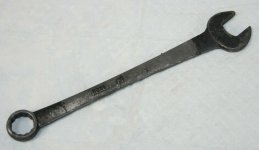
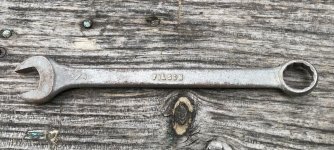
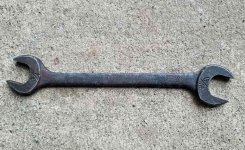
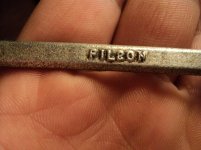
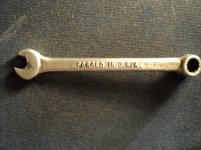
I found a couple of Filson branded wrenches. Had never seen the name before, so I started the usual web research and found this to be an obscure company with a few tool photos and a lot of folks wondering who they were. So I decided to dig a little deeper to see what I could find.
A few examples of tools I found were helpful in that they appear to bear a more complete name, Henley Filson Company of North Vernon, Indiana. Even then, information on this company is almost non-existent. Most refer to a Filson company that is still in business selling outerwear and bags, but after looking into it I don’t think there’s a connection.
One tool of which I found a couple of examples is a set of M2 crimpers marked Henley Filson Co. I also found forum posts recalling their use in the military as far back as the Korean War and into the Vietnam era. One post maintained that this was a standard service crimper since WWII, implying that the tool started being supplied to the military sometime during the war. So the occasional ‘rumor’ I encountered that the company made contract wrenches for the government look to be correct.
While a few examples appear to be older, most all photos I found resemble post-war production.
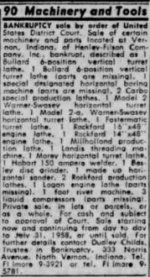
I finally got lucky in locating an article on page 103 in the Indianapolis Star newspaper of 2/7/1954 that appears to be a kind of PR piece extolling the virtues of moving to North Vernon because of the business and transportation resources there. One of the companies listed having 60 to 100 employees is the Henley Filson Company, a maker of dies and forgings. Also helpful was the statement that “INDUSTRY HAS been slow coming to North Vernon, despite its abundant transportation and a location nearly midway between Indianapolis, Louisville and Cincinnati. No major industry pre-dates 1937.” It accounts this to periodic water shortages, which seem to have been resolved with the recent completing of a reservoir at the Muscatatuck State School (a large facility for the mentally retarded). There is also the indication that industry only started developing in the town as the result of war-time manufacturing needs, and then converted to commercial and consumer production after the war.
This article provides vital missing pieces of the puzzle. Based on the artifacts and available information, it appears as if Filson was started in North Vernon, not having relocated there from some place else. All artifacts with any location markings are all North Vernon. Since the article states that no industry existed in this rural agricultural community prior to 1937, it’s safe to assume that Filson opened sometime during the war. It also seems that Filson made contract tools for the military, which ties in quite nicely with the historical context of the article. This might be another tool to chase down for those military tool collectors.
Also, based on what little information is available and studying the existing artifacts, it appears that they were in business perhaps into the 1970s, but probably not beyond.
So…an important part of the puzzle has now been solved. However, all this brings up an interesting possibility. In looking at the available photos online of various Filson tools, there seems to be a discontinuous mix of designs perhaps representing three or more distinct styles, all bearing strong resemblance to better known brands. Some are marked FORGED in USA, some MADE, some MFD. Some markings are forged (including all that have the additional “Henley”), others stamped. There is even a photo showing Indestro and Filson locking pliers side by side that appear virtually identical. First impressions would lead one to believe that Filson was just a sales company having all its tools contracted out, which might also explain why there are so few online references to the company or its tools. But now we know for certain that Filson made its own dies and forgings, and thus most likely some of their own tools. It may be possible then that, at least in some cases, this scenario is reversed—that it was Filson that made contract tools for some other brands! This might also explain the variety of Filson designs—perhaps after having made the contract dies for other makers, it modified them with its own name and sold its own product based on whatever contract dies were in house at the time. Stranger arrangements have been known to have occurred in the American tool industry.
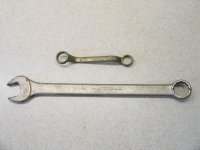
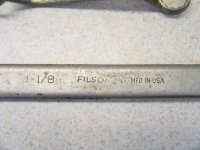
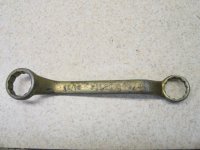
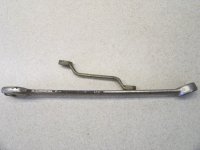
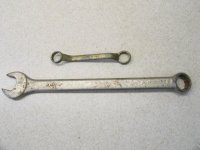
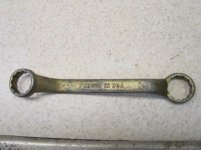
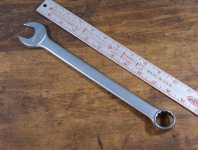
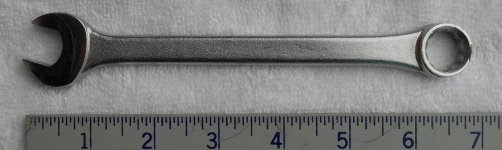
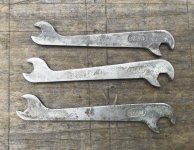
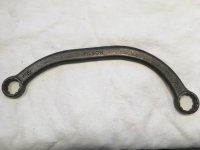
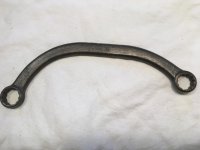
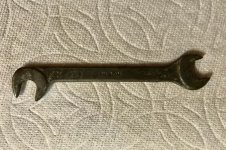
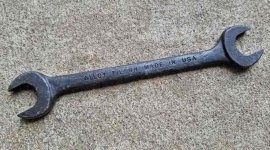
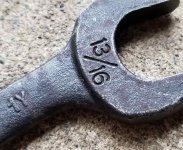
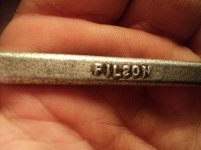
The posted photos are of the two Filson pieces I have. You’ll note the DBE has one of those odd anodized-like finishes that look brassy with hints of other colors in it. Perhaps the detailed photos can help a member identify another brand with identical geometries.
I can post the other photos I found around the web if you’d like. As long as they’re used for scholarly reference and not for any financial gain, I think they fall under the “fair use” clause of the copyright laws.
A few examples of tools I found were helpful in that they appear to bear a more complete name, Henley Filson Company of North Vernon, Indiana. Even then, information on this company is almost non-existent. Most refer to a Filson company that is still in business selling outerwear and bags, but after looking into it I don’t think there’s a connection.
One tool of which I found a couple of examples is a set of M2 crimpers marked Henley Filson Co. I also found forum posts recalling their use in the military as far back as the Korean War and into the Vietnam era. One post maintained that this was a standard service crimper since WWII, implying that the tool started being supplied to the military sometime during the war. So the occasional ‘rumor’ I encountered that the company made contract wrenches for the government look to be correct.
While a few examples appear to be older, most all photos I found resemble post-war production.
I finally got lucky in locating an article on page 103 in the Indianapolis Star newspaper of 2/7/1954 that appears to be a kind of PR piece extolling the virtues of moving to North Vernon because of the business and transportation resources there. One of the companies listed having 60 to 100 employees is the Henley Filson Company, a maker of dies and forgings. Also helpful was the statement that “INDUSTRY HAS been slow coming to North Vernon, despite its abundant transportation and a location nearly midway between Indianapolis, Louisville and Cincinnati. No major industry pre-dates 1937.” It accounts this to periodic water shortages, which seem to have been resolved with the recent completing of a reservoir at the Muscatatuck State School (a large facility for the mentally retarded). There is also the indication that industry only started developing in the town as the result of war-time manufacturing needs, and then converted to commercial and consumer production after the war.
This article provides vital missing pieces of the puzzle. Based on the artifacts and available information, it appears as if Filson was started in North Vernon, not having relocated there from some place else. All artifacts with any location markings are all North Vernon. Since the article states that no industry existed in this rural agricultural community prior to 1937, it’s safe to assume that Filson opened sometime during the war. It also seems that Filson made contract tools for the military, which ties in quite nicely with the historical context of the article. This might be another tool to chase down for those military tool collectors.
Also, based on what little information is available and studying the existing artifacts, it appears that they were in business perhaps into the 1970s, but probably not beyond.
So…an important part of the puzzle has now been solved. However, all this brings up an interesting possibility. In looking at the available photos online of various Filson tools, there seems to be a discontinuous mix of designs perhaps representing three or more distinct styles, all bearing strong resemblance to better known brands. Some are marked FORGED in USA, some MADE, some MFD. Some markings are forged (including all that have the additional “Henley”), others stamped. There is even a photo showing Indestro and Filson locking pliers side by side that appear virtually identical. First impressions would lead one to believe that Filson was just a sales company having all its tools contracted out, which might also explain why there are so few online references to the company or its tools. But now we know for certain that Filson made its own dies and forgings, and thus most likely some of their own tools. It may be possible then that, at least in some cases, this scenario is reversed—that it was Filson that made contract tools for some other brands! This might also explain the variety of Filson designs—perhaps after having made the contract dies for other makers, it modified them with its own name and sold its own product based on whatever contract dies were in house at the time. Stranger arrangements have been known to have occurred in the American tool industry.
The posted photos are of the two Filson pieces I have. You’ll note the DBE has one of those odd anodized-like finishes that look brassy with hints of other colors in it. Perhaps the detailed photos can help a member identify another brand with identical geometries.
I can post the other photos I found around the web if you’d like. As long as they’re used for scholarly reference and not for any financial gain, I think they fall under the “fair use” clause of the copyright laws.








 That's a great call. Postwar late 40's into 50's production.