Denwood
Well-known member
This is a repost of one of my thread posts, however I figure it's worth some discussion here in the heating/cooling area.
I learned something this week about the value of garage door seals. The space in question is at my commercial site, but the garage door there is typical (albeit) larger to most installations. Efficiency is a big deal in this super-insulated retrofit building which requires about 9000 sq/ft in total of heating and cooling. I've posted various threads reviewing the nine Ecobee stats, some automation stuff, and our quest to reduce electricity use. Turns out we were missing out on a major "leak" with regard to the overhead door seals.
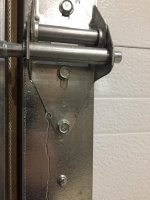
There were single blade side and top seals on the door, but they were old, and had shrunk up a bit leaving gaps. The top of the door also was not sealing properly. Due to the height of the door, and outside temps of -15 to 20C, I asked the folks at Nusteel Door Systems to do the work.
The double blade commercial seals they used are about half the price of what you'd find at Home Depot..and much better quality. It's something to think about if you have a commercial overhead door specialist in your area.
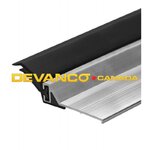
The top and side seals they used are very similar in design to the CF-101 from Devanco
The door is 10 ft wide, and 14 ft high. It's a 16x32 space, with 20 ft ceilings. Because it is heated with radiant, and we're using Ecobee3 thermostats, I have good data to compare before and after. I chose similar days..about -18C, with higher winds, from 20-40km/h. The door is not opened very often in this weather..and if it was, you could see the temp drops on the graph.
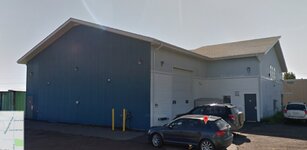
A Google street view of the building taken in warmer weather so you can visualise the size of the door and its location:
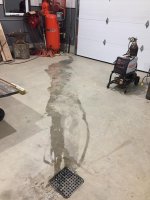
This is the view inside. The area is separated from the rest of the building via insulated walls and doors, very similar to an attached garage. All heat is from in-floor radiant.

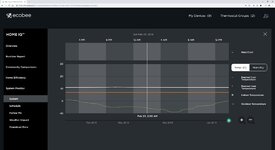
This data is from Ecobee showing runtime for the radiant floor system. Keep in mind that this area is only heated to 7C (about 44F) as it is only used as a loading and storage area.
On January 29th, the system ran a lot...maybe 11-12 hours over a 24 hr period. It was around -19C, and windy...20-40km/h North winds blowing against the door. The orange bars show the system runtime, but you can also view the outside temps, thermostat set temps (7C) and inside temps. Click on the images below to enlarge them.

Now with new seals, properly installed, a similar day with -19C temps and the same gusty 20-40 km/h winds against the door. The system ran for about 1.5 hours.

Is it time to replace your garage door seals?
I learned something this week about the value of garage door seals. The space in question is at my commercial site, but the garage door there is typical (albeit) larger to most installations. Efficiency is a big deal in this super-insulated retrofit building which requires about 9000 sq/ft in total of heating and cooling. I've posted various threads reviewing the nine Ecobee stats, some automation stuff, and our quest to reduce electricity use. Turns out we were missing out on a major "leak" with regard to the overhead door seals.
There were single blade side and top seals on the door, but they were old, and had shrunk up a bit leaving gaps. The top of the door also was not sealing properly. Due to the height of the door, and outside temps of -15 to 20C, I asked the folks at Nusteel Door Systems to do the work.
The double blade commercial seals they used are about half the price of what you'd find at Home Depot..and much better quality. It's something to think about if you have a commercial overhead door specialist in your area.
The top and side seals they used are very similar in design to the CF-101 from Devanco
The door is 10 ft wide, and 14 ft high. It's a 16x32 space, with 20 ft ceilings. Because it is heated with radiant, and we're using Ecobee3 thermostats, I have good data to compare before and after. I chose similar days..about -18C, with higher winds, from 20-40km/h. The door is not opened very often in this weather..and if it was, you could see the temp drops on the graph.
A Google street view of the building taken in warmer weather so you can visualise the size of the door and its location:
This is the view inside. The area is separated from the rest of the building via insulated walls and doors, very similar to an attached garage. All heat is from in-floor radiant.
This data is from Ecobee showing runtime for the radiant floor system. Keep in mind that this area is only heated to 7C (about 44F) as it is only used as a loading and storage area.
On January 29th, the system ran a lot...maybe 11-12 hours over a 24 hr period. It was around -19C, and windy...20-40km/h North winds blowing against the door. The orange bars show the system runtime, but you can also view the outside temps, thermostat set temps (7C) and inside temps. Click on the images below to enlarge them.
Now with new seals, properly installed, a similar day with -19C temps and the same gusty 20-40 km/h winds against the door. The system ran for about 1.5 hours.
Is it time to replace your garage door seals?
Last edited: