Private Lugnutz
Well-known member
Back in 2015 I devoted a ‘Living History Display’ thread to “The WWII Mechanic’s Kit”, linked here.
I turn my attention now to the men using the kits. In fact, to one man in particular – shining a shop light on his training.
The backstory is that a week ago I ran into a house liquidator at a flea market who had cleared the home of a deceased WWII master mechanic. Among his possessions were this postwar jerry can nozzle, three (of the five) wrenches (Barcalo) that were issued to every ground vehicle except Dodges, an extra long single open end tappet wrench (Herbrand), and a mish mash of midget drive items (Walden-Worcester, Bonney, Duro-Chrome, Plomb, New Britain, and Stanley), some of them caked in cosmolene.

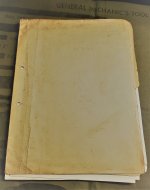
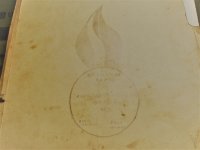
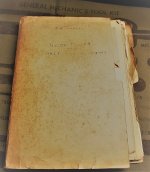
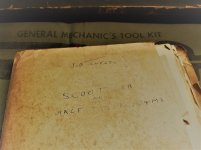
But the real treasure in the lot were these dirty manila folders, found in a ratty old fiber suitcase that I am eternally grateful I had the good instincts and fortune to open.

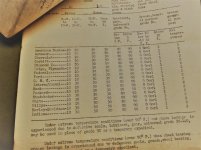
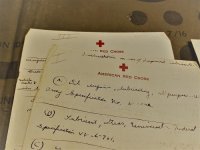
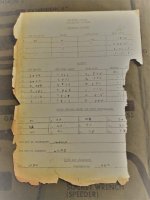
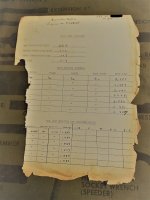
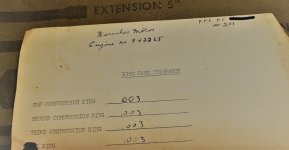
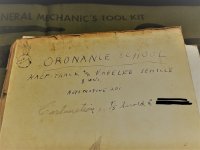
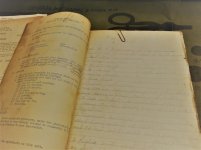
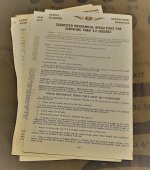
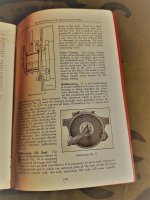
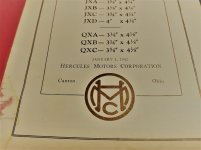
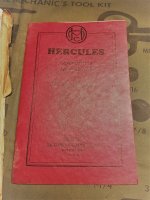
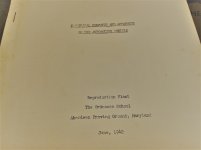
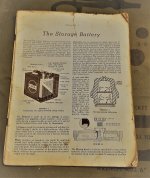
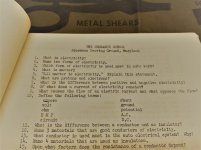
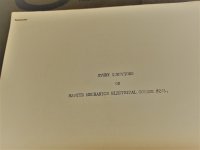
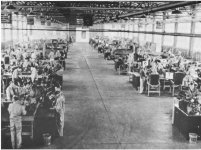
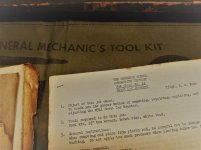
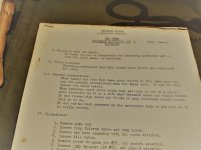
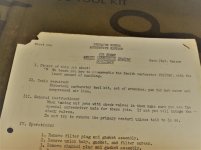
They are stuffed with textbooks, manuals, stapled handouts, study questions, and notes from a Lubrication Specialist course at Camp White, Oregon, and a White Scout Car and Halftrack Mechanics course and a Master Mechanics course at the Ordnance School, Automotive Section, Aberdeen Proving Ground, MD. I couldn't believe my eyes when I saw the paperwork, my heart was literally racing, and I had to use all my best picker's cunning and experience to seem indifferent when asking the liquidator for a price. In the ensuing time I have felt at times like a historian, a detective, an archaeologist, and an obituary writer all in one when sorting through this stuff.
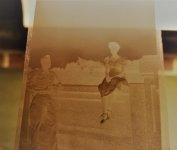
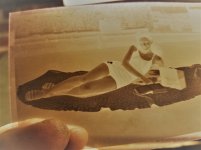
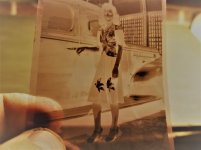
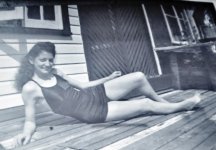
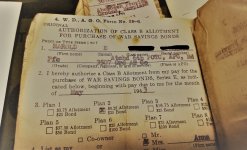
Using the Ordnance School documents and personal effects inside the folders – including some photographic negatives, a signed anniversary card, a hand-drawn portrait, and some savings bonds allotment receipts...

(See Pics 4, 5, & 6 for close-ups.)
...I was able to piece together a rough biography of this WWII veteran’s life as a student mechanic in 1943.
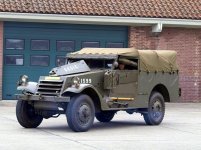
Harold E. L______ was from Calumet City, Illinois. With the rank of private he attended Special Troops IV Corps Automotive School at Camp White, Oregon, and, on April 10, 1943, earned a Lubrication Specialist certificate and a recommendation to attend “2nd Echelon Maintenance School” based on his “Excellent” rating. True to their word, he was sent to the Ordnance School, Ordnance Training Center, Automotive Section, at Aberdeen Proving Ground, MD, where he attended the Scout Car and Halftrack M2 and M3A1 Mechanics Course and the Master Mechanics 201 course, back-to-back, through August 1943. Somewhere along the way, probably between courses, he was promoted to a “T/5” or “Tech 5” (Technician Fifth Grade).
The timing is interesting. The severe problems that the QMC was encountering in recruiting qualified mechanics or men with mechanical aptitude were passed along to the Ordnance Department when it assumed responsibility for all wheeled-vehicle procurement and maintenance in September 1942, not too long before Harold would’ve enlisted and gone through basic training. The demographics are interesting, too. According to the Center for Military History’s WWII series on the Technical Services, top brass within the QMC and Ordnance Department were on record saying they were getting too many “white collar clerk types” from the east coast and not enough men from the industrial heartland. Also, Harold was one of the first Ordnance Dept automotive mechanics to attend a school owned and operated by the Ordnance Dept. From September 1942 through April 1943, all Ordnance Dept automotive mechanics were still being trained at QMC facilities by QMC trainers. The reference to the IV Corps Special Troops is even more interesting, because that’s the experimental Automotive Maintenance Battalion attached to IV Corps that the Ordnance Dept had set up in late 1942.
Using his name and serial number, I have dug a little further into Harold’s E. L______’s early life, and also where he served in the war after mechanics school, but I will save that for another day, perhaps. Some of the photographs and effects were quite personal, as you shall see, and I plan to keep his full name and serial number private, which is why they are redacted in the photographs.
It's going to take many posts to complete this story, so bear with me until I hit the END.
I turn my attention now to the men using the kits. In fact, to one man in particular – shining a shop light on his training.
The backstory is that a week ago I ran into a house liquidator at a flea market who had cleared the home of a deceased WWII master mechanic. Among his possessions were this postwar jerry can nozzle, three (of the five) wrenches (Barcalo) that were issued to every ground vehicle except Dodges, an extra long single open end tappet wrench (Herbrand), and a mish mash of midget drive items (Walden-Worcester, Bonney, Duro-Chrome, Plomb, New Britain, and Stanley), some of them caked in cosmolene.
But the real treasure in the lot were these dirty manila folders, found in a ratty old fiber suitcase that I am eternally grateful I had the good instincts and fortune to open.
They are stuffed with textbooks, manuals, stapled handouts, study questions, and notes from a Lubrication Specialist course at Camp White, Oregon, and a White Scout Car and Halftrack Mechanics course and a Master Mechanics course at the Ordnance School, Automotive Section, Aberdeen Proving Ground, MD. I couldn't believe my eyes when I saw the paperwork, my heart was literally racing, and I had to use all my best picker's cunning and experience to seem indifferent when asking the liquidator for a price. In the ensuing time I have felt at times like a historian, a detective, an archaeologist, and an obituary writer all in one when sorting through this stuff.
Using the Ordnance School documents and personal effects inside the folders – including some photographic negatives, a signed anniversary card, a hand-drawn portrait, and some savings bonds allotment receipts...
(See Pics 4, 5, & 6 for close-ups.)
...I was able to piece together a rough biography of this WWII veteran’s life as a student mechanic in 1943.
Harold E. L______ was from Calumet City, Illinois. With the rank of private he attended Special Troops IV Corps Automotive School at Camp White, Oregon, and, on April 10, 1943, earned a Lubrication Specialist certificate and a recommendation to attend “2nd Echelon Maintenance School” based on his “Excellent” rating. True to their word, he was sent to the Ordnance School, Ordnance Training Center, Automotive Section, at Aberdeen Proving Ground, MD, where he attended the Scout Car and Halftrack M2 and M3A1 Mechanics Course and the Master Mechanics 201 course, back-to-back, through August 1943. Somewhere along the way, probably between courses, he was promoted to a “T/5” or “Tech 5” (Technician Fifth Grade).
The timing is interesting. The severe problems that the QMC was encountering in recruiting qualified mechanics or men with mechanical aptitude were passed along to the Ordnance Department when it assumed responsibility for all wheeled-vehicle procurement and maintenance in September 1942, not too long before Harold would’ve enlisted and gone through basic training. The demographics are interesting, too. According to the Center for Military History’s WWII series on the Technical Services, top brass within the QMC and Ordnance Department were on record saying they were getting too many “white collar clerk types” from the east coast and not enough men from the industrial heartland. Also, Harold was one of the first Ordnance Dept automotive mechanics to attend a school owned and operated by the Ordnance Dept. From September 1942 through April 1943, all Ordnance Dept automotive mechanics were still being trained at QMC facilities by QMC trainers. The reference to the IV Corps Special Troops is even more interesting, because that’s the experimental Automotive Maintenance Battalion attached to IV Corps that the Ordnance Dept had set up in late 1942.
Using his name and serial number, I have dug a little further into Harold’s E. L______’s early life, and also where he served in the war after mechanics school, but I will save that for another day, perhaps. Some of the photographs and effects were quite personal, as you shall see, and I plan to keep his full name and serial number private, which is why they are redacted in the photographs.
It's going to take many posts to complete this story, so bear with me until I hit the END.
Attachments


Last edited: