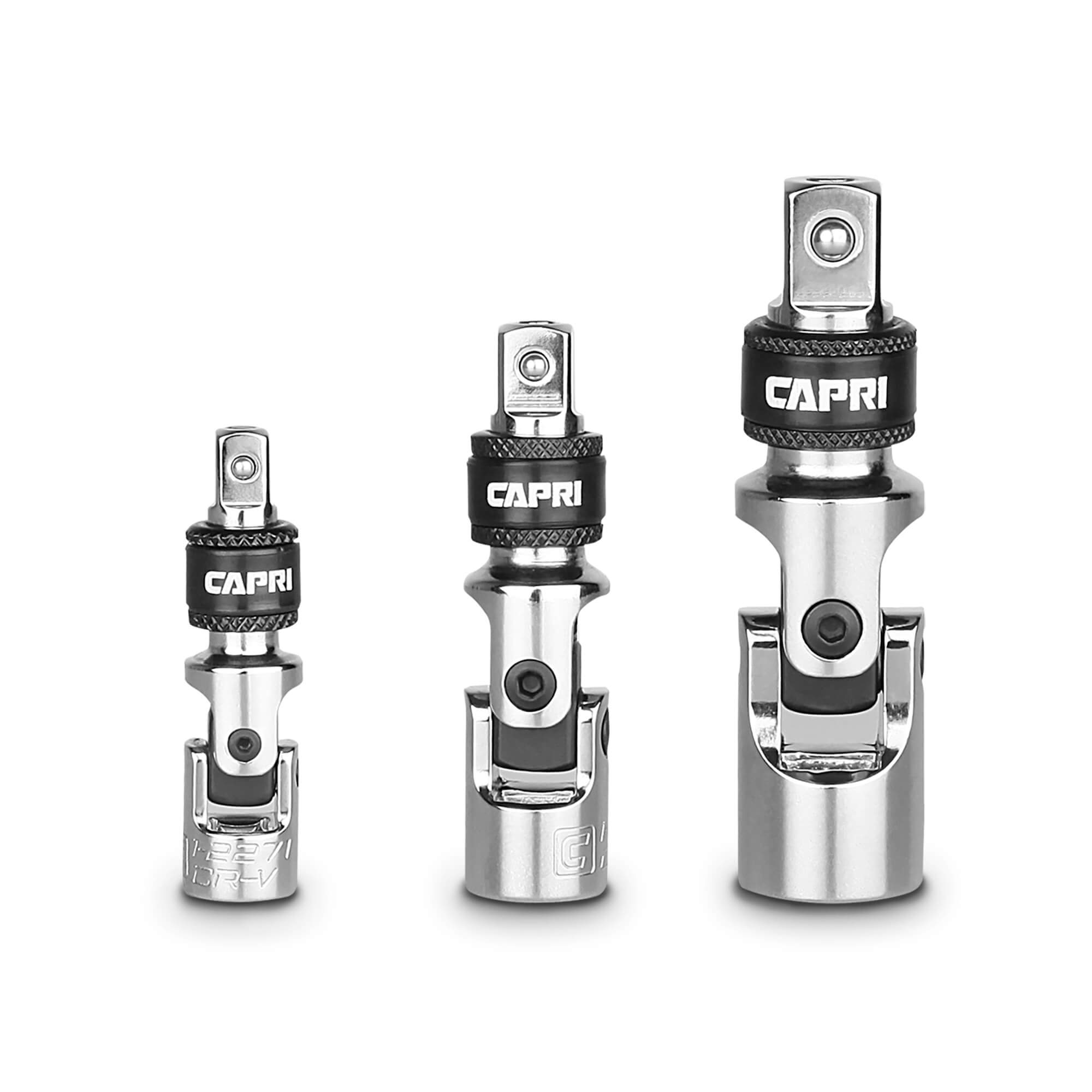
If I'm interpreting the OP correctly, he is looking for a locking wobble extension. As in, it "physically holds the socket and prevents it from falling off the extension when used in tight areas", not just a wobble or wobble plus extension which have a simple spring ball retention mechanism.
They probably don't exist as the type with a detent ball and a ring you move back and forth or a button you push to lock or release the socket. That style requires a notch along the side or a bore through the center of the square drive (for the locking mechanism). That likely can't be done on a wobble end, because the square drive end is already thinned out and weakened by the wobble shape and can't handle having even more metal removed.
If one exists at all, it would probably have to be a pin lock style wobble, for use only with impact sockets or chrome sockets that have a hole through the side of the female square drive end for the pin lock to engage and be released from.
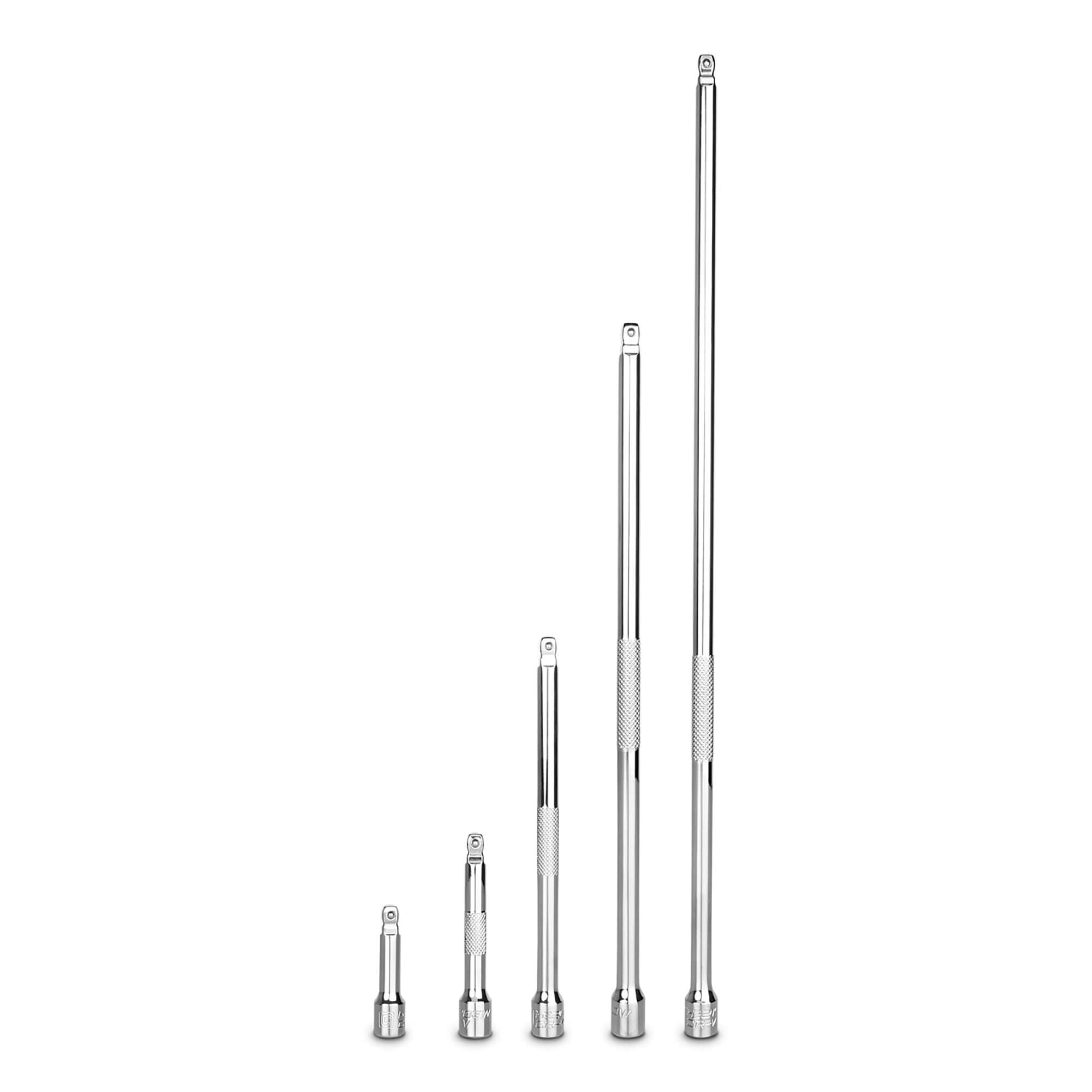
I made a couple wobble extensions myself, back when they were first introduced, were hard to find, and still quite expensive. I filed dual bevels onto each side of the male square drive end of regular extensions with a diamond file until I had about 8-10 degrees of socket angle capability. They did the job quite well until I eventually found good deals on the actual wobble extensions I have now.
If someone wants to do the same, ideally look for something like a long bare steel (Apex, etc) or black oxide coated impact extension with a pin lock male square end. That way there's no chrome peeling or chipping issues to worry about after you make the modification. With around 20 minutes of careful DIY work you could have yourself a nice 1/4" drive long pin lock tip extension for use in tight areas.
Here's a couple pics I found showing one of my original DIY wobble extensions, right after I finished making it. The third image shows a pin lock end, for people who might not know what one is. There is a pin instead of a detent ball, and it pushes in and springs back and locks itself into the hole in the side of a socket's female square drive. You then use a small tool (like a pin punch) to reach into the socket hole, push the pin in again, and release the socket when you are finished working.






 Would be interested to know if it works, or if the extension would no longer hold a socket securely.