To avoid these ads, REGISTER NOW!

110 volt question....

Junkman

Well-known member
Joined
Dec 18, 2006
Messages
6,626
Location
Northeastern CT
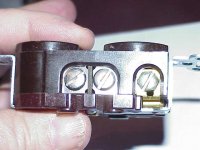
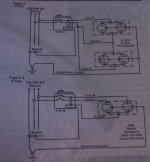
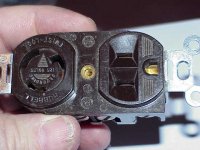
I have some receptacles that are set up with half being a 15 amp twist lock, and the other half a "normal" configuration. I would like to use these in my shop and since the two halves of the receptacle are split electrically, I would have to wire the twist lock side separate from the normal side. Is it possible to use 14/3 to wire these, or do I need to use a separate 14/2 for each side? Can I use a 220 volt GFI, connecting one leg each to each 110 circuit and have it work properly? Thanks ... Junk...
 

Attachments

  • MVC-639S.JPG
    MVC-639S.JPG
    38.1 KB · Views: 17
  • MVC-640S.JPG
    MVC-640S.JPG
    33.4 KB · Views: 14
To avoid these ads, REGISTER NOW!

v8garage

Well-known member
Joined
Jun 27, 2007
Messages
901
Location
Texas
I would just run a 12/2 to the box and then put a jumper wire from one side to the other. I never use 14 gauge wire.
 

PAToyota

Well-known member
Joined
Jan 20, 2006
Messages
4,366
Location
South Central Pennsylvania, USA
You could use a normal 14/2 and pigtail it to each side - although I'm not a fan of 14ga in the first place - which you'd have to do with the neutral and ground anyway if you used 14/3.

Even outside of code issues, although possible, I'm not a fan of using a 220V breaker to run two 110V circuits.
 

Torque1st

MEMBER EMERITUS
Joined
Sep 14, 2008
Messages
5,668
Location
KC Metro, Kansas
For multiple 15A outlets like that you can run a 20A breaker and #12 wire. For the actual outlets you can pigtail from the #12 with #14 wire to the outlet for easier installation. I would run #12 even with a 15A breaker so it can be upgraded easily.

Run your 120V branch to the LINE side of a 120V GFI unit then go from the LOAD side on to the other outlets. Using a common neutral circuit seems to sometime promote false trips with GFI units.

I don't particularly like to run dual breakers either.
 
Last edited:

Charles (in GA)

Well-known member
Joined
Jan 11, 2006
Messages
12,489
Location
50 mi south of Atlanta
GFI devices, no matter if a breaker or a receptacle, look at what goes out.... must come back. If it doesn't, it trips. On a 120V GFI, the current goes out the hot and returns the neutral, to the GFI, and then the neutral bar. On a 240V GFI, neutral is irrelevant, 240V doesn't use a neutral, so it looks at what goes out one hot, returns to the other hot, or the device trips. Granted, a 240v GFI breaker does have a neutral, but no place to land the neutral in the circuit. Most likely, the neutral wire on the breaker is there to provide a neutral for some of the electronics in the breaker, dunno.

End result, you CANNOT use a double pole, 240v GFI to operate a multiwire 120v system (two opposing hots and a shared neutral). Doing this will cause the current to go out one of the hots, and return the neutral, which the GFI doesn't know exist, and it trips.

I would jumper from one of the screws on the "normal" terminal, to the screw on the twist lock terminal on each side. This leaves you with one screw on each side to connect the supply leads to.

Charles
 

nissan_crawler

Well-known member
Joined
Jan 12, 2008
Messages
9,638
Location
Wichita, KS
Question, what would be the point of using a 240v breaker instead of dual 120v for 120 circuits (assuming you could)?

The only thing I can think of is if you maybe had a machine with two separate 120v feeds going to it, and you wanted to make sure they were connected so both were killed for servicing?

*mod, I was a tard and hit report instead of reply first, and typed without ever looking at the screen...disregard :spit::eek:
 

Charles (in GA)

Well-known member
Joined
Jan 11, 2006
Messages
12,489
Location
50 mi south of Atlanta
In virtually all circumstances where a edison multiwire circuit is installed (a circuit which shares a common neutral), the circuit breakers supplying the two sides of the circuit must have their handles tied together. Most common way of doing this is to simply use 240v circuit breaker. This also insures that the two sides of the circuit are on opposing (electrically) stabs in the panel, given the way circuit breaker panels in the US are built.

This is OK for regular double pole circuit breakers, but for GFI breakers, it won't work. Otherwise, the apparent solution is to use regular 120v GFI breakers and run normal two wire 120v circuits, or use a GFI receptacle at the beginning of a regular two wire 120v circuit and protect everything downline from it.

Charles
 

Charles (in GA)

Well-known member
Joined
Jan 11, 2006
Messages
12,489
Location
50 mi south of Atlanta
Junk, have you checked (with a meter) to make sure that the two screw terminals on one side of the receptacle are indeed not connected? Is it possible that they are connected inside the receptacle?

Charles
 

Aceman

Well-known member
Joined
Jan 28, 2007
Messages
2,513
Location
Eastern Oregon
For multiple 15A outlets like that you can run a 20A breaker and #12 wire. For the actual outlets you can pigtail from the #12 with #14 wire to the outlet for easier installation.

We've had this discussion before and I disagree with using #14 wire on a 20 amp general purpose branch circuit. I'm not going to get into it again, but I'm not going to sit back and let you post for the world to see that it's an okay installation practice. If a person can't do the job right and bend a few #12's back into the box, he shouldn't be doing the job.

GFI devices, no matter if a breaker or a receptacle, look at what goes out.... must come back. If it doesn't, it trips. On a 120V GFI, the current goes out the hot and returns the neutral, to the GFI, and then the neutral bar. On a 240V GFI, neutral is irrelevant, 240V doesn't use a neutral, so it looks at what goes out one hot, returns to the other hot, or the device trips. Granted, a 240v GFI breaker does have a neutral, but no place to land the neutral in the circuit. Most likely, the neutral wire on the breaker is there to provide a neutral for some of the electronics in the breaker, dunno.

End result, you CANNOT use a double pole, 240v GFI to operate a multiwire 120v system (two opposing hots and a shared neutral). Doing this will cause the current to go out one of the hots, and return the neutral, which the GFI doesn't know exist, and it trips.

Charles you need to look into this a little more first before you say that. A 240v 2 pole GFCI does sense both the neutral and "hot" current going out and coming back.

An example would be a hot tub with both 120v and 240v loads that is fed from a 2 pole GFCI.

http://forums.mikeholt.com/showthread.php?t=108179&highlight=mwbc

Junkman, I'd run one circuit 12/2 or 14/2 and jumper both sides of the recep together. You don't want to pay for a 2 pole GFCI. Then either use a 1 pole GFCI breaker or line/load a GFCI recep in front of your twistlock duplex receps.
 

Charles (in GA)

Well-known member
Joined
Jan 11, 2006
Messages
12,489
Location
50 mi south of Atlanta
Charles you need to look into this a little more first before you say that. A 240v 2 pole GFCI does sense both the neutral and "hot" current going out and coming back.

An example would be a hot tub with both 120v and 240v loads that is fed from a 2 pole GFCI.

http://forums.mikeholt.com/showthread.php?t=108179&highlight=mwbc

The one or two double pole GFCI breakers I've dealt with did not have a place to land a neutral wire going to the circuit. This is also mentioned in a discussion I found on the Mike Holt forum while making double sure of my fuzzy memory before I made the above post. (its been quite a while since I last installed a DP 240v GFI breaker at our community pool to replace one that would not test.)

Cannot find any info on the Net right now that has clear pics or info. May have to stop at HD or Lowes tomorrow on the way home from work and look at them.

Edit: OK, doing a little looking, I found a pic of a Siemens DP GFI breaker, and it does appear to have a third screw in the middle for a neutral.

3047958.jpg


Also a pic of a Murray that has a third screw.

3049830_042007i.jpg


Charles
 
Last edited:

nissan_crawler

Well-known member
Joined
Jan 12, 2008
Messages
9,638
Location
Wichita, KS
Ok, next stupid question, what's the advantage of a shared neutral? I guess I'm trying to find out why somebody wouldn't want to run two completely separate circuits. I'm sure there's probably a reason, I just don't know what I'm doing when it comes to that. :spit:

I just know the basic wiring stuff, none of the more involved things. breaker-wire-switch-light or breaker-wire-outlets
 

Charles (in GA)

Well-known member
Joined
Jan 11, 2006
Messages
12,489
Location
50 mi south of Atlanta
Saves wire, makes pulling in conduit easier (one less wire). Other than that, not much. I did it on my lighting circuits, but I didn't do it on my receptacles, on those I pulled two neutrals. On the lighting, I wanted the option of converting the circuit to 240v in the future, and given the length of the runs, wanted to save as much wire as possible.

Charles
 

Stuart in MN

Well-known member
Joined
Sep 8, 2005
Messages
23,042
Location
Minneapolis
A shared neutral basically saves you from running one extra wire. In my opinion it's more of a time and space saving procedure than anything else.
 

nissan_crawler

Well-known member
Joined
Jan 12, 2008
Messages
9,638
Location
Wichita, KS
alright, second stupid question...when running romex, obviously the one would be 12-2 ground...but what would the other wire be? Is there just a hot/ground available, or do you run plain 12-2 and use white for ground? <~~~lost.
 

Vicegrip

Well-known member
Joined
Mar 9, 2007
Messages
1,187
Location
NoVA.
Romex 12/2 has an insulated black an insulated white and a bare wire all 3 wires are 12AWG. The Black is normally the hot feed. White is the neutral and the bare is ground.
 

Charles (in GA)

Well-known member
Joined
Jan 11, 2006
Messages
12,489
Location
50 mi south of Atlanta
alright, second stupid question...when running romex, obviously the one would be 12-2 ground...but what would the other wire be? Is there just a hot/ground available, or do you run plain 12-2 and use white for ground? <~~~lost.

You would use 12/3 w/grd. One red, one black, one white, and one bare ground, with a multiwire circuit, if you were not using conduit. Same stuff you would use if running a three or four way lighting switch circuit.

Charles
 

Torque1st

MEMBER EMERITUS
Joined
Sep 14, 2008
Messages
5,668
Location
KC Metro, Kansas
We've had this discussion before and I disagree with using #14 wire on a 20 amp general purpose branch circuit. I'm not going to get into it again, but I'm not going to sit back and let you post for the world to see that it's an okay installation practice. If a person can't do the job right and bend a few #12's back into the box, he shouldn't be doing the job.

I know we disagree, but at the same time code allows 15A receptacles on a 20A circuit and #18 wires in a fixture on a 15A or 20A circuit. Older versions of the code go into detail on this practice and the new simplified codes do not disallow it. They even note the practice in tables. I have even done the negligible voltage drop and power dissipation calculations for you. If you don't believe my calculations go ask an EE to do it for you. Quit whining about it. :spit:
 
OP
J

Junkman

Well-known member
Joined
Dec 18, 2006
Messages
6,626
Location
Northeastern CT
Junk, have you checked (with a meter) to make sure that the two screw terminals on one side of the receptacle are indeed not connected? Is it possible that they are connected inside the receptacle?

Charles

I haven't checked on that, but visually, they are not connected. They might be connected inside where I can't see, so I will check that first. My thoughts on using the twist locks is because people keep asking to use my electric tools, and I have to chase them down to get them back. If I put twist locks on those that I don't want to loan, that will solve the problem of having to say NO to people that I don't want to loan them to.

We've had this discussion before and I disagree with using #14 wire on a 20 amp general purpose branch circuit. I'm not going to get into it again, but I'm not going to sit back and let you post for the world to see that it's an okay installation practice. If a person can't do the job right and bend a few #12's back into the box, he shouldn't be doing the job.

I can bend 12 gauge as well as 14 gauge, but I have lots of 14 gauge wire, and it is acceptable for a 15 Amp circuit. I wasn't aware that you can use a recipticle that is marked 15 Amp on a 20 Amp circuit legally. I try my best to always stay within the code.


..............
Junkman, I'd run one circuit 12/2 or 14/2 and jumper both sides of the recep together. You don't want to pay for a 2 pole GFCI. Then either use a 1 pole GFCI breaker or line/load a GFCI recep in front of your twistlock duplex receps.

I have an over abundance of new double pole 220 volt GFI breakers. A few years ago, the local HD had them on a clearance table and I bought them all.
 

LoneGunman

Well-known member
Joined
Mar 27, 2007
Messages
2,081
Location
The Gunshine state
"but I'm not going to sit back and let you post for the world to see that it's an okay installation practice."

LOL, you really are full of yourself. FWIW, I don't like it and don't do it as I see no reason to BUT I do not believe it's a code violation. If in your opinion it is then post the article.
 

Torque1st

MEMBER EMERITUS
Joined
Sep 14, 2008
Messages
5,668
Location
KC Metro, Kansas
My thoughts on using the twist locks is because people keep asking to use my electric tools, and I have to chase them down to get them back. If I put twist locks on those that I don't want to loan, that will solve the problem of having to say NO to people that I don't want to loan them to.

After getting back a number of broken loaned tools I simply don't loan tools anymore except to one individual.

EDIT- Someone will get "wise" and make an adapter pigtail... :)
 
Last edited:
To avoid these ads, REGISTER NOW!

Torque1st

MEMBER EMERITUS
Joined
Sep 14, 2008
Messages
5,668
Location
KC Metro, Kansas
I'll loan you my tools if you will loan me your polish..... :lol_hitti

Man you were not supposed to tell anyone about that! :D

Junk and I have duplicate split thumbnails...
I was telling him earlier about a "repair" I found in the ladies department at a local store.
 
Last edited:
OP
J

Junkman

Well-known member
Joined
Dec 18, 2006
Messages
6,626
Location
Northeastern CT
Man you were not supposed to tell anyone about that! :D

I just said "polish".... I didn't say what kind... for all that anyone else would have known, we could have been talking about Simonize... :beer:
Junk and I have duplicate split thumbnails...
I was telling him earlier about a "repair" I found in the ladies department at a local store.

My wife said to me after my reading your reply to my reply... "If you had mentioned this to me when we were at Walmart, I could have gotten it for you. I will give it a try, and hopefully it will work. The nail has been like this for almost 30 years. I will let you know how it works for me... Junk..
 

Torque1st

MEMBER EMERITUS
Joined
Sep 14, 2008
Messages
5,668
Location
KC Metro, Kansas
Mine has been that way for about 20. Usually keeping it so short it can't catch on anything has been enough.

Getting your wife to go over and get the nail products and standing next to the tampons etc would have been much better than what I did. At least if anyone looked at me strange I could have said; "the wife sent me..."

It is funny to think of how invulnerable we were when young. All those war wounds healed up. We just didn't know they would come back with a vengeance later...
 

Aceman

Well-known member
Joined
Jan 28, 2007
Messages
2,513
Location
Eastern Oregon
I know we disagree, but at the same time code allows 15A receptacles on a 20A circuit and #18 wires in a fixture on a 15A or 20A circuit. Older versions of the code go into detail on this practice and the new simplified codes do not disallow it. They even note the practice in tables. I have even done the negligible voltage drop and power dissipation calculations for you. If you don't believe my calculations go ask an EE to do it for you.

I don't know what the first part of your post has to do with the topic at hand. I'm talking about sizing pigtails in device boxes and you're trying to justify it by mentioning recep ampacity and fixture wires?? Secondly, I can't even understand why you would be doing a voltage drop calc on a 6" long pigtail?

I'm not going round and round with you, like I've said before, I've got a code article to back it up. The bottom line is you aren't willing to accept the fact you might of been doing it wrong all these years. Simple as that. Now I'm done.

LOL, you really are full of yourself. FWIW, I don't like it and don't do it as I see no reason to BUT I do not believe it's a code violation. If in your opinion it is then post the article.

Read into it whatever you want.

I simply come on this forum to give the diyer's a few pointers when they're having trouble and try and stop the misinformation other's may post before it's taken as fact. If I come off sounding like an arrogant a-hole, I don't mean too and I apologize for that.

Here's your article, 210.19(A)2.

http://forums.mikeholt.com/showthread.php?t=62344&highlight=receptacle+taps
 

Torque1st

MEMBER EMERITUS
Joined
Sep 14, 2008
Messages
5,668
Location
KC Metro, Kansas
It seems there are arguments at Mike's also, and a certain "God Code" mentality is present there.

The reason I mentioned fixture wires and 15A receptacles etc is that they are also conductors on a branch circuit.

Personally I don't worry about it. It won't cause a problem electrically. People were given a brain to use. People try to codify engineered systems with words and it has limitations. Sometimes a person just has to put the numbers to a problem. The code generally allows for that.
 

LoneGunman

Well-known member
Joined
Mar 27, 2007
Messages
2,081
Location
The Gunshine state
Learn something new everyday, after reading the link and the article numbers posted in the link, it is a violation. It doesn't make sense and theres no reason 14 gauge tails would be a safety issue BUT it is still a code violation.

Torque, while I agree it would not cause a problem electrically, most inspectors I have dealt with are not going to want to hear calculations or arguments if they decide to make an issue out of it. Even if they did, why go through the trouble? I save the arguing and deal making with the inspectors for things that really matter, like when they are wrong.

Of course there are arguments at Mike Holts forum and it's a known fact that many electricians don't know large amounts of the code but the two members there who have stated their opinion (resquecapt and Iwire) against using the 14ga tails are highly respected members on that site and another site, I "know" them from that other site, if they say it's a "no go" you can pretty much bet your azz it's a "no go".
 

sberry

Banned
Joined
Jun 18, 2005
Messages
35,747
Location
Brethren, Michigan
Question, what would be the point of using a 240v breaker instead of dual 120v for 120 circuits (assuming you could)?
2 reasons, to save wire especially on long runs and on some occasions to keep voltage drop to a minimum.
I am with these guys, I never run 14 to general use circuits or outlets, only place for it is in lighting IMO, as for the twist locks,, I just have to wonder "why", why make it more complicated than needed by adding in a ******* recept?
 

Mr_fixit

Well-known member
Joined
May 24, 2008
Messages
1,221
Location
Rustylvania
Here's a wiring diagram for a 2 pole gfi breaker. It can be used for (2) 120 volt receptacles sharing the same neutral.

Bottom line is It MUST sum the neutral and hot currents. So that SHOULD also mean it can be used for 240 and 120 circuits at the same time.
 

Attachments

  • crop100_2107.jpg
    crop100_2107.jpg
    64.9 KB · Views: 11
Last edited:

Torque1st

MEMBER EMERITUS
Joined
Sep 14, 2008
Messages
5,668
Location
KC Metro, Kansas
Learn something new everyday, after reading the link and the article numbers posted in the link, it is a violation. It doesn't make sense and theres no reason 14 gauge tails would be a safety issue BUT it is still a code violation.

Torque, while I agree it would not cause a problem electrically, most inspectors I have dealt with are not going to want to hear calculations or arguments if they decide to make an issue out of it. Even if they did, why go through the trouble? I save the arguing and deal making with the inspectors for things that really matter, like when they are wrong.

Of course there are arguments at Mike Holts forum and it's a known fact that many electricians don't know large amounts of the code but the two members there who have stated their opinion (resquecapt and Iwire) against using the 14ga tails are highly respected members on that site and another site, I "know" them from that other site, if they say it's a "no go" you can pretty much bet your azz it's a "no go".

I stand corrected according to the new code. I know there is no reason for it electrically and there are many applications using the smaller taps that work perfectly according to older code versions. I guess it is one of those changes to simplify the code. I apologize to Aceman and any others I may have offended.:beer:
 
OP
J

Junkman

Well-known member
Joined
Dec 18, 2006
Messages
6,626
Location
Northeastern CT
2 reasons, to save wire especially on long runs and on some occasions to keep voltage drop to a minimum.
I am with these guys, I never run 14 to general use circuits or outlets, only place for it is in lighting IMO, as for the twist locks,, I just have to wonder "why", why make it more complicated than needed by adding in a ******* recept?

You wouldn't have to wonder if you read what I had posted. You come into the discussion at the end, and you question motive, when it has already been clearly stated. Is it that difficult to start reading at the beginning and come up to speed before you start typing??? My receptacle is grossly offended by your calling it a "*******"... It has a better pedigree than you do, and it, unlike you is UL listed!!!!!!!
 

Charles (in GA)

Well-known member
Joined
Jan 11, 2006
Messages
12,489
Location
50 mi south of Atlanta
We use those 15 amp twistlocks at work. We have duplex receptacles that have both positions as twistlock. I HATE the things. You spend an inordinate amount of time turning the plug around to align the plug correctly to plug it in. All of our electrical items on the Hangar floor are set up for them however. At least the extension cords have the Woods rubber end boxes with receptacles back to back, and they did put a standard duplex receptacle on one side, for mechanics to plug in items like flashlight chargers and radios.

The receptacles and plugs are horribly expensive. Junk, If you don't already have the plugs (I know you said you had the receptacles) you need to price them before doing this. Pass and Seymour are about $15 EACH at Home Despot.

I am careful to not let people know what I have, and I only have one neighbor who I loan anything to. He takes good care of items and returns them promptly, and only borrows once or twice a year. I've got an JLG scissor lift and I'm scared to death someone will find out I have it and want to borrow it. It weighs 2500lbs so if someone asks, I'll tell them they have to have a roll back come pick it up and move it down the street to their place......... and give me at least that much money (deposit) so I can have it hauled back when they don't bother to............ that should solve that problem!

Charles
 

Charles (in GA)

Well-known member
Joined
Jan 11, 2006
Messages
12,489
Location
50 mi south of Atlanta
I have lots of 14 gauge wire, and it is acceptable for a 15 Amp circuit. I wasn't aware that you can use a recipticle that is marked 15 Amp on a 20 Amp circuit legally. I try my best to always stay within the code.

210.21(B)(3) allows 15 amp receptacles to be used with a 20 amp circuit (ie. 20 amp breaker and 12 gauge wire). Only exception is a single.... single receptacle would have to be 20 amp. A duplex 15 amp counts as two receptacles. Also, you cannot install any 20 amp receptacles on a 15 amp circuit.


I have an over abundance of new double pole 220 volt GFI breakers. A few years ago, the local HD had them on a clearance table and I bought them all.

What amp capacity? While I'm sure they make all kinds, all I ever see are 50 amp ones for hottubs. Of course, that is how you got them cheap, some store buyer purchased something no one wanted or needed, and they sat and sat till they put them out on clearance.

I bought my double pole 30 amp light switches on clearance too.

Charles
 

toolfreak450

Member
Joined
Dec 23, 2008
Messages
11
Location
Independence, MO
you need to make sure that if you use 14-3 to run two circuits with common neutral that you DO NOT!!!! use a 220 breaker the proper way is to use single pole breakers and make sure they land on opposite side of the panel so you are pulling from both leg's of the service if you dont you can unbalance the neutral load and over time you will be calling the fire department first and then your insurance agent.
 
Last edited:

Charles (in GA)

Well-known member
Joined
Jan 11, 2006
Messages
12,489
Location
50 mi south of Atlanta
you need to make sure that if you use 14-3 to run two circuits with common neutral that you DO NOT!!!! use a 220 breaker the proper way is to use single pole breakers and make sure they land on the same side of the panel so you are pulling from only one leg of the service if you dont you can unbalance the neutral load and over time you will be calling the fire department first and then your insurance agent.

HUH???????

Where did you "learn" electricity?

What you are recommending (if I read your post correctly) is exactly opposite the correct method. (and a sure fire way to start a fire)

210.4 discusses multi-wire circuits.

Charles
 

toolfreak450

Member
Joined
Dec 23, 2008
Messages
11
Location
Independence, MO
thank you Charles you are right the townhome village i work in has pushamatic breakers so i'm use to picking up 220 from side to side not top and bottom and when i look at panels with flip breakers it throws me off sometimes i was just trying to protect this guy i meant no harm good looking out though
 
OP
J

Junkman

Well-known member
Joined
Dec 18, 2006
Messages
6,626
Location
Northeastern CT
I have about 40 / 50 of these receptacles and at least that amount of twist locks plugs to use with them. Both the receptacles and plugs are by Hubbell. As for locating the locking bar properly, the easy way is to just put a spot of red nail polish on both the receptacle face plate and the plug to show where they are matched.. :thumbup:
 

Charles (in GA)

Well-known member
Joined
Jan 11, 2006
Messages
12,489
Location
50 mi south of Atlanta
thank you Charles you are right the townhome village i work in has pushamatic breakers so i'm use to picking up 220 from side to side not top and bottom and when i look at panels with flip breakers it throws me off sometimes i was just trying to protect this guy i meant no harm good looking out though

Not familiar with push-a-matic breakers, but for multiwire circuits code requires that in most cases, the two breakers are common trip, either single pole set adjacent to one another, with an identified handle tie, or double pole.

Charles
 
To avoid these ads, REGISTER NOW!
Top Bottom