To avoid these ads, REGISTER NOW!

120 Volt To 240 Volt Step Up Transformer Question.

roblouvasz

Well-known member
Joined
Nov 12, 2011
Messages
1,314
Location
Somewhere between the end of the line and the midd
Can someone explain to me how these step up transformers work? I know that in a regular electrical panel, that you get 240 volts from two separate legs of 120 that are out of phase with each other, hence 120 volts from 1 leg to neutral and 120 volts from the other leg to neutral. I picked up one of these step up/ step down transformers to convert 240 to 120 and 120 to 240. I measured the 240 output across the 2 "hots" and got 240. I then measured from one hot to ground and got 240 volts and then from the other hot to ground and got zero volts. So, here's the other part of the question, doesn't a 240v appliance require two out of phase legs to work? Or is there such a thing as one hot leg at 240v and a neutral? The reason I'm asking is because I have a foreign turntable that requires 240volts. Any thoughts?
 
To avoid these ads, REGISTER NOW!

Wiz02

Well-known member
Joined
Jul 13, 2007
Messages
2,399
Location
Southeastern PA
Can someone explain to me how these step up transformers work? I know that in a regular electrical panel, that you get 240 volts from two separate legs of 120 that are out of phase with each other, hence 120 volts from 1 leg to neutral and 120 volts from the other leg to neutral. I picked up one of these step up/ step down transformers to convert 240 to 120 and 120 to 240. I measured the 240 output across the 2 "hots" and got 240. I then measured from one hot to ground and got 240 volts and then from the other hot to ground and got zero volts. So, here's the other part of the question, doesn't a 240v appliance require two out of phase legs to work? Or is there such a thing as one hot leg at 240v and a neutral? The reason I'm asking is because I have a foreign turntable that requires 240volts. Any thoughts?
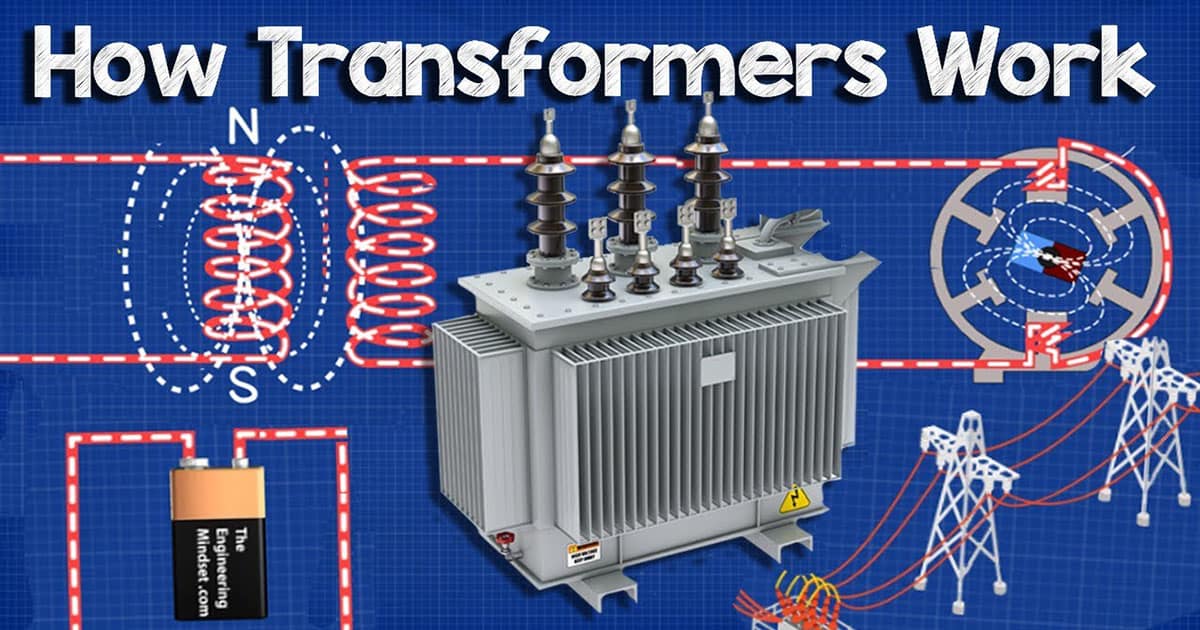
Here's an article on how transformers work. No "legs" involved 😁


American Locomotive

Well-known member
Joined
Jan 8, 2017
Messages
10,958
Location
Rhode Island
Voltage is all relative.

Just imagine a transformer as a long piece of wire with a voltage gradient across it. You measure across the ends of the wire, you get 240v. If you measure between one end and the middle of the wire, you get 120v.

Neutral is only "Neutral" because its attached to earth ground at the transformer and in your panel. In North America, they tie the middle point of that imaginary wire to earth ground and neutral. That means whatever voltage that middle point is at, ground and neutral is also at.

But you could just as easily take that same transformer, leave the middle point disconnected, and then tie one ends to neutral/ground instead. Now you have 240v to ground.

The devices attached don't care where the ground reference is. They just want the correct voltage across l1 and l2
 

wyliesdiesels

Well-known member
Joined
Aug 14, 2012
Messages
20,014
Location
Modesto, CA
Sounds like you didnt connect the transformer leads correctly for 120v output

It would help if you provided the make/model of the transformer and a pic of how you connected the leads.
 
To avoid these ads, REGISTER NOW!

PCustoms

Well-known member
Joined
Jul 23, 2011
Messages
22,875
Location
VT
Thread bump with an early morning (read: dumb) question.

I've got a condensate pump NIB that is 240v. Would it be practical to buy a transformer to power from 120v or should I just buy the proper pump? Don't have the specs in front of me but amo draw is minimal.

It was an an ordering mistake found after return window closed.
 
Last edited:

Innovate1

Well-known member
Joined
Jul 28, 2014
Messages
4,288
Location
Illinois near St. Louis, Missouri
On the pump you could get a 120:120 transformer and connect one winding to the 120 incoming power. Then connect one wire of the other winding to the neutral. Then measure between the hot wire and the unconnected winding wire. If you get zero just reverse the second winding wire connected to neutral and you should get 240V. The transformer only has to be rated for 1/2 the total power but good to upsize it so it runs cooler. But it may be easier to buy a 120V pump.
 

theoldwizard1

Well-known member
Joined
Feb 22, 2011
Messages
43,169
Location
SE MI
I've got a condensate pump NIB that is 240v. Wouldn't be practical to buy a transformer to power from 120v or should I just buy the proper pump? Don't have the specs in front of me but amp draw is minimal.

It was an an ordering mistake found after return window closed.
MAYBE !

Depends on the amp draw. Transformers are typically rated in "volt-amps" (VA). Not exactly "watts" but close enough for most things.
 
Last edited:

EarlyBroncoGuy

King Of The World
Joined
Aug 15, 2013
Messages
923
I service commercial equipment that requires 220v on 2 power cords. The manufacturer's allowable voltage range is 200 - 240v. We measure it on every installation and service call - if it's out of that range, we can't touch the equipment (company policy) until the customer gets the voltage issue resolved. Usually they'll have an electrician install a buck/boost transformer to adjust the voltage on one leg to bring the overall voltage within range.

One site only had 110v outlets in the room where the equipment (printer) was located. Rather than put in 220v outlets (and wiring), they purchased step-up transformers that plugged into the 110v outlets and produced 220v at their own outlets that the printer could plug into.
However, measuring the outlets on the step-up transformers, it was 0v from ground to one "hot" leg, 220v from ground to the other hot leg, and 220v across the two "hots". I'd never run across that before, had to check with the manufacturer to make sure that was acceptable. It took them several hours to get back to me, but basically they said "We think it's OK, go ahead and plug it in and see what happens." :rolleyes:

So, I did...and the printer didn't care. Worked just fine. Still does, as far as I know.
 
To avoid these ads, REGISTER NOW!
Top Bottom