To avoid these ads, REGISTER NOW!

1920-60s DELTA / ROCKWELL picture thread - Post your Delta!

Davefr

Well-known member
Joined
Jan 7, 2010
Messages
11,822
Location
OR
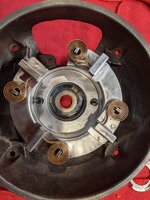
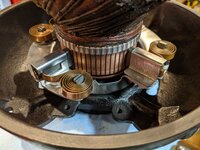
I put in some time on the brush ring. The copper brush springs I soaked in a white vinegar and saline solution and they shined up quickly.

PXL_20231213_042155677~3.jpg

The original badge color is not salvageable so I sanded it off and will research having it laser etched.

PXL_20231213_042016213.jpg

This would be the correct badge style.

Delta DP Motor Tag 1HP Orange - Thumb (1).jpg
Bayphoto.com is your friend. Send them the image and dimensions and they'll print one on aluminum with their diffused ink process. It's not a decal or paint. The cost is around $50.

P1100880.jpgP1100886.jpg
 
To avoid these ads, REGISTER NOW!
OP
H

Hoorn

Well-known member
Joined
May 19, 2020
Messages
1,140
Location
Glendora, CA
@Davefr thank you for providing that information. Your Delta badge looks great -which glossy treatment did you select? Also, how did you cut it out of the square aluminum?

Here is a link to a YouTube video from Bayphoto.com breaking down options. Thanks again Dave!

 
OP
H

Hoorn

Well-known member
Joined
May 19, 2020
Messages
1,140
Location
Glendora, CA
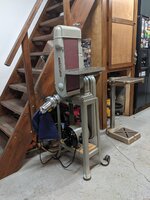
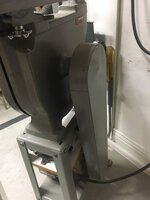
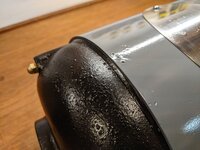
@shoot summ that is a BADASS 6x48 belt sander! All the usual things that are typically missing or broken seem to be there: no broken star handles or ball crank handle, the side cover hasn't been chopped up, intact raised knurled screws on the cast iron base, intact dust flap, and what luck to have the sawdust blower attachment! Spectacular find that will provide so much satisfaction as you bring it back to life. That cut on the top cover will repair fairly easy.

If you intend to attach a Hamilton Beach vacuum to the sawdust blower attachment, hopefully this post can help you through that. And they work extremely well, pulling every fiber of sawdust.

Post in thread '1930-60s DELTA / ROCKWELL picture thread - Post your Delta!' https://www.garagejournal.com/forum...re-thread-post-your-delta.491552/post-9604612

These 1930/40s Hamilton Beach vacuums are still available on eBay for reasonable cost.

thumbnail - 2022-05-22T181015.302.jpg

thumbnail - 2022-05-22T170538.943.jpg
 
Last edited:

shoot summ

Well-known member
Joined
Jun 8, 2010
Messages
2,952
@shoot summ that is a BADASS 6x48 belt sander! All the usual things that are typically missing or broken seem to be there: no broken star handles or ball crank handle, the side cover hasn't been chopped up, intact raised knurled screws on the cast iron base, intact dust flap, and what luck to have the sawdust blower attachment! Spectacular find that will provide so much satisfaction as you bring it back to life. That cut on the top cover will repair fairly easy.

If you intend to attach a Hamilton Beach vacuum to the sawdust blower attachment, hopefully this post can help you through that. And they work extremely well, pulling every fiber of sawdust.

Post in thread '1930-60s DELTA / ROCKWELL picture thread - Post your Delta!' https://www.garagejournal.com/forum...re-thread-post-your-delta.491552/post-9604612

These Hamilton Beach vacuums are still available on eBay for reasonable cost.

thumbnail - 2022-05-22T181015.302.jpg

thumbnail - 2022-05-22T170538.943.jpg
I looked it over really well from the pics and noticed exactly what you stated. The seller even seemed to have some knowledge as he did point out one of the knurled nuts on the motor cover was missing. I've completed most of the tear down and it seems to be in decent shape, I would bet it sat outside a little bit as it has a fair amount of surface rust in places that I wouldn't expect to see in a shop, and the tags look sun faded to me. And I did notice the sawdust blower attachment that I did not even know existed until I poked around on vintage machinery, very cool that the vac can be fitted.

I do have a question. For the spindle there is a 1" nut on the drive side, it's going to be a lot easier to take that off with an impact but a traditional deep socket is too short. Any thoughts on a deeper socket? Make my own? I make try to hold the spindle in a copper jawed vise and use a wrench as well.
 
OP
H

Hoorn

Well-known member
Joined
May 19, 2020
Messages
1,140
Location
Glendora, CA
Using a spare BS base. This is how I have gotten the bearing retention nut off in the past.

PXL_20231217_192318075.jpg

Keeping it in the vise, you can remove the bearing closure nut with a hammer and punch.

PXL_20231217_192726756.jpg
 

Davefr

Well-known member
Joined
Jan 7, 2010
Messages
11,822
Location
OR
@Davefr thank you for providing that information. Your Delta badge looks great -which glossy treatment did you select? Also, how did you cut it out of the square aluminum?

Here is a link to a YouTube video from Bayphoto.com breaking down options. Thanks again Dave!

I used sheer glossy. Sheer leaves the unprinted background the same as the base aluminum vs. white. I used a mini benchtop belt sander to grind away the excess and fine tuned the border with a Dremel. The aluminum is a little too thick to make nice clean cuts with tin snips. Bayphoto really does a great job with these nameplates.
 
OP
H

Hoorn

Well-known member
Joined
May 19, 2020
Messages
1,140
Location
Glendora, CA
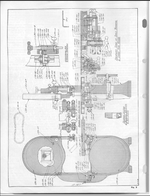
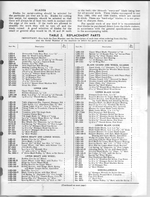
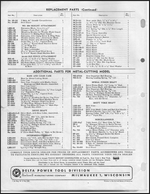
@shoot summ please post as many pictures of your process as possible, particularly of that cast iron base, inside and out. It will be very interesting to follow your progress.

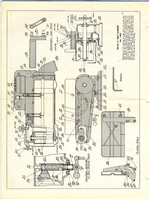
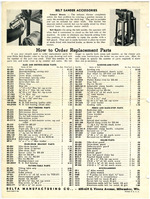
Here is a copy of a manual from the 1930s to help out with fit and part description.

Screenshot_20231217-120732~2.png

Screenshot_20231217-111826~2.png

Screenshot_20231217-120746~2.png

Screenshot_20231217-111832~2.png
 

shoot summ

Well-known member
Joined
Jun 8, 2010
Messages
2,952
Using a spare BS base. This is how I have gotten the bearing retention nut off in the past.

PXL_20231217_192318075.jpg

Keeping it in the vise, you can remove the bearing closure nut with a hammer and punch.

PXL_20231217_192726756.jpg
That method worked great, thanks!
 
OP
H

Hoorn

Well-known member
Joined
May 19, 2020
Messages
1,140
Location
Glendora, CA
It's been periodically rainy in SoCal over the last week or so. I had an opportunity to prime and paint the motorband and end bells, but it's taking a bit longer to dry -day 4 and still the slightest bit of tackiness because of the weather.

20231221_203733-COLLAGE.jpg

PXL_20231222_043154235.jpg

To replace the original New Departure 87504 bearings I snagged these replacements from Belford International on eBay. Specifications are precise to the original which had an extended inner race.

20231221_211241-COLLAGE.jpg
 

Boogerman

Well-known member
Joined
Jan 28, 2021
Messages
833
Location
aspen cove hill
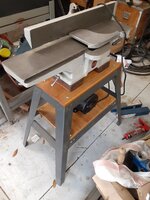
This jointer assembled from multiple machines.

Many years ago, bought tilting table saw/jointer combo. When moved, took jointer off, sold saw and stand with motor. Rarely use jointer; used to just set up workbench and hang motor below letting the belt support it and use milk crate and boards to hold up motor weight. Bought a jigsaw or sander or something that had been cobbled onto the stand, took it off and discarded and put jointer on stand because it right for the jointer. Later, got the motor with something homemade, discarded the homemade tool and put the motor on the jointer. Haven't used in months or years, just did some walnut to make cutting boards; worked perfectly. Have never sharpened blades or adjusted the table; have always used it as it came to me, although mechanisms do work correctly.

Also have Rockwell era unisaw, excellent user saw came from local high school when they got grant for buying Sawstop. I have used that saw a lot, have been too cheap to buy a Sawstop myself. I did retrofit with a semi riving knife and blade guard, but quit using the blade guard, like most old guys, because it gets in the way.
 

Attachments

  • 20231221_225756.jpg
    20231221_225756.jpg
    545 KB · Views: 18
  • 20231221_225647.jpg
    20231221_225647.jpg
    695.9 KB · Views: 17
  • 20231221_225607.jpg
    20231221_225607.jpg
    824.6 KB · Views: 16
  • 20231221_225536.jpg
    20231221_225536.jpg
    732.9 KB · Views: 20
  • 20231221_225514.jpg
    20231221_225514.jpg
    712.9 KB · Views: 27

pmcgowan

Member
Joined
Dec 24, 2023
Messages
8
At the behest of the thread OP I deiced to throw my hat in the ring. This will be my first post on the forum.

"It took me about three years of hunting for parts to complete this 1942 Delta Milwaukee No. 1160 10” Tilt Top Table Saw! I pieced this saw together from three different donor machines. Due to their popularity and age it is becoming increasingly difficult to find bases for these machines. A very interesting machine from a very interesting period in history. The machine dates to the year 1942 as indicated by the stamped steel Sn. tag. Like all of my machines this one received the full rebuild treatment. Completely stripped, primed, painted, pin striped, components nickel plated, new bearings, a rebuilt motor, a new switch, new wiring and much more. The 1HP repulsion induction motor really rips and is just about the largest motor that can fit inside the cast iron base. This saw is now ready for another 80 years of service!"

As time allows I will try to get some other machines posted on here. I update my Instagram on a more regular basis for those of you who are interested.

@_PATMCGOWAN

Vintage Machinery Restoration & Repair

Thanks for the invitation to participate Paul!


IMG_3461.jpgIMG_3465.jpgIMG_3468.jpgIMG_3486.jpgIMG_3469.jpgIMG_3470.jpgIMG_3483.jpgIMG_3481.jpgIMG_3474.jpgIMG_3471.jpg
 

shoot summ

Well-known member
Joined
Jun 8, 2010
Messages
2,952
At the behest of the thread OP I deiced to throw my hat in the ring. This will be my first post on the forum.

"It took me about three years of hunting for parts to complete this 1942 Delta Milwaukee No. 1160 10” Tilt Top Table Saw! I pieced this saw together from three different donor machines. Due to their popularity and age it is becoming increasingly difficult to find bases for these machines. A very interesting machine from a very interesting period in history. The machine dates to the year 1942 as indicated by the stamped steel Sn. tag. Like all of my machines this one received the full rebuild treatment. Completely stripped, primed, painted, pin striped, components nickel plated, new bearings, a rebuilt motor, a new switch, new wiring and much more. The 1HP repulsion induction motor really rips and is just about the largest motor that can fit inside the cast iron base. This saw is now ready for another 80 years of service!"

As time allows I will try to get some other machines posted on here. I update my Instagram on a more regular basis for those of you who are interested.

@_PATMCGOWAN

Vintage Machinery Restoration & Repair

Thanks for the invitation to participate Paul!


IMG_3461.jpgIMG_3465.jpgIMG_3468.jpgIMG_3486.jpgIMG_3469.jpgIMG_3470.jpgIMG_3483.jpgIMG_3481.jpgIMG_3474.jpgIMG_3471.jpg
Absolutely gorgeous!! Had no idea they put that saw on a CI base.
 
OP
H

Hoorn

Well-known member
Joined
May 19, 2020
Messages
1,140
Location
Glendora, CA
@pmcgowan thanks for posting brother -it would have been a crime not to get your work on that tilty on this website for others to enjoy. The attention to detail is simply top tier, right down to the red incremental indicators on the fence rail.

Your choice of color combination was perfect and quite complimentary to the machine. Really enjoy what you did with that 1 HP RI motor. Judging from the texture of the end bell "window", that motor appears like it may have been rough before you worked your magic on it.

Can you share your treatment of the table top?

Can't wait for you to post your pedestal grinder and 14 inch bandsaw as well! Everyone on this thread, you're in for quite a treat.
 

Mike'smeatshop

Well-known member
Joined
Apr 1, 2023
Messages
1,273
At the behest of the thread OP I deiced to throw my hat in the ring. This will be my first post on the forum.

"It took me about three years of hunting for parts to complete this 1942 Delta Milwaukee No. 1160 10” Tilt Top Table Saw! I pieced this saw together from three different donor machines. Due to their popularity and age it is becoming increasingly difficult to find bases for these machines. A very interesting machine from a very interesting period in history. The machine dates to the year 1942 as indicated by the stamped steel Sn. tag. Like all of my machines this one received the full rebuild treatment. Completely stripped, primed, painted, pin striped, components nickel plated, new bearings, a rebuilt motor, a new switch, new wiring and much more. The 1HP repulsion induction motor really rips and is just about the largest motor that can fit inside the cast iron base. This saw is now ready for another 80 years of service!"

As time allows I will try to get some other machines posted on here. I update my Instagram on a more regular basis for those of you who are interested.

@_PATMCGOWAN

Vintage Machinery Restoration & Repair

Thanks for the invitation to participate Paul!


IMG_3461.jpgIMG_3465.jpgIMG_3468.jpgIMG_3486.jpgIMG_3469.jpgIMG_3470.jpgIMG_3483.jpgIMG_3481.jpgIMG_3474.jpgIMG_3471.jpg
Welcome Pmc. You do very good work. I am also looking for more.
 

pmcgowan

Member
Joined
Dec 24, 2023
Messages
8
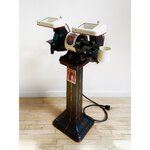
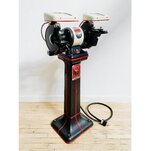
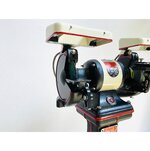
Next up, this 1957 Delta Rockwell, 23-415, 7” Pedestal grinder I completed in 2020. This thing was in fairly rough condition when I acquired it. It obviously spent a good portion of its life in an industrial setting. The machine was originally wired for 440 and had an absurd amount of aftermarket electrical safety equipment attached to it. The vast majority of the hardware was replaced with stainless or nickel plated equivalents. All of the castings were stripped, primed, painted, and pin-striped. One of the slides for the tool rest in the wheel guard casting was damaged as well and required a fair amount of work to rebuild. All of the badges were completely unreadable. I replaced them with high quality vinyl decals on new metal plates. It was the first time I have attempted this method and was very pleased with the results. I was able to find an original Square D 3 phase manual starter switch on eBay that would have been OEM to the machine. It was also in fairly poor condition and required new contacts, thermal units, and springs. I rewired the lights and tied them into the 3 phase switch so I did not have to run a separate 120V line. Amazingly when I opened up the motor it looked like it had never been used. The lacquer was still on the windings and all of the leads were in perfect shape. The tool rests and water cup are both aftermarket reproductions. I got very lucky in finding an original No. 1294 Plane Blade Grinding Attachment. It was new old stock in the original box.


IMG_9682.jpegIMG_9687.jpegIMG_2213.jpegIMG_2171.jpegIMG_2220.jpegIMG_2225.jpegFullSizeRender-2.jpegIMG_2176.jpegIMG_2242.jpeg
 
Last edited:

Jgaz

Well-known member
Joined
Dec 16, 2016
Messages
1,648
Location
AZ
@pmcgowan Absolutely incredible!
Your machines are tool **** if I’ve ever seen it. I love the pin striping.

I‘m almost afraid of when you post your 14” bandsaw. pit

I rebuilt a 1953 about 25 years ago but it is not a work off art like your machines.
 

pmcgowan

Member
Joined
Dec 24, 2023
Messages
8
Can you share your treatment of the table top?


Forgot to respond to this... So yeah the top on that table saw has an usually deep Blanchard grind, not sure why or what happened. I theorize and someone who is vastly more experienced in this department could probably give a better answer than this but it seems like maybe they stopped the grinding machine at the end of its run on the table instead of lifting the grinding head up then stopping the machine. Those last couple "elliptical swirls" are the machine coming to a stop on the surface. That could be total ********, but I have yet to come up with a better idea and I have yet to see another machine surface that has been Blanchard ground that has that particular inconstant surface finish at that depth. That being said none of this affects the use of the machine, it just looks interesting.
 

pmcgowan

Member
Joined
Dec 24, 2023
Messages
8
Can't see it from my house. But what steps did you take to clean and paint? If you have the time.


I will try to keep this short... but I do a lot of surface prep, corrosion removal, and painting at my day job so it is something I can easily go on about in detail. Everything below works for me in my situation but everyone has access to different tools and equipment.

That being said like most people I get pretty tired of stripping castings very quickly. Finding efficiency in my process is important to me so I am typically always refining what I do to ensure the ball keeps rolling forward. I try to keep these processes as simple and hands off as possible.

I have 7 gallon ultrasonic cleaner that I put straight concentrated de-greaser in and turn it up to basically just below a boil. Any parts that can fit this unit go in it small to medium sized. Between the de-greaser and high temperature this will pretty much remove any paint, grease, dirt, oil, etc. etc. etc. and leave you with a clean part.

Then occasionally I remove the parts from the ultrasonic cleaner and just hit them with a stiff brush, 3M pad, or wire brush.

After that I will drop the hot parts into a bucket of Evaporust if there is any left over corrosion present on the surface. I try to not leave parts in the Evaporust for too long as it has a tendency to blacken the surface which then has to be removed before painting aka extra work.

For medium sized to large parts, I have half a of 55 gallon drum that I will fill with concentrated de-greaser and throw a fish tank heater in. Basically same process as the ultrasonic cleaner just not as hot and no ultrasonic action. I will leave the pieces in here for several days at a time, scrub them once or twice, but when they come out they are clean just takes longer but still very hands off.

For large parts or stuff that is just too heavy to manage I will de-grease and pressure wash first, apply paint stripper as many times as necessary. After that it is some sort of mix of wire wheels on the 7" angle grinder or 3M Roloc stripper discs to get the last bits. Additionaly I will chemically etch the surface and do a final surface scrubbing with a 3M pad.

Last up, if and when I can for the small/medium and some large parts after the previously mentioned steps I will very quickly run them through the blast cabinet. This is typically just to get some extra tooth on the surface prior to paint and I do not always do this. I honestly hate standing in front of the blast cabinet so if I do not feel this is absolutely necessary then I just wont do it.

I use a 2 part epoxy primer on most things as there is really not many better options out there but will use an acid etch primer as well at times for smaller items or touch ups

I rarely use body filler on castings unless there is an area that is very rough. Super slick surface finishes on castings are not really my thing but they do have their place. Occasionally I will also use a filler/sand-able primer to "unify" a surface.

Top coats are a whole other subject.

So to finish it off, yes, you could absolutely just have a large blasting cabinet throw all your parts in there and blast everything with excellent results but it is still a very time consuming process. You could also just use a 4 1/2 inch angle grinder and a wire wheel and strip parts that way it will 100% work but again it is very time consuming. What I have set up for myself is the most efficient least amount of time invested in the monotonous boring part of the job if you will.

I do have the "perfect setup" designed in my head but I can not afford it at the moment and do not have the space for it but that is a story for another time.
 

Mike'smeatshop

Well-known member
Joined
Apr 1, 2023
Messages
1,273
Thanks a million. I have a shop mate waiting for my new hip in a month and I like the steps you take. I found that distilled water rinse keeps my parts from rusting up right away. Now I can't wait to tear into it.
 
To avoid these ads, REGISTER NOW!

FarmerJB

Member
Joined
Dec 11, 2023
Messages
19
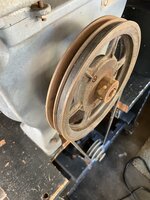
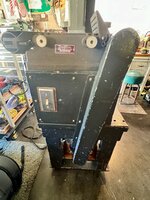
hey fellas- just brought home my first vintage Delta Milwaukee piece! a nice old bandsaw.
she fires right up. looks to need new tires on the wheels, and probably do bearings while i’m at it. the power cord is dangerously old so thats getting replaced also.
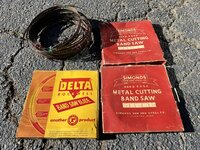
it came with about 12 blades of various types.
attached to the homemade stand is a vintage Dayton 4” sander too!
i bought it from an old widow in her 80’s. her husbands dad is the original owner. he is the one who built the stand. it also works great.
the back cover for the bottom belt is hand made and im repairing it now as it’s been cracked for god knows how long. id like to get an original metal cover for it.
i got it all for $250
i dont know the year etc, so maybe one of you guys can help me out.
thanks in advance! i am hooked…..
she also has a matching Delta 6” jointer i might bring home also….should i?
 

Attachments

  • IMG_9007.jpeg
    IMG_9007.jpeg
    1.5 MB · Views: 25
  • IMG_9008.jpeg
    IMG_9008.jpeg
    794.5 KB · Views: 26
  • IMG_9009.jpeg
    IMG_9009.jpeg
    813.1 KB · Views: 30
  • IMG_9010.jpeg
    IMG_9010.jpeg
    692.1 KB · Views: 28
  • IMG_9011.jpeg
    IMG_9011.jpeg
    867.1 KB · Views: 26
  • IMG_9015.jpeg
    IMG_9015.jpeg
    912.3 KB · Views: 25
  • IMG_9017.jpeg
    IMG_9017.jpeg
    596.2 KB · Views: 26
  • IMG_9016.jpeg
    IMG_9016.jpeg
    752.5 KB · Views: 27
  • IMG_9014.jpeg
    IMG_9014.jpeg
    806 KB · Views: 29
  • IMG_9013.jpeg
    IMG_9013.jpeg
    794.4 KB · Views: 24

Jgaz

Well-known member
Joined
Dec 16, 2016
Messages
1,648
Location
AZ
Post in thread '1930-60s DELTA / ROCKWELL picture thread - Post your Delta!'
https://www.garagejournal.com/forum...e-thread-post-your-delta.491552/post-10089706

Welcome. You are going to love that band saw. You are in a site with some serious experts on older Delta equipment .
The above post may help you figure out what year saw you have.
Edit: Maybe not helpful since this above chart shows alpha numeric info.

The post is by a very, very, knowledgeable member (@Hoorn) and was posted in answer to my post when I first showed my 1956 saw.
I had been told incorrectly that mine was 1953 vintage.
 
Last edited:

Jgaz

Well-known member
Joined
Dec 16, 2016
Messages
1,648
Location
AZ
@FarmerJB
My 1956
IMG_0648.jpeg
My belt guard
IMG_0649.jpeg

Get yours running and then decide what you need to repair.

My saw was a mess when I got it. Literally a barn find.
The castings were full of dog food, corn, and a few acorns.

Ive never changed the bearings and your belt guard looks way better than my home brew.
 

trents99

Well-known member
Joined
Jan 1, 2011
Messages
132
Location
GA
Farmer, that serial number is a 1951. It also has the riser block (LBS28)which is of value to some people. Check the blade lengths on those spares to see if they are all to be used with the riser block due to the extra length.

As for the jointer, if you feel you need or may need one down the road they are a good unit. If you are doing some serious woodworking then a better unit can be had but for most a 6" delta is enough.
 
OP
H

Hoorn

Well-known member
Joined
May 19, 2020
Messages
1,140
Location
Glendora, CA
Thanks @Jgaz
@FarmerJB , @trents99 is 100% correct on the serial number. For those Milwaukee years, this would be the numerical order:

194113-0000-15-0000
194216-0000-21-6500
194321-6501-26-6900
194426-6901-33-6900
194533-6901-40-6600
194640-6601-49-5000
194749-5001-60-6000
194860-6001-74-6000
194974-6001-82-5500
195082-5501-91-5950
195191-5951-100-7044
1952100-7045-105-4004

He was also correct regarding your riser, here is how it appeared in the 1951 Delta catalog:

Screenshot_20240108-170447~2.png

Although not stated, the riser block would have come with the elongated bolt, nut and washer required, an elongated wooden guard and an auxiliary blade guard to make up for the additional length. This would have attached to the upper wheel guard.

To answer questions you may have about setup, blade tensioning, etc here is the Delta 14-in bandsaw manual that would have come with your machine in 1951. It is dated 1946 but it was essentially unchanged by 1951.

Screenshot_20240108-171020~2.png

Screenshot_20240108-171027~2.png

Screenshot_20240108-171037~3.png

Screenshot_20240108-171229~2.png

Screenshot_20240108-171236~2.png

Screenshot_20240108-171242~2.png

Screenshot_20240108-171248~2.png

Screenshot_20240108-171253~2.png
 
Last edited:

Jgaz

Well-known member
Joined
Dec 16, 2016
Messages
1,648
Location
AZ
i just picked up a reprint of the original shop manual for it off ebay.
If the reprint manual you just picked up doesn’t have the info that @Hoorn so graciously supplied, I can forward you a PDF of his pages.
PM me if you’re interested.
 
OP
H

Hoorn

Well-known member
Joined
May 19, 2020
Messages
1,140
Location
Glendora, CA
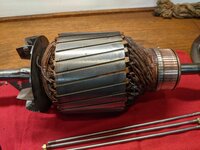
I completed my 1 HP Delta repulsion induction motor.

Here is the end bell which has the window where you can view the brushes riding on the commutator and make R or L directional adjustments.
Within the bearing retention housing are the felt washer, washer and spring.

PXL_20231228_052221837.jpg

In this image you can see the brush ring held in place by a large metal washer with two screws. By loosening the two screw heads on the outside of the end bell, you can position the brush ring so that the armature will turn either right or left. Once you have your position, you will tighten down the screws and the washer will compress against the brush ring and hold it firmly in place.

PXL_20231228_052552234~3.jpg

From the reverse side you can see how the brush ring is situated. There is a groove in the cast iron that acts as a marker and you adjust R or L as needed.

PXL_20231228_052753907.jpg

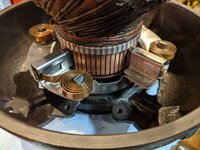
Here the bearing was mounted on the arbor shaft and the entire commutator / armature have been put in place prior to placing the end bell on to the motor housing. This picture clarifies how the brushes ride on the commutator while fully seated.

PXL_20231228_053439937.jpg

PXL_20231228_061610858.jpg

Here it is completed. Since I do not have a machine to attach it to at this time, I removed the power cord for ease of storage. I ran it with the cord and it runs nicely.

Because the badge was so thrashed and totally beyond saving I just polished it up and put it back on for now. I may keep it this way, or I may reach out to several of the reproduction badge manufacturers out there.

PXL_20240113_031329376.jpg

PXL_20240113_031640804.jpg

Each side of the housing band has witness marks made at the factory to specify precisely where the end bell should be positioned.

PXL_20240113_031800364.jpg
 
Last edited:

Mike'smeatshop

Well-known member
Joined
Apr 1, 2023
Messages
1,273
I completed my 1 HP Delta repulsion induction motor.

Here is the end bell which has the window where you can view the brushes riding on the commutator.

PXL_20231228_052221837.jpg

In this image you can see the brush ring held in place by a large metal washer with two screws. By loosening the screw head on the outside of the end bell, you can position the brush ring so that the armature will turn either right or left. Once you have your position, you will tighten down the screws and the washer will compress against the brush ring and hold it firmly in place.

PXL_20231228_052552234~3.jpg

From the reverse side you can see how the brush ring is situated. There is a groove in the cast iron that you can adjust for right or left.

PXL_20231228_052753907.jpg

Here the bearing was mounted on the arbor shaft and the entire commutator / armature have been put in place prior to placing the end bell on to the motor housing. This picture clarifies how the brushes right on the commutator while fully seated.

PXL_20231228_053439937.jpg

PXL_20231228_061610858.jpg

Here it is completed. Since I do not have a machine to attach it to at this time, I removed the power cord for ease of storage. I ran it with the cord and it runs nicely.

Because the badge was so thrashed and totally beyond saving I just polished it up and put it back on for now. I may keep it this way, or I may reach out to several of the reproduction badge manufacturers out there.

PXL_20240113_031329376.jpg

PXL_20240113_031640804.jpg

Each side of the housing band has witness marks made at the factory to specify precisely where the end bell should be positioned. Three punch marks on one side and two on the other.

PXL_20240113_031800364.jpg
Great job Hoorn. Did you receive a new bushing with your brushes when you bought them? It has been years since I rebuilt one, but I always replaced the bushing also.
 
OP
H

Hoorn

Well-known member
Joined
May 19, 2020
Messages
1,140
Location
Glendora, CA
@Mike'smeatshop when you say bushings, are you referring to the bearings? This is a ball bearing repulsion-induction motor with a commutator, shorting garter, brush ring, springs and carbon brushes. What would be the bushings on this type of motor?
 

Mike'smeatshop

Well-known member
Joined
Apr 1, 2023
Messages
1,273
@Mike'smeatshop when you say bushings, are you referring to the bearings? This is a ball bearing repulsion-induction motor with a commutator, shorting garter, brush ring, springs and carbon brushes. What would be the bushings on this type of motor?
The small brass or copper ring at the end of the mount. Where the commutator slides in. You drive it out and replace it. They ware out and play can happen especially old motors.
 
OP
H

Hoorn

Well-known member
Joined
May 19, 2020
Messages
1,140
Location
Glendora, CA
This type of motor does not have bushings, and I personally have yet to run across a repulsion motor where the commutator was mounted inside a bushing -to include old Century motors with bronze sleeves.

The metal brush ring surrounds the commutator and holds the brushes which ride on the copper bars. Can you please post an image of this type of motor.

PXL_20231228_053439937.jpg
 

Mike'smeatshop

Well-known member
Joined
Apr 1, 2023
Messages
1,273
This type of motor does not have bushings, and I personally have yet to run across a repulsion motor where the commutator was mounted inside a bushing -to include old Century motors with bronze sleeves.

The metal brush ring surrounds the commutator and holds the brushes which ride on the copper bars. Can you please post an image of this type of motor.

PXL_20231228_053439937.jpg
Your first two pics of the end has a bronze or brass sleeve in it, that is What we always changed. And what we always called a bushing.
 
OP
H

Hoorn

Well-known member
Joined
May 19, 2020
Messages
1,140
Location
Glendora, CA
I see what you are referring to now. So that end bell is 100% cast iron with zero brass or bronze and has no press fit sleeves or bushings of any kind. That recessed circular area in the middle was machined and was solely for new departure ball bearings. There is nothing to replace.

PXL_20231228_052221837.jpg

Also in the picture above is a gold colored felt washer, washer, and spring clip that the bearing will rest on. The commutator itself does not ride within any bushing or sleeve.

I have a Century motor, circa 1920s, that has a bronze sleeve bushing that could be replaced. (Picture below)

58573.jpeg

The commutator would not ride inside this bronze bushing though, only the arbor shaft.
 
Last edited:
To avoid these ads, REGISTER NOW!
Top Bottom