bouncer254
Member
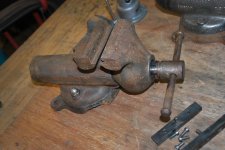
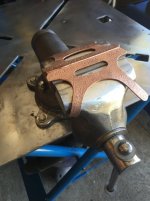
This 1965 8145 Wilton Cadet vise was the kind of project you devote yourself. In most cases it would have been more valuable as parts or scrap, but underneath the rust and looking beyond the cracked cast iron, there was a hard working tool wanting to work.
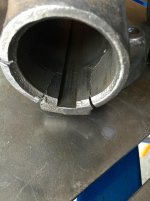
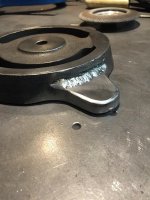
I have never TIG welded cast iron before. I had some great advice from a good friend, longtime welder and tool maker, KMScott. I used the right welding material, TIG Tectic 224 rod, and preheated the vise to around 500°F on my gas barbecue. Welding the cracks was not so bad, it was handling this incredibly hot chunk of metal while trying to weld. This particular vise was pretty abused and I had to fabricate a tab foot from some 4140 steel. The process was straight forward but the preheating was even more important due to the size of the welds. All the welding was done with urgency and focus and then each piece spent an hour or so stepping down the heat so the welded areas cooled down evenly, preventing fracturing.
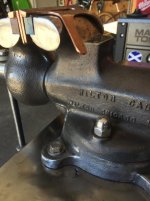
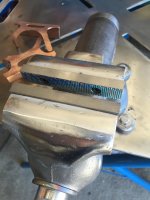
The first inclination on a beat up chunk of metal is to grind the thing down smooth, in this case it would have been a drastic amount of material to remove. I opted to leave the working marks and my TIG welds, mostly to show what this vise has been through but also to maintain integrity. I also do not want to paint the vise as I plan on using it as a welding platform. Instead I gave the surface a fine buffing and a good coat of beeswax. I added a new set of Jaws, a new horseshoe washer both from KMScott, and a new set of copper jaw caps.
I still want to even out my finishing and I need to make sure the underside of the base remains rust free, but I had some welding work to do, It can wait a few more days. I took this on as a challenge and I ended up with a tool that will last long after I am gone. Learning new skills and renewing a beautiful tool was time and effort well spent.
I have never TIG welded cast iron before. I had some great advice from a good friend, longtime welder and tool maker, KMScott. I used the right welding material, TIG Tectic 224 rod, and preheated the vise to around 500°F on my gas barbecue. Welding the cracks was not so bad, it was handling this incredibly hot chunk of metal while trying to weld. This particular vise was pretty abused and I had to fabricate a tab foot from some 4140 steel. The process was straight forward but the preheating was even more important due to the size of the welds. All the welding was done with urgency and focus and then each piece spent an hour or so stepping down the heat so the welded areas cooled down evenly, preventing fracturing.
The first inclination on a beat up chunk of metal is to grind the thing down smooth, in this case it would have been a drastic amount of material to remove. I opted to leave the working marks and my TIG welds, mostly to show what this vise has been through but also to maintain integrity. I also do not want to paint the vise as I plan on using it as a welding platform. Instead I gave the surface a fine buffing and a good coat of beeswax. I added a new set of Jaws, a new horseshoe washer both from KMScott, and a new set of copper jaw caps.
I still want to even out my finishing and I need to make sure the underside of the base remains rust free, but I had some welding work to do, It can wait a few more days. I took this on as a challenge and I ended up with a tool that will last long after I am gone. Learning new skills and renewing a beautiful tool was time and effort well spent.