To avoid these ads, REGISTER NOW!

2 post Lift Concrete Construction Joint

bagsanthony

Well-known member
Joined
Sep 2, 2010
Messages
364
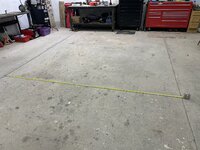
Hi guys, forgive my ignorance, I’m a wrencher not a Structural Engineer- Luck would have it that my garage floor has construction joints spaced 130 inches apart. This would put my 2 post lifts over the joints… this is a no-no correct? Is the solution to cut out a 3ft x3ft and set the columns on this? Thanks guys
 

Attachments

  • IMG_2669.jpeg
    IMG_2669.jpeg
    1,014.2 KB · Views: 73
  • IMG_2670.jpeg
    IMG_2670.jpeg
    1.3 MB · Views: 74
To avoid these ads, REGISTER NOW!

wssix99

Well-known member
Joined
Mar 2, 2011
Messages
5,159
Location
Chicago, IL
Correct. Its a NO-GO situation. If you have to put the columns there, then you would need to follow the manufacturer's repair slab instructions. (They will have specific instructions. Probably more involved than simple 3X3 squares. The repair slabs will probably need to be deeper than the old slab and keyed into it. Some lifts require a single pad with reinforcing spanning between the two columns.)

The reason this is a problem is because the crack reduces the pull-out resistance to the anchors that go through the plate into the concrete. The concrete resists pull-out in a conical zone around the anchor, and when the crack or joint crosses these stress cones, the whole thing is weakened.
 

AC-WC

Well-known member
Joined
Jan 22, 2023
Messages
763
Location
NE, Indiana
Correct. Its a NO-GO situation. If you have to put the columns there, then you would need to follow the manufacturer's repair slab instructions. (They will have specific instructions. Probably more involved than simple 3X3 squares. The repair slabs will probably need to be deeper than the old slab and keyed into it. Some lifts require a single pad with reinforcing spanning between the two columns.)

The reason this is a problem is because the crack reduces the pull-out resistance to the anchors that go through the plate into the concrete. The concrete resists pull-out in a conical zone around the anchor, and when the crack or joint crosses these stress cones, the whole thing is weakened.
Hit the nail on the head!
Follow the Bendpak guidelines and you won't have any problems regardless of which lift you choose. I ended up doing a 4'X12' because of all my stress joints. Went down 14", 2" compacted stone, 2 layers of fiberglass rebar, pinned to surrounding concrete. 2 1/2 years now and no problems.
If you need pictures let me know.
 
OP
B

bagsanthony

Well-known member
Joined
Sep 2, 2010
Messages
364
Thanks gentlemen! Really helps! I suppose I could put the lift on an angle but would prefer to go straight on!
Yes, AC- if you have pics I would appreciate it! Thanks again
 

AC-WC

Well-known member
Joined
Jan 22, 2023
Messages
763
Location
NE, Indiana
Sorry for the late reply had a work dinner tonight:)
Pic 1 is digging down 14" after cutting out the concrete
Pic 2 is 2" of crushed stone tamped down
Pic 3 is fiberglass rebar per Bendpak spacing 1st layer (chairs in pic 2-very important)
Pic 4 is fiberglass rebar 2nd layer (not specified by Bendpak) with cutouts on the top layer where the columns will set. Note pinning into surrounding area. Bendpak recommends to pin to existing concrete OR key under existing (dig out 4-6" around perimeter of hole).
Pic 5 is one column showing how far the bolts are from the expansion joints.
I paid a concrete guy to come in and do this, all I helped with was tamping the corners and actual pour. Two of them and myself. Cost was around $3500. Done in 2 days-it would have taken me weeks to do this by myself. They had the concrete saw, jack hammer, bobcat to get rid of excess, stone and used the bobcat to get the concrete in the garage. They earned their pay for sure.
I highly recommend if you end up doing this to be onsite when they work. I had a hard time getting anyone to quote, he did not have experience with 'technical pours' like this. He normally did sidewalks, driveways. He wasn't going to use rebar, did not have a ******** (to settle the concrete). Had I not been there that very important stuff would not have been done. Not blaming him because he was out of his wheel house of knowledge. I really need to get him back and do some other pours so happy with the work he did. I have only done concrete once before like 30 years ago on a driveway so I'm not an 'expert' by any means but I can do research and follow the real experts recommendations.
Because of where your lines are it may be best for you to do something similar instead of 2 separate pads. The 4X12 is definitely stronger than 2- 3X3 pads.
 

Attachments

  • 20220301_134157[1].jpg
    20220301_134157[1].jpg
    1.2 MB · Views: 54
  • 20220302_072615[1].jpg
    20220302_072615[1].jpg
    675.9 KB · Views: 56
  • 20220302_105211[1].jpg
    20220302_105211[1].jpg
    1.1 MB · Views: 57
  • 20220302_134909[1].jpg
    20220302_134909[1].jpg
    814.4 KB · Views: 57
  • 20220413_205956[1].jpg
    20220413_205956[1].jpg
    746.9 KB · Views: 58

C-S-H

Well-known member
Joined
Jan 18, 2024
Messages
145
Pic 4 is fiberglass rebar 2nd layer (not specified by Bendpak) with cutouts on the top layer where the columns will set.
I'm not a fan of removing the rebar from the area where they will do the most good. It is too easy to get the geometry right. The bars they specified look to be just temperature/shrinkage reinforcement in any case. I would have bars running each way through the anchor bolt group, top and bottom, if I were adding bars to their design.
 
OP
B

bagsanthony

Well-known member
Joined
Sep 2, 2010
Messages
364
Thank you so much for the excellent info AC!
Sorry for the late reply had a work dinner tonight:)
Pic 1 is digging down 14" after cutting out the concrete
Pic 2 is 2" of crushed stone tamped down
Pic 3 is fiberglass rebar per Bendpak spacing 1st layer (chairs in pic 2-very important)
Pic 4 is fiberglass rebar 2nd layer (not specified by Bendpak) with cutouts on the top layer where the columns will set. Note pinning into surrounding area. Bendpak recommends to pin to existing concrete OR key under existing (dig out 4-6" around perimeter of hole).
Pic 5 is one column showing how far the bolts are from the expansion joints.
I paid a concrete guy to come in and do this, all I helped with was tamping the corners and actual pour. Two of them and myself. Cost was around $3500. Done in 2 days-it would have taken me weeks to do this by myself. They had the concrete saw, jack hammer, bobcat to get rid of excess, stone and used the bobcat to get the concrete in the garage. They earned their pay for sure.
I highly recommend if you end up doing this to be onsite when they work. I had a hard time getting anyone to quote, he did not have experience with 'technical pours' like this. He normally did sidewalks, driveways. He wasn't going to use rebar, did not have a ******** (to settle the concrete). Had I not been there that very important stuff would not have been done. Not blaming him because he was out of his wheel house of knowledge. I really need to get him back and do some other pours so happy with the work he did. I have only done concrete once before like 30 years ago on a driveway so I'm not an 'expert' by any means but I can do research and follow the real experts recommendations.
Because of where your lines are it may be best for you to do something similar instead of 2 separate pads. The 4X12 is definitely stronger than 2- 3X3 pads
 

Kaizen

Well-known member
Joined
Jan 9, 2015
Messages
6,948
Location
New England
This is why i cut my joints myself after the concrete guys were done. I knew roughly how many i needed and laid out the lift dimentions to make sure i had room. I ended up cutting that "block" bigger then the rest to give another 2 feet beyond the post location. Can you move yours over so its a foot or so on the other side of that joint?
If you don't know this........merry xmas........if you are installing these yourself and using sleeve anchors that they come with make sure you drill all the way through the slab. This way if they fail you can push them into the dirt and use another.
 
To avoid these ads, REGISTER NOW!
OP
B

bagsanthony

Well-known member
Joined
Sep 2, 2010
Messages
364
Kaizen - when you say ' move yours over so its a foot...' Are you referring to moving the lift column posts over so I have adequate joint clearance? Just want to be sure I understand.... It will set me slightly off-center from the garage door. However, the garage is 36 ft deep so a little offset I do not think will be the end of the world....maybe your on to something!
 

Wiz02

Well-known member
Joined
Jul 13, 2007
Messages
2,399
Location
Southeastern PA
The guy that installed my 2 post lift had to offset it a few inches from being centered on the garage door center line, in order to leave enough space between the post mounting holes and a control joint.

Luckily the offset location is pretty easy to manage, as all that I need to do is pull in the garage a bit closer on the driver's side.

It will be 10 years since the installation and the mounting bolts are still at the installation torque.

If you can offset the lift to meet manufacturer's requirements and still drive in without too much trouble, you can save some $$$. It may be worth mocking up with some tape on the floor to see if it will work.
 
OP
B

bagsanthony

Well-known member
Joined
Sep 2, 2010
Messages
364
Agreed! Thank you for the info Wiz! I don't think it will be the end of the world.... At 36 feet deep its a lot different than having the lift tighter to the back giving less room to swing in...I will do some mocking up for sure!
 

Hobby_Man22

Well-known member
Joined
Nov 16, 2020
Messages
3,581
Location
tx
Sorry for the late reply had a work dinner tonight:)
Pic 1 is digging down 14" after cutting out the concrete
Pic 2 is 2" of crushed stone tamped down
Pic 3 is fiberglass rebar per Bendpak spacing 1st layer (chairs in pic 2-very important)
Pic 4 is fiberglass rebar 2nd layer (not specified by Bendpak) with cutouts on the top layer where the columns will set. Note pinning into surrounding area. Bendpak recommends to pin to existing concrete OR key under existing (dig out 4-6" around perimeter of hole).
Pic 5 is one column showing how far the bolts are from the expansion joints.
I paid a concrete guy to come in and do this, all I helped with was tamping the corners and actual pour. Two of them and myself. Cost was around $3500. Done in 2 days-it would have taken me weeks to do this by myself. They had the concrete saw, jack hammer, bobcat to get rid of excess, stone and used the bobcat to get the concrete in the garage. They earned their pay for sure.
I highly recommend if you end up doing this to be onsite when they work. I had a hard time getting anyone to quote, he did not have experience with 'technical pours' like this. He normally did sidewalks, driveways. He wasn't going to use rebar, did not have a ******** (to settle the concrete). Had I not been there that very important stuff would not have been done. Not blaming him because he was out of his wheel house of knowledge. I really need to get him back and do some other pours so happy with the work he did. I have only done concrete once before like 30 years ago on a driveway so I'm not an 'expert' by any means but I can do research and follow the real experts recommendations.
Because of where your lines are it may be best for you to do something similar instead of 2 separate pads. The 4X12 is definitely stronger than 2- 3X3 pads.
Slab looks a good 6 or 8" thick. You're wasting your time.
 

firebirdparts

Well-known member
Joined
Jun 8, 2016
Messages
10,601
Location
Kingsport, TN
This has been asked 100 times. The 3 x 3 idea is not enough. The slab holds the lift DOWN and you want a lot more than that. 3 x 3 isn’t even getting close to the load. Width, I would go all the way across from post to post. Length it’s hard to say. For an asymmetric the length needs to at least reach past the center of gravity to make me feel good.
 

AC-WC

Well-known member
Joined
Jan 22, 2023
Messages
763
Location
NE, Indiana
Slab looks a good 6 or 8" thick. You're wasting your time.
There were 3 issues that are hard to see with these pics.
1) there was mesh at the very bottom laying on the dirt i.e. it was never pulled into the concrete. It's at least 50 yrs old and I had no idea what the psi is.
2) there were other expansion joints closer to the columns that can't be seen in the pics.
3) lots of concrete spalling from winter slush/salt. After cutting I saw how thick it really was but the expansion joints just weren't worth the risk.
 

Hobby_Man22

Well-known member
Joined
Nov 16, 2020
Messages
3,581
Location
tx
There were 3 issues that are hard to see with these pics.
1) there was mesh at the very bottom laying on the dirt i.e. it was never pulled into the concrete. It's at least 50 yrs old and I had no idea what the psi is.
2) there were other expansion joints closer to the columns that can't be seen in the pics.
3) lots of concrete spalling from winter slush/salt. After cutting I saw how thick it really was but the expansion joints just weren't worth the risk.
Concrete must have been cheap back then. I see 50 year old houses with 2ft thick pads where the ac condensor sits on top of lol.
 
To avoid these ads, REGISTER NOW!
Top Bottom