matt_i
Well-known member
No inspector is residential construction gets down to, nor are houses built to that level of detail.
Every single house uses some amount of steel beams to support the first floor.
We measure the pockets after the walls are poured, and order our beams 1.5” less then that distance. Beams usually require 4” of bearing area on concrete walls, and our pockets are 6” deep so we have plenty of leeway.
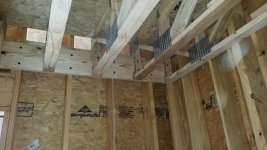
And the connections, all we do is use a 2x6 laid flat, with 16d sinkers Nailed in the end an inch and hammered down and around the beam. Then your joists rest on top of that and are toenailed to the wood. There’s no fancy connections. If your doing a flush beam, it’s the same thing. There’s hangers that get nailed over the top of the flat wood and hang down to hold the joists
Agreed on the concrete pocket, shim with steel to level. Fairly easy and never going to develop creep or defects like drying wood can.
But this is suspended - overhead and (apparently) no pre-planned foundation to put it on other than the concrete floor. So now its got legs...Steel legs? Wood legs? None of those go on with 16ds. And wood joists attaching to the steel header? How to attach? Easy is to set them on the top flange but now there's no full bracing unless the joists overhang enough to wrap the 16ds, and the depth is effectively doubled for the floor support system (when looking at the edge). Trying to make it a "thick plane"....which it sounded like the O.P. was after in going steel in the first place, requires joist hangers or the like...which again don't go in with 16ds or the Simpson nails/hex screws....its surely my opinion but I thoroughly believe the LVLs are the sweet spot when it comes to cost + ease of fabrication.
Last edited: