

You are using an out of date browser. It may not display this or other websites correctly.
You should upgrade or use an alternative browser.
You should upgrade or use an alternative browser.
2021 Garage Sale Thread
- Thread starter bmwrd0
- Start date
jeffmoss26
Well-known member
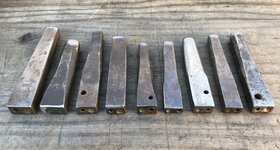
got these for a dollar yesterday, cleaned them up with evaporust!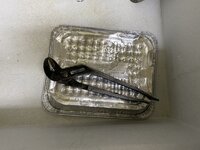
RagTopTA
Well-known member
Was not as much at the flea this morning. Found 2 HUGE Snappy wrenches for 2 dollars, and a 1/4 drv Snappy flex shaft extension. Also a pair of Blue Point snap ring pliers, and a tool box I have bever seen before. Looks to be a socket set box Anyone seen one like it before?
Attachments


Private Lugnutz
Well-known member
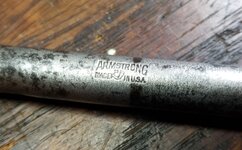
Rags - I missed that photo of your L-handle showing that those whittled drive studs are 1/4-inch. It's a head scratcher. I have never seen an L-handle in anything but 1/2-inch drive before. But the shank does have an Armstrong logo. Maybe it was a 1/2-inch drive L-handle that someone turned into a 1/4-inch? Here is an Armstrong L-handle I have.
Attachments

RagTopTA
Well-known member
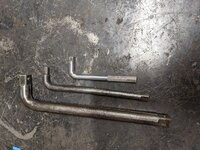
Its much smaller than a 1/2 drive. Heres a pic with 1/2 ,Hex, and 1/4 for comparison. I have lots of dif L handles in my box after box of stuff.Rags - I missed that photo of your L-handle showing that those whittled drive studs are 1/4-inch. It's a head scratcher. I have never seen an L-handle in anything but 1/2-inch drive before. But the shank does have an Armstrong logo. Maybe it was a 1/2-inch drive L-handle that someone turned into a 1/4-inch? Here is an Armstrong L-handle I have.
Attachments

RagTopTA
Well-known member
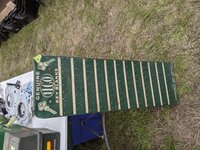
I saw this at Pate swap meet amd thought of you!got these for a dollar yesterday, cleaned them up with evaporust!
Attachments
Over the RAINY weekend the LesserGrands and LesserDogs congregated outside Mansfield PA to celebrate my mother’s 75th birthday (MrsLS & I celebrated our 33rd anniversary, as well). My sister drove from St Louis, even. It was the largest family gathering in more than a year.
Though I saw a few garage sale signs, they were mostly dreary and damp; I stopped nowhere.
So this morning, it was with some cheery expectation that MrsLS & I, having returned to our home last night, set out under clearing skies to Jake’s Flea Market. Jake’s is usually a Sat-Sun venue, but also many holidays. Today was so-so, IMO.
$18 snagged three Bonney wrenches, an Erie S-adjustable, an Atha ballpein, a Jensen USA long-nose ViseGrip knockoff, and a “Standard” ballpein head. The last looks very much like the Atha, which of course resembles Stanley, Bonney, etc.
Better than nothing, but not a fantastic morning.
Though I saw a few garage sale signs, they were mostly dreary and damp; I stopped nowhere.
So this morning, it was with some cheery expectation that MrsLS & I, having returned to our home last night, set out under clearing skies to Jake’s Flea Market. Jake’s is usually a Sat-Sun venue, but also many holidays. Today was so-so, IMO.
$18 snagged three Bonney wrenches, an Erie S-adjustable, an Atha ballpein, a Jensen USA long-nose ViseGrip knockoff, and a “Standard” ballpein head. The last looks very much like the Atha, which of course resembles Stanley, Bonney, etc.
Better than nothing, but not a fantastic morning.
d42jeep
Well-known member
The Standard hammers are shown in the Stanley catalogs as a less expensive option to the Stanley branded hammers.
-Don

Catalog image supplied by Tin Medic
-Don
Catalog image supplied by Tin Medic
Last edited:
Private Lugnutz
Well-known member
Speak of theCatalog image supplied by Tin Medic
 , he hasn't been here in months. Can you just imagine the surprise he's going to get the next time he logs in?
Old Radar
Well-known member
Speaking of Tin Medic, I ran into him at an estate sale on Friday. We hit two and on our mutual way home, he suggested I follow him back to his dragon hoard (enviably organized now, BTW) where he presented me with this slew of Williams ignition wrenches.

The sale finds include:
Disston Challenger 4100 100' Tape Measure
McGraths, St Paul 3" Caliper -- missing the locking nut
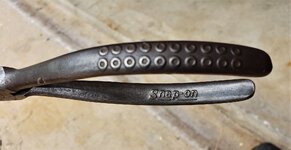
Snap-on No. 97 Needle Nose Pliers
Two of my favorite "socket reamers"
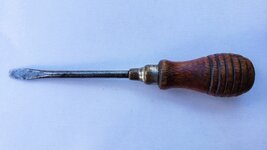
A tiny Beehive wood handle screw driver
Williams B-108 3" extension
Two Bell System 5" Wire Cutters -- one from Pexto, one from Klein & Sons
Pexto 34-5 Tinners Rivet Setter
$14 total.
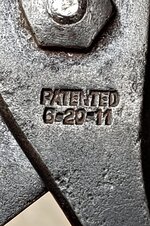
Someone please explain how Tinners Rivet Setters work. Also, in my research, I tried to look up the stamped patent date. It appears to be 6-20-11 but I don't recognize any viable entry on that date.




The sale finds include:
Disston Challenger 4100 100' Tape Measure
McGraths, St Paul 3" Caliper -- missing the locking nut
Snap-on No. 97 Needle Nose Pliers
Two of my favorite "socket reamers"
A tiny Beehive wood handle screw driver
Williams B-108 3" extension
Two Bell System 5" Wire Cutters -- one from Pexto, one from Klein & Sons
Pexto 34-5 Tinners Rivet Setter
$14 total.
Someone please explain how Tinners Rivet Setters work. Also, in my research, I tried to look up the stamped patent date. It appears to be 6-20-11 but I don't recognize any viable entry on that date.
Thank you for the Stanley tip, Don.
I stopped at several TOO garage sales (void of interest) and the small local flea at Weil Antique Center.
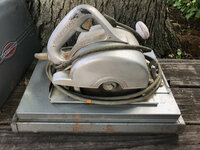
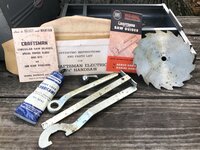
Picked up two items destined for cross-posting. A “repaired” Bonney 14” S-adjustable and a Heritage Craftsman 6-1/2” circular saw with most of its ancillaries.
I stopped at several TOO garage sales (void of interest) and the small local flea at Weil Antique Center.
Picked up two items destined for cross-posting. A “repaired” Bonney 14” S-adjustable and a Heritage Craftsman 6-1/2” circular saw with most of its ancillaries.
Attachments


Old Radar
Well-known member
Nice saw, LS! I'll bet that's got some heft to it!
duddly
Well-known member
Someone please explain how Tinners Rivet Setters work. Also, in my research, I tried to look up the stamped patent date. It appears to be 6-20-11 but I don't recognize any viable entry on that date.

I have attached a PDF with the 6/20/11 patent into.. (and the full text/explanation) I am still confused as to the operation. Nice piece.
It does seem that J. L. Young had a number of patents for different pliers, many were dental
Update: while browsing down the patent search rabbit hole...
here is the patent https://patents.google.com/patent/US995754
Also https://patents.google.com/patent/US995754 << just replace the patent number with what you are looking for!
new to me anyway. I use google, DATAMP, etc. but still struggle - this will help.
My favorite way to find them based only on the date is to find the patent gazette for the reference Tuesday/Date - then I often struggle to find a copy of the patent by itself = modifying the URL above is easy!
Attachments
Last edited:
RTM
Well-known member
That patent says dental wire, how did we end up on rivet sets? I know a rivet set as a block you hammer a rivet into shape with, so was quite confused.

(I did spend last night working on increasing my rivet set knowledge so I could fix some toolboxes.)
Pexto Mechanics' Hand Tools : Catalogue No. 26T : Peck, Stow & Wilcox Co. : Free Download, Borrow, and Streaming : Internet Archive
80 p., illus., 17.8 cm, trade catalog
archive.org
(I did spend last night working on increasing my rivet set knowledge so I could fix some toolboxes.)
Very, very wet weekend here. Lots of sales were scheduled this weekend, most seem to have been postponed.
What's the consensus on rainy weekend sales? Do sellers tend to make better deals (lower prices) because traffic is light, or dig their heels in to make as much money as possible off the low volume?
Mike
What's the consensus on rainy weekend sales? Do sellers tend to make better deals (lower prices) because traffic is light, or dig their heels in to make as much money as possible off the low volume?
Mike
Old Radar
Well-known member
Thanks Duddly and RTM!
I came up dry on DATAMP using only the date.
RTM--did you happen to stay at a Holiday Inn Express last night?
Your catalog leaves out the whole Pliers section--who knows what might have been in there...
As for how we got onto rivet setters, I put "Pexto 34-5" into Google and apparently dove down the wrong rabbit hole.

I came up dry on DATAMP using only the date.
RTM--did you happen to stay at a Holiday Inn Express last night?
Your catalog leaves out the whole Pliers section--who knows what might have been in there...
As for how we got onto rivet setters, I put "Pexto 34-5" into Google and apparently dove down the wrong rabbit hole.
Around here, no one really worries about the rain, as it comes down half the year. But, back when I lived in the bay area, some of the swaps would still be open on rainy days, although with vastly reduced buyes and sellers. I had some of my best days like that as people would make great deals and I tended to look hard at what little was there.Very, very wet weekend here. Lots of sales were scheduled this weekend, most seem to have been postponed.
What's the consensus on rainy weekend sales? Do sellers tend to make better deals (lower prices) because traffic is light, or dig their heels in to make as much money as possible off the low volume?
Mike
Outlawmws
Well-known member
I made an Estate sale, yesterday, post a visit to my mom, (only the second in over a year? - C-19...)
Last day, and "discount day" but VERY picked over.
Soldering Iron stand, B&C bar clamps, an oil can, and a Sexaur sink wrench with a bunch of different sized jaws.

A Williams box and socket, and driver Craftsman & magnetic Apex sockets, 4 Armstrong wrenches & punch, A clay/Art knife marked E.C Miller, and a pair of Athol dividers patented June 2, 1885.
,
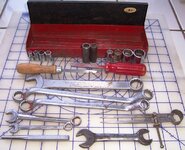
The Williams box - I think it's a box for a 3/8 set of sockets, (4 were in the buy, most not in the box...) - I'l have to see if I have enough Sockets to fill the box, but I don't think so in 3/8. I have a ratchet somewhere, but not any extensions.

Last day, and "discount day" but VERY picked over.
Soldering Iron stand, B&C bar clamps, an oil can, and a Sexaur sink wrench with a bunch of different sized jaws.
A Williams box and socket, and driver Craftsman & magnetic Apex sockets, 4 Armstrong wrenches & punch, A clay/Art knife marked E.C Miller, and a pair of Athol dividers patented June 2, 1885.
,
The Williams box - I think it's a box for a 3/8 set of sockets, (4 were in the buy, most not in the box...) - I'l have to see if I have enough Sockets to fill the box, but I don't think so in 3/8. I have a ratchet somewhere, but not any extensions.
Outlawmws
Well-known member
Mostly the rain here closes the sales down. Probably less so in areas that get regular rain year round...
RTM
Well-known member
Been there, done that w DATAMP. I’ve had three patents this week that were not in DATAMP, I need to find a steward and drop an email, or ask to be a steward to help out. Last time I asked, the vise guy had 700 patents still to enter from a spreadsheet.I came up dry on DATAMP using only the date.
Your catalog leaves out the whole Pliers section--who knows what might have been in there...
As for how we got onto rivet setters, I put "Pexto 34-5" into Google and apparently dove down the wrong rabbit hole.
I looked in three different catalogs, and didn’t see your pliers, but wasn’t clever enough to scroll down to Duddly’s reply, I did look to see that there were 646 patents approved that day, so brute force searching wasn’t going to be fun.
yeah, following a random google hit can be a loss every so often. If I find something, I try to get another one to agree before I put too much faith in it.
Rain here on the wet side of the bay almost always shuts things down. We have wet mornings, and people cancel quite often. Not like inland where it will dry out by 10.
Old Radar
Well-known member
Here's a possible lead--
https://archive.org/details/PeckStowAndWilcoxCatalogueNo20/page/n71/mode/2up
1920 catalog with "Radio Pliers." Not as many different diameters as mine, but looks like the same concept.
https://archive.org/details/PeckStowAndWilcoxCatalogueNo20/page/n71/mode/2up
1920 catalog with "Radio Pliers." Not as many different diameters as mine, but looks like the same concept.
3jakes
Well-known member
These were in a $5.00 lot box at a yard sale.
I thought I hit the jackpot seeing the proto body file on top of what looked like several interesting monkey wrenches & other stuff.
Got the lot home & sadly discovered most wrenches were either broken, pieces missing, or somehow defective.
Can't win them all. The scrap bucket grows.
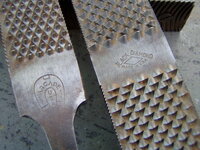
Still an ok deal with the 1509 body file, and what were probably farrier rasps:
Black Diamond 4 in one 18" (non Nicholson)
Arcade half round 16"
The Proto brake tool was from another yard sale for a buck.
I thought I hit the jackpot seeing the proto body file on top of what looked like several interesting monkey wrenches & other stuff.
Got the lot home & sadly discovered most wrenches were either broken, pieces missing, or somehow defective.
Can't win them all. The scrap bucket grows.
Still an ok deal with the 1509 body file, and what were probably farrier rasps:
Black Diamond 4 in one 18" (non Nicholson)
Arcade half round 16"
The Proto brake tool was from another yard sale for a buck.
Attachments

steaks&anvils
Well-known member
Are you still trying to figure out the use for the pliers?Here's a possible lead--
https://archive.org/details/PeckStowAndWilcoxCatalogueNo20/page/n71/mode/2up
1920 catalog with "Radio Pliers." Not as many different diameters as mine, but looks like the same concept.
With jewelry making pliers like that, they are for turning loops without marks frfom the jaws.
The flat jaw does not dimple the wire on the outside when you turn the loop. Also the wider stepped area of the round jaw does not mar the inside of the loop. Mostly anyway.
Pliers with two tapered round jaws can leave dimples where the jaw grabs the wire when you form the loop. Since you may have to turn the wire a few times to get a full loop, you can get multiple marred spots on both sides of the wire.
Good technique/practice keeps the the user from marring the wire regardless of which pliers are used.
For earrings, with silver wire, I have turned thousands of ear wire loops.
I suppose that with your pliers, you wouldn't want marred wire where an electrical contact is needed (less contact area). Plus the wire tends to break at these dimples as the wire gets hardened when it is turned at the loop.
jeffmoss26
Well-known member
sweet!I saw this at Pate swap meet amd thought of you!
Are you still trying to figure out the use for the pliers?
With jewelry making pliers like that, they are for turning loops without marks frfom the jaws.
The flat jaw does not dimple the wire on the outside when you turn the loop. Also the wider stepped area of the round jaw does not mar the inside of the loop. Mostly anyway.
Pliers with two tapered round jaws can leave dimples where the jaw grabs the wire when you form the loop. Since you may have to turn the wire a few times to get a full loop, you can get multiple marred spots on both sides of the wire.
Good technique/practice keeps the the user from marring the wire regardless of which pliers are used.
For earrings, with silver wire, I have turned thousands of ear wire loops.
I suppose that with your pliers, you wouldn't want marred wire where an electrical contact is needed (less contact area). Plus the wire tends to break at these dimples as the wire gets hardened when it is turned at the loop.
Are you from Rhode Island??? Many generations of Rhode Islanders did piecework in the jewelry industry, before it all got offshored.
Mike
Stopped by a Memorial Day sale late and was fortunate to find this haul for $35:
Vintage Proto Tools Flying Lady Ratchet Socket Tool Box; Snap-On Rethreading Set RTD-42 SAE Metric Tap Die Set; Huot Drill Index; Clamp-on table vise; Blackhawk 15" Flex-Head 49905 breaker bar; Snap-On 10" SL710 1/2" drive ratchet; Proto No. 1236 1 1/8" combination wrench; Proto 5450 1/2" drive ratchet; Bay State pliers; Proto Professional No. 1200 H Set combination wrench; miscellaneous Proto wrenches.
Vintage Proto Tools Flying Lady Ratchet Socket Tool Box; Snap-On Rethreading Set RTD-42 SAE Metric Tap Die Set; Huot Drill Index; Clamp-on table vise; Blackhawk 15" Flex-Head 49905 breaker bar; Snap-On 10" SL710 1/2" drive ratchet; Proto No. 1236 1 1/8" combination wrench; Proto 5450 1/2" drive ratchet; Bay State pliers; Proto Professional No. 1200 H Set combination wrench; miscellaneous Proto wrenches.
Attachments

steaks&anvils
Well-known member
LOL nope, Colorado. Lived here all but 3yrs (when I was little we lived overseas).Are you from Rhode Island??? Many generations of Rhode Islanders did piecework in the jewelry industry, before it all got offshored.
Mike
We had jewelry making in my high school (I'm old) and I have always just dabbled in it since.
Old Radar
Well-known member
Massive suckage there, Fred...
Mike
 All the tool freaks must have been barbecuing all day.
Southern83
Well-known member
Went camping in Virginia this weekend. Stopped by a few sales. Not much for tools but did come away with a few things. A Craftsman parts organizer, an Eagle oil can and a Craftsman drill bit guide. $21 for the group. 
On the way home I hit a road side sale...no gimme when your pulling a 35' camper!
This was the best stop of the weekend as far as amount of tools. Found a long c lineman pliers and wrench, Dunlap and P&C adjustables, MAC wrench and a Williams clamp. All for $18.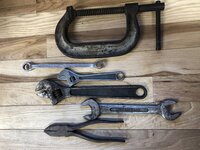
On the way home I hit a road side sale...no gimme when your pulling a 35' camper!
This was the best stop of the weekend as far as amount of tools. Found a long c lineman pliers and wrench, Dunlap and P&C adjustables, MAC wrench and a Williams clamp. All for $18.
d42jeep
Well-known member
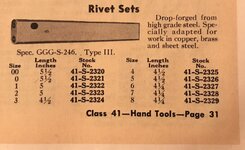
Depending on material, I think you either heat the rivet (or not), put it in the hole of the items to be riveted together, and pound the set with a big hammer to form the rivet head. Nobody ever knows what they are at sales so the price is invariably right.Someone please explain how Tinners Rivet Setters work.
-Don



wrenchguy
Well-known member
Nice paw O R.
Private Lugnutz
Well-known member
I have attached a PDF with the 6/20/11 patent into..
That patent says dental wire,
1920 catalog with "Radio Pliers."
Dental, radio, and jewelry work ALL have one thing in common - small wires. Only on the GJ GS thread could a found pair of wire-forming pliers turn into a tutorial on rivet sets and rivet-setting and nobody consider it a bad tangent!With jewelry making pliers like that,

Old Radar
It looks like you've identified your pliers on your own, with some help from Duds, RTM, and S&A, but I will add just one last little bit more for context.
Round-nose pliers have always been for wire-forming. They were (and probably still are) available in different sizes. Here is a photo I took for an older discussion on different plier tips in general, showing, from left to right, needle nose, flat-nose, half-round nose, round-nose, and larger round-nose.
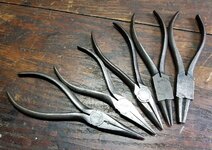

If you only had one size round-nose you could also just slip the wire farther up or down the tapered jaws for making different size loops.
Your telescoping (mandreled?) round-nose combine multiple sizes on the same plier more efficiently and precisely. Which is pretty dang cool. I have never seen one in the wild. Nice find! I'm jealous.
RTM
Well-known member
As I said, I had been reading up on using them the other night, that was the first video I watched. I think the trimming to 1.5 diameters is a key take away.Youtube knows everything...
I had previous seen videos where they put the tool on the domed head, and banged away on the opposite side w a ball peen. “To protect the dome”. Some of the rivet squeezers seem to have both jaws domed, and using a bucking bar confused me, so I stopped for the night.
Last edited:
Provincial
Well-known member
Back to OR's pliers: I believe the various sizes stamped on the round jaw are screw sizes. 4,6,8,and 10 are common screw sizes for terminals in older electrical/electronic work. A quick measurement will confirm. #4 is 7/64", #6 is 9/64", #8 is 5/32" and #10 is just over 3/16".
Private Lugnutz
Well-known member
They are. The 1920 PEXTO catalog OR linked above, with a different "radio" plier having only two mandrels, cites them as forming loops for 6- and 8-32 screws.
RTM
Well-known member
That makes a ton more sense than Pexto carrying dental pliers.Back to OR's pliers: I believe the various sizes stamped on the round jaw are screw sizes. 4,6,8,and 10 are common screw sizes for terminals in older electrical/electronic work. A quick measurement will confirm. #4 is 7/64", #6 is 9/64", #8 is 5/32" and #10 is just over 3/16".