To avoid these ads, REGISTER NOW!

20x20 Wiring plan

helopilot

Member
Joined
Jan 2, 2008
Messages
16
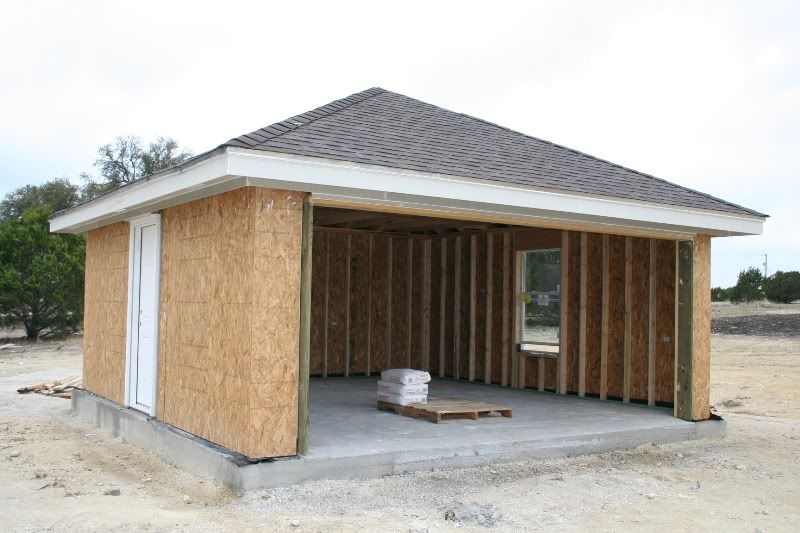
New guy here but I have reading the forums for a while now. Just hoping you guys would peruse my tentative wiring plan and see if it makes sense. The garage will be used mostly for woodworking, but I will also be welding and working on my vehicles as well. The biggest thing I have is a 3 phase dust collector that I will wire with a rotary phase converter. To the best of my knowledge I have done all of the calculations for the load on the circuits, however, I am currently teaching myself all of this stuff.


garage.jpg
 
To avoid these ads, REGISTER NOW!
OP
H

helopilot

Member
Joined
Jan 2, 2008
Messages
16
Here are pics of it in progress...of course it is 1000 miles away from me right now, but that doesn't mean I can't plan.

IMG_8269.jpg


IMG_8268.jpg


IMG_8434.jpg


closeupofgarage-1.jpg
 

6768rogues

Banned
Joined
Nov 28, 2007
Messages
4,524
Location
Western NY
We had a power outage a couple of years ago, and I had to find my way out of the garage in total darkness. I added a battery powered emergency light on one of the lighting circuits. It has been handy on a couple of occasions since then. It cost $30 +/- at Lowe's. You have one lighting circuit, so you are at the mercy of the electric company and one breaker for getting out safely. I always have lots of stuff to trip over on my way out, so I like to have at least a minimal amount of light. Also, I would add a light by the man door (code required almost everywhere) and an outdoor convenience outlet. Maybe some lights by the overhead door too. Is one receptacle for a garage door opener?
 

GShelton

Well-known member
Joined
Aug 14, 2006
Messages
252
Location
N. Central Florida
This might seem petty, but if you are planning to drywall the inside, put your outlet and switch boxes 48 1/2 inches down from the top of the top plate. (Assuming 1/2 in drywall on the ceiling.) This will allow you to hang the top wall sheet without having to do any cutting around electrical boxes.

And, I can't believe I am saying this, but that is a lot of outlets. LOL! You might consider alternating them on the circuits. That way you are not working off of just one circuit while working at the bench, etc.. For example, the back wall (Circuit 5) could be mixed between a couple of circuits so you would have Circuit 5, 3, 4, 5 etc.. or at least 5, 3, 5, 3 etc..

Hope that makes sense.
 

trainer

Well-known member
Joined
Nov 28, 2005
Messages
2,019
Location
Northern Ontario, Canada
I'd do a couple of things differently.
Wire the fluorescents so they are in 2 or 3 separately switched banks. That way when you go into the shop to grab a screwdriver or something, you only need to switch one bank on, saving wear and tear on your lights and ballasts.

Secondly, when wiring ceiling light fixtures, run the power feed directly from the panel to the fixtures, then run a wire to the switch. Handy in the future if you ever want to swap a fixture for a ceiling fan or a motion detector fixture, nightlight, etc. I was taught to do it this way by a retired electrician friend.
 
OP
H

helopilot

Member
Joined
Jan 2, 2008
Messages
16
Thanks for all of the ideas guys!!! I have implemented some of the ideas in this newer diagram. I still have to get to Texas in order to get some more info as well as permits and such.

garage-1.jpg
 
To avoid these ads, REGISTER NOW!

6768rogues

Banned
Joined
Nov 28, 2007
Messages
4,524
Location
Western NY
If you are buying new lights, check T5s. They use less energy and put out more light. At our school, we are starting to remove the 10 year old T8s and put in new T5s.
 

trainer

Well-known member
Joined
Nov 28, 2005
Messages
2,019
Location
Northern Ontario, Canada
If you are buying new lights, check T5s. They use less energy and put out more light. At our school, we are starting to remove the 10 year old T8s and put in new T5s.


Thats how I got my t-8's. I got 42 very nice 2 lamp fixtures with covers and (used) bulbs from a school remodel for under $200.
 

CalGeo

Active member
Joined
Jan 17, 2008
Messages
41
Location
Alameda & St Helena, California
Looks good so far. Am I to assume that circuit #7 is for the garage door opener? If not you need to install an outlet for one, even if you don't plan on installing a door opener soon. I also noticed that there are no outside lights, you will need one outside the side door and may want to consider one on the rear outside wall and one on each side of the garage door. Depending on how you are going to use the outside space, you might want a few outlets and lights for working on projects that you don't have inside the garage or having power for a short term RV.

The lights in the front can be sensor controlled or put on a timer. What about sprinkler systems, attic fan and alarm system, have you allowed for a irrigation control box or alarm? What about driveway lighting, now is the time to place your conduits.

When I install my outlets and switches, I set the boxes at 46" to the top, this allows for the taper to run his tape and mud without interference with box. If you are sheet rocking the ceiling, make sure you have power and lighting up there. Just my 2 cents!
 
OP
H

helopilot

Member
Joined
Jan 2, 2008
Messages
16
#7 is for the garage opener and a drop light. Most of the things you mentioned are being taking care of as part of the house being built. The other garage will house the sprinkler system and most of the other outside circuits. Those are already wired and I am just having the builder leave this garage unfinished so I can customize it some and cut down on costs.

I was planning on putting the receptacles at 50" so I could lay plywood and other sheet goods against the wall without blocking access to the receptacle.

Thanks again for all of the responses!!!
 
To avoid these ads, REGISTER NOW!
Top Bottom