To avoid these ads, REGISTER NOW!

230 v compressor hook up

vjjack04

Member
Joined
Jun 28, 2014
Messages
14
Guys,
New to the forum so hello to all. I did a couple of searches, and found some info - but I guess my question is really elementary....I just got an Husky 60 gallon compressor and of course it didn't come with a cord. I see that its a 3 wire hook up - but I need about 12 ft of cord and the 230 volt outlet in my shop has a 4 slot receptacle....my fuse box has a 30 amp breaker for the circuit...what do I need to get the compressor wired? Do I change the receptacle to a 3 slot type? Is the 30 amp breaker ok to use...? Thanks for any assistance....
 
To avoid these ads, REGISTER NOW!

600SL

Well-known member
Joined
Apr 26, 2012
Messages
1,794
Location
Connecticut
You probably have the same compressor I have only painted a different color and sold by Lowes. 60 gal 3.7 HP. It requires a 20 AMP breaker but 30 should be fine. It does not require a neutral so you can use a 3 prong plug or a 4 prong plug with the neutral prong just not connected.
 
OP
V

vjjack04

Member
Joined
Jun 28, 2014
Messages
14
600SL,
You are correct, I looked at both and the only difference was $10...plus, Home Depot is closer to my house.....

Thanks for the response...

How did you configure the air connection and dryer deal...?
 

wyliesdiesels

Well-known member
Joined
Aug 14, 2012
Messages
19,983
Location
Modesto, CA
Your compressor needs to be hardwired as recepticles arent rated for more than 3HP.

Wire should be 125% of FLC, which is around 23a, so #10 NM-b or #12 THHN. U dont need a neutral. Breaker is permited to be max 250% FLC. A 30a breaker may work but could suffer from nuissance trips. I generally use a breaker sized @ 200% of FLC for motor circuits....
 
Last edited:

600SL

Well-known member
Joined
Apr 26, 2012
Messages
1,794
Location
Connecticut
Your compressor needs to be hardwired as recepticles arent rated for more than 3HP.

Wire should be 125% of FLC, which is around 23a, so #10 NM-b or #12 THHN. U dont need a neutral. Breaker is permited to be max 250% FLC. A 30a breaker may work but could suffer from nuissance trips. I generally use a breaker sized @ 200% of FLC for motor circuits....

Full load current for this compressor is about 14 amps. Manufactures recommended CB is 20 amps. I have had mine running about a year on a 20 amp breaker. Mine is hardwired.
 

600SL

Well-known member
Joined
Apr 26, 2012
Messages
1,794
Location
Connecticut
600SL,
You are correct, I looked at both and the only difference was $10...plus, Home Depot is closer to my house.....

Thanks for the response...

How did you configure the air connection and dryer deal...?

I just had a 1" flex hose plumbed into my dryer pressure regulator on the wall and plumbing all around my shop.
 

Charles (in GA)

Well-known member
Joined
Jan 11, 2006
Messages
12,489
Location
50 mi south of Atlanta
Switch out the outlet to a three prong and run a 50 amp breaker

Terrible advice.

For the OP, what we need to know is the specs on the motor, what amp draw is given on it specifically. The fact that it is given as 4 hp tells me it may be one of those compressors with the "fake" hp whose specs have been jacked up from what the motor is really putting out. Amps will tell us whether the hp and amps agree (768 watts per hp roughly)

If the circuit proves to be suitable, you could possibly use a matching plug and simply not hook up the neutral in the plug to the new cord. However, first you need to track down a manual for the compressor and see what the manufacturer recommends for wiring connections.

Charles
 
Last edited:

sberry

Banned
Joined
Jun 18, 2005
Messages
35,747
Location
Brethren, Michigan
I have never seen one of these trip a 30A breaker where there wasn't a fault with the motor, never. There is a zillion 5 hp runs on 30;s in the world.
 

sberry

Banned
Joined
Jun 18, 2005
Messages
35,747
Location
Brethren, Michigan
All this reminds me,,, had my main trip first time ever a couple weeks ago and I switched out to backup. I should go reset it and see what the problem is, my guy was here yesterday but I was busy to take a look at it. I put some bearings in it a couple months ago and fiddled with the contacts so its been apart and may have agrivated it, havnt had a chance to look. After the brg job it had been working normal.
 
OP
V

vjjack04

Member
Joined
Jun 28, 2014
Messages
14
Your compressor needs to be hardwired as recepticles arent rated for more than 3HP.

Wire should be 125% of FLC, which is around 23a, so #10 NM-b or #12 THHN. U dont need a neutral. Breaker is permited to be max 250% FLC. A 30a breaker may work but could suffer from nuissance trips. I generally use a breaker sized @ 200% of FLC for motor circuits....

I am not sure I understand hard wired. My garage has a box and the line I am refering to has a 30 amp circuit. It has the THHN wire in the wall. You are saying I should not get some wire qnd put a three prong 230 plug on it? What is required for hard wiring?

Specs say its 15 amps
 
OP
V

vjjack04

Member
Joined
Jun 28, 2014
Messages
14
Terrible advice.

For the OP, what we need to know is the specs on the motor, what amp draw is given on it specifically. The fact that it is given as 4 hp tells me it may be one of those compressors with the "fake" hp whose specs have been jacked up from what the motor is really putting out. Amps will tell us whether the hp and amps agree (768 watts per hp roughly)

If the circuit proves to be suitable, you could possibly use a matching plug and simply not hook up the neutral in the plug to the new cord. However, first you need to track down a manual for the compressor and see what the manufacturer recommends for wiring connections.

Charles

It actually says it 3.7hp and specs show 15 amps...Unfortunately, I cannot find anything on what the manufacturer recommends....
 

Stuart in MN

Well-known member
Joined
Sep 8, 2005
Messages
22,977
Location
Minneapolis
Post the model number of the compressor, along with the information on the motor nameplate, and then hopefully you can get some good advice. Without those things, everyone is just guessing on what is required.
 
OP
V

vjjack04

Member
Joined
Jun 28, 2014
Messages
14
Post the model number of the compressor, along with the information on the motor nameplate, and then hopefully you can get some good advice. Without those things, everyone is just guessing on what is required.

It a Husky from Home Depot -Model C601H

Motor model is BTM56RB34D3.7M
 

Stuart in MN

Well-known member
Joined
Sep 8, 2005
Messages
22,977
Location
Minneapolis
Here's the owner's manual for that compressor: http://www.homedepot.com/catalog/pdfImages/4c/4cfb5520-b4ad-409f-bcb1-915ef9072864.pdf

It says 240vac single phase 13.5 amps, with a minimum branch circuit size of 20 amps.

It also says "running" horsepower is 3.7hp, which is kind of a fake number...air compressor manufacturers are famous for publishing misleading horsepower ratings, the actual horsepower is more like 2.5hp actual.

You said you have an existing 30 amp circuit, which should be fine for that air compressor. 20 amps as mentioned above is the minimum circuit size, but you are allowed to have a larger circuit within certain limits.

Your existing receptacle has four slots; two of them are for the hot leads, one for the neutral, and one for the ground connection. On a air compressor you only need the two hots and a ground, so get a plug that matches the receptacle and use a 10 gauge power cord.
 

Executive

Well-known member
Joined
Jun 29, 2012
Messages
77
Here's the owner's manual for that compressor: http://www.homedepot.com/catalog/pdfImages/4c/4cfb5520-b4ad-409f-bcb1-915ef9072864.pdf

It says 240vac single phase 13.5 amps, with a minimum branch circuit size of 20 amps.

It also says "running" horsepower is 3.7hp, which is kind of a fake number...air compressor manufacturers are famous for publishing misleading horsepower ratings, the actual horsepower is more like 2.5hp actual.

Excellent point. "Marketing horsepower" is different from real horsepower. Do you think that shop-vac Home Depot sells is really 6.5 horsepower with a 16 AWG cord? Same with compressors.

If you do hard-wire this compressor, and I recommend that you do, you should install a disconnect switch within sight of the compressor. This is required by code but could be the breaker if it is line of sight and within 50 feet. This is important.

Calculating the maximum overcurrent protection device (breaker) for this application should be done in accordance with NEC Table 430.52. You will have additional safety if the motor for the compressor has built-in overload protection, typically a red reset button.

Based on what I have read here, you should have no problems running #10 THHN supplied by a 30 amp 2 pole breaker. Remember that disconnect too!

Chris
 

600SL

Well-known member
Joined
Apr 26, 2012
Messages
1,794
Location
Connecticut
I have actually noticed the compressor manufactures are getting better at rating there stuff. Not so for the vacuum cleaner people yet.

3.7 HP = 3.7HP x 746w/HP = 2760 watts

2760 watts/230V = 12 amps

Assuming motor efficiency 0.765 (for the **** motor it is)

12/0.765 = 15.7 amps which is what the motor name plate says on mine, I just checked. It appears to me an honest number as shown by its CFM output.

On the other hand a 6HP vacuum that plugs into a 115V wall socket is ridicules. I guess Shop Vac and its competitors haven't been sued yet.

It is actually a lot of power for the money, but it is a cheep high speed nosy MF that wont last as long as the great 5HP cast iron slow turning industrial unit I had for 25 years that turned 1/4 the speed that lasted 25 years with a rod knock and a leak in the tank. But the replacement for it was $2100.00. For the Lowes 3.7HP model I believe I paid $400. At the time I bought it I thought if I need more power, which I may for sand blasting I will just get 2 and I can replace both of them 3 times before the industrial unit pays off.
 

Attachments

  • Oil Pressure Fitting D.jpg
    Oil Pressure Fitting D.jpg
    147.2 KB · Views: 54
  • P5080010.jpg
    P5080010.jpg
    136.8 KB · Views: 73
To avoid these ads, REGISTER NOW!

600SL

Well-known member
Joined
Apr 26, 2012
Messages
1,794
Location
Connecticut
I have never seen one of these trip a 30A breaker where there wasn't a fault with the motor, never. There is a zillion 5 hp runs on 30;s in the world.

30 amps is pushing it with a real industrial 5HP compressor. Mine had a 25amp draw on the name plate and I measured it at about 24 with a clamp just before shut down. I used a 40amp for that application. Start up current would pull over 100 amps momentarily. Newer motors with efficiency ratings in the .9 range should handle a 30 amp breaker without any problems but you wont find those motors on cheep compressors.

Then again some of the advertised compressors claims of 5HP don't really pull anywhere near 20 amps. Sears HD and Lowes will tell you they are selling the perpetual motion machines and they will run just fine on 30 amp breaker.
 

600SL

Well-known member
Joined
Apr 26, 2012
Messages
1,794
Location
Connecticut
Excellent point. "Marketing horsepower" is different from real horsepower. Do you think that shop-vac Home Depot sells is really 6.5 horsepower with a 16 AWG cord? Same with compressors.

Chris

That's about 42 amps @ 115V not including efficiency losses. How does that go on a 16 AGW cord. Is your BS meter pegged?
 
OP
V

vjjack04

Member
Joined
Jun 28, 2014
Messages
14
All,
Thanks much; I have learned a lot from the dialogue you've provided. I think I can get this done now....I appreciate the real responses from all - some other forums, they start out answers with...."I am not sure, but I think you...." - that's really annoying.....all of you who responded seemed to have personal experience....thanks.
 

Executive

Well-known member
Joined
Jun 29, 2012
Messages
77
That's about 42 amps @ 115V not including efficiency losses. How does that go on a 16 AGW cord. Is your BS meter pegged?

My point exactly. Any motor will do its best to do whatever work you impose on it. Horsepower in this case could be used as an indicator of how much work can be done before the motor fails. Marketing people will put anything on a product to make it stand out against the competition.

Your calculation seems based on 746 X 6.5 / 115 = 42.** pretty good but in reality, a 6.5 HP motor @ 115v, if it really existed, would fall between the 56 AMPS of a 5 HP motor and the 80 AMPS of a 7.5 HP motor based on NEC T430.248. An even more challenging load for that 16 AWG cord!

So, yes, my BS monitor is on high alert when buying a product with any sort of HP rating.

The OP should keep in mind that compressors are generally quite taxing on an electrical system. This is a concern when sizing branch circuits/feeders for compressor motor loads especially at start up when the rotational mass of the compressor pistons must work against tank pressure and friction to get going.


Chris
 
OP
V

vjjack04

Member
Joined
Jun 28, 2014
Messages
14
You probably have the same compressor I have only painted a different color and sold by Lowes. 60 gal 3.7 HP. It requires a 20 AMP breaker but 30 should be fine. It does not require a neutral so you can use a 3 prong plug or a 4 prong plug with the neutral prong just not connected.

ok - I have one more question on this. I am replacing the 4 prong receptacle with a 3 prong - there are 4 wires in the receptacle hole, (you all, I am sure, know that)....the wires are red, black, white and bare copper - So I used the red as the positive, the black as the negative, and the bare wire to the 3rd, middle prong....is that right? And then at the compressor - it has a white wire to the positive (to correspond I connect the red wire) and a black wire as the negative (to correspond I connect the black wire)...and the bare wire is grounded to the compressor mount areas.....is that right?
 

Charles (in GA)

Well-known member
Joined
Jan 11, 2006
Messages
12,489
Location
50 mi south of Atlanta
ok - I have one more question on this. I am replacing the 4 prong receptacle with a 3 prong - there are 4 wires in the receptacle hole, (you all, I am sure, know that)....the wires are red, black, white and bare copper - So I used the red as the positive, the black as the negative, and the bare wire to the 3rd, middle prong....is that right? And then at the compressor - it has a white wire to the positive (to correspond I connect the red wire) and a black wire as the negative (to correspond I connect the black wire)...and the bare wire is grounded to the compressor mount areas.....is that right?

Don't bother changing the receptacle, just use a four prong plug on the compressor cord and have a unused pin/blade. The L shaped blade is the ground/green/bare. The one directly opposite it is the neutral which is white. The other two are hots, black and red, or black/black, doesn't matter. There is no "positive" or "negative" in alternating current. The neutral is just as hot, and will kill you just as quick as the hots. The difference is, it is connected to ground and earth and the power companies neutral which is also earthed.

If you have some real strong desire to use a three prong plug instead, just screw a small wirenut on the end of the white wire and fold it into the back of the box. The bare or green goes on the middle pin or blade, and the two hots on the other two.

If you bought 10/3 cord, it will have an insulated (green) ground wire and a black and a white. Use the black for black (one hot) and use the white for the other hot, and take a red permanent marker and color the exposed white insulation red all around on both ends.

Cord is that soft rubber jacketed stuff with soft rubber jacketed wires inside. Cord will NEVER have a bare wire in it for the ground. If you bought cable (housewire) such as Romex, it has to be secured and protected where exposed. It is NOT designed to be used as a cord for a plug in device or equipment. Cable will have a bare wire to be used as the ground. it would be designated 10/2 w/grd rather than 10/3 like the cord.

Charles
 
Last edited:
OP
V

vjjack04

Member
Joined
Jun 28, 2014
Messages
14
Don't bother changing the receptacle, just use a four prong plug on the compressor cord and have a unused pin/blade. The L shaped blade is the ground/green/bare. The one directly opposite it is the neutral which is white. The other two are hots, black and red, or black/black, doesn't matter. There is no "positive" or "negative" in alternating current. The neutral is just as hot, and will kill you just as quick as the hots. The difference is, it is connected to ground and earth and the power companies neutral which is also earthed.

If you have some real strong desire to use a three prong plug instead, just screw a small wirenut on the end of the white wire and fold it into the back of the box. The bare or green goes on the middle pin or blade, and the two hots on the other two.

If you bought 10/3 cord, it will have an insulated (green) ground wire and a black and a white. Use the black for black (one hot) and use the white for the other hot, and take a red permanent marker and color the exposed white insulation red all around on both ends.

Cord is that soft rubber jacketed stuff with soft rubber jacketed wires inside. Cord will NEVER have a bare wire in it for the ground. If you bought cable (housewire) such as Romex, it has to be secured and protected where exposed. It is NOT designed to be used as a cord for a plug in device or equipment. Cable will have a bare wire to be used as the ground. it would be designated 10/2 w/grd rather than 10/3 like the cord.

Charles

Thanks Charles - I already changed out to the 3 prong. I have 10-3 NM W/G so I used red and black for hot and the bare for the ground. I put a cap on the white like you said and pushed it in the box. At the compressor, I put the bare ground on the compressor ground screw, same as the motor....its all working....just want to ensure I am not catching the barn on fire in the end....Thanks for your frank comments....
 

Executive

Well-known member
Joined
Jun 29, 2012
Messages
77
Don't bother changing the receptacle, just use a four prong plug on the compressor cord and have a unused pin/blade. The L shaped blade is the ground/green/bare. The one directly opposite it is the neutral which is white. The other two are hots, black and red, or black/black, doesn't matter. There is no "positive" or "negative" in alternating current. The neutral is just as hot, and will kill you just as quick as the hots. The difference is, it is connected to ground and earth and the power companies neutral which is also earthed.

If you have some real strong desire to use a three prong plug instead, just screw a small wirenut on the end of the white wire and fold it into the back of the box. The bare or green goes on the middle pin or blade, and the two hots on the other two.

If you bought 10/3 cord, it will have an insulated (green) ground wire and a black and a white. Use the black for black (one hot) and use the white for the other hot, and take a red permanent marker and color the exposed white insulation red all around on both ends.

Cord is that soft rubber jacketed stuff with soft rubber jacketed wires inside. Cord will NEVER have a bare wire in it for the ground. If you bought cable (housewire) such as Romex, it has to be secured and protected where exposed. It is NOT designed to be used as a cord for a plug in device or equipment. Cable will have a bare wire to be used as the ground. it would be designated 10/2 w/grd rather than 10/3 like the cord.

Charles

This is excellent and accurate advice. 100% correct.
Nice work.

Chris
 
OP
V

vjjack04

Member
Joined
Jun 28, 2014
Messages
14
Guys,
Thanks for you helpful comments on this - I was wondering however, CH makes the Husky compressor or at least one very similar and I found that they have a power cord for it - EC012902AV - It is 6 feet long and is the 10/2 configuration...why would that be a bad options? Thanks.
 

Charles (in GA)

Well-known member
Joined
Jan 11, 2006
Messages
12,489
Location
50 mi south of Atlanta
Guys,
Thanks for you helpful comments on this - I was wondering however, CH makes the Husky compressor or at least one very similar and I found that they have a power cord for it - EC012902AV - It is 6 feet long and is the 10/2 configuration...why would that be a bad options? Thanks.

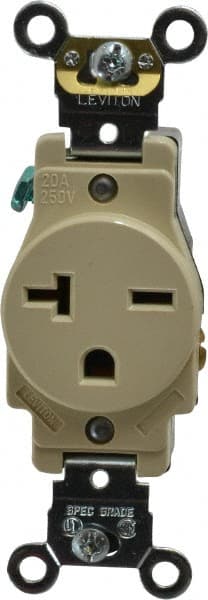
Nothing wrong with using the CH cord. It has a NEMA 6-20 plug on it. The receptacle shown in the pic below is a combination of NEMA 6-15 (two horizontal blades) and also accepts NEMA 6-20 (a horizontal blade and a vertical blade, same size but opposite sides as the similar looking 120v receptacle and plug.

7436659-23.jpg


And will require you to change out the receptacle in the wall to match, You would need to cap and stow the white wire in the wall box, as it will not be used. In addition, you would need to replace the 30 amp double pole breaker with a 20 amp double pole breaker to match the receptacle and plug.

Charles
 

89GLH

Well-known member
Joined
Mar 24, 2011
Messages
1,057
Location
Westminster, MD
Your compressor needs to be hardwired as recepticles arent rated for more than 3HP.

Wire should be 125% of FLC, which is around 23a, so #10 NM-b or #12 THHN. U dont need a neutral. Breaker is permited to be max 250% FLC. A 30a breaker may work but could suffer from nuissance trips. I generally use a breaker sized @ 200% of FLC for motor circuits....

My Quincy is 5hp, and has been running in my garage on a cord for 4+ years.
 

CompressorPros.com

Well-known member
Joined
Jun 27, 2014
Messages
411
Location
SC
Compressor manufacturers had been using Peak HP in the consumer market. That is why you were seeing stuff like a 7HP compressor that was 115V. There was a class action lawsuit several years back that stopped that. Now they are required to show running HP. Some still list a Peak HP, but it can't be the main HP listed.

Also, be careful if you decide to go with a cord and plug, most 230V wiring to the outlet is not adequate to handle an air compressor
 

logixjock

Well-known member
Joined
Jun 17, 2012
Messages
636
Location
Sturgeon, MO
Doesnt mean that it was done right! Lots of stuff runs or works correctly for awhile despite being installed or done incorrectly!

Guess I'd better alert my current employer (Hubbell) to stop making all those high amp plugs they invented and made millions of over the years. Someone in industry might actually continue to use them to run large electric motors like they have for years. Biggest I've ever wired up personally was in '96 on a 100HP part wind start fan motor installed in a filterhouse. (Cedarapids-Standard Havens Division) That particular installation was UL approved at the customers special request BTW.

Are you guys making this stuff up as you go along?
 

wyliesdiesels

Well-known member
Joined
Aug 14, 2012
Messages
19,983
Location
Modesto, CA
Apples and oranges logix. No we dont make this stuff up. A standard nema outlet such as a 6-50 is rated for 3HP. Go look at a plug like that and see the rating for yourself. The plugs u speak of are probably the pin and sleeve type which are rated for higher HP...
 

logixjock

Well-known member
Joined
Jun 17, 2012
Messages
636
Location
Sturgeon, MO
Apples and oranges logix. No we dont make this stuff up. A standard nema outlet such as a 6-50 is rated for 3HP. Go look at a plug like that and see the rating for yourself. The plugs u speak of are probably the pin and sleeve type which are rated for higher HP...

OK, that is precisely what they are. Guilty as charged of posting without thinking. Just had a "what the hell is he talking about, I did that and it was perfectly code compliant" moment there.

Carry on.......
 
To avoid these ads, REGISTER NOW!
Top Bottom