To avoid these ads, REGISTER NOW!

240V 20A extensiopn cords......

bczygan

Well-known member
Joined
Nov 4, 2009
Messages
22,002
Location
DETROIT! Arsenal of Scrappers
240V 20A extension cords......

Build my own or best place to buy parts or assembled cords?

I just fired up my 240V compressor, and it has a very short (5') plug and cord on it. Looks like it got cut as there's tape around it near the plug.

Sears Craftsman 2HP 20 Gal. 106.154781 compressor

Plug is the 6-20P.
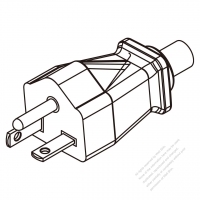
Se7b13566a49fe044480Zq.jpg


6-20R Receptacle:
ibcGetAttachment.jsp


So I need to either wire in a much longer cord and plug, or get an extention cord to match.

At what length would I need to go from #14 to #12?

Bill
 
Last edited:
To avoid these ads, REGISTER NOW!

theoldwizard1

Well-known member
Joined
Feb 22, 2011
Messages
43,339
Location
SE MI
Re: 240V 20A extension cords......

Build my own or best place to buy parts or assembled cords?

These are hard to find pre-made. I had to make my own.

I just fired up my 240V compressor, and it has a very short (5') plug and cord on it. Looks like it got cut as there's tape around it near the plug.
Do what I did. Buy a good quality 12 gauge extension cord. I would noy go more that 25' (If you really need more, I would go with a 10 gauge cord.) Cut both end off (cheaper that buying SJ cord). Buy 6-20P ($5-$10 on eBay or Amazon). Disassemble the connection at the compressor and us the other end of new cord on directly. Nice and neat.


(That 6' cord was probably 14 gauge but that is not adequate for anything longer than that ! That was what was on my compressor also !)
 
OP
B

bczygan

Well-known member
Joined
Nov 4, 2009
Messages
22,002
Location
DETROIT! Arsenal of Scrappers
I may have to eat my words ! The cheapest 12/3 extension cords are about $20, but you don't really know what kind of cable you are getting (likely NOT SJOOW).

This an EXCELLENT price on SJOOW on eBay
25' SJOOW 12/3 CABLE PORTABLE INDOOR/OUTDOOR WIRE 300V - eBay $23

That IS a good price.

The cord on it now is SJ 16/3.

What's the longest cord you would use at #12? I ask because while the cord you linked to is .92/lin. ft., If I use a coupon code at Lowes I can buy 43 feet for $43.18

Bill
 
OP
B

bczygan

Well-known member
Joined
Nov 4, 2009
Messages
22,002
Location
DETROIT! Arsenal of Scrappers
Last edited:
OP
B

bczygan

Well-known member
Joined
Nov 4, 2009
Messages
22,002
Location
DETROIT! Arsenal of Scrappers
I checked the voltage drop and come up with 2.1%, so am I right in assuming that this isn't a factor for the 50' cable length?

I like the idea of being able to roll this small compressor out of the garage and to the end of the driveway so I can use the air impact in the street to do auto repairs with a fairly short air hose.

Bill
 

theoldwizard1

Well-known member
Joined
Feb 22, 2011
Messages
43,339
Location
SE MI
Your fine with 12 guage at 50 ft.

"Officially" they down grade a current capacity on "crodage", 12 gauge is only "good" for 15A. I think 50' would be "pushing it". If you are running the compressor for a long period of time, it may not have a chance to cool down much between re-starts. The hotter it gets the more current it will draw when it re-start. More current, more voltage drop, which means more current, which mean ...

If the motor has a built in thermal overload (reset button), I would be a lot less concerned.
 

nadogail

Well-known member
Joined
Jan 23, 2009
Messages
32,061
Location
Coronado, CA
I have had good luck with SO, and SJO cord from industrial surplus stores and Home Depot remnant racks.

Only when I get in a hurry do I find myself paying retail.
 
OP
B

bczygan

Well-known member
Joined
Nov 4, 2009
Messages
22,002
Location
DETROIT! Arsenal of Scrappers
I have had good luck with SO, and SJO cord from industrial surplus stores and Home Depot remnant racks.

Only when I get in a hurry do I find myself paying retail.

Some Lowes will give you half off for remnants and even have a sign stating so in the electrical department. Some won't. Best price I can get at Lowes on this cord is still higher by about 8 cents a foot, than the link above. While I can get it immediately, I have to buy 43'. But I can put it on my Lowes charge. The EBay seller, while fairly local, will ship for free, but just has it in 25' and 50' lengths.

My local HD will not discount remnants, and this is a very specific cord and length that I need.

So there's the choices.

And why, I ask, is it better to have a longer air hose? I can see not wanting to leave your compressor on the curb where it can be seen and also stolen, then or later. And it's noisy out there, but not too bad since it's oiled.

I like the fact that a short air hose means less line loss and better power for impacts. Bigger shorter lines help. And I like the compressor to be more mobile. The outlet is in the middle of the garage, so I lose 10' plus just getting it to the door. A 25' cord might get it halfway down the driveway.

Well, maybe that is the answer. Get the 25' cord and relocate the outlet by the door. And use high flow fittings in the air hose. A balance between cord length and hose length.

I've got to check the compressor and see of that thick a cord will even physically fit into where it connects, since the present one is 16/3.

Bill
 
Last edited:

dave*99

Well-known member
Joined
May 5, 2009
Messages
4,289
Location
Coastal NJ
Use a longer air hose. Do the calculations. Ingersoll-Rand has a calculator on their website.

Here is an example. A 1/2" impact gun may need about 10 CFM. At 90 PSI using 50' of 3/8 air hose, you lose about 2 or 3 PSI.
 

nadogail

Well-known member
Joined
Jan 23, 2009
Messages
32,061
Location
Coronado, CA
I guarantee that no matter which viable solution you choose; compresser sitting outside where it can be seen, longer heavy extension cord, or longer air hose. Somebody will certainly volunteer "You should have done it a different way".

Longer air hoses have thier place, I just popped for a new 50' hose yesterday. Heavy Duty extension cords will never go out of style. Having wheels on your compresser is wonderful.

When I paint fences, I use all three features. I roll the compresser as close to the job as the cords allow, plug in a long hose, and spray away.

Sometimes I just keep the compresser in the back of the van because extension cords and air hoses are easier to handle than unloading the compresser and then reloading it.
 
OP
B

bczygan

Well-known member
Joined
Nov 4, 2009
Messages
22,002
Location
DETROIT! Arsenal of Scrappers
I guess I'm finding that combinations work the best. Short and long of everything.

Sure is true with extension cords. And different wire sizes for different uses.

I'd rather lay out a 50' and a 25' or even 2 50'ers than wind up one 100' cord.

Bill
 

CNGsaves

Well-known member
Joined
Sep 26, 2012
Messages
13,233
Location
KS and OK
Will be cheaper to have longer air hose than 240v extension cord.

If you like idea of compressor being closer, then 50 ft extension cord max. After that, just get more lengths of 3/8" or 1/2" air hose.
 
OP
B

bczygan

Well-known member
Joined
Nov 4, 2009
Messages
22,002
Location
DETROIT! Arsenal of Scrappers
Will be cheaper to have longer air hose than 240v extension cord.

If you like idea of compressor being closer, then 50 ft extension cord max. After that, just get more lengths of 3/8" or 1/2" air hose.

So that is what I'll do.

I'll get 50' of 12/3 SJOOW cord for $46 and another male and a female plug. Maybe they all should be locking plugs and outlets?

I'll attach 20' to the compressor, replacing the existing cord, so there is enough to get it out the garage door a bit, with the receptacle near the door. I'll take the other 30' and make an extension cord, for use when I really need to get it far from the outlet(s).

Any other needed length will be hose. There are two outlets on this compressor. One fixed and one with a quick connect. I'll put a 20' hose on the fixed one, for a convenient to handle length. Then I can have any lengths needed that I can use on the quick connect.

Sound like a good plan?

Bill
 
Last edited:

nadogail

Well-known member
Joined
Jan 23, 2009
Messages
32,061
Location
Coronado, CA
You may find yourself using that extension cord for more than your compresser.

For that reason I suggest you avoid special (twist lock) connectors. There are other way to keep cords plugged together.
 
To avoid these ads, REGISTER NOW!

md21722

Well-known member
Joined
Nov 30, 2015
Messages
1,840
Location
Mt Juliet, TN
At 2HP, it will run great at 230V on #12 wire. I have two wired up this way. You can buy the wire and add connectors or do whatever. SO is big, thick insulation. It's hard to drive a spike through it. SJ is still rated for what you're trying to do, but the insulation isn't as thick. I prefer Hubbell connectors & Crown wiring myself, but anything rated will do. If you had to skimp somewhere, you may choose a lesser wire brand. But if its something you're going to unplug and plug in constantly, choose Hubbell or equivalent.
 

TheOtherChris

Well-known member
Joined
Sep 15, 2013
Messages
226
Location
SE Idaho
All of my 240v equipment (mill, lathe, compressor, welder, plasma torch) now have the same twist lock plugs. All the 240v outlets in my shop have the matching twist lock. The 50 foot SOOW extension cable I have matches as well. I can move any of them anywhere I need.
 

sberry

Banned
Joined
Jun 18, 2005
Messages
35,747
Location
Brethren, Michigan
Make 1 cord with common ends and quit the compulsive worry about voltage drop and for what its worth a 1/2 uses closer to 20 than 10 and loses 10# or more down 50 ft. Using 50 ft of cord on this comp doesn't matter.
 
OP
B

bczygan

Well-known member
Joined
Nov 4, 2009
Messages
22,002
Location
DETROIT! Arsenal of Scrappers
OK,
Another question then. And forgive me for being stupid here.

I know that breakers and fuses in the service panel protect the branch circuit wiring, and are sized so they are not too big for the wire served, or to think of it the other way, the wiring can't be too small. The breaker must open before the wire gets too hot.

But what protects the cord attached to the device? Is it simply that it is sized big enogh for any load from the device and the device has protection?

Bill

Also, I can see a need to oversize a circuit, so devices with larger and smaller loads could use it. And then you could standardize plugs and cords. But that seems only useful to a point. I don't want to be dragging around 100' of #10 SOOW on a 2HP 20 gal. compressor.

Can I standardize just the plugs at 30A? We're talking 240V here of course.
 
OP
B

bczygan

Well-known member
Joined
Nov 4, 2009
Messages
22,002
Location
DETROIT! Arsenal of Scrappers
You guys are looking at this all wrong...he doesn't need a longer cord...he needs a bigger shop to bring the work inside....LOL

I AM making my shop bigger.....by extending my utilities to the corners of my lot and even into the street itself with hoses and cords.

If I could go across the street and up the block with them, I would extend my shop into some empty houses down the street!:rocker:

Bill

I wonder if anyone would notice an extra wire running from pole to pole???:bounce:
 
OP
B

bczygan

Well-known member
Joined
Nov 4, 2009
Messages
22,002
Location
DETROIT! Arsenal of Scrappers
I can also see that using sub-panels extends power and reduces the need for long runs of heavy wire.

When I get it set up, the garage sub-panel will give me 240V right there in the garage.

Another one in the woodworking shop will give me 240V in that part of the yard.

And wherever I have 240, I can make 3 phase.

Bill
 

theoldwizard1

Well-known member
Joined
Feb 22, 2011
Messages
43,339
Location
SE MI
...The breaker must open before the wire gets too hot.

But what protects the cord attached to the device? Is it simply that it is sized big enough for any load from the device and the device has protection?

Few electric appliances/devices have any kind of built in protection. "Hard starting" devices (compressor, table saw, refrigerator, etc) might, but that is not a guarantee. That is why it is important to size the breaker to the capacity of the wire "downstream".

If the breaker is oversized for the wire, the wire could overheat. If the breaker and the wire are oversized, the device will overheat.


Also, I can see a need to oversize a circuit, so devices with larger and smaller loads could use it. And then you could standardize plugs and cords. But that seems only useful to a point. I don't want to be dragging around 100' of #10 SOOW on a 2HP 20 gal. compressor.

Can I standardize just the plugs at 30A? We're talking 240V here of course.
You will not pass any electrical inspection if you do, but few inspectors ever inspect "temporary" wiring (extension cords).

If you have 100' of 12/3 SOOW (or SJOOW) and you put a 30A plug (NEMA 6-30) on it (assuming you have it protected by a 30A breaker), you are asking for trouble. At 100', 12/3 cordage will get pretty darn hot if it is run for a long period of time at 20A.

Any connector (plug/receptacle) adds some voltage drop, so longer cords instead of multiple shorter ones is better.


CONFESSION : My 2hp Craftsman compressor now has a 25' 12/3 cord on it and on occasion, I have added a a 25' extension cord. For the job I was doing, the compressor had a very low duty cycle (number of minutes running versus the number of minutes not running), which was the justification I used.
 
Last edited:

theoldwizard1

Well-known member
Joined
Feb 22, 2011
Messages
43,339
Location
SE MI
And wherever I have 240, I can make 3 phase.

Any type of phase converter is expensive (unless of course it was FREE ! :bounce: ). They are also expensive to operate so you do NOT want to use one on a machine that will be run many hours each day.
 

theoldwizard1

Well-known member
Joined
Feb 22, 2011
Messages
43,339
Location
SE MI
How expensive to operate?
Well, you are taking 1 phase and making 3, so 3 times ????

Or to say it another way, if you want 3 - 20A phases out, it is probably going to take at least 60A in.


If you have a 3 phase mill, to you only use occasionally, it might be cost effective. At the same time you might be able to find used 3-5HP single phase motor and sell the 3 phase and break even or come close.
 
Last edited:
OP
B

bczygan

Well-known member
Joined
Nov 4, 2009
Messages
22,002
Location
DETROIT! Arsenal of Scrappers
OK,

I'm going to ask for some debate on the cost of running a static phase converter.

Based on some quick Google searching, I'm going to go out on a limb and say it DOES NOT increase the cost of running a piece of 3 phase equipment compared to the same HP single phase equipment.

What it does do, is reduce the output of the 3 phase equipment. So you are getting 1/3 less work for your money or energy use.

Is that important?

Take my 2HP mill. Let's use 1KW/H per HP to account for efficiency loss (Not thinking of converting yet). So the mill, whether single or three phase uses 2 kWh of energy, which is 15 cents from DTE. At 2 kWh, it costs 30 cents an hour to run, If I ran it for 4 hours on a project, it would cost me $1.20. And that is assuming at full load.

Now, sticking a static converter on it, I lose 30% of the power output, so I'm operating a 1 1/3HP mill.

What's the big deal?

Where is the big costs?

Bill

PS; Even thinking of it the other way around, if it costs me 1/3 more to get the same work done, my cost for 2HP is 40 cents an hour.

Anything wrong here?
 
Last edited:

theoldwizard1

Well-known member
Joined
Feb 22, 2011
Messages
43,339
Location
SE MI
What it does do, is reduce the output of the 3 phase equipment. So you are getting 1/3 less work for your money or energy use.
You will have to show me where you came up with 1/3 loss. I would guess it would be 2/3 loss

Take my 2HP mill. Let's use 1KW/H per HP to account for efficiency loss (Not thinking of converting yet). So the mill, whether single or three phase uses 2 kWh of energy, which is 15 cents from DTE. If I ran it for 4 hours on a project, it would cost me 60 cents.
Which was one of the points I was trying to make. For a hobbyist, if you can live with the loss of torque at the spindle, and the cost of the converter is not too high, it might be worth it to stay 3 phase

Where is the big costs?
The big costs are the converter and the loss of torque.


Personally, I would still swap the motor. KISS. No weird wiring.
 

Falcon67

Well-known member
Joined
Jun 11, 2009
Messages
18,371
Location
Merkel, TX
JMHO - I would not run a 2HP 3 phase anything off a static converter. You get so much better performance out of a VFD, plus full power to the device. There are some tradeoffs, such as the VFD has to talk/wire directly to the motor and not through the device controls but in my experience it is well worth sorting that out. My mill spindle stops in less that .5 seconds when I hit the off switch, faster if it's the E-Stop. Can't do that with a static converter and can't do it with a 240V single phase motor either. As far as I know anyway.
 
OP
B

bczygan

Well-known member
Joined
Nov 4, 2009
Messages
22,002
Location
DETROIT! Arsenal of Scrappers
JMHO - I would not run a 2HP 3 phase anything off a static converter. You get so much better performance out of a VFD, plus full power to the device. There are some tradeoffs, such as the VFD has to talk/wire directly to the motor and not through the device controls but in my experience it is well worth sorting that out. My mill spindle stops in less that .5 seconds when I hit the off switch, faster if it's the E-Stop. Can't do that with a static converter and can't do it with a 240V single phase motor either. As far as I know anyway.

Yes, I have a VFD for it, but to get it up and running, without sorting out the hookups and settings of the VFD, I thought this would be a quick and dirty solution. And I can always use the static elsewhere, or turn it into a rotary later. The cost for any of the solutions is low, in my book, except the single phase motor. They can be pricey for a Bridgeport.

Bill
 

theoldwizard1

Well-known member
Joined
Feb 22, 2011
Messages
43,339
Location
SE MI
Yes, I have a VFD for it, but to get it up and running, without sorting out the hookups and settings of the VFD, I thought this would be a quick and dirty solution. And I can always use the static elsewhere, or turn it into a rotary later.

I found this information here

The simplest type of old technology phase converter is generically called a static phase converter. This device typically consists of one or more capacitors and a relay to switch between the two capacitors once the motor has come up to speed. These units are comparatively inexpensive. They make use of the idea that a 3-phase motor can be started using a capacitor in series with the third terminal of the motor. It is almost guaranteed that a static phase converter will do a poor job of balancing the voltages on the motor. Unless motors operated on static converters run only for short periods or deliver significantly less than half of their rated output, they will be damaged from overheating.
 
To avoid these ads, REGISTER NOW!
Top Bottom