To avoid these ads, REGISTER NOW!

25 yr. Old Compressor, Rebuild, New Pump or Replace? 2026

To avoid these ads, REGISTER NOW!
OP
G

gahrajmahal

Well-known member
Joined
Dec 12, 2008
Messages
2,527
Location
Cincinnati, Ohio

Shitbox

Well-known member
Joined
Nov 28, 2021
Messages
62
Any news on this? Having the same issue although I’m pretty sure mine is my pressure switch bleeding down. Fortunately I have another waiting just need to grab some new line since the wiring and airline are on opposite sides of the original(thanks Ingersol Rand).
 
OP
G

gahrajmahal

Well-known member
Joined
Dec 12, 2008
Messages
2,527
Location
Cincinnati, Ohio
Any news on this? Having the same issue although I’m pretty sure mine is my pressure switch bleeding down. Fortunately I have another waiting just need to grab some new line since the wiring and airline are on opposite sides of the original(thanks Ingersol Rand).

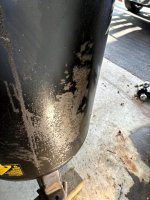
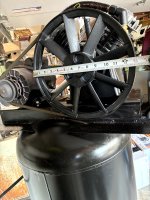
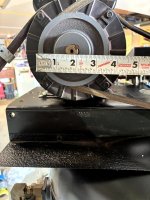
Hello Mr. Sbox and others. I have purchased the McGraw single stage pump from Harbor Freight due to a 15% coupon. The 15% paid for the state tax and a container of synthetic compressor oil, so I still spent $180 for it. I also purchased a new Milton one way check valve. Once I got the car out of the garage and removed the hoses and wiring from the compressor , it took a while to get the old compressor, belt guard and other items off the tank. The new McGraw V-Twin compressor is almost the same size as the old upright two cylinder pump. The large pulley is 13” in diameter where the original one is 12” diameter. I checked all of the threaded bungs on the compressor while I still had air pressure in the tank. I found no air leaks. The back of the tank had surface rust on the outside. I soaped it up and checked for leaks and found none. The wall behind the tank had a crack, once repaired and now opened back up, so that is where the moisture came from.

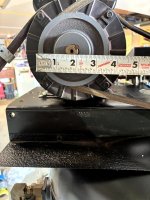
Using the new instruction manual I found the old drive pulley of approximately 3-3/4” diameter would under drive the new compressor making it slow to fill. McMaster Carr failed me for the first time as they didn’t have the new 4-3/4 diameter pulley it would need. A random Google search found a 4-1/2” diameter one which I purchased. The compressor is close to the central pressure switch so I ordered a new belt too, one inch longer.

The new Milton check valve was different from the old one which had (8) 11/64” diameter holes. The Milton had (8) 9/64 diameter holes around the periphery for the air to enter the tank through the check valve. Doing the math it is approximately 1/4” diameter smaller in area for the air to go from pump to tank. Since the new compressor was about 1 cfm more in capacity, a reduction in area to fill the tank seemed like a step in the wrong direction. The all brass Milton valve had a snap ring holding the spring and plunger together, so I disassembled it in an attempt to open up the 8 holes. After drilling two holes, I looked inside only to find the drill damaged the seat for the plunger. Discouraged, I cleaned up the old check valve and reinstalled it.

What with the wall crack I cleaned out, Milton valve I ruined and tank I needed to sand and primer and paint, I stopped for the day. I ordered the new pulley and belt and replaced all the stuff kept around the compressor and tank. I did get a full complement of photos still on my phone.

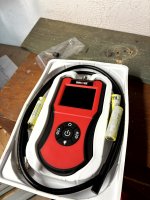
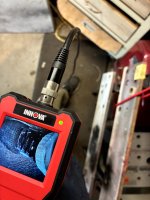
I now have the new pulley and belt. I will remove the old check valve and look inside the tank for major rust with my new scope, which I don’t think I will find. When draining the tank, the water was mostly clear and very little of it. Maybe 1/2 cup.

I expect to complete the compressor replacement this week after which I will update the thread with photos, descriptions and opinion of the repair.

Thanks for any who have interest in this !
 
OP
G

gahrajmahal

Well-known member
Joined
Dec 12, 2008
Messages
2,527
Location
Cincinnati, Ohio
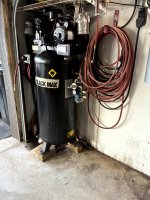
Only a month later! As mentioned above, Harbor Freight had a good sale on the air compressor. I wasn't quite ready, but I bought it so I would have it. After a week or so we had a stretch of decent weather and I pulled out my Chrysler so it wouldn't get in the way and I pulled out all the junk around and above the air compressor.

IMG_7965.jpg

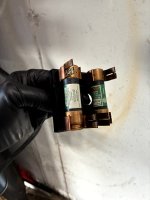
My 220 Volt extension cord for my Lincoln Tombstone welder. My father-in-law wired it up to this fuse box many years ago. He was a mine worker and trusted fuses. When they blow, there is no likelihood of power still being on the circuit.

IMG_7966.jpg

IMG_7967.jpg

IMG_7968.jpg

My cooling fan from out old gas furnace, I had hung from the wire shelf above the compressor. Surprisingly enough this really helped the compressor run cooler in the heat of the summer.


IMG_7969.jpg

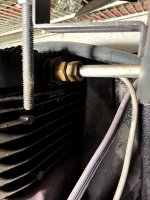
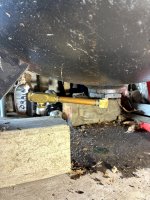
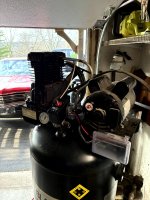
This is where the tank Check valve is located. More on that coming up.

IMG_7904.jpg


IMG_7905.jpg
 
OP
G

gahrajmahal

Well-known member
Joined
Dec 12, 2008
Messages
2,527
Location
Cincinnati, Ohio
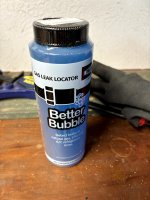
Next up, while there was still some pressure in the tank I'll apply my bubble soap to all the fittings to see if they are leaking. Remember, the slow tank leakdown is why I started this project to begin with.

IMG_7970.jpg

IMG_7971.jpg

IMG_7972.jpg

IMG_7973.jpg

IMG_7974.jpg

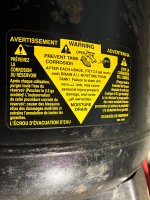
One of the members said he drained his tank of pressure after every time he used it. Here is my sticker saying to do the same thing. I am now reading it for the first time in 30 years! ha, ha

IMG_7975.jpg

Results? No leaks were found from any fittings...
 
OP
G

gahrajmahal

Well-known member
Joined
Dec 12, 2008
Messages
2,527
Location
Cincinnati, Ohio
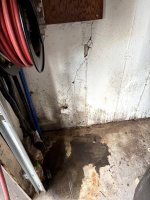
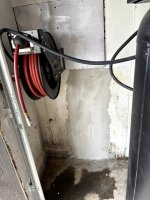
Once I dragged the very heavy compressor out of it's corner I discovered a large crack in the foundation wall. This was not a surprise because many, many years ago when we first bought the house this crack initially appeared. It was caused by the in-ground gutter drainpipe having broken so all the water from the back of the house was just going next to the foundation any time it rained. It caused this end of the foundation to crack, and water would fill this corner of the garage whenever it rained. This was prior to getting the air compressor. I had to dig all the way down to the footer, about four feet. I also dug out about 10 running feet of the underground drain pipe and discovered that a joint had come apart and was now about 12" of offset. The long drain pipe (green PVC) continued under the driveway and down a steep hill of our yard exiting in the street. When a water hose was run in this drain pipe for a few minutes, there was still no water going into the street, So I decided to run a very short pipe in the ground, exiting through a stone retaining wall and into the driveway. This pipe, schedule 40 PVC was only about 6 feet long and I thought it would be very easy to maintain should damage occur again.

Work scope creep... while I was at it, I decided what this side of the yard needed was a shallow "French Drain" running along the house. So I dug a trench about a foot deep, lined it with plastic and added a fabric covered 4" drainpipe. Covering that with pea gravel, I then banked the trench dirt against the foundation to direct water away from the house. The drainpipe connected into the downspout drain via. a T-Fitting. This has performed great over the years.

Anyway's, I chipped out the cracked concrete and re-pointed the interior wall with a thick slab of thinset. The moisture that had leaked through the crack had created surface rust on the back of the compressor tank. I then bought concrete waterproofing paint and covered the wall with that. I had done this wall maybe 10 years ago and the crack wasn't there at that time.

IMG_7980.jpg

IMG_7981.jpg

IMG_7982.jpg

IMG_7983.jpg

IMG_7984.jpg

IMG_7985.jpg

IMG_8023.jpg

IMG_8037.jpg
 
OP
G

gahrajmahal

Well-known member
Joined
Dec 12, 2008
Messages
2,527
Location
Cincinnati, Ohio
So, now to get to the discussion you are all interested in! Does the new compressor work on the old tank?

Well, yes and no.

IMG_7976.jpg

IMG_7977.jpg

IMG_7978.jpg

IMG_7979.jpg

IMG_7986.jpg

IMG_7987.jpg

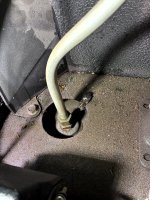
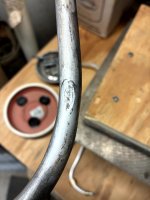
As I disassembled everything it was a lesson of discovery. There was a small rub mark on the discharge line caused by my furnace cooling fan rubbing it. Was this the cause of the slow air discharge? I had not discovered it while there was pressure in the tank and had not put any bubble compound on it to verify. Well, if I put the new compressor on the tank, I would probably have to replace this line with copper.

Also, when I pulled out the line from the tank I found it was a milky and oily film on it. Will the tank be rusted out?
 
OP
G

gahrajmahal

Well-known member
Joined
Dec 12, 2008
Messages
2,527
Location
Cincinnati, Ohio
Now for the tank check valve. I purchased a Milton brand replacement valve. I have one of their tire filling valves and it is an excellent quality, heavy duty affair with a built in pressure gauge. Truly a joy to use! The replacement valve is solid brass machined from a single piece of hex stock!

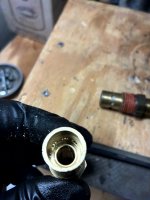
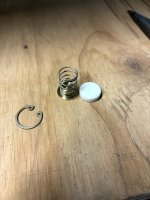
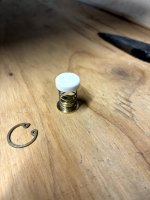
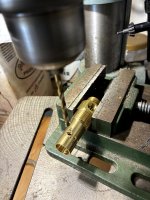
Once I got it out of the package, I noticed the ring of holes the air passes into the tank seemed a little smaller than the stock check valve. So, I got out my good drill bits and using them as a gauge I discovered that each hole was 1/32" smaller in diameter than original. 11/64 dia -vs- 9/64". This, I thought, will be a problem, as the new Harbor Freight compressor has a higher CFM than original. This adds up to almost 3/8" smaller area for the air to enter the tank. The valve had a c-clip so I could disassemble it and attempt to drill the ring holes the additional 1/32". 1/64" per side should be doable I thought, so I drilled the first hole on my drill press. Immediately, I knew it was a problem as it cleared the wall of the material it cut some more. The ring of holes was right on the edge of the seat area for the poppet valve and I had damaged it. So, I had ruined my new valve and would have to reinstall the old one.

IMG_7988.jpgIMG_7989.jpg

IMG_7990.jpgIMG_7991.jpg

IMG_7992.jpg

IMG_7993.jpg

IMG_7994.jpg

IMG_7995.jpg
 
To avoid these ads, REGISTER NOW!
OP
G

gahrajmahal

Well-known member
Joined
Dec 12, 2008
Messages
2,527
Location
Cincinnati, Ohio
Meanwhile over at the tank, let's get out the new Inovo borescope camera I received as a gift when purchasing an Inovo, vehicle scan tool via the Garage Journal link provided by Ryan when he profiled on the message board. See if you can see if the inside of the tank is rusty or not?

IMG_8027.jpg

IMG_8028.jpg

IMG_8029.jpg

IMG_8030.jpg

IMG_8031.jpg

IMG_8032.jpg

IMG_8033.jpg

IMG_8034.jpg
 
OP
G

gahrajmahal

Well-known member
Joined
Dec 12, 2008
Messages
2,527
Location
Cincinnati, Ohio
I don't know about you, but I couldn't see a damn thing! Except my gym shoe in the initial test!

Interestingly, when I drained the tank, there was very little water, and it was mostly clear. So, I just decided to carry on as if the tank is OK.

Now, does the new Harbor Freight compressor fit on the tank?

Yes it does, and very nicely too!

IMG_7999.jpg

IMG_7998.jpg

IMG_8002.jpg

IMG_8002.jpg

IMG_8004.jpg

IMG_7996.jpg

IMG_7997.jpg

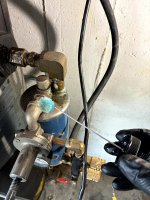
Did you notice on this photo where the output port is in relation to the input hole in the tank? Yes, it is orientated towards the outside and not the inside. If you look at the first photo in this posting you will see I decided to remove the fittings from each head and reverse them so the outlet port of the compressor will match the middle-of-the-tank inlet port. The next two photos show this switch. I used teflon paste for the fittings. They are poorly tapped and threaded, so this is a sketchy operation!

IMG_8001.jpg

IMG_8004.jpg
 

Attachments

  • IMG_8005.jpg
    IMG_8005.jpg
    612.9 KB · Views: 0
  • IMG_8003.jpg
    IMG_8003.jpg
    548.3 KB · Views: 0
OP
G

gahrajmahal

Well-known member
Joined
Dec 12, 2008
Messages
2,527
Location
Cincinnati, Ohio
I used a 1/4" thick wooden spacer in preparations for drilling the tank base for the new compressor footprint. This keeps the belt in alignment. I have a set of Transfer Punches to use for this task. They are like drill bits and come in a set increasing in size by 1/16". This allows them to be fit into the bolt holes and hitting them with a hammer puts the start spot exactly in the middle.

The Harbor Freight compressor's driven pulley is 1" larger than the original one and the original motor drive pulley is 3-1/2". Using the handy pulley calculation formula provided in the compressor instructions, I pre-purchased a new pulley, 4-1/2" diameter and 5/8" dia keyed shaft via. Amazon. It was the first time McMaster Carr ever failed me with something like this.

IMG_8004.jpg

IMG_8005.jpg
 
OP
G

gahrajmahal

Well-known member
Joined
Dec 12, 2008
Messages
2,527
Location
Cincinnati, Ohio
Meanwhile, this job was taking longer than expected and I didn't have any "air compressor" jobs that were getting held up, so I moved the heavy thing in and out a few times, returning the big convertible to its spot overnight. I had yet to drill the tank and noticed there were new oil drips on my cleaned-up floor under the air compressor.

Where were these coming from as it was THE COMPRESSOR HEAD that was leaking oil, right???

Look carefully at this photo.

IMG_8002.jpg

See what is still above the compressor on the wire shelf? Yes! It's my battery powered chain saw. It was the chain saw leaking oil onto the compressor head all the time!!! There was never anything wrong with the compressor other than the leaking check valve which I don't have a replacement for since I ruined the new one.


Well, what to do now. I'll have to have a think on this one
 
OP
G

gahrajmahal

Well-known member
Joined
Dec 12, 2008
Messages
2,527
Location
Cincinnati, Ohio
So,

I decided to step back, reassemble the old compressor, sand the rust off of the tank and re-paint it. Return the compressor, new pulley and belt for a refund and see what I have.

I changed the oil.

IMG_8035.jpg

Reinstalled the belt guard after adding some rubberized gaskets, and I applied some JB weld to the rubbed inlet pipe.

I have used it some for tire inflation and other minor stuff. All the returns went smoothly (didn't expect that). And the pressure still leaks down slowly. Once I get this post completed, I'll contact Milton to see if they have an inlet check valve with larger port sizes. If they don't, I'll just buy a replacement Chinese one.
 

finn

Well-known member
Joined
Mar 27, 2005
Messages
16,227
Location
The UP, God's country
Meanwhile, this job was taking longer than expected and I didn't have any "air compressor" jobs that were getting held up, so I moved the heavy thing in and out a few times, returning the big convertible to its spot overnight. I had yet to drill the tank and noticed there were new oil drips on my cleaned-up floor under the air compressor.

Where were these coming from as it was THE COMPRESSOR HEAD that was leaking oil, right???

Look carefully at this photo.

IMG_8002.jpg

See what is still above the compressor on the wire shelf? Yes! It's my battery powered chain saw. It was the chain saw leaking oil onto the compressor head all the time!!! There was never anything wrong with the compressor other than the leaking check valve which I don't have a replacement for since I ruined the new one.


Well, what to do now. I'll have to have a think on this one
Well, this project did keep you out of the bars for a while. Plus it sounds like there was some mental stimulation going on.

I call that a win.
 
OP
G

gahrajmahal

Well-known member
Joined
Dec 12, 2008
Messages
2,527
Location
Cincinnati, Ohio
Before I started working on it I wanted to check out my options and that’s why I started the thread. I got sidetracked by the good sale on the Harbor Freight replacement. It took a little time to check out the old one and I had a big duhhh moment when I realized the oil on the head of the compressor hadn’t originated there, but from the stuff stored above it. I realized the chain saw has been located over the compressor for two years or so and had not been leaking, but that isn’t unexpected with a chain saw to leak some bar oil after a while. My fix for that? I put a baking sheet underneath it. Problem solved!
 

finn

Well-known member
Joined
Mar 27, 2005
Messages
16,227
Location
The UP, God's country
Before I started working on it I wanted to check out my options and that’s why I started the thread. I got sidetracked by the good sale on the Harbor Freight replacement. It took a little time to check out the old one and I had a big duhhh moment when I realized the oil on the head of the compressor hadn’t originated there, but from the stuff stored above it. I realized the chain saw has been located over the compressor for two years or so and had not been leaking, but that isn’t unexpected with a chain saw to leak some bar oil after a while. My fix for that? I put a baking sheet underneath it. Problem solved!
I keep a couple sheets of pig mat under mine.
 
To avoid these ads, REGISTER NOW!
Top Bottom