To avoid these ads, REGISTER NOW!

3 Phase to single Phase

huphinsnifer

New member
Joined
Mar 21, 2013
Messages
4
Location
Detroit, Michigan Area
I have 3 Phase in my garage and would like to run my house off of my garage, my house has single Phase, I know it would be cheaper for me in the long run to just run it all off of my three phase. How would I run the wiring to produce single phase in my home from my garage?:lol_hitti
 
To avoid these ads, REGISTER NOW!
OP
H

huphinsnifer

New member
Joined
Mar 21, 2013
Messages
4
Location
Detroit, Michigan Area
I had DTE come out and run Three Phase to my garage for some of the tools I use are 3 Phase luckily I had a pole right next to my garage that they could run it off of, now I just want to run everything off the 3 Phase because less amperage means less money spent in the long run.
 

madosta

Well-known member
Joined
Sep 4, 2012
Messages
807
Location
Michigan
I had DTE come out and run Three Phase to my garage for some of the tools I use are 3 Phase luckily I had a pole right next to my garage that they could run it off of, now I just want to run everything off the 3 Phase because less amperage means less money spent in the long run.

That's awesome! Lucky! The high voltage single phase ends at the pole in my yard... nearest triple phase is a few miles away, but high tensions are within a mile.

Need some super long jumper cables!
 

kevin47

Well-known member
Joined
Jan 30, 2013
Messages
383
Location
Concord California
Yeah, you's lucky alright...Sheez...It's easy, too...You got three wires plus a ground...You's use two of's them that equals 120 plus the ground....

Wait, maybe it's one...At any rate, it can be done...
 
Last edited:

madosta

Well-known member
Joined
Sep 4, 2012
Messages
807
Location
Michigan
Please explain how using 3 phase results in less amperage.

Oh man... no hijack!

OP probably misspoke because 3ph motors use less watts to start, so therefore less amps. And ya know.. less caps to charge so less amps. Take that! :lol_hitti
 

kevin47

Well-known member
Joined
Jan 30, 2013
Messages
383
Location
Concord California
Yeah, Yeah yeah...Every one knows running 3 phase machines is cheaper... The task at hand is getting 120v volts single out of 240v 3 phase...Get out your VTVM/ohm Meter and find the correct wires that give you 120...It's simple...I just can't remember if the ground is one...I have to get to the shop...Hours behind...Some one will give you the simple low down...Soon enough...Don't sweat it...
 

nehog

Well-known member
Joined
Jan 2, 2010
Messages
7,935
Location
Jaffrey, NH
Please explain how using 3 phase results in less amperage.

For a given power, three phase line currents will be about 33% less than single phase. For services where you are billed based on peak amperage it matters. For services where you are billed based on peak power, it is meaningless. For services where you are billed flat rate it is meaningless as well! :lol:

OP: is one of those phases tapped to give 120-0-120 volts? Then you'd run that phase to the house as well. If not you'll need an auto-transformer to create that balanced setup. I'm also assuming you have delta feed, not wye, and that none of the phases are directly tied to ground.
 

wyliesdiesels

Well-known member
Joined
Aug 14, 2012
Messages
20,074
Location
Modesto, CA
I have 3 Phase in my garage and would like to run my house off of my garage, my house has single Phase, I know it would be cheaper for me in the long run to just run it all off of my three phase. How would I run the wiring to produce single phase in my home from my garage?:lol_hitti

I had DTE come out and run Three Phase to my garage for some of the tools I use are 3 Phase luckily I had a pole right next to my garage that they could run it off of, now I just want to run everything off the 3 Phase because less amperage means less money spent in the long run.

You have what's known as Delta 3-phase if the line to line voltage is indeed 240v. If it's a 3-wire service meaning no neutral, then you will need a transformer to get a neutral for 120v loads. If the service is 4-wire then it's called high leg Delta, which u have to pay special attention to when hooking up 120v loads. This is because the third leg, called the stinger/high leg is 208v to neutral/ground NOT 120v. The stinger leg SHOULD be marked with orange tape but might not be properly marked!

Now as far as it being cheaper to run your house off of this 3-phase service, this will not be the case and your bill will probably be HIGHER! This is because most utilities have multiple billing rates for 3-phase service all billed together. There's peak/off peak rates AKA time of use, peak demand(highest sustained usage in a set time period) AND the base rate for total KW/hr usage all on the same bill! On the other hand, residential service is billed solely for total usage!

If you're thinking that because 3-phase is more efficient it will lower your house's electric bill, you are wrong! You're billed on KW usage and single phase loads do not gain any efficiencies(less amperage) when connecting to a 3-phase service!


Please explain how using 3 phase results in less amperage.

Only 3-phase motors will use less amperage compared to the same size single phase motor! This won't help reduce his house usage!

Yeah, Yeah yeah...Every one knows running 3 phase machines is cheaper... The task at hand is getting 120v volts single out of 240v 3 phase...Get out your VTVM/ohm Meter and find the correct wires that give you 120...It's simple...I just can't remember if the ground is one...I have to get to the shop...Hours behind...Some one will give you the simple low down...Soon enough...Don't sweat it...

Grounds/EGCs should NEVER be used as a current carrying conductor!

For a given power, three phase line currents will be about 33% less than single phase. For services where you are billed based on peak amperage it matters. For services where you are billed based on peak power, it is meaningless. For services where you are billed flat rate it is meaningless as well! :lol:

OP: is one of those phases tapped to give 120-0-120 volts? Then you'd run that phase to the house as well. If not you'll need an auto-transformer to create that balanced setup. I'm also assuming you have delta feed, not wye, and that none of the phases are directly tied to ground.


Not quite sure what u mean by 120-0-120v on one phase? Are u meaning split phase service in which case those numbers are line to ground readings! But he wouldn't be running one phase leg to his house, he would run 2 phase legs and a neutral common to both of 'em!

As far as using an auto transformer, you're mixing things up. An auto transformer auto adjusts its output(changes its taps) depending on input voltage and is typically found in a substation. Voltage regulators, like my APC AVR-1200, also have auto transformers! If the OP needs a transformer to get a neutral for 120v loads, he will need a fixed voltage dry type transformer. I would not recommend this as he will be paying a little extra on his bill due to inherent losses in transformers!

The clue he gave u as to which service he has was the voltage he said he has. Delta is always 240v and WYE is always 208v! However, @ 480v, the service can be either Delta OR WYE connected!
 
Last edited:

nehog

Well-known member
Joined
Jan 2, 2010
Messages
7,935
Location
Jaffrey, NH
...
Not quite sure what u mean by 120-0-120v on one phase? Are u meaning split phase service in which case those numbers are line to ground readings! But he wouldn't be running one phase leg to his house, he would run 2 phase legs and a neutral common to both of 'em!

As far as using an auto transformer, you're mixing things up. An auto transformer auto adjusts its output(changes its taps) depending on input voltage and is typically found in a substation. Voltage regulators, like my APC AVR-1200, also have auto transformers!...

First, just for the record, I am (among other things) an electrical engineer. ;)

1. Some delta connected three phase (most?) have one phase wired with a neutral to provide single phase. I can draw a schematic if you want, but basically at the transformer one of the phases is center tapped, and that center tap is then used as a neutral (and connected to ground.) I suspect that is where he's getting the single phase for the rest of his garage.

2. There are many uses for auto-transformers. Yes you can buck/boost with one. You can change voltages (for example, 120 to 240 or versa-vica!) You can also hang one across an isolated (not grounded) 240 source, center tap that auto-transformer, and then ground that center tap. You will then get 120 volts on each side of that center tap. Nice thing is that if the 120 volt loads are reasonably load balanced that transformer doesn't carry much current, and things get very efficient.

So we need to ask the OP the question: how is he getting that 120 single phase for his shop's utility use? :headscrat
 
To avoid these ads, REGISTER NOW!

KenC

Well-known member
Joined
Dec 20, 2009
Messages
2,596
Location
oklahoma
You have what's known as Delta 3-phase if the line to line voltage is indeed 240v. If it's a 3-wire service meaning no neutral, then you will need a transformer to get a neutral for 120v loads. If the service is 4-wire then it's called high leg Delta, which u have to pay special attention to when hooking up 120v loads. This is because the third leg, called the stinger/high leg is 208v to neutral/ground NOT 120v. The stinger leg SHOULD be marked with orange tape but might not be properly marked!
!

This is what I have in my shop. The stinger is marked but I still managed to smoke a battery charger when I wired up a new outlet! So now all the breakers that land on that buss have an orange paint mark also.

Mine is actually 219V high leg to ground. I'm the only user on my transformer and no other 3 phase loads anywhere close so it runs a little high. My 240V single phase is about 249 most days.
 

Alchymist

Well-known member
Joined
Mar 1, 2009
Messages
4,423
Location
Central PA
OMG ! You must be almost as old as I am !

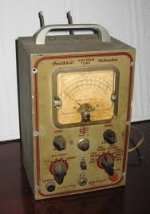
Points for any of you rug rats that knows what a VTVM is and bonus points for knowing what makes it different from a standard multimeter.

Does the Heathkit version count?
 

Attachments

  • HeathkitVTVM.jpeg
    HeathkitVTVM.jpeg
    7.4 KB · Views: 7

Grumpy365

Well-known member
Joined
Jan 21, 2010
Messages
623
Location
Brazoria County Texas
You don't buy power in Amperage!

You buy power in watts AND watts are watts.
You would see no savings.

Plus they don't make very many choices in high SEER residential AC units in 3 phase, so you would actually be stuck running less efficient AC.

I Looked into it and it just didn't make sense.
 

foolishpride

Well-known member
Joined
Mar 21, 2009
Messages
343
Location
Southwestern Ohio
You have what's known as Delta 3-phase if the line to line voltage is indeed 240v. If it's a 3-wire service meaning no neutral, then you will need a transformer to get a neutral for 120v loads. If the service is 4-wire then it's called high leg Delta, If it's not a Wye. which u have to pay special attention to when hooking up 120v loads. This is because the third leg, called the stinger/high leg is 208v to neutral/ground NOT 120v. The stinger leg SHOULD be marked with orange tape but might not be properly marked!

Now as far as it being cheaper to run your house off of this 3-phase service, i highly doubt this will be the case! This is because most utilities have multiple billing rates for 3-phase service all billed together. There's peak/off peak rates AKA time of use, peak demand(highest sustained usage in a set time period) AND the base rate for total KW/hr usage all on the same bill! On the other hand, residential service is billed solely for total usage!

If you're thinking that because 3-phase is more efficient it will lower your house's electric bill, you are wrong! You're billed on KW usage and single phase loads do not gain any efficiencies(less amperage) when connecting to a 3-phase service!


Only 3-phase motors will use less amperage compared to the same size single phase motor! This won't help reduce his house usage!


Grounds/EGCs should NEVER be used as a current carrying conductor!


Not quite sure what u mean by 120-0-120v on one phase? Are u meaning split phase service in which case those numbers are line to ground readings! But he wouldn't be running one phase leg to his house, he would run 2 phase legs and a neutral common to both of 'em!

As far as using an auto transformer, you're mixing things up. An auto transformer auto adjusts its output(changes its taps) depending on input voltage and is typically found in a substation. Voltage regulators, like my APC AVR-1200, also have auto transformers! If the OP needs a transformer to get a neutral for 120v loads, he will need a fixed voltage dry type transformer. I would not recommend this as he will be paying a little extra on his bill due to inherent losses in transformers!

The clue he gave u as to which service he has was the voltage he said he has. Delta is always 240v and WYE is always 208v! However, @ 480v, the service can be either Delta OR WYE connected!


Fixed it for you.
 

ddawg16

Well-known member
Joined
Jul 11, 2008
Messages
21,005
Location
S. California
First, just for the record, I am (among other things) an electrical engineer. ;)

1. Some delta connected three phase (most?) have one phase wired with a neutral to provide single phase. I can draw a schematic if you want, but basically at the transformer one of the phases is center tapped, and that center tap is then used as a neutral (and connected to ground.) I suspect that is where he's getting the single phase for the rest of his garage.

2. There are many uses for auto-transformers. Yes you can buck/boost with one. You can change voltages (for example, 120 to 240 or versa-vica!) You can also hang one across an isolated (not grounded) 240 source, center tap that auto-transformer, and then ground that center tap. You will then get 120 volts on each side of that center tap. Nice thing is that if the 120 volt loads are reasonably load balanced that transformer doesn't carry much current, and things get very efficient.

So we need to ask the OP the question: how is he getting that 120 single phase for his shop's utility use? :headscrat

Clearly stated and I have the same question.....

He 'could' have a Wye setup, but I really doubt it....easy to confirm by looking at the # of wires coming in to his main panel. 3+Gnd....Delta...4+Gnd...Wye.

In most installations where we need 120, we use a transformer connected to one phase of the 3-phase...then one end of the 120 is tied to earth ground to give us the neutral reference.

If the OP has a setup like this....to prevent the uneven loading on his phases, I would suggest a second transformer on one of the other phases.

However, this presents some problems.

The OP would need a pretty hefty 3-ph drop into his shop to support his garage and the house. Say he wants 100A 220 at his house....the drop needs to be able to support that and the load of the garage.

As also noted above...a 3ph drop typically has a higher utility rate....I'm thinking it might be cheaper to get the utility to do another single phase drop to the house.
 

Alchymist

Well-known member
Joined
Mar 1, 2009
Messages
4,423
Location
Central PA
Yes, what what does VTVM stand for ?

Vacuum Tube Volt Meter - actually a misnomer, as they were "multimeters", measuring not only volts but Ohms also. Their claim to fame was they were the first instruments outside a lab to have a high input impedance to reduce circuit loading.
 

ddawg16

Well-known member
Joined
Jul 11, 2008
Messages
21,005
Location
S. California
Well....technically, measuring resistance is actually a voltage measurement in the meter....it puts a known resistance in series with the object being tested and the meter displays the voltage.
 

Alchymist

Well-known member
Joined
Mar 1, 2009
Messages
4,423
Location
Central PA
Well....technically, measuring resistance is actually a voltage measurement in the meter....it puts a known resistance in series with the object being tested and the meter displays the voltage.

Show me an electrical measurement that doesn't rely on voltage somewhere.While the "meter" is measuring volts, the "instrument" is measuring ohms. And, technically, the meter is not measuring voltage, the meter is responding to current. :bounce:
 

wyliesdiesels

Well-known member
Joined
Aug 14, 2012
Messages
20,074
Location
Modesto, CA
First, just for the record, I am (among other things) an electrical engineer. ;)

1. Some delta connected three phase (most?) have one phase wired with a neutral to provide single phase. I can draw a schematic if you want, but basically at the transformer one of the phases is center tapped, and that center tap is then used as a neutral (and connected to ground.) I suspect that is where he's getting the single phase for the rest of his garage.

2. There are many uses for auto-transformers. Yes you can buck/boost with one. You can change voltages (for example, 120 to 240 or versa-vica!) You can also hang one across an isolated (not grounded) 240 source, center tap that auto-transformer, and then ground that center tap. You will then get 120 volts on each side of that center tap. Nice thing is that if the 120 volt loads are reasonably load balanced that transformer doesn't carry much current, and things get very efficient.

So we need to ask the OP the question: how is he getting that 120 single phase for his shop's utility use? :headscrat

I'm an electrician for the record and am very familiar with 3-phase service! The reason i was confused on your post is because i understand the same thing slightly different and explain the same setup slightly different. But i knew what you were referring to, just understand it slightly different!

This is what I have in my shop. The stinger is marked but I still managed to smoke a battery charger when I wired up a new outlet! So now all the breakers that land on that buss have an orange paint mark also.

Mine is actually 219V high leg to ground. I'm the only user on my transformer and no other 3 phase loads anywhere close so it runs a little high. My 240V single phase is about 249 most days.

Sounds like the HV side of the transformers feeding your service are running a little high but your voltages are within the usual 5% threshold most utilities have!

Fixed it for you.

No, he most definitely does NOT have a WYE service if the voltage is 240v which is the reason why i wrote what i did because he already told us he has a delta service when he said 240v. This is the reason why counting the # of wires on a 3-phase service to determine what service type it is, before knowing the voltage, doesn't work because u can have a 3 or 4-wire WYE service or a 3 or 4-wire DELTA service, though most WYE services are ran 4-wire!

Clearly stated and I have the same question.....

He 'could' have a Wye setup, but I really doubt it....easy to confirm by looking at the # of wires coming in to his main panel. 3+Gnd....Delta...4+Gnd...Wye.

In most installations where we need 120, we use a transformer connected to one phase of the 3-phase...then one end of the 120 is tied to earth ground to give us the neutral reference.

If the OP has a setup like this....to prevent the uneven loading on his phases, I would suggest a second transformer on one of the other phases.

However, this presents some problems.

The OP would need a pretty hefty 3-ph drop into his shop to support his garage and the house. Say he wants 100A 220 at his house....the drop needs to be able to support that and the load of the garage.

As also noted above...a 3ph drop typically has a higher utility rate....I'm thinking it might be cheaper to get the utility to do another single phase drop to the house.

Incorrect! As i previously said, u can have a 4-wire Delta or a 3-wire WYE. Never rely on number of wires to determine service type! U should always first check the voltage. I have read and seen many instances of fried equipment because an electrician thought the service was 208Y solely because there was 4-wires coming into the building but it turned out to be a high leg delta service where one of the phases to neutral is 208v NOT 120v, whereas a 208Y is 120v between all phases and neutral. NEVER RELY SOLELY ON NUMBER OF SERVICE WIRES! And PoCos do NOT bring a ground wire into the main service with the service wires! The grounding is established AT the main service panel!
 
Last edited:

kevin47

Well-known member
Joined
Jan 30, 2013
Messages
383
Location
Concord California
OMG ! You must be almost as old as I am !

Points for any of you rug rats that knows what a VTVM is and bonus points for knowing what makes it different from a standard multimeter.
Maybe...! And I'm still waiting for you to help me with switching my Miller Delta 450 3 phase over it single...Remember, I'm moving to the "country" and the diagram you had posted didn't show where the 2nd cap went...PM me please...I found the old post when I googled the conversion...Did you know your famous...? lol Kevin
 
To avoid these ads, REGISTER NOW!
Top Bottom