To avoid these ads, REGISTER NOW!

30A recepticle install with supplied 4-4-4-6 SER

monster1

Well-known member
Joined
Jan 8, 2012
Messages
704
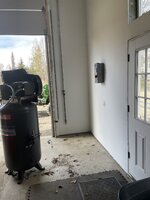
Finally, I upgraded my compressor from a 30gal 120v to a 60gal 230v. When we had the house built, I paid extra for a 240v circuit to be installed. They installed the circuit but didn't wire in and install a 30A recepticle because they didn't know how the compressor was to be wired without knowing what I was going to buy.

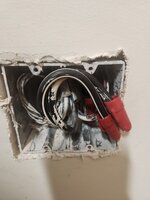
So now I'm left with an outlet box that has 4-4-4-6 Aluminum SER cable ready to be wired to the 30A recepticle they left sitting in a drawer for me. I'm not fond of aluminum wiring, so I want to make sure I'm terminating connections properly.

The wiring on the compressor is simply two hot legs and a ground. Do I need to pigtail the aluminum wires with copper, or do I connect directly to the recepticle? I just cap off the unused neutral and terminate the uninsulated ground wire to the appropriate terminal on the recepticle? Just want this to be correct and up to code.

Thanks!
 

Attachments
  • 20250126_150104.jpg
    20250126_150104.jpg
    554.4 KB · Views: 46
  • 20250126_150420.jpg
    20250126_150420.jpg
    403 KB · Views: 46
Last edited:
To avoid these ads, REGISTER NOW!

Cruzan80

Well-known member
Joined
Jul 22, 2015
Messages
4,302
Location
Denver, CO
My understanding is that you need to make sure the receptacle is rated for aluminum. If the receptacle is not rated for Alu, you can connect a copper wire to the aluminum using an appropriate connector rated for Alu-Copper connections (10ga THHN copper minimum for 30A, IIRC). You do cap off the (un-needed) neutral and leave it in the box. The ground goes to ground, as you mentioned.

For code, you do need to make sure the plug and receptacle are rated above the HP of the compressor. Quick search shows that a 6-30 plug/receptacle (straight or locking) is only rated @ 2HP. You would need something with a higher rating to wire it with a plug and be code compliant. Alternatively, if you hard-wire it to the wall, the HP rating does not matter (but you do need another form of disconnect, depending on placement).
 

mike93lx

ALLIANCE MEMBER
Joined
Dec 9, 2013
Messages
37,885
Location
Richmond, VA
A disconnect and a whip will make that connection a lot easier, plus disconnects are cheap.

Yes, cap the neutral and leave it unused

About $20 for a square D QO disconnect and $25 for a #10 liquidtite whip
 

mm08822

Well-known member
Joined
Jan 13, 2012
Messages
6,052
Location
NJ
You will need to hardwire and not use the receptacle to be code compliant. Receptacles typically found in residential budgets are only available up to 3 hp.

I would wire in a 6-50R if for myself and put on a 40A cb. It will handle #4.
The 6-50R will handle #4.

Cap off the neutral.
 

Cruzan80

Well-known member
Joined
Jul 22, 2015
Messages
4,302
Location
Denver, CO
Well, you've got to start with giving up the receptacle/plug idea.

Plan on a disconnect and hardwiring. You can run a nice sized sub/circuit with #4 SER.
Technically, he could probably source a receptacle/plug that is HP rated, and can handle Alu connections. I say probably, because I have not looked specifically for this set of options, but likely out there. The price of that equipment is what usually drives people to a different solution, though...

Edit: @mm08822 was posting as I was. Again, you "can" be code compliant with a receptacle, it just hits your wallet. So not impossible, just pricey.
 

PCustoms

Well-known member
Joined
Jul 23, 2011
Messages
23,432
Location
VT
Technically, he could probably source a receptacle/plug that is HP rated, and can handle Alu connections. I say probably, because I have not looked specifically for this set of options, but likely out there. The price of that equipment is what usually drives people to a different solution, though...

Edit: @mm08822 was posting as I was. Again, you "can" be code compliant with a receptacle, it just hits your wallet. So not impossible, just pricey.
Yes, technically.

I was keeping this in the homeowner territory.
 

PCustoms

Well-known member
Joined
Jul 23, 2011
Messages
23,432
Location
VT
Thanks for the replies. Yes, the recepticle is aluminum rated. It's stamped on the bracket. But after reading the comments, I feel hardwiring will be more appropriate. I was originally thinking that the option to unplug the compressor and plug in a generator (with properly installed interlock device on the main panel) to power certain devices during a power outage wouod be nice.

NO.

To do that with the receptacle shown would require a double male "suicide cord".

It also wouldn't work as an outlet for the compressor if you had a proper interlock in place.

You should probably call an electrician and have a true generator inlet installed in your main with the correct interlock
 
OP
M

monster1

Well-known member
Joined
Jan 8, 2012
Messages
704
You will need to hardwire and not use the receptacle to be code compliant. Receptacles typically found in residential budgets are only available up to 3 hp.

I would wire in a 6-50R if for myself and put on a 40A cb. It will handle #4.
The 6-50R will handle #4.

Cap off the neutral.
6-50R is actually the "recepticle" I have. Sorry for the confusing terminology. Its a 6-50R outlet they left to be wired into the wall for the compressor.
 
OP
M

monster1

Well-known member
Joined
Jan 8, 2012
Messages
704
NO.

To do that with the receptacle shown would require a double male "suicide cord".

It also wouldn't work as an outlet for the compressor if you had a proper interlock in place.

You should probably call an electrician and have a true generator inlet installed in your main with the correct interlock
Yes. After thinking about it, it couldn't be done without the use of a Deadman plug.
 
OP
M

monster1

Well-known member
Joined
Jan 8, 2012
Messages
704
A disconnect and a whip will make that connection a lot easier, plus disconnects are cheap.

Yes, cap the neutral and leave it unused

About $20 for a square D QO disconnect and $25 for a #10 liquidtite whip
Thank you. This is the route I'm going to take. Both items in stock at my local Ace.
 

PT Doc

Well-known member
Joined
Nov 12, 2010
Messages
3,197
Leviton makes motor rated switches and switch boxes for this application.
 
To avoid these ads, REGISTER NOW!

PCustoms

Well-known member
Joined
Jul 23, 2011
Messages
23,432
Location
VT
If the compressor is within sight of and 50’ less away from the breaker panel u do not need a disco
I almost noted this exception, but honestly, for $30 why not just add the disconnect?

As @mike93lx suggested it's a good place to jump down to a few wire sizes* to something easier to feed to the compressor.

*Making sure the breaker and smallest wire size are sized appropriately for the load.
 
OP
M

monster1

Well-known member
Joined
Jan 8, 2012
Messages
704
That wasnt the only issue.

Without an interlock you could energized the lines on the pole
Absolutely. An interlock was in the plans if I went that route. But as stated by another member, that couldn't be accomplished without a male to male end. So scrap that idea. Also, the compressor and main panel are within sight (6ft approximately), so as you said, a disconnect isn't required. So I could get away with a whip run though a cover plate with a knock out hole?
 

PCustoms

Well-known member
Joined
Jul 23, 2011
Messages
23,432
Location
VT
Absolutely. An interlock was in the plans if I went that route. But as stated by another member, that couldn't be accomplished without a male to male end. So scrap that idea.

It wouldn't have worked anyway.

The interlock on the breaker would keep the breaker open until you open the main and close the breaker. Your compressor would never have power!

Technically (and very dangerously!) a suicide cord and no interlock would function.

DO NOT DO THAT
 
OP
M

monster1

Well-known member
Joined
Jan 8, 2012
Messages
704
It wouldn't have worked anyway.

The interlock on the breaker would keep the breaker open until you open the main and close the breaker. Your compressor would never have power!

Technically (and very dangerously!) a suicide cord and no interlock would function.

DO NOT DO THAT
You're absolutely correct. I didn't think that through. Now I feel dumb. Lol
 

Cruzan80

Well-known member
Joined
Jul 22, 2015
Messages
4,302
Location
Denver, CO
So I could get away with a whip run though a cover plate with a knock out hole?
Yes, just make sure the method for connecting the two sets of wires is appropriate to their materials (guessing the whip is copper). Don't just wire nut them together.

Edit: If the breaker is really just 6ft away, why deal with all these issues, instead of just putting in the correct wire for what you need?
 
OP
M

monster1

Well-known member
Joined
Jan 8, 2012
Messages
704
Yes, just make sure the method for connecting the two sets of wires is appropriate to their materials (guessing the whip is copper). Don't just wire nut them together.

Edit: If the breaker is really just 6ft away, why deal with all these issues, instead of just putting in the correct wire for what you need?
Unfortunately the builder charged me an additional 600 to run this circuit and used aluminum wire. In hindsight, I could have easily ran the circuit myself. I did for my last house without issue.
 
OP
M

monster1

Well-known member
Joined
Jan 8, 2012
Messages
704
Aluminum is perfectly safe and functions the same as copper
Sure. I understand that it's not the same as the solid aluminum wire that used to burn houses down. Just there seems to be a learning curve in it's installation that I was unaware of. Thats why I didn't just simply wire in the outlet they supplied and call it a day. Sounds like I'm making this harder than it needs to be and just need to install the disconnect and whip you originally suggested.
 

PCustoms

Well-known member
Joined
Jul 23, 2011
Messages
23,432
Location
VT
Just there seems to be a learning curve in it's installation that I was unaware of.

No really any different things then copper.

Strip to correct length, apply nolox if specified on terminal, torque to correct torque
 

Norcal

Well-known member
Joined
Mar 16, 2008
Messages
13,769
Sure. I understand that it's not the same as the solid aluminum wire that used to burn houses down. Just there seems to be a learning curve in it's installation that I was unaware of. Thats why I didn't just simply wire in the outlet they supplied and call it a day. Sounds like I'm making this harder than it needs to be and just need to install the disconnect and whip you originally suggested.
The 12AWG, & 10AWG aluminum conductors used in the sixties was was a unregulated **** show w/ no standards from UL, aluminum alloy conductors used today are just fine.
 

wyliesdiesels

Well-known member
Joined
Aug 14, 2012
Messages
20,071
Location
Modesto, CA
Absolutely. An interlock was in the plans if I went that route. But as stated by another member, that couldn't be accomplished without a male to male end. So scrap that idea. Also, the compressor and main panel are within sight (6ft approximately), so as you said, a disconnect isn't required. So I could get away with a whip run though a cover plate with a knock out hole?
yup you would need an inlet
 
OP
M

monster1

Well-known member
Joined
Jan 8, 2012
Messages
704
Ok. So I got the disconnect and 6ft whip. So just to make sure I'm wiring this correctly going from the stranded aluminum to copper, my plan is to mount the disconnect box centered on a stud above the two gang box that is already there and abandon it completely.

Pull the aluminum wires through a knock out (with knock out bushing) on the back of the box and terminate the aluminum wires to the appropriate terminals, then pull through the whip through a bottom knock out and terminate the copper whip wires accordingly. Then wire the other end up to the compressor.

Sorry for beating this horse to death. I want to make sure it's correct code wise. Also, my house is still warranted and if an electrical issue arises , the builder can't say my work voided the warranty. Thanks for all the help and putting up with my OCD.
 
Last edited:

mike93lx

ALLIANCE MEMBER
Joined
Dec 9, 2013
Messages
37,885
Location
Richmond, VA
Ok. So I got the disconnect and 6ft whip. So just to make sure I'm wiring this correctly going from the stranded aluminum to copper, my plan is to mount the disconnect box centered on a stud above the two gang box that is already there and abandon it completely.

Pull the aluminum wires through a knock out (with knock out bushing) on the back of the box and terminate the aluminum wires to the appropriate terminals, then pull through the whip through a bottom knock out and terminate the copper whip wires accordingly. Then wire the other end up to the compressor.

Sorry for beating this horse to death. I want to make sure it's correct code wise. Also, my house is still warranted and if an electrical issue arises , the builder can't say my work voided the warranty. Thanks for all the help and putting up with my OCD.
Send it, boss
 
To avoid these ads, REGISTER NOW!
Top Bottom