To avoid these ads, REGISTER NOW!

30x40x16 Polebarn Garage

supermoose

Member
Joined
Sep 22, 2025
Messages
13
I'm back and finally have a signed contract with the builder for a 30x40x16 pole building/garage. For cost, I opted to not include the mezzanine for now (can be added later) and skipped the insulation and finishing of the walls. The ceiling will be insulated and finished. Half the structure will be 6" concrete for a lift and the other half 4". The building is not next to the house (roughly 100 yards away) and will serve as a workshop/garage for cars that I don't use on a regular basis (storing my truck when I'm not driving it and my classic Mercedes), storage, and a place to do reloading (although without some way to control the heat, powder and primers won't be stored up there to start).

I had a few questions as I'm still trying to plan a few things out that I was hoping for some direction on. Located in SE PA.

  1. Radiant in-ground heat.
    1. I know if I do this, I'll need to insulate under the slab. A complete system right now would be cost prohibitive but I was toying with the idea of potentially doing the insulation and running the pex for the future. I know I'd need to mark out a general area where the lift would go to avoid drilling through the lines later. Currently there is no gas line at the building, which means I'd have to see if a line can be run or put a propane tank up there. Thinking along these lines, I presume that the boiler would also provide hot water for the utility sink I plan to put there.
  2. Forced hot air
    1. If I go this route, does insulating under the slab make sense? Is there any material gains from doing that? Am I losing anything by not doing radiant in-ground heat?
  3. Frost line insulation
    1. Regardless of which heat source I choose, should I insulate along the sidewalls of the building down to the frost line? Is there any advantage to maintaining the temperature in the building by doing this or is it solely to prevent heave in the slab? It looks like in my area it would be 30-36 inches.
  4. A/C
    1. What would be the best way to cool the building in the summers? Mini split? Something else? Not looking for it to be frigid, even in the mid 70's would be great, more concerned about humidity.
  5. Lighting
    1. Any suggestions for overhead lights that won't break the bank?
  6. Garage door openers
    1. There will be one 10x10 door and one 16x8 door. What openers would I be looking at?
  7. Stubbing in water line
    1. Is this pretty much wherever I want to place them? My plan is likely to collect rain water and bury a cistern since I can't run water from the street and trying to run a water line from the house will likely exceed the cost of a cistern. That will likely come later, however, I need to do that before the concrete is poured.
I think that's all for now, I'm sure I'll have a number of other questions as I get some replies and things to think about.

Thanks!
 
To avoid these ads, REGISTER NOW!

AC-WC

Well-known member
Joined
Jan 22, 2023
Messages
760
Location
NE, Indiana
1) Radiant heat-I don't have personal experience with it but from our fellow GJ folks those that have it, love it. It makes sense to me to have a warm floor but remember it's heating mass so you just can't turn up the heat and get the building warmed up quickly. Plan to have 'heat' on all the time in the winter. My opinion-if you'll be out there a lot it would be easier to justify the cost, if just on the weekends then not so much.

2) Absolutely insulate the concrete underneath regardless of type of heat/cool. Also include a vapor barrier/plastic underneath the concrete. Even if it's just 1" foam board you need a thermal break.

3) I would not do to the frost line. As long as you insulate underneath the pad, then the sides of the pad, you are getting your thermal break.

4) I'm planning on doing a mini-split in my garage in the next few years for my comfort year round. It's supposed to be cheaper then forced air H/C. After reviewing lots of feedback many guys are reporting $20-40/month for the comfort. I've priced standard and mini and mini is slightly $ less equipment wise. For your size building you may need 2 wall units for even distribution.

5) I have 4 ft LED strip lights in the garage and those are about the lowest initial cost. 5k color and 5k lumens, with 16 fixtures in my 24X27 is pretty bright! Since you're planning on 16ft ceilings that will have an affect on light distribution. There's several light calculators and even a sticky (permanent thread) in the GJ electrical and lighting forum with tons of info.

6) Not the standard chain/belt drive. Because of your ceiling height you need a wall mount opener. Doors will need to be ordered with 'high' lift rails/hardware. My opinion-they're all pretty much the same quality, just how much do you want to spend?

7) Yep, wherever you want the water. Be sure to run it all before the concrete and the stone base. I would add foam pipe insulation or a 2 or 3" PVC around the water line where it comes out from the concrete to help with expansion and prevent damage to the water line.

8) What about electrical power/internet? If coming from the house you could put electric and water line in the same trench. That's fairly easy to do with a trench machine yourself. With what you're planning no less than 60 amp, 100 amp would be better especially with mini splits, lift, air compressor, welders. When I did my electric I had the electrician run power out to the garage and I wired everything from that circuit box both inside the garage and to my other buildings as time/$ allowed.
 

carlaisle

Well-known member
Joined
May 14, 2022
Messages
367
Radiant offers fast recovery times but you need to decide you want heat a day in advance. Forced air provides heat immediately. The more time you spend in the space the more sense radiant makes.

A moisture barrier under the slab always makes sense. The value of insulation under the slab and frost line are a function of how much time you'll spend in the space and how much you want to spend on heat. The more time you spend in the space the more sense the slab and frost line insulation make.

Multiple mini-splits or central air will be equally effective. If you want cooling, the economics of forced air heat become more appealing.

Lighting is inexpensive. Spend some time identifying what you do and don't like for lighting and go from there.

Garage door openers: what AC-WC said.

A backhoe or mini-ex can knock out 100 yards of trench before lunch without breaking a sweat. I don't see how this can cost more than a cistern unless you have bedrock at 6". Even if you do, I'd still use a rockwheel before jackhammering out for a cistern.

A bathroom might be nice to save the 200 yard round trip and keep some of the shop dirt out of the house.
 
OP
S

supermoose

Member
Joined
Sep 22, 2025
Messages
13
Thanks for the replies so far.

As far as the concrete, specs call for a vapor barrier, so that is happening. I see myself working out there some weekends and evenings but it isn't going to be a constant, always out there thing. I presume, based on that, the forced hot air or mini split would be the ticket. I'll have to do some more research on the mini split to see what people are using as recommended brands and cost (if they're leaving the unit running all the time - again not at some crazy temperature but to keep things stable).

Electric and Internet (I forgot about those). The pole that runs service to my house is going to be within 20 feet of the building, so I was going to check with the electric company about running service direct to the building. Internet is a different story.

Water. My issue is that the water line comes in the front of my house. There is no great way to get it out the back side directly. There was an addition built in the 80s. The basement wall on the rear of the house is not flush with the end of the new kitchen (at the rear of the house). So I can't dig down to the frost line there. There is driveway covers the other portion on the old section of the house. The addition has a crawl space under it which (in theory) I could do but that seems like tempting fate. When I spoke to an excavator a while back, we looked and he suggested coming out the side of the house and up the back yard (which means going under a walkway, over, and under a fence twice. I'll have to look into this more and see what that would cost for the piping, etc. Maybe that is the better way.

Township said no to a bathroom in the building.

Garage doors. Specs call for a high lift track on the 10x10 and a low headroom track on the 16x8. The reason for the low headroom track was because the plans originally called for a mezzanine that was 1/2 the building. As I mentioned, because of budget, I pulled that out for now with the idea of being able to build it in the future.
 

finn

Well-known member
Joined
Mar 27, 2005
Messages
16,203
Location
The UP, God's country
Electricity should run through your existing meter or else you’ll be billed a monthly service charge for a second meter.

In floor heat doesn’t make sense if the building isn’t going to be used every day. My shop has in floor radiant but I keep the set point low and use a hanging heater to bring the room to working temperature.

My garage has pex in the floor, but I don’t heat it often enough to justify the cost of a boiler and pumps. I use a hanging heater if I’m going to be working in the garage.

We have in floor radiant in the house, but use mini splits for heat until the temperature is sufficiently low enough to heat full time. Radiant doesn’t respond fast enough when we have cold nights and warm sunny days, in my experience living with it for thirty years. It’s great when it’s cold consistently, with cloudy sky conditions, ie November through March. Once spring arrives, we activate the mini splits.
 

jblnut

ALLIANCE MEMBER
Joined
Jan 17, 2015
Messages
6,972
Location
In the Middle of MN
I'm back and finally have a signed contract with the builder for a 30x40x16 pole building/garage. For cost, I opted to not include the mezzanine for now (can be added later) and skipped the insulation and finishing of the walls. The ceiling will be insulated and finished. Half the structure will be 6" concrete for a lift and the other half 4". The building is not next to the house (roughly 100 yards away) and will serve as a workshop/garage for cars that I don't use on a regular basis (storing my truck when I'm not driving it and my classic Mercedes), storage, and a place to do reloading (although without some way to control the heat, powder and primers won't be stored up there to start).

I had a few questions as I'm still trying to plan a few things out that I was hoping for some direction on. Located in SE PA.

  1. Radiant in-ground heat.
    1. I know if I do this, I'll need to insulate under the slab. A complete system right now would be cost prohibitive but I was toying with the idea of potentially doing the insulation and running the pex for the future. I know I'd need to mark out a general area where the lift would go to avoid drilling through the lines later. Currently there is no gas line at the building, which means I'd have to see if a line can be run or put a propane tank up there. Thinking along these lines, I presume that the boiler would also provide hot water for the utility sink I plan to put there.
  2. Forced hot air
    1. If I go this route, does insulating under the slab make sense? Is there any material gains from doing that? Am I losing anything by not doing radiant in-ground heat?
  3. Frost line insulation
    1. Regardless of which heat source I choose, should I insulate along the sidewalls of the building down to the frost line? Is there any advantage to maintaining the temperature in the building by doing this or is it solely to prevent heave in the slab? It looks like in my area it would be 30-36 inches.
  4. A/C
    1. What would be the best way to cool the building in the summers? Mini split? Something else? Not looking for it to be frigid, even in the mid 70's would be great, more concerned about humidity.
  5. Lighting
    1. Any suggestions for overhead lights that won't break the bank?
  6. Garage door openers
    1. There will be one 10x10 door and one 16x8 door. What openers would I be looking at?
  7. Stubbing in water line
    1. Is this pretty much wherever I want to place them? My plan is likely to collect rain water and bury a cistern since I can't run water from the street and trying to run a water line from the house will likely exceed the cost of a cistern. That will likely come later, however, I need to do that before the concrete is poured.
I think that's all for now, I'm sure I'll have a number of other questions as I get some replies and things to think about.

Thanks!
0 - I’m located in Central MN. It can get -35f here but not often. It will get to -20f and stay below 0f for weeks at times. On the other end we’ll see 90f a few times but 85f often and when it’s that warm it is incredibly humid.

1 - I’m one of the GJ guys that is a HUGE fan of in floor heat. I have a 54x72x18 building that is used as a very active (at times) farm shop. The heat is on all the time weather I’m in there or not. I went a little nuts with my insulation in the building and don’t regret it one bit. On the floor itself I have 4” of foam around the outside 8’ and 2” for the rest. I went down 3’ vertically with 2” foam to keep the frost out from under the building. I’ve heard mixed things about this but did it anyway. I also put foam between all 2x4 purloins all the way around the building, an 8” thick single fiberglass batt between the poles and foam between the inner purlins as well. Ceiling is blown in to r60.

1.5 - if you do infloor heat make sure to put a pipe in for a slab thermostat. I run my system completely off the slab temp. When the sun comes up and goes down most systems freak out and either shut off or run full bore to keep your air temp where it needs to be. It’s a common complaint from people with improperly installed systems. The air temp will fluctuate a little bit doing it this way but mine will stay within 2f day and night. This way the slab stays at a constant temp and has heat going into it even when the air temp side would be calling for heat. That way when the sun goes down or comes up the system will only call for the heat needed to keep the slab warm.


2 - If done properly more insulation is never a bad thing other than the initial shock to your finances. For those that say radiant is slow to react I always reply with “you should have put more pipes in”. I can raise the air temp in the shop from 58-68f in 12hrs. I’d have to look for sure but I think I have 10 300’ loops of pipe in my floor. The outside 4 runs are 6” apart, the next runs are 8” apart and everything else is 12” apart. Zero issues heating it up from comfy working temp to shop party temp overnight even when it’s **** cold outside. The amount of pipe and amount of insulation all contribute to this of course.

4 - I have a single 2-ton mini split rated down to 5f in the shop and it will keep it cold enough to leave milk on the table if you’d like. I have another in the kids hangout room upstairs that is a 9k unit. Air circulates from upstairs down into my office/kitchen and keeps the whole works a comfy whatever temp I want. The mini splits use half the power that the pair of 6k window units I had used and provide wayyyyy more cooling power. I have another Emporia Vue on the shop panel and the mini splits use $20-30/ month in juice. Well worth it. No hot or cold spots whatsoever ever.

5 - I went with a 2’x2’ high bay led that my electrician supplied. I think they’re 150w each and there are 15 in the shop area. It’s like the surface of the sun in there.

6 - I have a lift master side drive on my 16x12 and hate it. I don’t like side drives though. It works fine but is sloooooooooow. I also have a lift master on the 26x16 and have no complaints. Both connect to the WiFi’s and have given zero issues with the side drive being cycled 4-6 times a day for the last 6yrs. Slooooooooooooly though lol.

7 - I put waterlines under my slab in every corner and the middle of every wall in the shop. I have hooked 3 of them up so far. All by doors. They’re all connected in the mech room but are valves off and capped in it in the shop.

Additional thoughts/regrets - I wish I’d have put a pair water lines from the mechanical room to the main floor drain. One to be used as a clean out line for the drain and one to be used as a condensate drain. Do not forget whatever gas system you go with will have liquid to get rid of. My IBC boiler has around 5gal of liquid a day to dispose of when it’s **** cold outside.

I put 100% of the electrical runs under the slab and ran 4x the amount of conduits I thought I’d need. I have filled a whole bunch of them already and would run more spares if I had to do it again.

Have a set of light switches by every exterior door. I skipped them by the door by my leanto and regret it.

My township also said “no bathroom” and guess where I’m typing this from lol !?
 
Last edited:

Punkinhead

Well-known member
Joined
Nov 19, 2011
Messages
54
I'm in the final stretch of having a 40x60x18 pole barn built so I can only share what I did - I don't have any real life experience living with it yet. Mine was a retirement "spare no expense" shop so my choices aren't the same as I'd have made 20 or 30 years ago when money was tighter.

I added in-floor heat with a boiler. The boiler will also provide on-demand hot water to a utility tub. As others have suggested, even if you don't add a boiler now at least insulate under the slab and consider running tubing for future proofing. I'm planning on a 4-post lift that won't be bolted down so I don't have to worry about drilling into the tubing. I also went with 6" instead of 4" concrete since I'll be parking my 30k lb motorhome inside. 6" means it's unlikely I'd drill deep enough to hit the tubing if I decided to bolt something down. I knew I didn't want a 2-post lift or I'd have had the builder add deeper pads where they bolt down.

Don't forget floor drains. Nice for washing vehicles inside in the winter. I also had a separate drain added for a utility tub. They just go to a french drain right now but I may install a septic tank later if I decide to add a bathroom upstairs. My septic field is too far away to connect the barn to it. My county doesn't allow bathrooms or anything that can be construed as a bedroom in outbuildings because they don't want them used as living space, but it can be done with a zoning variance. I already had to get a variance because the pole barn is larger than the house and didn't want to tempt fate asking for a bathroom. I can add one later when no inspectors are snooping around but I doubt I will. But having a drain in place at least gives me the option.

I went with closed cell spray foam insulation. It's double the cost of fiberglass but really tightens up the building against air intrusion and mice. Even now with no HVAC running (no power to the barn yet) it's amazing how cool it is inside on a 90 degree day.

I added about 1000 sq ft of second floor that will be my wife's. We had a mini-split installed that supports up to 5 head units and put 2 units upstairs and 1 in a 20x30 walled off woodworking shop on the first floor for me. We have the option of adding more heads later to the other shop areas but I doubt I'll ever do that. I decided on a mini-split instead of a heat pump because I didn't want to deal with ducting or give up space for a mechanical closet for the indoor unit. Mini-splits are simple and cheap to install because you just run a line set to each head unit instead of ducting. Time will tell how well they work - I've never had mini-splits before.

Have your electrician do all quad 120v outlets. They're the same cost to install as duplex outlets so it costs you nothing to double the number of outlets you have. My girts are on a 22" vertical spacing so I had all outlets placed on the second girt to get them above bench height. No trying to reach behind a bench or piece of equipment to plug something in. I also made a drawing of everywhere I wanted 240V outlets and what amperage. Lots of NEMA 6-20R receptacles for most woodworking and metalworking equipment, a couple 6-50R receptacles for welders, and a 14-50R for my RV and possibly a future electric vehicle charge station.

I decided on metal interior sheathing instead of drywall. For my builder the cost was a wash because metal costs more but is cheaper to install. Metal panels are easily removed if I need to run something inside the walls later and it gives me great options for hanging stuff with magnets. Plus they can be hosed off. The downside is since they're corrugated it takes more thought to get things like shelves or wall cabinets to sit flat. The upstairs is drywalled because that's what my wife wanted. I hope I made the right decision with metal interior walls.

I'm using high rise garage door hardware to get them as close to the ceiling as I can with side mount door openers to maximize overhead space. I used scissor trusses to get more overhead space on the second floor since I wanted at least 9' ceilings on the first floor underneath the mezzanine areas. I went with extra tall and wide doors. I have a 14' tall by 12' wide door for the RV bay and 10' tall by 12' wide for the bay where the 4-post lift will go. I wanted 12' wide doors so that when I bring in lumber with my tractor on pallet forks I have enough room to just drive straight in.

I added a lot of windows for cross-ventilation and natural light, including non-opening windows up high.

The trenching for power from the house to the barn is supposed to happen in the next few days and I've asked the electrician to put 1" conduit in the trench so that I can run fiber for internet later. I may go with a point-to-point wifi bridge instead, but having the conduit there gives me options.

I added a 6' double door on the second floor so I can lift stuff up there with a forklift or my tractor. I'm too old to carry my wife's treadmill up stairs.

As far as lighting, I had the electrician install a ton of LED can lights. I had 4' LED fixtures in my last shop and I was happy with them, but recessed can lights are cleaner and I get to choose what color light I get. I like a very stark white for shop areas and my wife likes a more natural yellow light for her area.

We put in a separate entrance from outside to the stairwell to the second floor. As much as possible we wanted to keep metal chips and woodworking dust from making their way into the finished area upstairs. There is a door from the shop to the stairwell but we'll use that sparingly.
 
To avoid these ads, REGISTER NOW!

carlaisle

Well-known member
Joined
May 14, 2022
Messages
367
You can tap into the water line anywhere on your property after the meter, although having a shutoff inside the house would be ideal. Nice thing about water is it's pressurized, so routing it is pretty forgiving.

No one has ever regretted installing a spare 3" ABS or PVC conduit with a 1/4" per foot drop from a new building to their house. You never know what you might end up wanting to run through there.

That separate meter charge may be reasonable today, but do not assume it will remain so. If it is feasible to run electric from the house, that would generally be preferred. A separate conduit can be run at the same time for your internet.
 
OP
S

supermoose

Member
Joined
Sep 22, 2025
Messages
13
Well these posts have given me a lot more to think about...

Unfortunately my water meter is inside the house in the basement and I don't have lines going out (other than the two hose bibs).

I'm trying to do this on a budget and I don't know how long I'll be in this house, potentially only 5 more years or so. Part of the reason I stripped out the mezzanine but am building the garage to be able to do things in the future if other plans that involve leaving don't pan out. I don't want to regret not doing something but also don't want to/can't afford to go all out. Trying to find that happy middle ground of a useable space and ability to do more in the future if I want without breaking the bank.
 

AC-WC

Well-known member
Joined
Jan 22, 2023
Messages
760
Location
NE, Indiana
Water-thinking out of the box-this is probably not in your budget but you could bore a water line from the house to an outside trench that goes to the new building. I had this done for a drain in the basement and it was $4800 for about 40 feet to an outside drain to my field.

My garage is maybe 10 feet from the house and I use waterless hand cleaner before I get inside. Keeps the grime off the doors and the wife happy she's not cleaning up my mess when I get back in.

Definitely get the side mount opener for whichever door you use for the lift.

Here's a reference for lights, ceiling. My gables are all covered in white metal since these pics were taken. Do a search for member Racecougar or Southern Illinois I'm slowly getting my garage to resemble theirs for interior finish.
 

Attachments

  • 20240323_184559.jpg
    20240323_184559.jpg
    637 KB · Views: 12
  • 20240323_184634.jpg
    20240323_184634.jpg
    493.9 KB · Views: 12
OP
S

supermoose

Member
Joined
Sep 22, 2025
Messages
13
Water-thinking out of the box-this is probably not in your budget but you could bore a water line from the house to an outside trench that goes to the new building. I had this done for a drain in the basement and it was $4800 for about 40 feet to an outside drain to my field.

My garage is maybe 10 feet from the house and I use waterless hand cleaner before I get inside. Keeps the grime off the doors and the wife happy she's not cleaning up my mess when I get back in.

Definitely get the side mount opener for whichever door you use for the lift.

Here's a reference for lights, ceiling. My gables are all covered in white metal since these pics were taken. Do a search for member Racecougar or Southern Illinois I'm slowly getting my garage to resemble theirs for interior finish.
I mean, it may be possible to run it from the house. It'd really just be a matter of dealing with the trenching in the front of the house to the side and running under the fence in two places. Seems like figuring out which flexible pipe can take potable water (I don't know off the top of my head and haven't looked at closely) might be a cost effective way, especially if I rent a ditch witch and do the trenching myself. I'll have to look into it more.
 

Craig Balzer

Well-known member
Joined
Sep 21, 2005
Messages
859
Location
Colorado Springs
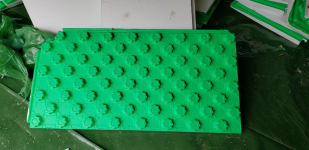
An option that saves labor when installing in-floor radiant heating lines is Crete-Heat (https://crete-heat.com/).
1781140650512.png
Each panel is 2' x 4'.
The "hockey pucks" secure the heating lines and ease installation.
Each panel is 2" thick = insulation.
Panels are available to support 3/8", 1/2" and 5/8" tubing or 3/4" and 1" tubing
The panel can be easily cut with a blade
Each panel is designed to overlaplink with the next
1781141913476.jpeg

Sorry for the dark-ness of these videos; no lights were installed yet when they laid the heating tubes
/
Little better view

As you can see
  • No need to wire tubing to rebar
  • Saves time on installation
  • The only place large staple-like hoops were used was around tight corners
  • May save $$ as Crete-Heat is 2" insulation
1781141837385.jpeg
/
No tubing was placed in that rectangle (foot print for 2-post lift)
1781141873410.jpeg

My concrete guy had never seen this before. He inspected the Crete-Heat before my pour. He was impressed and the pour was uneventful.
 

Craig Balzer

Well-known member
Joined
Sep 21, 2005
Messages
859
Location
Colorado Springs
Almost forgot (I have posted this several times so apologies to readers who have seen it before)

Some notes I compiled after my from-scratch build. My shop was built to work on cars. My 2,300 sq ft Hobby Shop is complete and I am working in it daily and still populating it with stuff. What stuff? How is it all gonna fit? Where’s it gonna go. What goes next to what? See below


(sorry -- my OCD kicked in and I got pretty detailed):

GENERAL
• Build as big as you can afford/fit on your property (or you'll regret it).
• You gotta know your plan inside and out – when the builder asks to move something elsewhere, only you can visualize the impact on other things / stuff
• Be flexible when reality shows up – also be true to your overall plan
• Windows? PRO: natural light – CON: entry point for a$$holes
• Skylight(s)? PRO: natural light – CON: then no attic
• Keep the building dimensions in multiples of 4 feet – reduces wastage of wood
• A mezzanine is good for long-time storage of large or awkward items; plan for where the staircase is gonna be placed; plan how to get heavy items up there and back down

FLOOR
• Gonna place light(s) in floor under lift??
• First thing you lay down is 10 mil vapor barrier
• Then closed-cell insulation – 2 inches thick
• In-floor tubing for radiant goes in before concrete pour – plan carefully if a lift is planned. Should be thicker concrete and limit pex tubing near posts
• Lay some plastic conduit in the floor before concrete is poured from the circuit box to the three other walls to allow future wiring to be run without tearing into walls or mounting conduit on the walls
o Since I forgot to do this, I installed a 2-3" PVC pipe in the upper left-hand corner of the circuit breaker box that terminates in the attic with another sweeping 90° curve. This easily allows fishing a new line (or two) into the circuit box. (See photo) The girts needed to be notched so the OSB would lay flat and metal straps were used to hold the pipe in place.
1781142215978.png
• Thickness? 4” works. Except under lift – my pour was 9-12 inches thick under posts.
• Plan now for smoothness of finish on concrete - - epoxy covering?
• Gonna wash cars in there – floor drain(s)? Lot’s of environmental issues to learn

WALLS
• 2x4 vs 2x6 construction. A 2x6 is pennies more per board and allows thicker insulation
• I have R19 in my walls (Colorado) and the building is noticeably cooler in summer and stays warm in winter even during sub-freezing temps
• I have R49 blown-in above the ceiling
• Sheath with OSB vs Dry Wall. Dry wall looks prettier but to hang anything heavy requires finding a stud or two. OSB has more industrial appearance (and can be a ***** to paint – think “sponge”) but a shelf goes wherever you want to put it
• Windows – already covered
• Height of walls? 12 or 13’ allows most lifts to fit (I have 14’ ceilings in main room)
• Tall walls require more heating capacity, and costs more to heat

ELECTRICAL
• Plan where your 110v outlets are gonna be, then add 50% more of them (mine are 4 feet apart except where a window gets in the way); I have 45x 120V outlets in my 2300 sq ft hobby shop
• Are you gonna use 15- or 20-Amp circuits? (different wiring requirements and different fixtures)
• Place them 45-48” above the floor level so they aren’t hidden later by benches, toolboxes, etc
• Plan for outlet(s) on the exterior of each wall
• Plan for outlet(s) in ceiling for lift or drop light or other
• Plan for outlet(s) in ceiling for garage door opener
• Plan for outlets up high on wall: wall clock, TV, modern “smart” speakers, other
• Lights – fluorescent or LED? Dimmable? Dimmable LEDs are available but require different wiring and dimming switch
• Plan for exterior lights – Colorado Code requires a light above each man-door opening
• Plan for exterior lights – gonna have a patio nearby or BarBQ pit or horseshoe pit or Christmas lights?
• Plan for dedicated circuit for heater
• Plan for dedicated circuit for water heater
• Now plan where circuits are gonna start. Each can handle 8-10 outlets and need to start with a GFIC outlet
• Plan where your 220v outlets are gonna be. Consider welders, air compressor, lift, oven (powder coating), special tools, etc. Even if you won’t have these until the future, plan now to power them.

WATER
• Gonna have water in the garage? A sink to wash up before going into the house is priceless
• Gonna have water in the garage? A sink to wash parts is useful
• A shower is priceless to avoid getting SWMBO’s towels and linens filthy
• Toilet?
• Hot water is nice to wash cars in the winter
• Plan a hose bibb on at least one exterior wall and maybe one inside

A/C

HEAT

• Gonna use in-floor PEX? -- see notes on concrete.
• If not, propane or electric heater will need power and proper placement and capacity
• See comments re height of walls

STUFF
What toys do you have? What toys do you plan to have? Sketch your floor plan to scale on gridded paper; don’t forget to include windows, doors, and the circuit box. And then, to scale, place your toys. All of them. The easy ones are toolbox(es), benches, welders, air compressor, and the like. Did you remember to ID a place to store floor jacks? Creeper? Jack stands? Ladder(s)? Computer desk?

Find a place for place everything:
o Welder
o Plasma Cutter
o Grinder
o Polisher / Buffer
o Powder Coating Oven
o Blast Cabinet
o Parts Washer
o Microwave
o Refrigerator
o Charging station for cordless tools
o Desk lamp
o TV
o Stereo
o Computer
o Phone
o Wall Art / Neon signs
o Other

Expanded details:
STORAGE

• Plan cabinet(s) to store hardware (nuts, bolts, washers, this and that)
• Plan cabinet(s) to store supplies, such as (paint, cleaners, paper towels, etc)

FLUIDS for the car
• Oil
• Oil Filters
• Fuel Filter(s)
• Gear Lube
• Differential Lube/Additive
• ATF
• Brake fluid
• Anti-Freeze
• Power Steering Fluid
• Marvel Mystery Oil
• Starting Fluid
• Lacquer Thinner
• Grease for ball joints/tie rod ends etc

CLEANING yourself
• Hand Cleaner
• Latex (or Nitrile) Gloves
• Shop Towels

CLEANERS for the Car/Engine/Garage/Floor
• Castrol Concentrated Cleaner
• Engine Cleaner
• Brake Cleaner
• Carb Cleaner
• Rust Remover
• Brushable Rustoleum
• Degreaser
• Acetone
• Mineral Spirits

Beauty Products
• Polish
• Wax
• Touch-up paint
• Chrome Cleaner
• Chrome Kleener (Autosol)

WORKING on the Car
• Di-electric grease
• Bearing Grease
• 3-1 oil
• Silicon Spray
• Anti-seize compound
• Loctite
• Teflon tape
• Acousti-Seal, Exhaust System Sealing Compound
• Wellseal Gasket Compound / Gasket sealer
• Wire of various colors and sizes
• Electrical Connectors
• Masking Tape
• Duct Tape
• Electric Tape
• Contact Cement
• 3M Weather-strip Adhesive
• General Purpose Adhesive Solvent Part #: 051135-08984
• 3M Adhesive Remover (Ronson lighter fluid)
• PB Blaster or Kroil -or Knock’er Loose
• Wire ties
• Mechanic's wire
• Cotter pins
• C-clips
• E-clips
• Snap rings
• Hose clamps
• Roloc pads/grinding discs
• Die-grinder burrs/bits
• Buffing wheels/compound
• Razor blades
• Utility knife blades
• Sandpaper
• Emory cloth
• Scotch-brite
• Grease fittings
• Fuel line/brake line and fittings
• Rubber hose: windshield washer, heater, radiator, fuel, vacuum
• Spray paint
• JB Weld

THE MOST IMPORTANT POINT: TAKE TONS OF PHOTOS.
Just like when you disassemble a car or major component, referring to a before photo is priceless during reassembly. I have been able to show my GC photos of the routing of power lines or placement of studs or whatever on at least 5 occasions. Saved guess work by him and potential oop's during drilling or nailing.
 
To avoid these ads, REGISTER NOW!
Top Bottom