Wife bought a new stove, delivery people said they will not plug it in unless we have a 4 prong plug setup ( this is a electric stove ) Why is this? I really dont know what we have right now, i will have to check this out later tonight. What will i have to do if we only have the 3 prong plug? Whats the idea behind the 4 prong?

You are using an out of date browser. It may not display this or other websites correctly.
You should upgrade or use an alternative browser.
You should upgrade or use an alternative browser.
4 Prong plug for stove?????
- Thread starter theo2
- Start date
readhead
Well-known member
4 Prong has a ground.
Theory is as follows:
3 prong plug for 240V AC power (in the USA) is two hot lines and a ground line. From hot-to-hot is 240V, and from either hot-to-ground is 120V.
Since an electric stove needs both 240V power (for the heating elements, of whatever type) and often some 120V power for things like the light(s) and control board, the only way to get that is to use one hot line/leg/conductor and also the ground line/leg/conductor.
But OMG! You now are 'using' the ground line/leg/conductor to actually -conduct- power and not just as the safety equipment grounding conductor!
Result is a requirement for a 4 prong 240V connection. Same two hot lines/legs/conductors and the ground line/leg/conductor, but now also a "neutral" line/leg/conductor. The 240V parts of the machine/appliance still use the two hot legs and the ground is still the ground, but now parts of the machine/appliance that use 120V power will use one of the two 'hot' legs and the "neutral" conductor to get that 120V power.
If you have a four prong outlet already, just plug-n-play.
If you have four wires in the electrical box but a 3 prong outlet, you would need to connect (or have connected) a 4 prong outlet.
note: If you don't KNOW what you are doing there, have someone who does know what they are doing work on the wiring.
It's not rocket science or brain surgery, but the electrical power involved can be harmful or fatal or cause damage (fire!) if done wrong.
If you only have 3 wires in the electrical box, you'll need to have a fourth wire (the neutral) run from the breaker panel to the outlet box.
Again, you need to know what you are doing in this case. Not rocket science, blah blah blah.
3 prong plug for 240V AC power (in the USA) is two hot lines and a ground line. From hot-to-hot is 240V, and from either hot-to-ground is 120V.
Since an electric stove needs both 240V power (for the heating elements, of whatever type) and often some 120V power for things like the light(s) and control board, the only way to get that is to use one hot line/leg/conductor and also the ground line/leg/conductor.
But OMG! You now are 'using' the ground line/leg/conductor to actually -conduct- power and not just as the safety equipment grounding conductor!
Result is a requirement for a 4 prong 240V connection. Same two hot lines/legs/conductors and the ground line/leg/conductor, but now also a "neutral" line/leg/conductor. The 240V parts of the machine/appliance still use the two hot legs and the ground is still the ground, but now parts of the machine/appliance that use 120V power will use one of the two 'hot' legs and the "neutral" conductor to get that 120V power.
If you have a four prong outlet already, just plug-n-play.
If you have four wires in the electrical box but a 3 prong outlet, you would need to connect (or have connected) a 4 prong outlet.
note: If you don't KNOW what you are doing there, have someone who does know what they are doing work on the wiring.
It's not rocket science or brain surgery, but the electrical power involved can be harmful or fatal or cause damage (fire!) if done wrong.
If you only have 3 wires in the electrical box, you'll need to have a fourth wire (the neutral) run from the breaker panel to the outlet box.
Again, you need to know what you are doing in this case. Not rocket science, blah blah blah.
4 wire is safer with the 3 wire used in the past the frame of the appliance is grounded though the neutral , that being said the 3 wire is legal in existing installations, anything wired since the adoption of 1996 NEC requires four wire. The three wire 125/250 volt range and dryer receptacles should have been gotten rid of 50 years ago.
sberry
Banned
You need to bond the neutral to the frame if there is a 3 wire feed. Delivery people absolutely wire these wrong all the time. Found a couple a while back come 4 wire with the bond in tact. They think its a double safety ground.
sberry
Banned
I am a big fan of running a new wire if possible.
Theory is as follows:
3 prong plug for 240V AC power (in the USA) is two hot lines and a ground line. From hot-to-hot is 240V, and from either hot-to-ground is 120V.
Since an electric stove needs both 240V power (for the heating elements, of whatever type) and often some 120V power for things like the light(s) and control board,. the only way to get that is to use one hot line/leg/conductor and also the ground line/leg/conductor
But OMG! You now are 'using' the ground line/leg/conductor to actually -conduct- power and not just as the safety equipment grounding conductor!
Result is a requirement for a 4 prong 240V connection. Same two hot lines/legs/conductors and the ground line/leg/conductor, but now also a "neutral" line/leg/conductor. The 240V parts of the machine/appliance still use the two hot legs and the ground is still the ground, but now parts of the machine/appliance that use 120V power will use one of the two 'hot' legs and the "neutral" conductor to get that 120V power.
If you have a four prong outlet already, just plug-n-play.
If you have four wires in the electrical box but a 3 prong outlet, you would need to connect (or have connected) a 4 prong outlet.
note: If you don't KNOW what you are doing there, have someone who does know what they are doing work on the wiring.
It's not rocket science or brain surgery, but the electrical power involved can be harmful or fatal or cause damage (fire!) if done wrong.
If you only have 3 wires in the electrical box, you'll need to have a fourth wire (the neutral) run from the breaker panel to the outlet box.
Again, you need to know what you are doing in this case. Not rocket science, blah blah blah.
A 3-wire range receptacle is a ungrounded dual voltage device, there is no ground, the frame of the appliance is bonded to the neutral.
Last edited:
sberry
Banned
Is that worded right?
 Thanks.
BillK
Well-known member
Theo,
Read the instructions. Our new GE was the same way but the instructions tell you exactly how and where on the back of the stove to connect the ground to the stove frame. Takes about 2 minutes. Then plug it in and start cooking
Read the instructions. Our new GE was the same way but the instructions tell you exactly how and where on the back of the stove to connect the ground to the stove frame. Takes about 2 minutes. Then plug it in and start cooking
Charles (in GA)
Well-known member
I suppose the OP let them take the old stove away without salvaging the cord off of it?
4 prong has a neutral also ,3 prong has a ground only.
3 prong is a 125/250V dual voltage UNGROUNDED plug, there is no ground, if there was a grounding conductor it would be a single voltage plug.
I suppose the OP let them take the old stove away without salvaging the cord off of it?
They always claim if you reuse it the warranty is void, still you can still buy them it should be no problem, I have to agree w/ Sberry that a new feed is a better idea but it is not always reality, the OP may even have a existing 3 wire with ground cable........
sberry
Banned
This is one of the places I really go to the extra effort and change out if I can, I do it on all my own and stopped for a few minutes a while back on a job to go over this with a couple guys on an install, came with 4 wire but the installer left the bond.
A person should simply send it back if they give ****, most of them know absolutely nothing about it and someone would be right to sue the sheet out of one of those stores. It does go to show how rare statistically accidents are to some extent though considering millions of these are wired wrong, wrong 20 yrs ago and still doing it.
A person should simply send it back if they give ****, most of them know absolutely nothing about it and someone would be right to sue the sheet out of one of those stores. It does go to show how rare statistically accidents are to some extent though considering millions of these are wired wrong, wrong 20 yrs ago and still doing it.
bczygan
Well-known member
I have a 3 prong outlet. But a gas range.
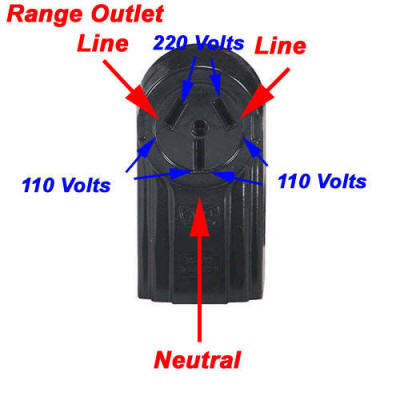
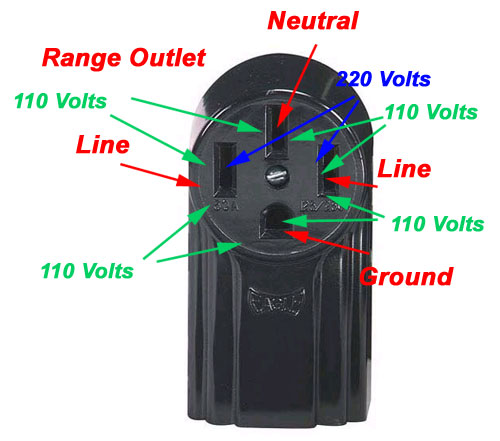
I have a 3 prong outlet. But a gas range.
110 & 220 volts have not been used in the US in decades, lower performance occurs if modern cooking equipment were operated on 220V since they are rated for a 120/240V supply.
bczygan
Well-known member
I was going to post a link to a video showing how to do this.
But the first video Google brought up, showed replacing the outlet, but NOT upgrading the wiring! Yikes!
But the first video Google brought up, showed replacing the outlet, but NOT upgrading the wiring! Yikes!
My bad. Was thinking NEMA6-50 type outlet with hot-hot-ground and not NEMA10-50 3 prong range outlet/plug with hot-hot-neutral.
My note about knowing what you are doing with electricity still applies though.
For the 4 prong outlet/plug (NEMA 14-50) , you'll still need the four wires in the electrical box. Hot-hot-neutral-ground. If those four wires are there, then it's relatively easy to wire up the 4-prong NEMA 14-50R outlet to those four wires.
My note about knowing what you are doing with electricity still applies though.
For the 4 prong outlet/plug (NEMA 14-50) , you'll still need the four wires in the electrical box. Hot-hot-neutral-ground. If those four wires are there, then it's relatively easy to wire up the 4-prong NEMA 14-50R outlet to those four wires.
In a 240 V application, there are two hot legs and a ground. The neutral switches back and forth thru the 60 cycles utilizing each leg as the neutral throughout the cycle. You can test this and watch it work by disconnecting the ground wire in any 240 volt appliance and plugging it in. It will still work because of the varying neutral. A ground is ALWAYS a ground. It is never a current carrying conductor.
Speedy Petey
Well-known member
Nope. Not quite. Your theory on 240V is wrong with regard to ranges. The ground is/was NEVER intended to be used for the neutral. And this was NOT the cause for the 4-wire requirement.Theory is as follows:
3 prong plug for 240V AC power (in the USA) is two hot lines and a ground line. From hot-to-hot is 240V, and from either hot-to-ground is 120V.
Since an electric stove needs both 240V power (for the heating elements, of whatever type) and often some 120V power for things like the light(s) and control board, the only way to get that is to use one hot line/leg/conductor and also the ground line/leg/conductor.
But OMG! You now are 'using' the ground line/leg/conductor to actually -conduct- power and not just as the safety equipment grounding conductor!
Result is a requirement for a 4 prong 240V connection. Same two hot lines/legs/conductors and the ground line/leg/conductor, but now also a "neutral" line/leg/conductor. The 240V parts of the machine/appliance still use the two hot legs and the ground is still the ground, but now parts of the machine/appliance that use 120V power will use one of the two 'hot' legs and the "neutral" conductor to get that 120V power.
Speedy Petey
Well-known member
Wow! Just wow.In a 240 V application, there are two hot legs and a ground. The neutral switches back and forth thru the 60 cycles utilizing each leg as the neutral throughout the cycle. You can test this and watch it work by disconnecting the ground wire in any 240 volt appliance and plugging it in. It will still work because of the varying neutral.
PLEASE don't post if you are going to make erroneous incorrect posts like this. It will only serve to confuse DIYers and give them the wrong info.
First off, an electric range is a 120/240V appliance, NOT straight 240V.
Even so, in your description, a 240V appliance/load DOES NOT use or require a neutral. And it especially does not "switch back and forth".
Also, the ground in a 240V circuit has NOTHING to do with it's functionality, NOR does it have anything to do with the neutral.
Theo, please listen to Norcal and Sberry in this thread.
New regulations are created to keep regulators employed. Does anyone think the hoards at EPA et al are going to ever say "It's Good" turn off the lights and quit drawing paychecks? 
I had to do a 4 prong in a new house I wired. (with a permit even). My current house has 3 wire. Doubtless there is some scenario where the 4 wire protects you from something. You have to decide if you give a damn. I am at the point in my life where I don't. Still live and kicking with my 3 wire.
I had to do a 4 prong in a new house I wired. (with a permit even). My current house has 3 wire. Doubtless there is some scenario where the 4 wire protects you from something. You have to decide if you give a damn. I am at the point in my life where I don't. Still live and kicking with my 3 wire.
LS6 Tommy
Well-known member
Please correct me if I'm wrong, but I seem to recall ovens were required to be hard wired.
Or is it hard wired ovens have to be changed to plug in configuration to meet the "service disconnect" requirement?
Tommy
Or is it hard wired ovens have to be changed to plug in configuration to meet the "service disconnect" requirement?
Tommy
Last edited:
volleyball
Well-known member
He bought a stove, not an oven. Big difference
wyliesdiesels
Well-known member
Ugg another 3-prong/4-prong plug debate...
OP is your range fed from the main service panel or a subpanel?
there is. Lets say u have a 3-wire 120/240v outlet. The neutral feeding it develops a bad connection. U go to do your laundry and touch the washer and dryer at the same time. U can get shocked because the chassis of the dryer is bonded to the neutral terminal in the dryer and the broken neutral connection is completed through the grounded washer chassis. If it was 4-wire, this wouldnt be a possible...
The potential safety issue with 3-wire dryers is the bonding of the neutral...same concept with a 3-wire feeder to a subpanel. If theres parrallel metallic pathways, then neutral current could flow on an alternate path because of the bond in the panel...
OP is your range fed from the main service panel or a subpanel?
New regulations are created to keep regulators employed. Does anyone think the hoards at EPA et al are going to ever say "It's Good" turn off the lights and quit drawing paychecks?
I had to do a 4 prong in a new house I wired. (with a permit even). My current house has 3 wire. Doubtless there is some scenario where the 4 wire protects you from something. You have to decide if you give a damn. I am at the point in my life where I don't. Still live and kicking with my 3 wire.
there is. Lets say u have a 3-wire 120/240v outlet. The neutral feeding it develops a bad connection. U go to do your laundry and touch the washer and dryer at the same time. U can get shocked because the chassis of the dryer is bonded to the neutral terminal in the dryer and the broken neutral connection is completed through the grounded washer chassis. If it was 4-wire, this wouldnt be a possible...
The potential safety issue with 3-wire dryers is the bonding of the neutral...same concept with a 3-wire feeder to a subpanel. If theres parrallel metallic pathways, then neutral current could flow on an alternate path because of the bond in the panel...
Last edited:
We never told anyone we wouldn't install a range if they didn't have a 4 prong plugin. All we asked was 3 or 4 and if they didn't know, we went off the age of the house. Never once had an issue. I've installed many ranges and dryers when I worked at an appliance store. We always kept a handful of each cord on the truck when we delivered. If they won't install it, buy a cable and do it yourself. Most ranges have a chart on the back that shows how to wire in the cable.
checkthisout
Well-known member
- Joined
- Sep 5, 2008
- Messages
- 5,232
Weird. I just redid a range plug on a house. The inspector did not make me change it to a 4 wire plug.
As Wylie's said, the 4 wire is safer. If you lose the neutral, the chassis of the appliance is now live and you can get shocked.
With 4 wire, the chassis will always be grounded and pop the breaker if a hot comes in contact with the chassis.
In other words, there will always be a path for the current travel that has lower resistance than the human body.
As Wylie's said, the 4 wire is safer. If you lose the neutral, the chassis of the appliance is now live and you can get shocked.
With 4 wire, the chassis will always be grounded and pop the breaker if a hot comes in contact with the chassis.
In other words, there will always be a path for the current travel that has lower resistance than the human body.
volleyball
Well-known member
Weird. I just redid a range plug on a house. The inspector did not make me change it to a 4 wire plug.
As Wylie's said, the 4 wire is safer. If you lose the neutral, the chassis of the appliance is now live and you can get shocked.
With 4 wire, the chassis will always be grounded and pop the breaker if a hot comes in contact with the chassis.
In other words, there will always be a path for the current travel that has lower resistance than the human body.
People assume that but if one wire comes loose, what is stopping another?
On a 3 wire, the light and control panel will be dead so the stove won't work.
Mustang51js
Well-known member
Breaker will still pop on a 3 wire if the hot hits the chassis. And btw I have yet to come across a stove that lost it's neutral and the chassis became hot,not saying it can't happen.
LS6 Tommy
Well-known member
He bought a stove, not an oven. Big difference
Zero difference. Stove. Oven. Range. Semantics... The electrical requirements are what matters. I could see if it were a 120VAC cook top things would be different.
Tommy
Last edited:
I replaced my oven. New 4 wire circuit. But, I also replaced the cooktop. Glass surface, no exposed metal, no 120 requirement, reused the 3wire. I feel safe.
IMO, cooktop, range, oven real world requirements can differ.
IMO, cooktop, range, oven real world requirements can differ.
LS6 Tommy
Well-known member
I replaced my oven. New 4 wire circuit. But, I also replaced the cooktop. Glass surface, no exposed metal, no 120 requirement, reused the 3wire. I feel safe.
IMO, cooktop, range, oven real world requirements can differ.
No exposed metal? Your oven is made out of plastic?

Tommy
Mechanical Noise
Well-known member
New regulations are created to keep regulators employed. Does anyone think the hoards at EPA et al are going to ever say "It's Good" turn off the lights and quit drawing paychecks?
I had to do a 4 prong in a new house I wired. (with a permit even). My current house has 3 wire. Doubtless there is some scenario where the 4 wire protects you from something. You have to decide if you give a damn. I am at the point in my life where I don't. Still live and kicking with my 3 wire.
The building codes were started by the insurance companies. It wouldn't surprise me if the acceptability of the 3 prong circuit was eliminated after a payout on some weird, but not impossible failure.
Mechanical Noise
Well-known member
People assume that but if one wire comes loose, what is stopping another?
On a 3 wire, the light and control panel will be dead so the stove won't work.
The connections in the neutral circuit carry current and could potentially fail from expansion and contraction as the connections heat and cool. A grounding conductor carries current only during emergency situations and, theoretically, is always at the ready.
In reality, at least here in Chicago, just about all wiring is supposed to be in a grounded metallic raceway of one sort or another. **** grounds are as common as loose and corroded fittings.
Stuart in MN
Well-known member
This whole deal is covered in the 2014 NEC under article 250.140. The short version is that new installations require a separate equipment grounding conductor (ground) and grounded circuit conductor (neutral), but for existing installations where an equipment grounding conductor is not present in the outlet or junction box the frame of the stove can be connected to the neutral wire.
Apparently, the practice of connecting the frame to the neutral wire on stoves began during WWII, and remained in practice until it was removed from the 1996 NEC.
Apparently, the practice of connecting the frame to the neutral wire on stoves began during WWII, and remained in practice until it was removed from the 1996 NEC.
Last edited:
checkthisout
Well-known member
- Joined
- Sep 5, 2008
- Messages
- 5,232
Breaker will still pop on a 3 wire if the hot hits the chassis. And btw I have yet to come across a stove that lost it's neutral and the chassis became hot,not saying it can't happen.
If the neutral is in tact, yes.
What you might not have considered is the fact that if the neutral is lost, the chassis becomes hot if anything on the stove uses 110 volts is simply turned on.
I'm thinking only clock and control circuits so probably only items that would provided enough resistance to keep you from sustaining serious injury but still, for a couple extra bucks the 4 wire is a good idea I think...of course in practice I kept the 3 wire.
An oven coil failing in such a way that it contacts the chassis doesn't seem like it would be out of realm of reasonable possibility either?
Last edited:
No exposed metal? Your oven is made out of plastic?
Tommy
read it again! that applies to the cooktop, not oven!
James-W
Well-known member
I realize that in some cases it may be difficult (or costly) to run a new wire, but if the local electrical code requires a 4 wire receptacle, then I would think prudence dictates that you do it.