

You are using an out of date browser. It may not display this or other websites correctly.
You should upgrade or use an alternative browser.
You should upgrade or use an alternative browser.
40x80 options - Foundation/SIP vs pole/etc.
- Thread starter Jesse_Boyer
- Start date


ConCretin
Well-known member
6" 4000 psi floor, GFRP reinforcement.
Congrats on your pending project. I can't offer much help with regard to your questions regarding insulation. I am curious about your choice of reinforcing. Why fiberglass rebar?!?
I built a 40 x 80 steel with a 4 12 pitch and 2 ft overhangs heated floor. Looked at SIPS and wood,pole and just block. Went with steel cause it gave me the clear span and high ceilings . Most steel buildings the columns are 20' apart. I divided 3 sections with three 12' x 12' doors . The far end has a 20' x 40' area without a overhead door and a 20'x 20' loft you could use for bedroom loft or storage. Below is a full bathroom,wash- slop utility room with laundry connections and a furnace room. In the boiler room I have my air compressor and plenty of storage. The other 20'x20' in the front of the loft is open and could be temp quarters to live in . Over all 40' x 80' for shop will fill fast with equipment and material . If you do auto or wood work the open high ceiling is the way to go. Same way with 12' x 12' doors. I have loaded several 10' pieces of lumber or swung 12' pieces of siding every direction to stain and you have no worries of fork lifting or moving material around without hitting walls or doors.
Mac
Mac
Last edited:
matt_i
Well-known member
I think if you built the post frame with bookshelf girts on 24" vertical centers then you'd have an easier time insulating it.
Where I struggle with the post frame design is being unable to have rock-solid assurance that the floor and the wall won't ever separate and cause a gap.
With all of that foam I would take a look at a frost protected shallow foundation, FPSF. There is a HUD design guideline .pdf you can look up via google and has all that you need for the design. Its less excavation and disturbed earth than the traditional stem-wall design, just needs a little creativity in the concrete formwork as the concrete foundation is poured on top of the foam.
I would also take a look at "energy heel" trusses, insulating to R30 or more (I think they use R50 in mountain & northern regions) would be preferred to match your R-26 walls.
Looks like a great start on the entire build, challenging to get all of the plans and specs in place for sure! Great size shop as well.
Where I struggle with the post frame design is being unable to have rock-solid assurance that the floor and the wall won't ever separate and cause a gap.
With all of that foam I would take a look at a frost protected shallow foundation, FPSF. There is a HUD design guideline .pdf you can look up via google and has all that you need for the design. Its less excavation and disturbed earth than the traditional stem-wall design, just needs a little creativity in the concrete formwork as the concrete foundation is poured on top of the foam.
I would also take a look at "energy heel" trusses, insulating to R30 or more (I think they use R50 in mountain & northern regions) would be preferred to match your R-26 walls.
Looks like a great start on the entire build, challenging to get all of the plans and specs in place for sure! Great size shop as well.
beatersubi
New member
I built a 40 x 80 steel with a 4 12 pitch and 2 ft overhangs heated floor. Looked at SIPS and wood,pole and just block. Went with steel cause it gave me the clear span and high ceilings . Most steel buildings the columns are 20' apart. I divided 3 sections with three 12' x 12' doors . The far end has a 20' x 40' area without a overhead door and a 20'x 20' loft you could use for bedroom loft or storage. Below is a full bathroom,wash- slop utility room with laundry connections and a furnace room. In the boiler room I have my air compressor and plenty of storage. The other 20'x20' in the front of the loft is open and could be temp quarters to live in . Over all 40' x 80' for shop will fill fast with equipment and material . If you do auto or wood work the open high ceiling is the way to go. Same way with 12' x 12' doors. I have loaded several 10' pieces of lumber or swung 12' pieces of siding every direction to stain and you have no worries of fork lifting or moving material around without hitting walls or doors.
Mac
This sounds very similar to what I want to build, only in a 40x60 size. Do you have pictures of yours you'd like to share?
OP
Jesse_Boyer
Member
Congrats on your pending project. I can't offer much help with regard to your questions regarding insulation. I am curious about your choice of reinforcing. Why fiberglass rebar?!?
I can certainly be told/convinced/educated otherwise. I'm completely new to GFRP, honestly. It's not set in stone (pun intended) and I could go with steel rebar, but I genuinely feel this is the way the world of reinforcement will go entirely. The strength is there with GFRP as I read and the bars won't rust and cause the concrete to crack and fail from the inside out. It's overkill for my application, but so is the 6" floor. I really don't want this to crack/move whatsoever, so I'm giving it every chance I can along with compaction and subgrade. I debated using just horsehair fiberglass in lieu of reinforcing bar, but I can fasten my PEX to the top of whatever reinforcement I chose.
Wrong line of thinking at all or is this a decent plan?
I built a 40 x 80 steel with a 4 12 pitch and 2 ft overhangs heated floor. Looked at SIPS and wood,pole and just block. Went with steel cause it gave me the clear span and high ceilings . Most steel buildings the columns are 20' apart. I divided 3 sections with three 12' x 12' doors . The far end has a 20' x 40' area without a overhead door and a 20'x 20' loft you could use for bedroom loft or storage. Below is a full bathroom,wash- slop utility room with laundry connections and a furnace room. In the boiler room I have my air compressor and plenty of storage. The other 20'x20' in the front of the loft is open and could be temp quarters to live in . Over all 40' x 80' for shop will fill fast with equipment and material . If you do auto or wood work the open high ceiling is the way to go. Same way with 12' x 12' doors. I have loaded several 10' pieces of lumber or swung 12' pieces of siding every direction to stain and you have no worries of fork lifting or moving material around without hitting walls or doors.
Mac
I need to give steel some more thought. Would you mind sending me a private message and discussing what your project involved, how much it cost, etc?
I think if you built the post frame with bookshelf girts on 24" vertical centers then you'd have an easier time insulating it.
Where I struggle with the post frame design is being unable to have rock-solid assurance that the floor and the wall won't ever separate and cause a gap.
With all of that foam I would take a look at a frost-protected shallow foundation, FPSF. There is a HUD design guideline .pdf you can look up via google and has all that you need for the design. Its less excavation and disturbed earth than the traditional stem-wall design, just needs a little creativity in the concrete formwork as the concrete foundation is poured on top of the foam.
I would also take a look at "energy heel" trusses, insulating to R30 or more (I think they use R50 in mountain & northern regions) would be preferred to match your R-26 walls.
Looks like a great start on the entire build, challenging to get all of the plans and specs in place for sure! Great size shop as well.
For whatever reason, FPSF worries me. Iwas recently in the first Passivhaus in South Dakota and that used a FPSF as well (with 12" of EPS foam under the home too boot.)
If I end up with a pole or metal building, it will guaranteed be spray-foamed with 2" or more of closed cell, then likely BIBS the remaining. I'll forego the rolled insulation initially. There's nothing like spray foam in my opinion to stiffen-up the exterior of a structure.
Last edited:
OP
Jesse_Boyer
Member
Congrats on your pending project. I can't offer much help with regard to your questions regarding insulation. I am curious about your choice of reinforcing. Why fiberglass rebar?!?
Also, as a mechanical mind, I know very little about concrete. The links in your signature are a great resource for someone like me to at least be somewhat informed. Greatly appreciated.
Last edited:
Voi
Well-known member
I'm an admitted insulation and efficiency wackjob. I'm hoping to show this SIP proposal and hoping someone can chime in and give other options/methods of building the foundation with poles and piers, etc. Pole barns are extremely common here, not many deviate from this. I'm struggling to find designs of foundations with pole barns which insulate adequately.
There has been discussion about using SIPs as a structural replacement to girts here and on other forums. I don't know how to recommend going about finding those threads, but I'd recommend trying to find them.
I assume you're using the local SIP company. There are SIP companies in Minnesota and/or Iowa that seem to have more experience with large shop packages. I'll see if I can find their names.
I didn't look closely at your pictures but one issue with SIPs is efficient use of materials, which I'm sure you already know. I'll take a closer look at your pictures later.
OP
Jesse_Boyer
Member
Energy Panel Structures out of IA has done a lot of them in this area and that's where the quote/design came from via this GC. EPS does the engineering for the walls, trusses, etc as a package.
Regarding use of materials, please elaborate. I'm no expert and won't claim to be; always willing to learn more. SIPs are expensive and if there's a way to build a better building with traditional methods, I'm all ears.
For what it's worth, my father-in-law is having a Cleary pole barn built with radiant floors, Cleary insulation, 16' side walls (admittedly different than my 12') and his is coming out to nearly 10-15% higher per sqft than my SIP structure.
Regarding use of materials, please elaborate. I'm no expert and won't claim to be; always willing to learn more. SIPs are expensive and if there's a way to build a better building with traditional methods, I'm all ears.
For what it's worth, my father-in-law is having a Cleary pole barn built with radiant floors, Cleary insulation, 16' side walls (admittedly different than my 12') and his is coming out to nearly 10-15% higher per sqft than my SIP structure.
Firebrick43
Well-known member
Steel reinforcing in a house is not an issue of drainage is correct. It's an issue on roads due to copious amounts of salt spread.
Have you looked at icfs?
Have you looked at icfs?
OP
Jesse_Boyer
Member
Steel reinforcing in a house is not an issue of drainage is correct. It's an issue on roads due to copious amounts of salt spread.
Agreed. However, the lighter weight stuff will be easier to handle too. I'm not saying it's a guarantee, just curious enough to look into it.
I'll say I've never seen GFRP rebar used in ICF walls, only traditional steel rebar. I just found GFRP recently and never thought about anything but traditional rebar until a couple weeks ago.
Dzlpete
Well-known member
ICF’s ICF’s ICF’s
Easy to do, inexpensive- relatively speaking, rot proof, rodent proof, very high wind resistance, super efficient, super strong!
Logixicf.com !!
We are currently doing a 2 story 4500 sf. Home with this. Excellent system.
We have done 4 different home and building projects with this company. No surprises, no blowouts.
Easy to do, inexpensive- relatively speaking, rot proof, rodent proof, very high wind resistance, super efficient, super strong!
Logixicf.com !!
We are currently doing a 2 story 4500 sf. Home with this. Excellent system.
We have done 4 different home and building projects with this company. No surprises, no blowouts.
OP
Jesse_Boyer
Member
ICF’s ICF’s ICF’s
Easy to do, inexpensive- relatively speaking, rot proof, rodent proof, very high wind resistance, super efficient, super strong!
Logixicf.com !!
We are currently doing a 2 story 4500 sf. Home with this. Excellent system.
We have done 4 different home and building projects with this company. No surprises, no blowouts.
Good suggestion. My home will be ICF's and that's what I've planned on from the start. SIPs seemed like a reasonable compromise for the building.
Rough cost of ICF is $15/sqft of wall for an 8" R22 block with steel, footing, etc. . On a building of this size, that's a spendy structure as well at $52000 for the walls, footing, etc. Granted, there's no better method in my opinion.
Steel reinforcing in a house is not an issue of drainage is correct. It's an issue on roads due to copious amounts of salt spread.
Have you looked at icfs?
Beat me to the punch lol. Icf would be my first choice for a shop. On a thickened edge slab. Insulated properly cut off from the outside. So far loving the icf house we are about to move into. Haven’t paid much attention to the heat usage but it can maintain heat for hours without furncae coming on. .5 degree is my cut in point so it’s not much.
My shop will be this way as well. Ideally when the slab and edge is poured it would be best to have sytro on the outside of the slab that the icf can line up with. I haven’t thought too much about how I would accomplish this yet. We built one shop for a guy and was like this but because the foam wasn’t secured to the slab it sunk and messed with the icf a bit. So if the slab for, was left high and foam nailed to it then slab poured using the foam as a screed height. The form could stay up and give an edge for the icfs.
But it takes he fun out of it because once it’s poured ya don’t have to worry about framing or insulating or vapour barrier.
Sent from my iPad using Tapatalk Pro
Voi
Well-known member
Regarding use of materials, please elaborate.
What I mean is getting the most out of a panel as you can.
For a simple example, if a company uses 8 x 24 panels you'll be charged the same for 10' sidewalls as you would 12' sidewalls. In the 10' case, 2' of the panel will just end up as trash and you'll be charged for it. In the 12' case that 2' will end up in your structure and you'll be charged the same.
This is a more significant issue on gable ends with the angled cuts. One company I dealt with didn't have computers that could calculate that the angled cutoff piece could be used for the matching gable piece. Their computer was literally calculating half of a 8 x 24 panel as garbage -- and charging me for it.
I didn't go through with that project. Well I did, but stick built instead of SIP.
Radix2
Well-known member
With the insulation below, there is no reason to elevate the pex. Better to put the pex under and the metal above. The entire thickness of concrete is going to be the same temp anyway, there is no efficiency benefit to complicate the install.
With good compaction 4 in is just as good as 6 in and no more likely to crack, that is a place to save if you are looking for one perhaps.
With the pex on the foam stapled, the mesh or rebar above is in the middlish without messing with chairs that will get stomped into the foam.
I did 40x85 with ICF frost walls, 4in foam on outer 4feet of floor and 2in on the rest. Very cheap to heat ( walls foam flash then wet cellulose), deep cellulose ceiling.
With good compaction 4 in is just as good as 6 in and no more likely to crack, that is a place to save if you are looking for one perhaps.
With the pex on the foam stapled, the mesh or rebar above is in the middlish without messing with chairs that will get stomped into the foam.
I did 40x85 with ICF frost walls, 4in foam on outer 4feet of floor and 2in on the rest. Very cheap to heat ( walls foam flash then wet cellulose), deep cellulose ceiling.
OP
Jesse_Boyer
Member
What I mean is getting the most out of a panel as you can.
For a simple example, if a company uses 8 x 24 panels you'll be charged the same for 10' sidewalls as you would 12' sidewalls. In the 10' case, 2' of the panel will just end up as trash and you'll be charged for it. In the 12' case that 2' will end up in your structure and you'll be charged the same.
This is a more significant issue on gable ends with the angled cuts. One company I dealt with didn't have computers that could calculate that the angled cutoff piece could be used for the matching gable piece. Their computer was literally calculating half of a 8 x 24 panel as garbage -- and charging me for it.
I didn't go through with that project. Well I did, but stick built instead of SIP.
I follow now, thank you.
OP
Jesse_Boyer
Member
With the insulation below, there is no reason to elevate the pex. Better to put the pex under and the metal above. The entire thickness of concrete is going to be the same temp anyway, there is no efficiency benefit to complicate the install.
With good compaction 4 in is just as good as 6 in and no more likely to crack, that is a place to save if you are looking for one perhaps.
With the pex on the foam stapled, the mesh or rebar above is in the middlish without messing with chairs that will get stomped into the foam.
I did 40x85 with ICF frost walls, 4in foam on outer 4feet of floor and 2in on the rest. Very cheap to heat ( walls foam flash then wet cellulose), deep cellulose ceiling.
This is the article/study I can't stop thinking about when discussing depth of PEX. John S is pretty well known regarding radiant heat designs. Essentially with a 4" thick slab and 100F water, locating the piping at the center of the slab vs bottom yields significantly more heat with 100F water.
https://www.hpacmag.com/features/hydronics-radiant-floor-tubing-depth-siegenthaler/
I like the idea of a 4" slab vs 6" to save a bit, just worried about getting the compaction and subgrade correct. Honestly, the 6" seemed like little insurance policy just in case I had an issue with one spot of the compaction.
Last edited:
borderboy1971
Active member
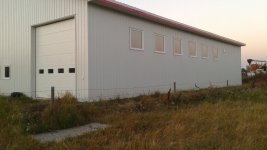
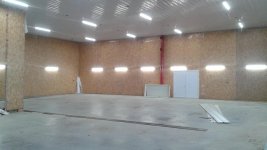
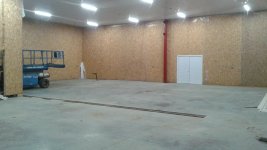
I put up a 60x64 16' sip shop. With a 14x60 stick frame cold storage. My walls are 8" thick. Roof is standard trusses with r50 blow in. I love it and loved the construction of it. I did all the ground work, did all the forms, played out 2" styro and rebar and pex. I would have done the concrete but couldn't find enough quality help to pour and finish it. ( money well spent having it done anyways). The concrete company just came and poured and finished in a day. Cost wise im doing pretty good imo. 37,000 US for the panels to my door. (From extreme panel in minnesota). About 18000 Canadian for the ground work and concrete finished. Rebar and pex about 1000 Canadian. Roof trusses 6000 Canadian. Blow in 4000. I fished all the wiring. (I over wire stuff). Tin for exterior put on by a local contractor 25000, and ceiling tin done by same contractor 8000. Windows and doors....cant recall except the 2 r26 sectional doors were about 4000 each. I personally can't say enough about how easy it was to put together and perfectly straight....no crooked lumber. And very strong once it's together.
Attachments


Last edited:
Good suggestion. My home will be ICF's and that's what I've planned on from the start. SIPs seemed like a reasonable compromise for the building.
Rough cost of ICF is $15/sqft of wall for an 8" R22 block with steel, footing, etc. . On a building of this size, that's a spendy structure as well at $52000 for the walls, footing, etc. Granted, there's no better method in my opinion.
If your an insulation nut then this is the way. My house is if for basement and main floor. The block is r26 logix. On real windy days you’d never know unless you opened the door. $15 a sq ft seems high.... our blocks cost around $22/23 each Canadian. Both my floors were $18k for all the block. 52x36 house and 10’ basement and 10’ main floor. That puts the block at $5 a sq ft. And cement was around $11k total.
I would be inclined to save money on fibreglass reinforcement.
Aren’t sips harder to run electrical in being studs right at face?
Sent from my iPad using Tapatalk Pro
OP
Jesse_Boyer
Member
If your an insulation nut then this is the way. My house is if for basement and main floor. The block is r26 logix. On real windy days you’d never know unless you opened the door. $15 a sq ft seems high.... our blocks cost around $22/23 each Canadian. Both my floors were $18k for all the block. 52x36 house and 10’ basement and 10’ main floor. That puts the block at $5 a sq ft. And cement was around $11k total.
I would be inclined to save money on fibreglass reinforcement.
Aren’t sips harder to run electrical in being studs right at face?
Sent from my iPad using Tapatalk Pro
$15/sqft is finished wall installed. Concrete, steel, ICF block, etc. I was told $5/sqft for ICF block, concrete, and labor (each, respectively.) The quote I received for the house was right at $15/sqft of wall space w/ footing, steel, waterproofing, draintile, tc.
$15/sqft is finished wall installed. Concrete, steel, ICF block, etc. I was told $5/sqft for ICF block, concrete, and labor (each, respectively.) The quote I received for the house was right at $15/sqft of wall space w/ footing, steel, waterproofing, draintile, tc.
Ahhh ok that makes sense. Maybe a touch high but in the range. Do you have the time to do the icf yourself? Easy to do. Save some money. The shop won’t have waterproofing and draintile so this will knock the price down. Also if using a slab you can take the footing price out as well.
What is the price of a sip in the same category?
borderboy1971
Active member
Aren’t sips harder to run electrical in being studs right at face?
Sent from my iPad using Tapatalk Pro
Running electrical was my biggest worry prior to doing it. I wanted to keep all my wiring within the walls so I had to fish it all. It went really easily actually. I used a piece of 3/8 air brake line for a fish tape (I could kind of steer it a bit by twisting). The worst spot I had was where I ran 10 strands of 14/2 wire through the 1 1/2" hole provided in the SIP.
OP
Jesse_Boyer
Member
Just looked and a Murus SIP (EPS foam, R23) was $23,800 + freight, plus erection, plus top/bottom boards, weather-resistant barrier, etc.
So, the $52000 I referred to earlier was a 16' ICF wall (4' as a foundation wall below grade, 12' above.) The SIP will still need a foundation wall (ICF or formed concrete, then insulated) on top of the $23,800 walls. Seems to me the ICF might not be that much different in the end
So, the $52000 I referred to earlier was a 16' ICF wall (4' as a foundation wall below grade, 12' above.) The SIP will still need a foundation wall (ICF or formed concrete, then insulated) on top of the $23,800 walls. Seems to me the ICF might not be that much different in the end
Firebrick43
Well-known member
My icf house/basement/and garage was nearly even with SIP quote but a much stronger end result. I agree that icf is easy to do if it's a simple rectangle building without any crazy offsets or funky Windows. I did some arch top Windows and was going to do garage door headers but due to time the headers ended up wood.
I used amvic and was quoted 22$ a block as well. That included use of the dealers walk boards and braces and help from him and his hired man on the day of the pour. I erected the forms by myself without any help except some bracing work the day before the pour (more weather window related). No bows or bulges due to good block (logix and buildblock are excellent as well) and good bracing. I would avoid fox block. Every job I went to I saw bulges and a few blow outs.
I used amvic and was quoted 22$ a block as well. That included use of the dealers walk boards and braces and help from him and his hired man on the day of the pour. I erected the forms by myself without any help except some bracing work the day before the pour (more weather window related). No bows or bulges due to good block (logix and buildblock are excellent as well) and good bracing. I would avoid fox block. Every job I went to I saw bulges and a few blow outs.
My icf house/basement/and garage was nearly even with SIP quote but a much stronger end result. I agree that icf is easy to do if it's a simple rectangle building without any crazy offsets or funky Windows. I did some arch top Windows and was going to do garage door headers but due to time the headers ended up wood.
I used amvic and was quoted 22$ a block as well. That included use of the dealers walk boards and braces and help from him and his hired man on the day of the pour. I erected the forms by myself without any help except some bracing work the day before the pour (more weather window related). No bows or bulges due to good block (logix and buildblock are excellent as well) and good bracing. I would avoid fox block. Every job I went to I saw bulges and a few blow outs.
I’d agree with the fox bulging as I’ve used them before. Amvic as well as qbasic I think it’s called. They were collapsible 8’.
Logix are my favourite. Seem to have the better pattern for locking together. I also bought their pro buck for my window rough openings. Worked awesome.
Amvic would be my second choice.
Radix2
Well-known member
This is the article/study I can't stop thinking about when discussing depth of PEX. John S is pretty well known regarding radiant heat designs. Essentially with a 4" thick slab and 100F water, locating the piping at the center of the slab vs bottom yields significantly more heat with 100F water.
https://www.hpacmag.com/features/hydronics-radiant-floor-tubing-depth-siegenthaler/
I like the idea of a 4" slab vs 6" to save a bit, just worried about getting the compaction and subgrade correct. Honestly, the 6" seemed like little insurance policy just in case I had an issue with one spot of the compaction.
I find it odd that John specifies half as much insulation below the slab and extra insulation above the slab (wood flooring) - doing so rigs the results significantly.
The efficiency of a thermal emitter will be based on the ratio of thermal transfer to the room vs to the earth... so here he models twice (4x if you use 4in of foam) the loss to the earth with his thin 1in base foam, he then impedes the flow to the room with wood over the concrete which is not the usual case.
So yes, if you have poor underlying insulation placing the tubes lower will increase losses out the bottom (obviously), Likewise placing insulation above the tubes will force more losses to the bottom as the tubes move down (obviously).
For the recommended case here - R-10 or more below and nothing on top of the concrete - the effects will be a fraction of what he modeled. Not worth messing with IMO, and more so with the typical 4in slab. With 4in of insulation, the effect would be nothing like he modeled.
Last edited:
ConCretin
Well-known member
I can certainly be told/convinced/educated otherwise. I'm completely new to GFRP, honestly. It's not set in stone (pun intended) and I could go with steel rebar, but I genuinely feel this is the way the world of reinforcement will go entirely. The strength is there with GFRP as I read and the bars won't rust and cause the concrete to crack and fail from the inside out. It's overkill for my application, but so is the 6" floor. I really don't want this to crack/move whatsoever, so I'm giving it every chance I can along with compaction and subgrade. I debated using just horsehair fiberglass in lieu of reinforcing bar, but I can fasten my PEX to the top of whatever reinforcement I chose.
Wrong line of thinking at all or is this a decent plan?
Your understanding of the properties of glass fiber reinforced polymer (GFRP) is accurate but it is very expensive and complete overkill for a garage slab. It is best suited for extreme exposure conditions such as bridge decks but even then it is used sparingly due to the cost.
If you wanted some additional corrosion protection, epoxy coated bars might be a better option but the the chemical properties of concrete provide adequate corrosion protection for rebar in most applications. I'd install plain old rebar and spend the savings on your insulation where you'll see a pay back.
Btw, when it comes to crack prevention/control, focus on shrinkage rather than reinforcing. It's possible to build a fairly substantial slab without cracks but most of us will rely on fiber to delay cracks, control joints to hide them and reinforcing to hold em together.
Voi
Well-known member
Energy Panel Structures out of IA has done a lot of them in this area and that's where the quote/design came from via this GC. EPS does the engineering for the walls, trusses, etc as a package.
The other company I was thinking of was Extreme Panel Technologies which I believe is also known as EPS Buildings. WiFi connection too problematic now to confirm. They are out of Minnesota.
I believe their shop packages came in a bit cheaper than others but you'd have to really look at the details to compare.
OP
Jesse_Boyer
Member
My icf house/basement/and garage was nearly even with SIP quote but a much stronger end result. I agree that icf is easy to do if it's a simple rectangle building without any crazy offsets or funky Windows. I did some arch top Windows and was going to do garage door headers but due to time the headers ended up wood.
I used amvic and was quoted 22$ a block as well. That included use of the dealers walk boards and braces and help from him and his hired man on the day of the pour. I erected the forms by myself without any help except some bracing work the day before the pour (more weather window related). No bows or bulges due to good block (logix and buildblock are excellent as well) and good bracing. I would avoid fox block. Every job I went to I saw bulges and a few blow outs.
I'm going to dig back into ICF. Given I evolved to using them on the house design over SIPs means the shop should just as well be this way if it's a top-notch structure as well. I wanted a pole building with a living quarters, but some of those are pricey as well.
I find it odd that John specifies half as much insulation below the slab and extra insulation above the slab (wood flooring) - doing so rigs the results significantly.
The efficiency of a thermal emitter will be based on the ratio of thermal transfer to the room vs to the earth... so here he models twice (4x if you use 4in of foam) the loss to the earth with his thin 1in base foam, he then impedes the flow to the room with wood over the concrete which is not the usual case.
So yes, if you have poor underlying insulation placing the tubes lower will increase losses out the bottom (obviously), Likewise placing insulation above the tubes will force more losses to the bottom as the tubes move down (obviously).
For the recommended case here - R-10 or more below and nothing on top of the concrete - the effects will be a fraction of what he modeled. Not worth messing with IMO, and more so with the typical 4in slab. With 4in of insulation, the effect would be nothing like he modeled.
I think John is really trying to account for the worst case scenario of poor conductivity through flooring and you're right, that wouldn't apply to me ein either case. I'll have bare concrete floors if I can manage to keep the cracking to a minimum. Regardless, I think an R16 of EPS foam under the floor will really help to mitigate the issue of heat loss to the Earth and keeping floor-coverings to a minimum is best. On a 4" floor, it's just not necessary to consider the depth of the tubing.
Your understanding of the properties of glass fiber reinforced polymer (GFRP) is accurate but it is very expensive and complete overkill for a garage slab. It is best suited for extreme exposure conditions such as bridge decks but even then it is used sparingly due to the cost.
If you wanted some additional corrosion protection, epoxy coated bars might be a better option but the the chemical properties of concrete provide adequate corrosion protection for rebar in most applications. I'd install plain old rebar and spend the savings on your insulation where you'll see a pay back.
Btw, when it comes to crack prevention/control, focus on shrinkage rather than reinforcing. It's possible to build a fairly substantial slab without cracks but most of us will rely on fiber to delay cracks, control joints to hide them and reinforcing to hold em together.
I thought GFRP was similar in price to steel. If it isn't, that changes things a lot. I'm currently aiming for an all ICF structure and will really try to focus on compaction and subgrade before having the floor completed. Plan is likely for an R16 of EPS foam, PEX on top of that, steel rebar on top of that.
Last edited:
Radix2
Well-known member
My build has the 40x85 of 4in slab (welded mesh) over the foam/pex with sawcuts every 10' -base under slab is sand, native to the site. Compaction was just the typical plate compactor variety - not a single crack except in the bottom of the saw cuts.
In addition to the 40x85 area, I have a smaller section of about 700sq ft that is exactly the same and poured at the same time - on this section I did not want the saw cuts due to looks.
This section has shrinkage cracks about every 6-10feet in both directions, they are grid like enough that I would even guess they follow the foam edges sometimes. With the mesh, and the fact that they are very narrow (1/64"), they are not a structural concern.
Just a real world example of how well the saw cuts work in practice.
In addition to the 40x85 area, I have a smaller section of about 700sq ft that is exactly the same and poured at the same time - on this section I did not want the saw cuts due to looks.
This section has shrinkage cracks about every 6-10feet in both directions, they are grid like enough that I would even guess they follow the foam edges sometimes. With the mesh, and the fact that they are very narrow (1/64"), they are not a structural concern.
Just a real world example of how well the saw cuts work in practice.
Last edited:
OP
Jesse_Boyer
Member
Just a real world example of how well the saw cuts work in practice.
Good info and very much appreciated. Frankly, I think proper saw cuts look awesome when they're symmetric and align with the walls/aesthetics of the room.
ConCretin
Well-known member
I'm currently aiming for an all ICF structure and will really try to focus on compaction and subgrade before having the floor completed. Plan is likely for an R16 of EPS foam, PEX on top of that, steel rebar on top of that.[/B]
Don't forget about a vapor barrier. It's always advisable but is crucial if you plan to install any kind of adhered floor covering such as epoxy. I'd place the vapor barrier first, followed by the rigid insulation. Staple the pex to the insulation and then place the supports and reinforcing.
This may come as a surprise to some but I'm not sure ICF's make as much sense as they used to. No doubt they make for a strong, quiet structure but it seems like advances in spray foam technology have mitigated most of the advantages ICF provide in air infiltration and R value. In addition, ICF construction can be quite pricey depending on local contractor experience.
Don't forget about a vapor barrier. It's always advisable but is crucial if you plan to install any kind of adhered floor covering such as epoxy. I'd place the vapor barrier first, followed by the rigid insulation. Staple the pex to the insulation and then place the supports and reinforcing.
This may come as a surprise to some but I'm not sure ICF's make as much sense as they used to. No doubt they make for a strong, quiet structure but it seems like advances in spray foam technology have mitigated most of the advantages ICF provide in air infiltration and R value. In addition, ICF construction can be quite pricey depending on local contractor experience.
I’d rather an icf over a spray foamed building built with organic materials. Which I think would rot being encased. Jmo
If I get moisture in my icf wall it’s no big deal. My studs won’t rot.
OP
Jesse_Boyer
Member
Don't forget about a vapor barrier. It's always advisable but is crucial if you plan to install any kind of adhered floor covering such as epoxy. I'd place the vapor barrier first, followed by the rigid insulation. Staple the pex to the insulation and then place the supports and reinforcing.
This may come as a surprise to some but I'm not sure ICF's make as much sense as they used to. No doubt they make for a strong, quiet structure but it seems like advances in spray foam technology have mitigated most of the advantages ICF provide in air infiltration and R value. In addition, ICF construction can be quite pricey depending on local contractor experience.
Absolutely, can't forget the 10+mil poly. Plan is exactly what you've described in the first paragraph.
First, I spent the better half of the evening reviewing your home entire build thread, start to finish. Phenomenal build, second-to-none; the entire design, setting, etc is remarkable.
Second, I'm interested in hearing more of your opinion on ICF vs spray foam. I like ICF for the noise reduction, strength (although SPF is remarkably strong too,) and thermal mass to help occasionally. SPF makes a wall solid, but it still has decently high sound transmission compared to ICF (which I've experienced, and have been told by a few builders.) Also, without double-stud wall or a layer of outsulation (ie, www.insofast.com) over the stud walls to minimize thermal bridging of studs, studs and SPF seems like it's missing something. Also, minimizing the chances for wood to rot and leaks to cause issues means a great deal to me. (I realize I'm getting more and more into reasons I liked ICF for my home vs the garage/shop, but those reasons have surfaced again.)
Lastly, I'm a fan of a spread footing and an insulated foundation wall regardless of building method. If I mount poles or a regular stick built wall on a foundation wall, the expense of formed concrete with insulation or ICF on the spread footing is still there. The only thing that changes is what is above grade. Also, the grade at the one end of the building will be higher than the front and this needs a taller foundation wall (like the rear of your garage as you cut it into the hill.) I really believe this will be easy with ICF as I'll just continue the whole system to the rafters. With only 3-4-ft being cut into the hill, it won't need much more reinforcement than I'll put in the rest of the wall structure.
Last edited:
imjustdave
Well-known member
I put up a 60x64 16' sip shop. With a 14x60 stick frame cold storage. My walls are 8" thick. Roof is standard trusses with r50 blow in. I love it and loved the construction of it. I did all the ground work, did all the forms, played out 2" styro and rebar and pex. I would have done the concrete but couldn't find enough quality help to pour and finish it. ( money well spent having it done anyways). The concrete company just came and poured and finished in a day. Cost wise im doing pretty good imo. 37,000 US for the panels to my door. (From extreme panel in minnesota). About 18000 Canadian for the ground work and concrete finished. Rebar and pex about 1000 Canadian. Roof trusses 6000 Canadian. Blow in 4000. I fished all the wiring. (I over wire stuff). Tin for exterior put on by a local contractor 25000, and ceiling tin done by same contractor 8000. Windows and doors....cant recall except the 2 r26 sectional doors were about 4000 each. I personally can't say enough about how easy it was to put together and perfectly straight....no crooked lumber. And very strong once it's together.
WOW I love your shop..envoy for sure.
Any reason you didn't do a SIP roof?
I thought GFRP was similar in price to steel. If it isn't, that changes things a lot. I'm currently aiming for an all ICF structure and will really try to focus on compaction and subgrade before having the floor completed. Plan is likely for an R16 of EPS foam, PEX on top of that, steel rebar on top of that.
Are you planning on using GFRP for both the horizontal and vertical bars in the ICF walls?
My experience is that GFRP is cheaper than #4 Grade 60 rebar.
OP
Jesse_Boyer
Member
Are you planning on using GFRP for both the horizontal and vertical bars in the ICF walls?
My experience is that GFRP is cheaper than #4 Grade 60 rebar.
I've never seen anybody use composite rebar in vertical ICF walls. I've only ever seen composite rebar used in traditional flat placements