To avoid these ads, REGISTER NOW!

50’x120’ steel span structure.

Montucky

Well-known member
Joined
Jan 24, 2021
Messages
97
Location
Montana
Hello,
I’m looking at putting up a 50’x120’ ,16/18 foot tall with 2:12 roof, steel span structure for my fleet service business. My business is mobile so the shop would be to store my mobile oil change vehicles, equipment, fork lift, totes of waste oil and barrels of oil. At any one time I have 4-10, 55 gallon drums of oil and two 240 gallon totes of waste oil. I would also store my camper trailer and all my toys in the shop.

I was renting a shop but when COVID hit I moved out of the shop and consolidated all my stuff into a 40’ double door(tunnel) shipping container. Right now my oil and rigs are basically outside in the weather.

Here’s my plan, please feel free to shoot holes in my plan and give feedback or not. I have a piece of Commerical ground I own that I can fit a 50’x120’ shop on. I would occupy half the building and I’d have a wall dividing the shop into two 3000 sq ft spaces. I would rent the other half of the shop. I would like to have a General contractor put up a steel span structure with the following attributes:

Two 14’ garage doors and two man doors.
No windows
One garage door and man door on an end wall due to property layout.
Heat( I’d love radiant but it might blow my budget) plan to keep it at 50 or above
Insulation, 6” roof and 4” wall
Stub ups for bathrooms and utility sinks faucets inside etc
Overhang on end wall with garage door for outside storage.
Eves to keep rain and snow melt away from doors and buildings.
Electrical and sewer
Considering additional garage and man door to allow the rental 3000 to be divided into two 1500 sq ft spaces

shops are renting near me for $8.5 sq ft per year NNN( they pay taxes, utilities etc) thus rental space could generate $25500 per year.

All in all a pretty simple structure with no office space etc. I own the property so I’m hoping I can make this structure fit my budget of $220-300000.

I welcome advice on any aspect of this plan. Both the local GC I have contacted deal with Nucor buildings. I am attaching a photo or two that show a sketch of structure, the ground it would go on and my old shop space.
Thanks
Sean

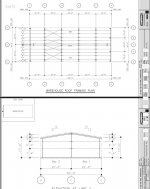
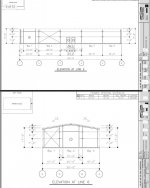
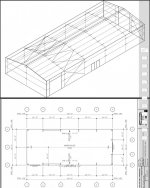
Sketch
225506A4-E649-410D-814A-616077338D06.jpg
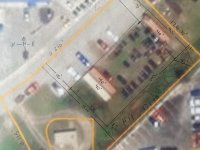
Overhead view of land, shop would be were shipping containers are. End wall entrance would be on left with driveway coming in near circle drive.
76F02160-2101-4552-BFF2-39CB827C47D7.jpg

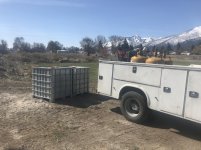
Current situation, totes, oil and gear in weather.
45720FE7-0FA1-4785-847F-A2C84BC17B4A.jpg

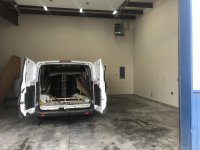
Old shop
681B4EA6-03B2-45AD-A5B5-C6BF81729354.jpg
 
Last edited:
To avoid these ads, REGISTER NOW!

TimbrSS

Well-known member
Joined
Jan 12, 2007
Messages
75
Check the code requirements before you decide on insulation. In my county in NC, a temperature controlled building is required to have R31 roof, R-17 walls, R-10 foundation... All that was 11K on a 50x80 building. (the "energry liner" type package.) There are ways around this, like saying you won't condition it, then adding HVAC after final inspection. I'd think in MN though that you would want to go with a lot more insulation than what you mentioned if you are trying to heat it.

I like the plan of renting half.. that will really help.
 
OP
M

Montucky

Well-known member
Joined
Jan 24, 2021
Messages
97
Location
Montana
Check the code requirements before you decide on insulation. In my county in NC, a temperature controlled building is required to have R31 roof, R-17 walls, R-10 foundation... All that was 11K on a 50x80 building. (the "energry liner" type package.) There are ways around this, like saying you won't condition it, then adding HVAC after final inspection. I'd think in MN though that you would want to go with a lot more insulation than what you mentioned if you are trying to heat it.

I like the plan of renting half.. that will really help.

Thanks for the feedback and it’s very timely. I just got off the phone with one GC and he mentioned that my County may have more stringent requirement in regards to insulation. He mentioned R25 in walls and r 38 ceiling. I’ll keep updating this thread as I get info and learn more. I tried to get a number per square foot and he reluctantly mentioned $60 per sq/ft. I was hoping to be more towards $40. I meet with another outfit Wednesday to discuss in person. They had preliminary mentioned 40-50$ per sq foot. That company is a lot larger and does breweries and really large facilities so I’m interested to hear their take.
 

AviationMan

Member
Joined
Feb 12, 2021
Messages
11
Location
Pacific Northwest
Thanks for the feedback and it’s very timely. I just got off the phone with one GC and he mentioned that my County may have more stringent requirement in regards to insulation. He mentioned R25 in walls and r 38 ceiling. I’ll keep updating this thread as I get info and learn more. I tried to get a number per square foot and he reluctantly mentioned $60 per sq/ft. I was hoping to be more towards $40. I meet with another outfit Wednesday to discuss in person. They had preliminary mentioned 40-50$ per sq foot. That company is a lot larger and does breweries and really large facilities so I’m interested to hear their take.

$60/ft sounds high to me. I was whining about being quoted $70k~ for erection in another thread here last week. I'm a state west of you, building a hangar, with as good as insulation, more expensive door (bi-fold),and a taller structure for less.

As for the size of your building, you can never have enough room, or too many bays. Are you planning on bringing work to your shop? I have a fleet maintenance facility for my large trucks down south, built what I thought was too big of a building and ended up having to build a second building for parts inventory.
 

matt_i

Well-known member
Joined
Mar 14, 2008
Messages
10,725
Location
SE Michigan
It would be worthwhile to plan for parking lot(s). If you ever get into the state where flatbed trucks need to be unloaded in the parking lot via forklifts then that becomes a more pressing issue. The forklifts can rut standard thickness asphalt fairly easily. Plan for "commercial thickness" in the areas you foresee that useage class.

You might want to look at overhangs and gutters on the building. I see you have the "covered roof" but I'm talking about the look that typical wood framed buildings go with after the truss tails pass the outer walls. The metal building mfg should have a kit for that.

I would not place any piping or conduits under the concrete slab and foundation other than the bare necessity for getting fixture stubs to work. Nightmare to deal with later on.
 
Last edited:

metlmunchr

Well-known member
Joined
Sep 10, 2011
Messages
1,278
With 14' high overhead doors you should go with an 18' eave height rather than 16'. The tracks on large doors have a large radius, and in the raised position, the door will be 4" or more above the centerline of the track. On a 16' height, the door will be close enough to the purlins that you don't have room for lights unless you stuff 'em up between the purlins to clear the door in the raised position. One of those things that's easy to overlook until the building is up and then you realize that you've got 260-270 sq ft at each overhead door that can't have any lights hung in the normal manner.

Since one of your doors will be in the end wall, the roof slope will take care of the above problem even with a 14' high door and 16' eave. From a cost standpoint, you might want to look at a 12' high door in the side wall rather than spend the money for 2' more height on the entire building just to accommodate a single 14' door in the side wall. Most any machinery a tenant might want to move into the rental space would be less than 11'6" tall as the lowest low deck trailers have a 24" deck height, and keeping the overall traveling height at less than 13'6" is a common design criteria since permitting overheight loads is a big deal compared to the more common overwidth or overweight loads.

Looks like your sketch is based on 20' bays. Our shop is 60 X 150 with 25' bays. You might check to see if the building you're interested in is available with 25' bays. You could potentially go to a 125' length and the savings from eliminating one rigid frame might offset the extra sheeting, roofing, etc such that you could pick up an extra 250 sq ft for not a lot of additional money. Not sure on that, but something worth investigating.

Since you're going to be storing oil, you need to check with whoever you plan to insure the building with the make sure you use a heating system acceptable to the insurer. We were in the commercial and industrial HVAC business and the crane and rigging business, so about half of our shop was a sheet metal shop and the other half was for maintenance of the cranes and other associated trucks and equipment. Having gas and diesel vehicles in the building as well as things like a parts washer, we were required to use closed combustion heating. We went with Reflecto Ray vacuum type radiant tube heaters for both safety and economical operation. The manufacturer is Combustion Research. We've got 3 of the radiant tube systems, installed in 1990, and have spent about $200 total on maintaining all of them for 30 years. Because radiant heats "things" rather than air, anything more than about 58-60 degrees feels too warm when working in the shop. Personally, I'd never install in-slab radiant in a building meant for commercial use. Too many potential issues with a thousand feet or more of plastic tubing buried in a slab where the use of the building could change over time.

Don't use any exposed wood in the building. We didn't give it any thought and used OSB from the floor up to the first girt line to protect the insulation rather than using steel liner panels made for the purpose. We were fine for a few years, and then an inspector from our insurer showed up one day to check out the building (as they always eventually do for commercial accounts), and we had a choice to either remove all the OSB or have our fire insurance premiums doubled. OTOH, we've got a 1000 sq ft area partitioned off from the rest of the shop, and that's wood framed with fire code sheet rock on both sides and that's okay with the insurer.

Final thought.... Don't waste money on excess concrete thickness. Soil compaction is everything, and a 10" thick slab won't make up for poor compaction. We did our own site prep and compacted everything with a vibratory roller. Our slab is 6" of 4000 psi with 6x6 wire mesh. Our heaviest rig has about 70,000 lbs on the tandem when the counterweight is installed, and it's been in the shop multiple times over the last 30 years with no cracks in the slab. The collective wisdom for loads like that would be foot-thick concrete with about 30 tons of rebar, but it just ain't so. Packing dirt is always cheaper and more effective than excess steel and concrete.

One other thing... Have them price a standing seam roof as an alternate to the standard screw down roof. Nothing worse than trying to track down the source of a leak that's somewhere above a couple hundred sq ft of soaked insulation, and a screw down roof that doesn't eventually leak in multiple places is a rare thing.
 
OP
M

Montucky

Well-known member
Joined
Jan 24, 2021
Messages
97
Location
Montana
With 14' high overhead doors you should go with an 18' eave height rather than 16'. The tracks on large doors have a large radius, and in the raised position, the door will be 4" or more above the centerline of the track. On a 16' height, the door will be close enough to the purlins that you don't have room for lights unless you stuff 'em up between the purlins to clear the door in the raised position. One of those things that's easy to overlook until the building is up and then you realize that you've got 260-270 sq ft at each overhead door that can't have any lights hung in the normal manner.

Since one of your doors will be in the end wall, the roof slope will take care of the above problem even with a 14' high door and 16' eave. From a cost standpoint, you might want to look at a 12' high door in the side wall rather than spend the money for 2' more height on the entire building just to accommodate a single 14' door in the side wall. Most any machinery a tenant might want to move into the rental space would be less than 11'6" tall as the lowest low deck trailers have a 24" deck height, and keeping the overall traveling height at less than 13'6" is a common design criteria since permitting overheight loads is a big deal compared to the more common overwidth or overweight loads.

Looks like your sketch is based on 20' bays. Our shop is 60 X 150 with 25' bays. You might check to see if the building you're interested in is available with 25' bays. You could potentially go to a 125' length and the savings from eliminating one rigid frame might offset the extra sheeting, roofing, etc such that you could pick up an extra 250 sq ft for not a lot of additional money. Not sure on that, but something worth investigating.

Since you're going to be storing oil, you need to check with whoever you plan to insure the building with the make sure you use a heating system acceptable to the insurer. We were in the commercial and industrial HVAC business and the crane and rigging business, so about half of our shop was a sheet metal shop and the other half was for maintenance of the cranes and other associated trucks and equipment. Having gas and diesel vehicles in the building as well as things like a parts washer, we were required to use closed combustion heating. We went with Reflecto Ray vacuum type radiant tube heaters for both safety and economical operation. The manufacturer is Combustion Research. We've got 3 of the radiant tube systems, installed in 1990, and have spent about $200 total on maintaining all of them for 30 years. Because radiant heats "things" rather than air, anything more than about 58-60 degrees feels too warm when working in the shop. Personally, I'd never install in-slab radiant in a building meant for commercial use. Too many potential issues with a thousand feet or more of plastic tubing buried in a slab where the use of the building could change over time.

Don't use any exposed wood in the building. We didn't give it any thought and used OSB from the floor up to the first girt line to protect the insulation rather than using steel liner panels made for the purpose. We were fine for a few years, and then an inspector from our insurer showed up one day to check out the building (as they always eventually do for commercial accounts), and we had a choice to either remove all the OSB or have our fire insurance premiums doubled. OTOH, we've got a 1000 sq ft area partitioned off from the rest of the shop, and that's wood framed with fire code sheet rock on both sides and that's okay with the insurer.

Final thought.... Don't waste money on excess concrete thickness. Soil compaction is everything, and a 10" thick slab won't make up for poor compaction. We did our own site prep and compacted everything with a vibratory roller. Our slab is 6" of 4000 psi with 6x6 wire mesh. Our heaviest rig has about 70,000 lbs on the tandem when the counterweight is installed, and it's been in the shop multiple times over the last 30 years with no cracks in the slab. The collective wisdom for loads like that would be foot-thick concrete with about 30 tons of rebar, but it just ain't so. Packing dirt is always cheaper and more effective than excess steel and concrete.

One other thing... Have them price a standing seam roof as an alternate to the standard screw down roof. Nothing worse than trying to track down the source of a leak that's somewhere above a couple hundred sq ft of soaked insulation, and a screw down roof that doesn't eventually leak in multiple places is a rare thing.

Hello,
Thanks for this great advice. I appreciate it and everyone else that has commented. I had a chance to look at my old shop building yesterday while doing some work there and I was thinking 14’ doors where really tall and not needed once I saw them compared to a 12’ door. Great advice about the heater and roof too. Again thanks.
Sean
 

ishiboo

Well-known member
Joined
Oct 27, 2010
Messages
9,481
Location
Oshkosh, WI
Regarding 16 or 18', I would definitely go 18'. The extra height helps for lighting, but to me most importantly you can divide an 18' space into two 8' floors... which is great when you decide to have an office with overhead storage, bathroom, etc. in the future... and the price to do it is usually very low.
 

BillK

Well-known member
Joined
Aug 24, 2006
Messages
9,313
Location
Beautiful Southern Maryland
I would occupy half the building and I’d have a wall dividing the shop into two 3000 sq ft spaces. I would rent the other half of the shop.

Cant help you with the rest of the plan but the rental part is absolutely the best thing you can do. A friend of mine did the same thing about 30 years ago and he has always said from day one his tenants basically paid for the entire building :) :)
 

dutchgray

Well-known member
Joined
Sep 28, 2014
Messages
6,465
Location
Dorset. England.
Go for the extra height, its relatively cheap to have the extra but alows for 2 storey offices or a storage mezzanine.
Go plenty wide with the doors, makes life so much easier and the door posts get hit less often. We put a yard drain along the length of the door just inside where it shuts, a nice strong cast iron one, its nice to be able push any rain that gets in an open door or water from a vehicle without having to open the door or slope the floor to a conventional floor drain.
Put steel posts, brightly painted on the outer corners and by the big doors openings, its when, not if someone will drive into one and you would rather they hit a solid post than your nice steel sheeting.
Put insulation under the slab, we do 2" foil backed solid foam, it makes a big difference to the heat loss and you can't do it afterwards like with walls or roof.
We use precast concrete panels clamped to the stanchions, sat on the steel base of the stanchions, to block the gap between the sheeting and the ground and also shutter for the concrete floor, this negates having to dig any wall footings for block or casting a stem wall and also means there is no wood needed for shuttering. The only footings are the cubes under the stanchions. This also makes it relatively easy to add an underground service somewhere as you can dig under the edge pretty easily and just drill the floor.
I would probably keep the waste oil outside in a separate shed or shipping container for insurance reasons.
Put in a bigger electrical service than you think you need, or at least oversize the cable. I have had to add a lot of extra electrical supplies in commercial buildings over the years.
You pretty much can't have too many lights, they don't need to all be on one switch, this also includes outside lighting.
Do all internal work in the building to regulation, if you don't you will be caught out eventually and have to do it properly a second time.
Concrete makes a better outside yard surface than asphalt if you have forklifts running on it, but ground prep must be excellent and don't forget the drainage.
 
OP
M

Montucky

Well-known member
Joined
Jan 24, 2021
Messages
97
Location
Montana
Go for the extra height, its relatively cheap to have the extra but alows for 2 storey offices or a storage mezzanine......
Good stuff thanks I appreciate your input.
Hello,

Good news in general I met with the other GC I was hoping to meet with and he said they could most likely get towards that 40 per sqft number that I’d like to see. This would include all the engineering, site prep, foundation and structure with insulation. My electrical and plumbing is minimal but I think that may be additional cost. I’ll know more when I get some info in writing in a few weeks. This GC was really organized and helpful.

He also mentioned that he would be using a standing seem roof and that they don’t do screw roofs due to expansion and contraction causing leaks.

Notable of mention was they do soil testing to determine type of engineering required for building foundation.

He also mentioned a height of I believe 18/20’ with 14’ doors. This will make the property more desirable for future renters and owners. Allowing a mezzanine with head space etc. or tall racking. Also I am going to have a 5 ‘ overhang on one end wall, the one with garage door, to allow outside storage of items.

It was a lot of info to absorb. In the end I need to make it affordable and meet my needs which is a balancing act.

In terms of heat and insulation he had some good ideas as well

Thanks again for the advice everybody let’s hope that I can make this thing happen.
 
To avoid these ads, REGISTER NOW!
OP
M

Montucky

Well-known member
Joined
Jan 24, 2021
Messages
97
Location
Montana
I visited a site for the General contractor I hope to have put up a building today. I snapped this photo of the building, not mine but similar type. Just thought I’d share. I’m expecting a quote in early March.

F715A631-2B46-415E-9CED-40A0ACE518A8.jpg

1041EBB5-7B9E-454F-B168-04796AD1C34F.jpg
 
OP
M

Montucky

Well-known member
Joined
Jan 24, 2021
Messages
97
Location
Montana
I really like those fixed pitch roof designs, especially for water collection...

Agreed. My only concern would be enough interior height for mezzanine or future build out. I’m going to talk to builder about this. So far of the three I’ve talked to one did suggest this type of design.
 
OP
M

Montucky

Well-known member
Joined
Jan 24, 2021
Messages
97
Location
Montana
Here’s a few pics I received to review from one builder. This is a Nucor building.
1153FD55-2B36-45B2-9C3F-59A9F403E5E1.jpg

33969C6D-F877-4BC3-8DEE-A7D7EA269336.jpg

BDFE4CA4-E598-49B9-B37E-BC16D2FE372B.jpg

EDD1D72D-A77F-4926-8B0B-29FF7876FCF1.jpg

Changes so far are 18’ not 17’
Soffits of 2’
Overhang on end wall with garage of 5’
 
Last edited:
OP
M

Montucky

Well-known member
Joined
Jan 24, 2021
Messages
97
Location
Montana
I talked to a client of mine that GC is own build and he seems to think I’m not going to be able to stay in my budget of 40 sq ft or 300000 max. He also has a ton of finishes that I won’t have. A portion of his structure his his home.

He gave me the name of all the contractors he used etc. I’ve reached out to them. I ponder my ability to GC this. My father was a GC for residential when I was a teenager but that by no means makes me an expert.

I don’t want to be in a stepping over a dollar to save a dime scenario. Two reasons I consider it are my job affords me some flexibility, it’s not 9 to 5 punch clock situation. Also I’ve got my pops to lean on for advice as he was a GC, now retired and lives in a different state.

Any advice on this is appreciated.
 
OP
M

Montucky

Well-known member
Joined
Jan 24, 2021
Messages
97
Location
Montana
I have hard numbers, they seem a little high. I’m ditching the floor drains and the sand oil separator and asking him to re do the numbers without those items. I’m not planning on having a lot of wet dripping vehicles in the space. I may keep the floor drains but no sand oil separator.

604DB0C9-2F63-4750-947C-1169A7A15378.jpg
 
OP
M

Montucky

Well-known member
Joined
Jan 24, 2021
Messages
97
Location
Montana
Quote on a pole barn I started another thread but I decided to bring it back to this thread to keep it all on one thread.

01974137-9AEC-41DB-8076-67B95ADF59CB.jpg

Also I had a friend construct a pole barn shop for his business same size as I want to build that he outfitted with kitchenette and bedroom and tons of finishes and he was at @306000

Here was part of his basic budget of all of it:
Building 86000
Prep 10000
Concrete 28000
Plumbing 13000
25000 radiant
14000 insulation r50-30
26000 electric
8000 floor insulation
8000 misc

This is looking more like the way for me to go. Pole barn vs Nucor steel building.
 
OP
M

Montucky

Well-known member
Joined
Jan 24, 2021
Messages
97
Location
Montana
I got one more quote from a pole barn builder. So far that’s two quotes from a pole barn builder and one from a steel span structure.

2F85EC82-F6C4-4618-A4D0-C801608D503B.jpg
 
OP
M

Montucky

Well-known member
Joined
Jan 24, 2021
Messages
97
Location
Montana
As luck would have it one of my clients has the exact building I like. It’s 50x120 mono slope it looks to be 23’ in front and 18’ in back. I got a tour of it and it’s really nice.

6E0A1FD1-04D9-402C-982C-11915558AF10.jpg
 

OldNeons

Well-known member
Joined
Dec 27, 2011
Messages
462
Location
Midwest
Looks like you have a nice building planned out. If it is available I would seriously consider installing 3 phase electrical service. Many potential tenants may want it for equipment. Also if there is any way you can swing it, a steel building is much nicer than pole barn in my experience. Both provide room and a roof over your head, but the quality is not the same.....
 

imjustdave

Well-known member
Joined
Apr 9, 2014
Messages
204
Location
Sumner WA
Not sure about your city state but I know in WA state building something that size and commercial I would expect a big Oil water separator in the parking lot, forced planting of trees, handicap parking spaces, storm water retention system management, sidewalks. not trying to rain on your parade just make sure before you get too deep into this no surprises from them.

75k for concrete.. seems like a lot.

3 phase for sure if you can.
Multiple meters if you can, I would considered 3 if you can plan for the possibility of 2 tenants next door. and or at least the option to add it in latter.
If your planning on NNN then I'd consider not even doing much past the electric panel let renter decide on what to run for power.
Don't discount outdoor parking in the ability to rent and make $ as well.

As on off topic Q ... what exactly do you do? I get the idea your doing oil changes on equipment but not entirely positive.
 
To avoid these ads, REGISTER NOW!
Top Bottom