To avoid these ads, REGISTER NOW!

A/C disconnect

Status
Not open for further replies.

wyliesdiesels

Well-known member
Joined
Aug 14, 2012
Messages
19,983
Location
Modesto, CA
It's still not done. Unless you happen to trust the only protective device left in the circuit...and no one I know does.

You assume what I am talking about is NOT following the unit data plate requirements. In fact I am speaking of holding to them in the most protective manner possible.

So far, not one person commenting from the minimum NEC requirements has spoken of wire distance and the associated resistance.

Do you own a copy of NFPA 70 aKa the NEC?

Ill wait for a response then post up the specific codes you obviously have no clue about.
 
Last edited:
To avoid these ads, REGISTER NOW!

bigb56

Well-known member
Joined
Jan 27, 2018
Messages
169
Location
Tucson, Arizona
Like Bert says you are entitled to do it however you want so long as it meets minimum code. We exceed minimum code in many installations too, nothing wrong with that. Just saying when it is done to minimum code it is still a compliant installation. One problem when bidding very large jobs is that you will be bidding against others who are bidding for minimum standards, making your bid higher or your profit lower when you exceed minimum standards. You may be able to sell your work based on this but most people only care about the bottom line, especially commercial/industrial.
 

brewchief

Well-known member
Joined
Sep 20, 2008
Messages
2,370
Location
Michigan
Its summer...temps rise to 110 F...the filter is plugged up, the condenser coil is blocked...liquid refrigerant is slugging the compressor and the fuses blow. 110 ambient, 380 head pressure, 140 suction pressure, one leg of the compressor is drawing 18.6 the other is drawing 20 ...They call out a repairman and he notices the blown fuses sees a 50 amp breaker and installs 50 amp fuses at the unit - the nomenclature is no longer readable due to the sun and age, the unit still won't start because the high pressure switch has failed in the open position. He simply wires it out and the unit starts...now that undersize wire is subject to higher amperage that it is designed to carry.

This is why in this trade you never undersize the wire and hope a units overload protection never fails. That internal overload may trip and trip and trip...but in the process it leaves a dangerous situation before it does. I've seen bars in panels melt - seen breakers completely blown up. At least the wire was not burning in the structure at a pinch or a junction, because they were sized larger than the maximum amp draw.

If using the data plate posted earlier I don't see a problem, 20 amps per leg on a wire rated for 30, not a problem. I've seen burned up breakers and contactors and such as well, it's always a bad connection that makes the heat not an undersized wire.


How long would a #10 nm-b last with 50 amps running through it? I bet it would get hot but not melt down for a very long time.

I've seen tons of units wired with what some would consider undersized wire and have yet to see one with a burnt wire feeding it.

I also see a LOT of units wired with 6-2 SEU cable(aluminum) and have seen plenty of disconnects with heat damage due to poor connections.
 

Bert_

Well-known member
Joined
Dec 24, 2016
Messages
9,698
Location
NW Iowa
It's still not done. Unless you happen to trust the only protective device left in the circuit...and no one I know does.

You assume what I am talking about is NOT following the unit data plate requirements. In fact I am speaking of holding to them in the most protective manner possible.

So far, not one person commenting from the minimum NEC requirements has spoken of wire distance and the associated resistance.

Fact is the NEC and the nameplate CLEARLY allow it.

If you think it is unsafe to allow such an installation and you have proof to back it up then feel free to write a code change proposal.

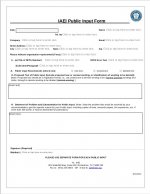
Here's the form, I'll be looking for those changes in the 2020 NEC. Until then I'll stick to the current rules.
 

Attachments

  • NEC changes.jpg
    NEC changes.jpg
    77.3 KB · Views: 36

Trey T

Well-known member
Joined
Aug 3, 2011
Messages
3,749
Location
Houston, TX
Do you own a copy of NFPA 70 ala the NEC?

Ill wait for a response then post up the specific codes you obviously have no clue about.
geez, stop citing codes. Help people understand of the intents of the codes, not just to point at it - it doesn't help anyone!!!

It's an online conversation not technical support service.

You don't see other people cite other codes that's regularly applied in home building. Sure it's good to reference code but don't throw a sledge hammer at ppl.
 
Last edited:

Trey T

Well-known member
Joined
Aug 3, 2011
Messages
3,749
Location
Houston, TX
My point was that .... mind as well to tell the other guy to STFU and get out of here --- (trying to make a point here). It's an online forum, where we exchange ideas not to be policed or enforced. Again, it's good to reference various codes as a secondary measure, but explaining the INTENT of the CODE is vital because it logs the MEANINGS into the forum and people don't have to ask about it so many times in the future. Unless y'all believe vast majority of ppl don't have the capacity to learn electricity.
 

tapered-pin

Well-known member
Joined
Sep 12, 2017
Messages
277
Location
Alpharetta, GA
Case in point.. A permitted residential renovation in the state of GA requires that any modified circuit or added circuit be ARC-fault protected. OK. So, you've got a home with 20 circuits and only 1-2 of them are ARC-Fault protected, congratulations.

Reality is that the wiring in the home MOST susceptible to an arc fault is the unchanged (or possibly DIY modified), original wiring.

code has the best of intentions..
reality is that it doesn't always address the actual problem it purports to solve.
 

tapered-pin

Well-known member
Joined
Sep 12, 2017
Messages
277
Location
Alpharetta, GA
An arc fault receptacle at the beginning of the circuit would remedy that situation. Congratulations, you're welcome
https://a89b8e4143ca50438f09-7c1706...iginal/leviton-aftr1t-brochure.pdf?1442954092

so would an arc fault breaker, but you're missing the point..
most homes dont burn down due to arc faults anyway (less than 7% of home fires are caused by faulty wiring)
so the code makes you upgrade a breaker or an outlet and it's not going to even come close to stopping 90% of the house fires every year, WHICH IS THE ONLY BENEFIT OF HAVING AN AFCI in the first place.. (over a gfci)

so thank you NEC for making my renovation more expensive because 7% of homes that actually burn every year (.02% of homes burn every year, btw, almost none are a total loss) MIGHT be protected by arc-fault protection.
 
Last edited:

mm08822

Well-known member
Joined
Jan 13, 2012
Messages
5,854
Location
NJ
Case in point.. A permitted residential renovation in the state of GA requires that any modified circuit or added circuit be ARC-fault protected.
True for most states – depending upon which code cycle enforced. Or it could require GFCI protection – depending upon the purpose and whether included at the original build date.

OK. So, you've got a home with 20 circuits and only 1-2 of them are ARC-Fault protected, congratulations.
Again depends somewhat upon age but more likely condition – i.e. subject to physical abuse, improper ocp levels, etc. Possibly DIY modified, but more likely due to the connected loads and portable connection hardware – cords, plugs…..
Reality is that the wiring in the home MOST susceptible to an arc fault is the unchanged (or possibly DIY modified), original wiring.

code has the best of intentions..
NEC is revised every 3 years based upon incidents (severity and frequency) presented to the Code Panels and the progression of prior topics executed under a phased-in approach.

reality is that it doesn't always address the actual problem it purports to solve.
It is reactive and existing installations that were compliant to a previous code are grandfathered under it. New builds see the changes as soon as enforced. We are not in a Police-state where every 3 years we get disconnected until re-certified that the structure is up to current code. Think of that underworld. mmmm!

so would an arc fault breaker, but you're missing the point..
most homes dont burn down due to arc faults anyway (less than 7% of home fires are caused by faulty wiring)
So for the other 94+% of house fires how many are due to just plain stupid people tricks?
NEC can only handle what is in its scope.
Maybe the IBC should eliminate wood and force everyone to build with concrete.
We could all wear designer PPE too.
Should we eliminate NG and LPG b/c a few houses launch to the moon every year?


so the code makes you upgrade a breaker or an outlet and it's not going to even come close to stopping 90% of the house fires every year, WHICH IS THE ONLY BENEFIT OF HAVING AN AFCI in the first place.. (over a gfci)
If, only 7% of fires are due to electrical origin then how would you expect ever coming close to 90% with any electrical change?

so thank you NEC for making my renovation more expensive because 7% of homes that actually burn every year (.02% of homes burn every year, btw, almost none are a total loss) MIGHT be protected by arc-fault protection.

Its not all about you, but protecting the next owner too. Or the guy in the next house.

Maybe a better use of time would be chasing the other contributors of home fires and remediating them instead of crying over an incremental $40.
 

bonneyman

Well-known member
Joined
Apr 22, 2010
Messages
8,757
Location
Desert SW
in my years of doing HVAC I've found many older disconnects that were just fine. Maybe one terminal or blade/switch was burnt. Seemed a shame to yank the whole thing off the wall and chuck it, as well as some of those brick walls the things were anchored to were brittle as hell.
So I started saving old disconnect parts for the 2 or 3 most commonly run across styles, and just replaced the one bad part when I found it. Saved a whole lot of time and aggravation....and customer money, too.
 

mm08822

Well-known member
Joined
Jan 13, 2012
Messages
5,854
Location
NJ
geez, stop citing codes. Help people understand of the intents of the codes, not just to point at it - it doesn't help anyone!!!

It's an online conversation not technical support service.

You don't see other people cite other codes that's regularly applied in home building. Sure it's good to reference code but don't throw a sledge hammer at ppl.

It was more than a conversation. A sledge hammer was needed to stop the pontification of miss-information. Many incorrect statements about topics covered in the code.

My point was that .... mind as well to tell the other guy to STFU and get out of here --- (trying to make a point here). It's an online forum, where we exchange ideas not to be policed or enforced. Again, it's good to reference various codes as a secondary measure, but explaining the INTENT of the CODE is vital because it logs the MEANINGS into the forum and people don't have to ask about it so many times in the future. Unless y'all believe vast majority of ppl don't have the capacity to learn electricity.

Exchanging ideas is one thing, continually spewing bs about claiming what is or is not code is wrong.

There are many ways to accomplish a safe and reliable wiring method for electrical equipment – a/c or otherwise. Different doesn’t make it wrong either. However, those methods must meet the minimum code requirements or exceed them if the end-user desires.
When people are making incorrect statements about what is permitted by code or what the code minimums are, it is spreading false information. So to nip this BS in the bud, people tend to pull out the codebook to put a level of credibility and basis to the real requirements. More often than not, posters do try to explain the rationale behind the code article. Sometimes people don’t want to or aren't capable of listening.
 

coljar

Well-known member
Joined
Sep 26, 2010
Messages
6,243
Location
Belpre, Ohio
I like the pull out and I'll tell you why and why I keep it locked up. I have a factory cover to keep the leaves out during the seasons I'm not using it. One time several years ago, we were out of town and it was a unseasonably March day and the dog setter decided to turn on the AC. It ran for 3 days and burned up the compressor.
 
OP
M

MikeF2316

Well-known member
Joined
Dec 29, 2012
Messages
9,605
Location
Thornhill, ON
I like the pull out and I'll tell you why and why I keep it locked up. I have a factory cover to keep the leaves out during the seasons I'm not using it. One time several years ago, we were out of town and it was a unseasonably March day and the dog setter decided to turn on the AC. It ran for 3 days and burned up the compressor.

I can see myself taking the pull out in the fall and putting in such a safe place that I won't find it in the spring... :lol_hitti
 

alfredeneuman

Well-known member
Joined
Mar 3, 2011
Messages
4,580
Location
Fullerton, CA
Pullouts, when the removable portion is removed and spun 180°, turns the circuit off.
You can put it right back in the body. There is even an imprint in the plastic to indicate whether it's on or off
It can be left that way indefinitely, so no misplacing it :)
 
Last edited:

eddieK

Well-known member
Joined
Mar 2, 2017
Messages
695
Location
Nampa Idaho
If using the data plate posted earlier I don't see a problem, 20 amps per leg on a wire rated for 30, not a problem. I've seen burned up breakers and contactors and such as well, it's always a bad connection that makes the heat not an undersized wire.


How long would a #10 nm-b last with 50 amps running through it? I bet it would get hot but not melt down for a very long time.

I've seen tons of units wired with what some would consider undersized wire and have yet to see one with a burnt wire feeding it.

I also see a LOT of units wired with 6-2 SEU cable(aluminum) and have seen plenty of disconnects with heat damage due to poor connections.

It is not the connections that always "fail"...it is the connections where the most heat builds up...because the unit is over amping. The problem stems from undersizing the wire in relation to the breaker or fuse protection. The weakest "link" should be the protection device, not the wire buried in walls etc...
 
Last edited:

eddieK

Well-known member
Joined
Mar 2, 2017
Messages
695
Location
Nampa Idaho
The Codes are the rules governing electrical work.
Some people that should know better give advice that's absolutely horrible.
Only then are Code Numbers brought up :)

Horrible advise -

Undersizing wire to save money. Counting on the units overload protection instead of safe wiring practices.
 

Norcal

Well-known member
Joined
Mar 16, 2008
Messages
13,752
Horrible advise -

Undersizing wire to save money. Counting on the units overload protection instead of safe wiring practices.

The NEC allows it, it's been tested and if it was the horror you claim it is, there would be large numbers of incidents as a result, there is no problem. :shocking:
 
Last edited:

eddieK

Well-known member
Joined
Mar 2, 2017
Messages
695
Location
Nampa Idaho
The NEC allows it, it's been tested and if it was the horror you claim it is, there would be large numbers of incidents as a result, there is no problem. :shocking:

There would be a number of incidents...I have NEVER seen in 40 years of working on A/C's ANY panels with a 50 amp breaker protecting #10 wire, because it does not. 50 amp breakers protect #6 wire. It is that simple.

The purpose of circuit breakers is to protect the wiring in the house. LRA is NOT what you size breakers and wire for, RLA is.
 
To avoid these ads, REGISTER NOW!

alfredeneuman

Well-known member
Joined
Mar 3, 2011
Messages
4,580
Location
Fullerton, CA
The term FLA-Full Load Amps was used up until 1976. (Before you got in the Trade)
By that time I just looked for the number itself, and didn't really notice the change from F to L . :)
 

Bert_

Well-known member
Joined
Dec 24, 2016
Messages
9,698
Location
NW Iowa
There would be a number of incidents...I have NEVER seen in 40 years of working on A/C's ANY panels with a 50 amp breaker protecting #10 wire, because it does not. 50 amp breakers protect #6 wire. It is that simple.

The purpose of circuit breakers is to protect the wiring in the house. LRA is NOT what you size breakers and wire for, RLA is.

Maybe it's not popular in your corner of the world. I've personally wired many units with #12 wire on a 30 amp breaker. Last year there was one that got #8 nm and a 50A, could have used #10 but didn't have all the specs when the wire got put in. The only reason it isn't popular in some area's is a complete lack of understanding of how motor circuits work.

Do you really think that this hasn't been studied in depth? If any of that testing showed it was unsafe it wouldn't be allowed. Generally the NEC is pretty conservative...

How much testing have you done? Or is your opinion just based on guesswork? Please back up your statement, telling us you've done it one way for 40 years isn't really the hard facts I was hoping for.
 

eddieK

Well-known member
Joined
Mar 2, 2017
Messages
695
Location
Nampa Idaho
The term FLA-Full Load Amps was used up until 1976. (Before you got in the Trade)
By that time I just looked for the number itself, and didn't really notice the change from F to L . :)

I always assumed full load amp and running load amp are interchangeable. I've seen both quite often over the years. In fact there's still a 1968 system(oldest I can think of right now) in operation I service regularly.

FLA Full load amps
RLA running load amps
LRA Locked rotor amps
 
Last edited:

eddieK

Well-known member
Joined
Mar 2, 2017
Messages
695
Location
Nampa Idaho
Absolutely covered in depth.

A number 10 wire is PROTECTED by a 30 amp breaker MAX. A 40 amp breaker (or higher)will not protect the number 10 wire from amps exceeding 30.

Back to the basics - breakers are not designed to protect motors etc...they are designed to protect the wiring. You know, the portions buried you cannot see.

I am telling you what I have seen and experienced in the field for 40 + years, what every electrician I've ever worked with has ever stated about breakers and wires (breakers are sized to protect wiring), what manufacturers demand and what makes the most sense. Unless a fire in your wall seems okay because...gee, you surely protected the motor okay.
 
Last edited:

Norcal

Well-known member
Joined
Mar 16, 2008
Messages
13,752
Absolutely covered in depth.

A number 10 wire is PROTECTED by a 30 amp breaker MAX. A 40 amp breaker (or higher)will not protect the number 10 wire from amps exceeding 30.

Back to the basics - breakers are not designed to protect motors etc...they are designed to protect the wiring. You know, the portions buried you cannot see.

I am telling you what I have seen and experienced in the field for 40 + years, what every electrician I've ever worked with has ever stated about breakers and wires (breakers are sized to protect wiring), what manufacturers demand and what makes the most sense. Unless a fire in your wall seems okay because...gee, you surely protected the motor okay.

You need to open your code book if you even have one, & quit quoting from the Urban Legend Code. If you wish to spend more then code requires that is fine, but sizing to the minimum ampacity & maximum overcurrent protection allowed by the label on the A/C equipment is allowed by code & quite safe. Neither way is wrong, I used to freak out when I saw it until it was explained properly, but motors, A/C equipment, get to operate under different rules then for what is kosher for branch circuits, and as long as it's not NM cable, Table 310.15(B)(16) can be used at listed ampacities, which means 14AWG is 20A, 12 AWG is 25A, & 10AWG is 35A, 430.6, 440.6, give permission to do so.
 

MattT

Well-known member
Joined
Feb 20, 2010
Messages
3,201
The term FLA-Full Load Amps was used up until 1976. (Before you got in the Trade)
By that time I just looked for the number itself, and didn't really notice the change from F to L . :)

Motor FLA is still used for motors. RLA appears to be a HVAC only thing which is used for motor and pump or fan assemblies. I'm guessing it's the normal current draw of the assembly which is probably less than the FLA of the motor.
 

alfredeneuman

Well-known member
Joined
Mar 3, 2011
Messages
4,580
Location
Fullerton, CA
If you want to change the Code, right now is the time.
Proposals for amendments to the 2020 NEC are being accepted. You'll have to provide substantiation (more than "That's the way I've always done it") for the proposed changes.
(the wiring for ACs have been around for 50+ yrs, and basically unchanged)
We'll be waiting for the results.
 
Last edited:

Bert_

Well-known member
Joined
Dec 24, 2016
Messages
9,698
Location
NW Iowa
If you want to change the Code, right now is the time.
Applications for changes to the 2020 NEC are being accepted. You'll have to provide substantiation (more than "That's the way I've always done it") for the proposed changes.
(the wiring for ACs have been around for 50+ yrs, and basically unchanged)
We'll be waiting for the results.

That's what I said, I even linked a form back in post #44.

Nobody said they filled it out though, guess they aren't to confident...
 

mm08822

Well-known member
Joined
Jan 13, 2012
Messages
5,854
Location
NJ
If you want to change the Code, right now is the time.
Proposals for amendments to the 2020 NEC are being accepted. You'll have to provide substantiation (more than "That's the way I've always done it") for the proposed changes.
(the wiring for ACs have been around for 50+ yrs, and basically unchanged)
We'll be waiting for the results.

That's what I said, I even linked a form back in post #44.

Nobody said they filled it out though, guess they aren't to confident...

No worries. NFPA has stopped taking input for change proposals to the 2020 Edition back in Sept '17. Eddie gets another 2 years to think about his story (and gather some verifiable facts to support it).

FYI....submission deadline is ~Sept 17, 2020 for the 2023 NFPA 70 edition. Put some reminders in your calendar.
 

mm08822

Well-known member
Joined
Jan 13, 2012
Messages
5,854
Location
NJ
Motor FLA is still used for motors. RLA appears to be a HVAC only thing which is used for motor and pump or fan assemblies. I'm guessing it's the normal current draw of the assembly which is probably less than the FLA of the motor.

I always assumed full load amp and running load amp are interchangeable. I've seen both quite often over the years. In fact there's still a 1968 system(oldest I can think of right now) in operation I service regularly.

FLA Full load amps
RLA running load amps
LRA Locked rotor amps


FLA is the nameplate amperage rating of the motor when loaded to its designed horsepower
RLA = RATED Load Amps not RUNNING load amps
Rated Load Amps is the value that the internal protective devices of the compressor motor will trip at.

It is a derived value from operating the specific compressor system over its range of operating parameters. Mfrs. determine this value after running comps under a variety of different operating conditions and set the value to meet a UL requirement. Once the compressor maximum continuous amps (MCA) is determined, UL requires the mfr. to calculate the compressor RLA using this formula: MCA / 1.56 = RLA.
The unit has an overall RLA that equals 125% of largest motor RLA + 100% misc loads– fans, etc.

The min ckt ampacity is calculated:
Min ckt amps = 125% of RLA of largest motor + 100% of other misc loads.

Max OCP is set at 175% of RLA of largest motor +100% of other misc loads. Can go up to 225% if tripping occurs at 175%.

This is very close to NFPA reqs for 125% of largest motor FLA’s + 100% of other simultaneous loads, etc. except the values are adapted to the system in operation vs. the prime mover ratings.)
 

eddieK

Well-known member
Joined
Mar 2, 2017
Messages
695
Location
Nampa Idaho
You need to open your code book if you even have one, & quit quoting from the Urban Legend Code. If you wish to spend more then code requires that is fine, but sizing to the minimum ampacity & maximum overcurrent protection allowed by the label on the A/C equipment is allowed by code & quite safe. Neither way is wrong, I used to freak out when I saw it until it was explained properly, but motors, A/C equipment, get to operate under different rules then for what is kosher for branch circuits, and as long as it's not NM cable, Table 310.15(B)(16) can be used at listed ampacities, which means 14AWG is 20A, 12 AWG is 25A, & 10AWG is 35A, 430.6, 440.6, give permission to do so.

Not safe - no matter how many times you say it is.

Breakers protect the wire and #10 rates to 30 amps, as standard industry practice. Next you'll be saying that 220 V 30 amp circuits for A/C's shouldn't be home runs, when practical.

Thank you for confirming exactly what I have stated...Look at what you have listed for #10 copper "10AWG is 35A" ...now tell me how common 35 amp 220 breakers are? They fall under special order. Nor will you EVER see 10AWG protected by a 50 amp breaker like was stated earlier in this thread.

You have solidly confirmed what I have been stating...I thank you
 
Last edited:

eddieK

Well-known member
Joined
Mar 2, 2017
Messages
695
Location
Nampa Idaho
If you want to change the Code, right now is the time.
Proposals for amendments to the 2020 NEC are being accepted. You'll have to provide substantiation (more than "That's the way I've always done it") for the proposed changes.
(the wiring for ACs have been around for 50+ yrs, and basically unchanged)
We'll be waiting for the results.

Funny. I've never said "that's the way I've always done it"

I have emphatically stated that this is the acceptable practice, is manufacturer recommended and is the safest...and that breakers are designed to protect wiring in homes, not motors.

Many of you seem much more concerned about installing the cheapest circuit you can, not the safest.
 
Last edited:

eddieK

Well-known member
Joined
Mar 2, 2017
Messages
695
Location
Nampa Idaho
FLA is the nameplate amperage rating of the motor when loaded to its designed horsepower
RLA = RATED Load Amps not RUNNING load amps
Rated Load Amps is the value that the internal protective devices of the compressor motor will trip at.

It is a derived value from operating the specific compressor system over its range of operating parameters. Mfrs. determine this value after running comps under a variety of different operating conditions and set the value to meet a UL requirement. Once the compressor maximum continuous amps (MCA) is determined, UL requires the mfr. to calculate the compressor RLA using this formula: MCA / 1.56 = RLA.
The unit has an overall RLA that equals 125% of largest motor RLA + 100% misc loads– fans, etc.

The min ckt ampacity is calculated:
Min ckt amps = 125% of RLA of largest motor + 100% of other misc loads.

Max OCP is set at 175% of RLA of largest motor +100% of other misc loads. Can go up to 225% if tripping occurs at 175%.

This is very close to NFPA reqs for 125% of largest motor FLA’s + 100% of other simultaneous loads, etc. except the values are adapted to the system in operation vs. the prime mover ratings.)

From above :

after running comps under a variety of different operating conditions and set the value to meet a UL requirement.

Semantics now...many people in the trade, that work with and on these circuits, verses those that study it and write about it...use the term running load because it is the load when the system is RUNNING at the highest operating pressures and temps.

Same - same
 

Bert_

Well-known member
Joined
Dec 24, 2016
Messages
9,698
Location
NW Iowa
Funny. I've never said "that's the way I've always done it"

You haven't given us any proof that there have been problems caused by the wire being sized at minimum either... Show me pictures of damage, wire temp readings, anything at all and we might listen...

I have emphatically stated that this is the acceptable practice, is manufacturer recommended and is the safest...and that breakers are designed to protect wiring in homes, not motors.

Many of you seem much more concerned about installing the cheapest circuit you can, not the safest.

What you are preaching is AN acceptable practice, there are others.
What the manufacturer recommends is clearly spelled out on the nameplate. It does not back up your logic. Safest would be to not install the A/C at all, no worries then. Better yet don't install any electric or gas in your house.

I am concerned with installing the most practical circuit I can. Many times I have installed #10 on for a unit that only pulls 15A but calls for a 30A breaker, often times because nobody knows the specs for the unit until it's sitting there. I have also ran 10's for a unit that called for a 50A breaker. What I won't do is support your BS logic.
 
Last edited:

Norcal

Well-known member
Joined
Mar 16, 2008
Messages
13,752
Funny. I've never said "that's the way I've always done it"

I have emphatically stated that this is the acceptable practice, is manufacturer recommended and is the safest...and that breakers are designed to protect wiring in homes, not motors.

Many of you seem much more concerned about installing the cheapest circuit you can, not the safest.


As soon as you posted "220 volts" that tells me your not a professional electrician, it is a DIY term & no California PoCo supplies 220V.

You can argue all you want but the NEC allows the practice and it is very safe. OPEN YOUR CODEBOOK & learn.
 

mm08822

Well-known member
Joined
Jan 13, 2012
Messages
5,854
Location
NJ
From above :


Semantics now...many people in the trade, that work with and on these circuits, verses those that study it and write about it...use the term running load because it is the load when the system is RUNNING at the highest operating pressures and temps.

Same - same

This was another learning opportunity for you – but you let the bus leave without you on it.

It is not the same and it is not it the load when the system is RUNNING at the highest operating pressures and temps. (Read it again)

The entire point of that explanation was to show how the various load values, min ckt size and max ocp that appear on the nameplate come about. It even provides the trip value of the o/l device for the compressor. Think you might ever need that info??? Imagine, right there on the nameplate.

You can’t learn anything new in 40 years doing it the same way, every day, week, year and you keep a closed mind.
 

6768rogues

Banned
Joined
Nov 28, 2007
Messages
4,524
Location
Western NY
I bought a few AC systems in the last couple of years and they always included a new disconnect. Let them do it, you will probably not get any money off for having a new one when they get there.
 

wyliesdiesels

Well-known member
Joined
Aug 14, 2012
Messages
19,983
Location
Modesto, CA
Wow, this thread has gone beyond assured......

Absolutely covered in depth.

A number 10 wire is PROTECTED by a 30 amp breaker MAX. A 40 amp breaker (or higher)will not protect the number 10 wire from amps exceeding 30.

Back to the basics - breakers are not designed to protect motors etc...they are designed to protect the wiring. You know, the portions buried you cannot see.

I am telling you what I have seen and experienced in the field for 40 + years, what every electrician I've ever worked with has ever stated about breakers and wires (breakers are sized to protect wiring), what manufacturers demand and what makes the most sense. Unless a fire in your wall seems okay because...gee, you surely protected the motor okay.

What do manufacturers demand?

Apparently youve never read a nameplate on an A/C. Manufacturers call for what is code permissible.

Many units call for #10 on 50a breaker. If you want to run bigger wire, nothing stopping you except maybe customer budget.

Do you upsize the ground/EGC when you upsize the ungrounded conductors?

Funny. I've never said "that's the way I've always done it"

I have emphatically stated that this is the acceptable practice, is manufacturer recommended and is the safest...and that breakers are designed to protect wiring in homes, not motors.

Many of you seem much more concerned about installing the cheapest circuit you can, not the safest.

Manufacturer recommended?

Please show me a letter from a manufacturer recommending anything but what is on the nameplate....

And what youre saying here is that the code permits unsafe wiring methods?

There would be a number of incidents...I have NEVER seen in 40 years of working on A/C's ANY panels with a 50 amp breaker protecting #10 wire, because it does not. 50 amp breakers protect #6 wire. It is that simple.

The purpose of circuit breakers is to protect the wiring in the house. LRA is NOT what you size breakers and wire for, RLA is.

If you think #6 is the smallest wire that is rated for 50a, its very obvious you dont even know your ampacities. Time for you to learn the basics. #8 THWN is rated for 50a as well....

Heck, you dont even need a pysical copy of the code book. Go to NFPAs site and register for a free account. Then open a copy of NFPA 70 and go to Table 310.15(B)(16)....

And the manufacturers have already sized the wire for you. Ever read the MCA and MOCP values on a nameplate? Apparently not...
 
Last edited:

mm08822

Well-known member
Joined
Jan 13, 2012
Messages
5,854
Location
NJ
Like i said 40 yrs ........nothing new learned. Ampacities are from the TW insulation days.
 

alfredeneuman

Well-known member
Joined
Mar 3, 2011
Messages
4,580
Location
Fullerton, CA
Even in the days of TW wire the rules were the essentially same as they are today.
The first time I ran into the issue,(in the '70s) I opened up an old 480V service and found the ACs were wired with #8 TW, on a 50Amp breaker. :shocking:

I was puzzled at first, but I looked at a Code book, and found out it was acceptable.
 
Last edited:
Status
Not open for further replies.
To avoid these ads, REGISTER NOW!
Top Bottom