To avoid these ads, REGISTER NOW!

A few more electrical questions (220V)

green.bubbly

Well-known member
Joined
Dec 14, 2008
Messages
2,156
Location
Lafayette, LA
So the last thing I need to do in my shop is run a 220V line just in case I ever need it. So that leads to more questions...


1. Is it ok to use a liquid-tight whip as conduit in an interior wall? I can not think of any reason not to but there are some strange codes that I do not quite understand. Why the whip? Basically because I am installing it just a few feet from the panel box and the 6' whip seemed easier and cheaper than buying 25' of 10-3 flex MC cable.

2. Current code requires four conductor for stoves and dryers. Does this apply to standard 220 outlets for power tools?

3. Last stupid question. I purchased a 220V 20A receptacle. The breaker for this would be a double 20A breaker correct?


Receptacle...
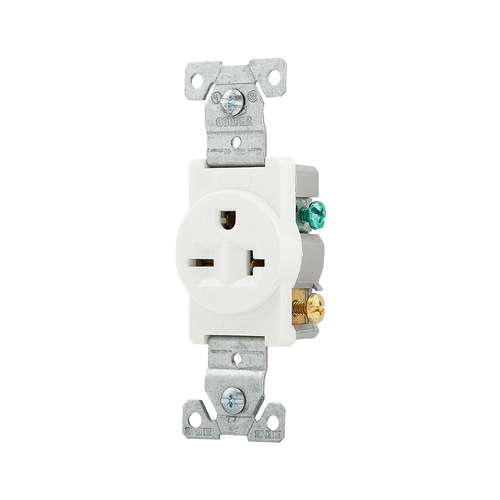

032664311505xl.jpg


Breaker...


Connecticut-Electric-THQP220-rw-159093-240557.jpg
 
To avoid these ads, REGISTER NOW!

mrb

Well-known member
Joined
Dec 31, 2008
Messages
3,734
for that type of receptacle you dont need 3 wires, just two plus ground. If you are only installing a 20 amp circuit then you dont need #10, #12 is fine.
 

Alchymist

Well-known member
Joined
Mar 1, 2009
Messages
4,423
Location
Central PA
Yes and no - if your power tools are 240V only, 3 wires are sufficient - 2 hots and a ground, which is what the outlet you pictured requires. If the 240V tool also requires 120 for anything (think light, fan, etc) then a 4 wire circuit with a 4 pole receptacle is needed.

MRB is right on the wire - ....

The breaker you showed I believe is a tandem - 2 120V circuits, same phase. You need one like this:
 

Attachments

  • GE20_220breaker.jpg
    GE20_220breaker.jpg
    9 KB · Views: 12

bww_mnm

Well-known member
Joined
Dec 30, 2010
Messages
673
Location
Chicago area
So the last thing I need to do in my shop is run a 220V line just in case I ever need it. So that leads to more questions...


1. Is it ok to use a liquid-tight whip as conduit in an interior wall? I can not think of any reason not to but there are some strange codes that I do not quite understand. Why the whip? Basically because I am installing it just a few feet from the panel box and the 6' whip seemed easier and cheaper than buying 25' of 10-3 flex MC cable.

2. Current code requires four conductor for stoves and dryers. Does this apply to standard 220 outlets for power tools?

3. Last stupid question. I purchased a 220V 20A receptacle. The breaker for this would be a double 20A breaker correct?


Receptacle...


032664311505xl.jpg


For my 220V table saw, i ran 12-2. With that said, i should have run 12-3. minimal adder and gives you options down the road.

- Brad
 
OP
G

green.bubbly

Well-known member
Joined
Dec 14, 2008
Messages
2,156
Location
Lafayette, LA
Yes and no - if your power tools are 240V only, 3 wires are sufficient - 2 hots and a ground, which is what the outlet you pictured requires. If the 240V tool also requires 120 for anything (think light, fan, etc) then a 4 wire circuit with a 4 pole receptacle is needed.

MRB is right on the wire - ....

The breaker you showed I believe is a tandem - 2 120V circuits, same phase. You need one like this:


Ahhhh, I think you are right. One breaker needs to connect to one hot leg and the other breaker needs to connect to the other hot leg so I need to go look at my panel again.


I went with #10 wire just in case I need more amps down the road. At this moment, I do not have anything that uses 220 but I will probably be getting a table saw down the road. I got the 220V 20A receptacle just to have something to wire up for now.
 
OP
G

green.bubbly

Well-known member
Joined
Dec 14, 2008
Messages
2,156
Location
Lafayette, LA
Yes and no - if your power tools are 240V only, 3 wires are sufficient - 2 hots and a ground, which is what the outlet you pictured requires. If the 240V tool also requires 120 for anything (think light, fan, etc) then a 4 wire circuit with a 4 pole receptacle is needed.


So is that the whole reason new 220 dryers require four wires, for 120 volt lights/etc.
 

Norcal

Well-known member
Joined
Mar 16, 2008
Messages
13,754
Remember the color code for 220 is brown for the hot/live, blue for the neutral & green w/ a yellow stripe for the ground/earth & the frequency is 50 hertz.:shocking: :shocking::shocking::shocking:
 

Alchymist

Well-known member
Joined
Mar 1, 2009
Messages
4,423
Location
Central PA
So is that the whole reason new 220 dryers require four wires, for 120 volt lights/etc.

New appliances require a fourth wire for equipment ground. Many driers use a 220 (240 :bounce:) volt heating element, and 120 for motor and controls. Way back when, three wires were supplied - 2 hots and a neutral. The case was tied to the neutral, and no ground included. Today it's required for safety reasons.
 

Gooch

Well-known member
Joined
May 30, 2009
Messages
676
Location
Petersberg, IA
New appliances require a fourth wire for equipment ground. Many driers use a 220 (240 :bounce:) volt heating element, and 120 for motor and controls. Way back when, three wires were supplied - 2 hots and a neutral. The case was tied to the neutral, and no ground included. Today it's required for safety reasons.

actually, they were supplied with a ground(using 10-2 Romex) you would have your two hots then a bare copper and it was used for the neutral aswell.
 

Norcal

Well-known member
Joined
Mar 16, 2008
Messages
13,754
actually, they were supplied with a ground(using 10-2 Romex) you would have your two hots then a bare copper and it was used for the neutral aswell.

Using a grounding conductor for a neutral was NEVER permitted by code, if there is a installation done that way it was done by a hack. (prob. said they were installing 220 for a dryer too :D). It was common to use SE cable when 3-wire was allowed for new installs but did have to originate from the service equipment, was not allowed to be fed from a subpanel.
 

oleguy

Well-known member
Joined
Nov 22, 2009
Messages
273
Yes and no - if your power tools are 240V only, 3 wires are sufficient - 2 hots and a ground, which is what the outlet you pictured requires. If the 240V tool also requires 120 for anything (think light, fan, etc) then a 4 wire circuit with a 4 pole receptacle is needed.

MRB is right on the wire - ....

The breaker you showed I believe is a tandem - 2 120V circuits, same phase. You need one like this:

no he don't.that is a thin GE 240 breaker.he is fine as long his panel is set up for thin breakers.as most GE panels are...
 

ddawg16

Well-known member
Joined
Jul 11, 2008
Messages
21,005
Location
S. California
Regarding grounding and conductor colors......Even if you ignore what the code says...never take cheap short cuts....like using the bare grounding wire as a neutral...

You may know what it is for....but the next guy that comes along and sees a bare copper wire is going to think it is earth ground. If that wire is being used as a current conductor and he connects it to ground thinking it was not hooked up right...good chance some not so pretty things are going to happen.

Black = AC hot
Red = switched AC hot
Yellow = AC hot from a another source - another control panel as an example.
White = neutral
red w/white tracer = switched neutral
Green or green w/ yellow tracer = ground/earth ground

blue = DC voltage, ie, 12vdc, 24vdc
white w/blue tracer = dc common

Brown = AC 3 pahse - phase A
Orange = AC 3 pahse - phase B
Yellow = AC 3 Phase - phase C

shileds: think of current loops
2 cond
clear or red = +
black = -(neg)
3 cond
red = power (24vdc typically for transducers)
clear = + (signal output)
black = - (signal common)
 

Gooch

Well-known member
Joined
May 30, 2009
Messages
676
Location
Petersberg, IA
Using a grounding conductor for a neutral was NEVER permitted by code, if there is a installation done that way it was done by a hack. (prob. said they were installing 220 for a dryer too :D). It was common to use SE cable when 3-wire was allowed for new installs but did have to originate from the service equipment, was not allowed to be fed from a subpanel.

I understand that, but that is how almost every older house with an electric dryer or range is installed. atleast in this area.
 

Gooch

Well-known member
Joined
May 30, 2009
Messages
676
Location
Petersberg, IA
Regarding grounding and conductor colors......Even if you ignore what the code says...never take cheap short cuts....like using the bare grounding wire as a neutral...

You may know what it is for....but the next guy that comes along and sees a bare copper wire is going to think it is earth ground. If that wire is being used as a current conductor and he connects it to ground thinking it was not hooked up right...good chance some not so pretty things are going to happen.

Black = AC hot
Red = switched AC hot
Yellow = AC hot from a another source - another control panel as an example.
White = neutral
red w/white tracer = switched neutral
Green or green w/ yellow tracer = ground/earth ground

blue = DC voltage, ie, 12vdc, 24vdc
white w/blue tracer = dc common

Brown = AC 3 pahse - phase A
Orange = AC 3 pahse - phase B
Yellow = AC 3 Phase - phase C

shileds: think of current loops
2 cond
clear or red = +
black = -(neg)
3 cond
red = power (24vdc typically for transducers)
clear = + (signal output)
black = - (signal common)

common misconception. Orange is not for B phase 480v. it's for the wild leg on a open delta systems.
 

Teken

Well-known member
Joined
Jan 2, 2010
Messages
8,214
Location
The Bad Lands
Remember the color code for 220 is brown for the hot/live, blue for the neutral & green w/ a yellow stripe for the ground/earth & the frequency is 50 hertz.:shocking: :shocking::shocking::shocking:

Does that mean my saw will turn slower? :headscrat

He is being facetious, your voltage is 240 not 220 and it apparently bugs him when people say 220 and mean 240:thumbup:

Using a grounding conductor for a neutral was NEVER permitted by code, if there is a installation done that way it was done by a hack. (prob. said they were installing 220 for a dryer too :D). It was common to use SE cable when 3-wire was allowed for new installs but did have to originate from the service equipment, was not allowed to be fed from a subpanel.

:dunno: :lol_hitti :lol_hitti :willy_nil
 

oleguy

Well-known member
Joined
Nov 22, 2009
Messages
273
Regarding grounding and conductor colors......Even if you ignore what the code says...never take cheap short cuts....like using the bare grounding wire as a neutral...

You may know what it is for....but the next guy that comes along and sees a bare copper wire is going to think it is earth ground. If that wire is being used as a current conductor and he connects it to ground thinking it was not hooked up right...good chance some not so pretty things are going to happen.

Black = AC hot
Red = switched AC hot
Yellow = AC hot from a another source - another control panel as an example.
White = neutral
red w/white tracer = switched neutral
Green or green w/ yellow tracer = ground/earth ground

blue = DC voltage, ie, 12vdc, 24vdc
white w/blue tracer = dc common

Brown = AC 3 pahse - phase A
Orange = AC 3 pahse - phase B
Yellow = AC 3 Phase - phase C

shileds: think of current loops
2 cond
clear or red = +
black = -(neg)
3 cond
red = power (24vdc typically for transducers)
clear = + (signal output)
black = - (signal common)

brown,orange,yellow.three phase is for 277/480 4 wire.black,red,blue is 120/240 3 phase 4 wire.
 
To avoid these ads, REGISTER NOW!

oleguy

Well-known member
Joined
Nov 22, 2009
Messages
273
common misconception. Orange is not for B phase 480v. it's for the wild leg on a open delta systems.

B phase is orange for 480.high leg 0n 4 wire delta,B leg is high leg and it is orange.on 4 wire 277/480,B again is orange beacause between neutral and B phase is high leg or 277.
 

mrb

Well-known member
Joined
Dec 31, 2008
Messages
3,734
orange for 240 delta high leg. most everyone is using yellow purple brown for 480. grey for the neutral on 277/480.

120/208Y is usually black, red, blue.

the color scheme ddwag posted is whats commonly used in industrial control panels and wouldnt really apply to residential or commercial line voltage wiring installs outside its context
 

mrb

Well-known member
Joined
Dec 31, 2008
Messages
3,734
If its a neutral wouldn't it have to be predominately white?


he's speaking to a wiring standard used in industrial control panels. In building wiring neutral has to be white, or white with a stripe. I saw a breaker panel once in a highrise office building built when cost was no object for titans of industry where the branch circuit neutrals were striped white/black, white/red, white/blue to identify each neutral as to which phase it belonged to. And all the wiring in the panel was laced. Never seen anything like it, or since.
 

walrus

Well-known member
Joined
Nov 12, 2008
Messages
11,677
Location
Maine
he's speaking to a wiring standard used in industrial control panels. In building wiring neutral has to be white, or white with a stripe. I saw a breaker panel once in a highrise office building built when cost was no object for titans of industry where the branch circuit neutrals were striped white/black, white/red, white/blue to identify each neutral as to which phase it belonged to. And all the wiring in the panel was laced. Never seen anything like it, or since.

Industrial settings don't have to follow the NEC, shops and homes do. The NEC mentions White, Gray and Green, other than that all bets are off on what color does what and what voltage might be on that color.
 

Gooch

Well-known member
Joined
May 30, 2009
Messages
676
Location
Petersberg, IA
Industrial settings don't have to follow the NEC, shops and homes do. The NEC mentions White, Gray and Green, other than that all bets are off on what color does what and what voltage might be on that color.

NEC also stats what Orange is to be used for. and last i checked the NEC applied in Industrial settings aswell.
 

mrb

Well-known member
Joined
Dec 31, 2008
Messages
3,734
Industrial settings don't have to follow the NEC, shops and homes do. The NEC mentions White, Gray and Green, other than that all bets are off on what color does what and what voltage might be on that color.

what are these industrial settings that dont have to follow NEC? only ones I am aware of are certain govt installs, and utility facilities like power plants..

and if more than one voltage is present everything has to have different color codes. For example if you have 120/208 and 277/480 you cant use yellow on the 120/208 system if it exists on the 277/480 system
 

oleguy

Well-known member
Joined
Nov 22, 2009
Messages
273
Industrial settings don't have to follow the NEC, shops and homes do. The NEC mentions White, Gray and Green, other than that all bets are off on what color does what and what voltage might be on that color.

not so...only thing code does not cover is buildings that house power generating eq.every thing else is covered in the nec...control circuitry is prety much standard of manufacture.but primary power to eq is nec.
 

walrus

Well-known member
Joined
Nov 12, 2008
Messages
11,677
Location
Maine
not so...only thing code does not cover is buildings that house power generating eq.every thing else is covered in the nec...control circuitry is prety much standard of manufacture.but primary power to eq is nec.

An engineer can sign off anything he wants, screw the NEC.Most industrial settings are full of engineers
 

rabidsquirrel

Well-known member
Joined
Jul 17, 2010
Messages
397
Location
SE Pennsylvania
orange for 240 delta high leg. most everyone is using yellow purple brown for 480. grey for the neutral on 277/480.

At least in the Philadelphia area, we use Brown/Orange/Yellow for A/B/C 277/480.

he's speaking to a wiring standard used in industrial control panels. In building wiring neutral has to be white, or white with a stripe. I saw a breaker panel once in a highrise office building built when cost was no object for titans of industry where the branch circuit neutrals were striped white/black, white/red, white/blue to identify each neutral as to which phase it belonged to. And all the wiring in the panel was laced. Never seen anything like it, or since.

I'm sure that will be coming back with recent code changes. For example at the University of Penn they don't want two or three pole breakers when sharing neutrals, so they spec a separate neutral for everything. We've been ordering MC with 6 circuits in it, as well as a ground and an isolated ground. All the neutrals are identified with the appropriate color.

It's interesting that you guys use purple as a phasing color.
 

Norcal

Well-known member
Joined
Mar 16, 2008
Messages
13,754
At least in the Philadelphia area, we use Brown/Orange/Yellow for A/B/C 277/480.


I'm sure that will be coming back with recent code changes. For example at the University of Penn they don't want two or three pole breakers when sharing neutrals, so they spec a separate neutral for everything. We've been ordering MC with 6 circuits in it, as well as a ground and an isolated ground. All the neutrals are identified with the appropriate color.

It's interesting that you guys use purple as a phasing color.

Some areas require brown/purple/yellow, San Fransisco is one, the only colors specified by the NEC is white/green & then orange for the high leg of a 240V delta system I would call the BOY, brown/orange/yellow color code for 480Y/277V a industry standard, if 120/240V 3Ø & 480Y/277V were in the same building orange could not be used for 480V because each system must be identified.
 

oleguy

Well-known member
Joined
Nov 22, 2009
Messages
273
Thanks, you were correct. :thumbup:

better look again.there is a handel tie on that breaker.like i said that is a 240 thin ge.it connects to two diff phases.the tie is in the hole in the handels...or it appears to be.could be wrong.
 

Alchymist

Well-known member
Joined
Mar 1, 2009
Messages
4,423
Location
Central PA
better look again.there is a handel tie on that breaker.like i said that is a 240 thin ge.it connects to two diff phases.the tie is in the hole in the handels...or it appears to be.could be wrong.

Hard to tell, I blew it up, can't see if there is a tie or not. Can't read the PN either. Guess he'll have to install it and measure the voltage across the two terminals. :headscrat
 
OP
G

green.bubbly

Well-known member
Joined
Dec 14, 2008
Messages
2,156
Location
Lafayette, LA
Well alrighty, first thing in the morning, I will be calling for my electrical inspection for the garage. Hopefully through the support of a few helpful members, everything will go smooth.

But if something is wrong, I will blame all of you. :)
 

rburke65

Well-known member
Joined
Nov 10, 2007
Messages
12,349
Location
Canfield, Ohio
Some areas require brown/purple/yellow, San Fransisco is one, the only colors specified by the NEC is white/green & then orange for the high leg of a 240V delta system I would call the BOY, brown/orange/yellow color code for 480Y/277V a industry standard, if 120/240V 3Ø & 480Y/277V were in the same building orange could not be used for 480V because each system must be identified.

MY God people....this guy just asked a simple question and does not care in the least....I assume.....in the codes in San Fransisco or Europe, control panels or manufacturing plants. Rather than trying to tout your knowledge on codes and **** just answer the question and move on!
 

Norcal

Well-known member
Joined
Mar 16, 2008
Messages
13,754
MY God people....this guy just asked a simple question and does not care in the least....I assume.....in the codes in San Fransisco or Europe, control panels or manufacturing plants. Rather than trying to tout your knowledge on codes and **** just answer the question and move on!

What kind of cheese do you want to that whine?
 
To avoid these ads, REGISTER NOW!
Top Bottom