A.L.A.M.
Association of Licensed Automobile Manufacturers
Association of Licensed Automobile Manufacturers
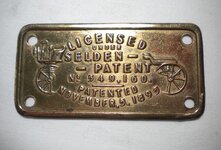
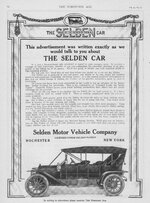
The A.L.A.M. was organized in 1903 in an attempt to coordinate all automobile manufacturing under one standardized umbrella, and significantly, to have some level of control under the terms of the Selden patent No.549,160 of 1895. A number of early automakers lined up with A.L.A.M. and that included paying a patent royalty fee. The account of the founding and the efforts of the A.L.A.M. are an interesting study. Famously, Henry Ford challenged the arrangement and ultimately won his court battle in 1911 which doomed the A.L.A.M. and it morphed into the National Automobile Chamber of Commerce.
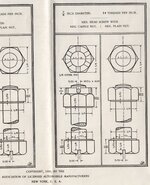
One of the lasting legacies of the A.L.A.M. was a standardization of threaded fasteners that incorporated both thread dimensions and bolt and screw head sizes. At the demise of the A.L.A.M. and the profusion of other automobile makers, the A.L.A.M. standards, with a few changes, became the basis for the SAE, Society of Automobile Engineers, standards still in widespread use today.
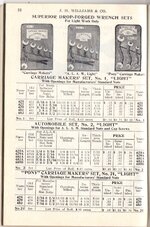
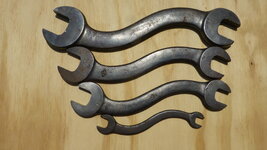
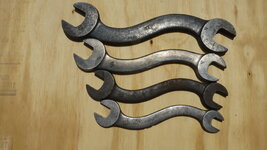
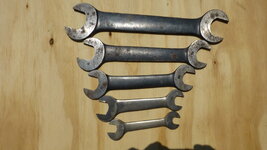
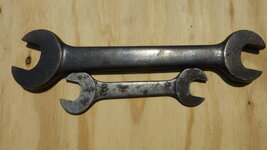
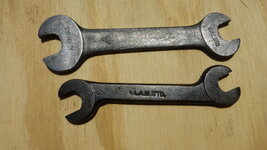
At the time of the A.L.A.M., the two major commercial wrench makers, J.H. Williams of Brooklyn NY, and Billings & Spencer of Hartford CT, marketed wrenches that were sized and marked to accommodate these A.L.A.M. standards. They continued to sell them for a short time after 1912. Other less influential (at the time) tool makers listed A.L.A.M. compatible wrenches in their catalogs and a few also offered wrenches with A.L.A.M. markings.