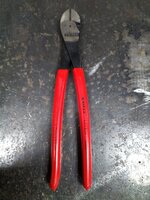
It’s meant to keep your fingers from sliding off while reaching down to cut something like rebar tie wire, or while pulling them out of a tool pouch or pocket on carpenter jeans. It also helps to orient them in your hand without looking in low light areas.
This^^^
The asymmetry on your Knipex is
pretty subtle. If we are to take Knipex at their word, it's there for "efficiency":

What is
more common is a pronounced and substantial hook/flare on one side, which offers several advantages to some:
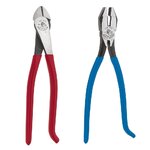
Extended and repetitive tool use by individuals in a specific trade/field who are performing the same task day-in and day-out leads to tweaks and modifications from the very slight to complete overhauls etc.
Ironworkers, and more specifically, guys who are tying rebar all day long on forms underfoot are hunched over for
LONG periods of time. The flare/hook allows them to maintain a grip on the pliers without having to clench them at all - just using gravity. You will see the hook/flare not only on dykes, but "Ironworkers" pliers which, in addition to being side cutters, have aggressively knurled plier faces for pulling, tying, and twisting annealed wire as well as some "Lineman" style pliers.
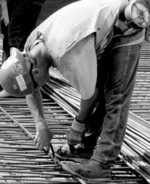
TLDR: I don't know specifically with the Knipex pliers that you are showing, but with the more common asymmetrical handles on dykes, the hook is to keep the pliers in the hands of guys who are working hunched over all day long using the pliers underfoot to tie rebar together with wire.