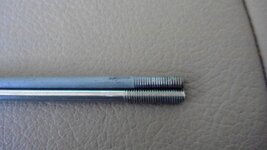
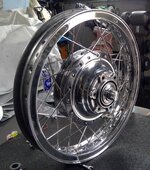
I bought some stainless, front wheel spokes from a well known XS650 parts supplier in Australia. When I laced up the wheel, centred it and trued it, I found there was about 3mm of thread visible after the ****** between ****** and hub, damn ugly. I removed a couple of spokes and compared them with the stock spokes, and sure enough, there was 3mm extra thread on the stainless spokes. When I advised the seller all I got was a series of abusive texts and emails. Finally, he sent me a picture of a wheel laced by his 'professional' spoker showing the same thing, both the seller and 'professional' spoker told me I didn't know what I was doing, saying there was nothing wrong with the spokes, thread showing after the ******* was perfectly acceptable.

You are using an out of date browser. It may not display this or other websites correctly.
You should upgrade or use an alternative browser.
You should upgrade or use an alternative browser.
A spoking tragedy.
- Thread starter toglhot
- Start date


Kwikasfaki
Well-known member
Maybe lace it with a different cross pattern, to use more spoke length?
Fortunately, he didn't have any stainless, rear wheel spokes at the time, so I ordered them from Heidens in Holland. The price was the same, despite the spokes coming all the way from Holland! Anyway, I laced up the rear wheel with Heiden's stainless spokes, centred and trued the wheel. And - no thread showing. I took a picture and emailed it to the Australian seller, advising him that his spokes were not up to scratch. Further suggesting he should find another supplier and another spoker because, apparently, neither was up to scratch. Not surprisingly, I heard nothing back from him.
Attachments


The ******* came with the spokes, so obviously they were meant to be used with the spokes.Perhaps the longer thread is used to facilitate different nuts.
Not possible: The spoke holes in the rims are drilled at specific angles, so using a different X pattern would result in the spoking angle not matching the hole angle.Maybe lace it with a different cross pattern, to use more spoke length?
The ******* came with the spokes, so obviously they were meant to be used with the spokes.
Clearly aftermarket spoked are made to fit a variety of wheel configurations.
Why not just order them from Yamaha?
What year's your bike?
Well, for a start Yamaha don't make stainless spokes. And no, spokes are not made to fit a variety of configurations. Spokes for both bicycles and motorbikes are made in different lengths, with varying head angles to suit different applications. Spoke thread is generally the same length to suit the ****** length and rim diameter. There are various mathematical equations to work out the spoke length required for lacing a specific hub to a specific rim. As the spoke length for this application is correct, ie, no thread protruding above the ****** and the spoke end being flush with the ****** head. Then obviously the thread is too long, a manufacturing deficit. ******* are counterbored without thread for around 3mm to account for any variance in diameter of the rim, or any off centre discrepancies. Thus hiding any excess thread. I spoked my first wheel in 1966 and have laced many wheels since then, both bicycle and motorcycle, never have I had visible thread showing, simply because the spoke length was correct as was the thread length.
Walkers
Well-known member
Honestly, I really don’t see what the huge issue is.
Well, for a start Yamaha don't make stainless spokes. And no, spokes are not made to fit a variety of configurations. Spokes for both bicycles and motorbikes are made in different lengths, with varying head angles to suit different applications. Spoke thread is generally the same length to suit the ****** length and rim diameter. There are various mathematical equations to work out the spoke length required for lacing a specific hub to a specific rim. As the spoke length for this application is correct, ie, no thread protruding above the ****** and the spoke end being flush with the ****** head. Then obviously the thread is too long, a manufacturing deficit. ******* are counterbored without thread for around 3mm to account for any variance in diameter of the rim, or any off centre discrepancies. Thus hiding any excess thread. I spoked my first wheel in 1966 and have laced many wheels since then, both bicycle and motorcycle, never have I had visible thread showing, simply because the spoke length was correct as was the thread length.
So when you order spokes, you just specify the OAL and the length of the thread?
vavet
Well-known member
I won't defend your supplier because rudeness is never acceptable, but please educate the rest of us. Is this just an appearance issue? Or do you not have enough thread engaged. From what I gather, this is just an appearance issue, but I'm not a motorcycle guy.
Modern Garage
Well-known member
Not just an appearance issue: the excess length protrudes into the inside of the wheel where your inner tube lives. Like having a broken spring in your mattress poking you all night - not only will you get no sleep but you could end up with a hole in you (or your inner tube).
There is a "rim strip" that protects the tube from being abraded by the spoke ******* but it won't protect from excess spoke length.
You're absolutely right, the supplier provided substandard parts and should have made it right instead of finding a substandard installer to try to help wiggle out of his responsibility.
Joe
There is a "rim strip" that protects the tube from being abraded by the spoke ******* but it won't protect from excess spoke length.
You're absolutely right, the supplier provided substandard parts and should have made it right instead of finding a substandard installer to try to help wiggle out of his responsibility.
Joe
APEowner
Well-known member
Except the OP is complaining about the excess threads showing on the inside of the ****** not excess length protruding past the outside of the ****** into the rim strip. As he explained in post #8 the threads should be covered up by the counterbore on the ******. It is largely an aesthetics issue but the whole point of stainless spokes is aesthetics so it's reasonable to expect stainless spokes to do all the pretty things.Not just an appearance issue: the excess length protrudes into the inside of the wheel where your inner tube lives. Like having a broken spring in your mattress poking you all night - not only will you get no sleep but you could end up with a hole in you (or your inner tube).
There is a "rim strip" that protects the tube from being abraded by the spoke ******* but it won't protect from excess spoke length.
You're absolutely right, the supplier provided substandard parts and should have made it right instead of finding a substandard installer to try to help wiggle out of his responsibility.
Joe
rlitman
Well-known member
Sounds to me like the guy running the thread rolling the machine was having a snooze that day.The ******* came with the spokes, so obviously they were meant to be used with the spokes.
Is there a reason you stepped down a gauge in spoke thickness (or is it just the camera playing tricks on my eyes)?
SlappyWhite
Well-known member
I assume the spokes are the same length (that is what I get from your description) and the new spokes just have more thread. This is cosmetic IMO and I would not lose any sleep over it.
If it is a huge problem for you, you can likely get longer spoke ******* to hide the extra threads. If you are totally OCD about it, mix the spokes in a pattern that mixes the longer ******* in a pattern.
If it is a huge problem for you, you can likely get longer spoke ******* to hide the extra threads. If you are totally OCD about it, mix the spokes in a pattern that mixes the longer ******* in a pattern.
You can do it that way, and I have on occasion. But the XS 650 is a very popular classic, so spokes are made for that bike and you order them for that bike. Same with all popular bikes. Bicycles and other not so popular bikes are a different matter, you order them by length. Thread length is pretty standard for all spokes.So when you order spokes, you just specify the OAL and the length of the thread?
Nope, the spoke does not protrude past the ****** into the rim, that is easily fixed. The spoke end is level with the ****** head - perfect. Not so perfect is the thread showing after the spoke, so the thread is too long.Not just an appearance issue: the excess length protrudes into the inside of the wheel where your inner tube lives. Like having a broken spring in your mattress poking you all night - not only will you get no sleep but you could end up with a hole in you (or your inner tube).
There is a "rim strip" that protects the tube from being abraded by the spoke ******* but it won't protect from excess spoke length.
You're absolutely right, the supplier provided substandard parts and should have made it right instead of finding a substandard installer to try to help wiggle out of his responsibility.
Joe
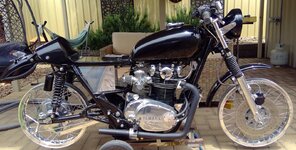
It is purely a cosmetic problem. Just about everything on this bike is hand made: Seat pan, tail light, side panels, headlight brackets, cooler mount, filter mount, instrument mount, ignition switch mount, coil mount, battery box, exhaust, exhaust clamps and brackets, brake anchor, engine mounts and lots of other parts. I've spent a lot of time and effort ensuring everything is just right, sometimes making multiples of the same item to ensure it is perfect, I didn't spend all this time and effort making parts for this bike only to have it spoiled by sub standard spokes.
Just to help you understand my point of view, go into a motorcycle dealership and look at the bikes with spoked wheels. I can guarantee you won't see any thread sitting proud at the ******.
Just to help you understand my point of view, go into a motorcycle dealership and look at the bikes with spoked wheels. I can guarantee you won't see any thread sitting proud at the ******.
Attachments
Last edited:
Dumber than lumber
Well-known member
- Joined
- Dec 19, 2015
- Messages
- 2,067
Are you going to link your Yelp review back to this GJ thread?The ******* came with the spokes, so obviously they were meant to be used with the spokes.
The whole point of stainless spokes is to pretty things up. If you weren't interested in prettying things up you wouldn't install stainless spokes, would you? So, you install 'pretty' spokes only to have the look spoilt by thread showing. No point then, is there?
Nice looking build! Wish I still had my XS, it was a beater but ran great and nothing wasn't past redemption.It is purely a cosmetic problem. Just about everything on this bike is hand made: Seat pan, tail light, side panels, headlight brackets, cooler mount, filter mount, instrument mount, ignition switch mount, coil mount, battery box, exhaust, exhaust clamps and brackets, brake anchor, engine mounts and lots of other parts. I've spent a lot of time and effort ensuring everything is just right, sometimes making multiples of the same item to ensure it is perfect, I didn't spend all this time and effort making parts for this bike only to have it spoiled by sub standard spokes.
Just to help you understand my point of view, go into a motorcycle dealership and look at the bikes with spoked wheels. I can guarantee you won't see any thread sitting proud at the ******.
I've built many a wheel, not sure if I have had this issue but I have never had a complaint, had to go out and look at two of my bikes that have SS spokes and not a thread showing.
I use a rather famous supplier in Cali.
I've been spoking wheels for 55 years, most with aftermarket spokes. But please tell me from where would I get stainless OEM spokes and why would I need to reduce the length of the spokes??Welcome to the world of lacing rims with aftermarket spokes. Go with OEM spokes, or just realize that you will, of course, need to reduce the length of those stainless spokes. Anyway, I too am a big fan of XS 650 Twins.
Last edited:
Modern Garage
Well-known member
My mistake. That's what I get for trying to see the tiny pictures on my phone. It certainly is a cosmetic issue - but not JUST a cosmetic issue. That would be quite annoying on an otherwise pretty neat build.
Joe
Joe
nadogail
Well-known member
You can trim the protruding spokes with an angle grinder after you true the wheel. I realize that this will not eliminate the problem of the excess threads; I have no idea where to suggest you look for longer *******.Not just an appearance issue: the excess length protrudes into the inside of the wheel where your inner tube lives. Like having a broken spring in your mattress poking you all night - not only will you get no sleep but you could end up with a hole in you (or your inner tube).
There is a "rim strip" that protects the tube from being abraded by the spoke ******* but it won't protect from excess spoke length.
You're absolutely right, the supplier provided substandard parts and should have made it right instead of finding a substandard installer to try to help wiggle out of his responsibility.
Joe
Not exactly close to you but these guys are the experts in my area....
Buchanan's Product Listing
Buchanan's Product Listing https://www.buchananspokes.com/images/misc/Jim Buchanan-sm.jpg
www.buchananspokes.com
The spoke end is level with the ****** head so doesn't require trimming. I thought I made that pretty clear.You can trim the protruding spokes with an angle grinder after you true the wheel. I realize that this will not eliminate the problem of the excess threads; I have no idea where to suggest you look for longer *******.
slowtwitch73
Well-known member
Yeah, I've build a lot of bike wheels and there's 'not supposed to be' any thread showing or spoke out the back of the ****** (not an issue here).
Main reason is it usually indicates the spoke threads don't go all the way through ******, so weaker. But in the op's case there is full thread engagement, just too much thread up the spoke.. which as stated a tad bit longer ****** wild fix.
Are ****** lengths standardized? Are there washers between the rim and ******? I cold see if the original seller was using slightly longer, he may think you were wrong. Or maybe a slight deviation in the rim or hub. That only looks like 2mm or so of thread.
Functionally they would be fine. Aesthetically not so much.
If the guy has his bs meter turned up to high he could have said they provide extra thread so the user can re tension after use and then nip off any interior protrusion.
Main reason is it usually indicates the spoke threads don't go all the way through ******, so weaker. But in the op's case there is full thread engagement, just too much thread up the spoke.. which as stated a tad bit longer ****** wild fix.
Are ****** lengths standardized? Are there washers between the rim and ******? I cold see if the original seller was using slightly longer, he may think you were wrong. Or maybe a slight deviation in the rim or hub. That only looks like 2mm or so of thread.
Functionally they would be fine. Aesthetically not so much.
If the guy has his bs meter turned up to high he could have said they provide extra thread so the user can re tension after use and then nip off any interior protrusion.
Thirdyfivepickup
Well-known member
You seem pissed off. Don't be pissed off. No one here sold you the wrong spokes.
Lassen Forge
Well-known member
There is a 3rd alternative, get the spokes unthreaded and long, thread them yourself and trim to length once installed. Had to do that more than once on bicycles AND motorcycles... especially on a custom/retro bike (and yeah, I'm a sucker for the XS650, nice job so far) sometimes the only real answer is to do it yourself and do it right. PITA? You betcha. But the results are worth it.
Aftermarket spokes and ******* are often a roll of the dice. That said, I'd just remove the spokes and grind/file/sand them down. I'll also note that some spokes have threads that are rolled on rather than cut. This means that you can't always cut the threads unless you're given a dead on diameter of the spoke at the '******' end as a reference. And I, as former MC dealership mechanic, can tell you that spoke hassles, both OEM and aftermarket, are par for the course. Seen some serious 'near coming to blows' arguments over spokes, *******, and lace patterns (patterns being very rare tho).
Meanwhile, I'm a big fan of XS650 twins.
Meanwhile, I'm a big fan of XS650 twins.
rlitman
Well-known member
I wouldn't. Cutting threads on a die gives a weaker spoke than spokes that are roll threaded.There is a 3rd alternative, get the spokes unthreaded and long, thread them yourself and trim to length once installed. Had to do that more than once on bicycles AND motorcycles... especially on a custom/retro bike (and yeah, I'm a sucker for the XS650, nice job so far) sometimes the only real answer is to do it yourself and do it right. PITA? You betcha. But the results are worth it.
Please tell us how you 'unthread', I'm sure we'd all like to know that!There is a 3rd alternative, get the spokes unthreaded and long, thread them yourself and trim to length once installed. Had to do that more than once on bicycles AND motorcycles... especially on a custom/retro bike (and yeah, I'm a sucker for the XS650, nice job so far) sometimes the only real answer is to do it yourself and do it right. PITA? You betcha. But the results are worth it.
Aftermarket spokes are not often a roll of the dice. I've been spoking since 1968 , always using aftermarket spokes, never come across this problem before. There are such things spoke length calculators and mathematical formulas to work out spoke lengths. Before the advent of the internet you got you spoking info from books. For this you input rim size, hub size, spoke number and cross pattern. Spoke thread length is standard across the board to accord with ****** length. All ******* have a thread free section at the beginning of the ****** to account for discrepancies caused by various things. Honda, Kawasaki, Yamaha, Suzuki, Harley, Triumph, Ducati, et Al, do not make their own spokes, they use spokes from various spoke manufacturers, so in effect there is no such thing as OEM spokes. The same is true of many items that go into the manufacture of all cars and motorcycle, and even bicycles. Of course manufacturers carry spares for their vehicles, so while you may well order parts from the parent manufacturer, that does not necessarily mean the manufacturer actually makes these parts, they may stamp panels, cast engine blocks and manufacture many associated parts, but not all as it is not economically viable. Many parts are manufactured by an external manufacturer to the parent manufacturers standards and sizes. Examples: Seat belts, bulbs, cables, bolts and nuts, wheels, tyres, filters, hose, paint, springs, exhausts, mufflers, and yes, even spokes. this list is not comprehensive and not true of all manufacturers. The same is true of manufacturers of pretty well everything: TVs, houses, fridges, washing machines, furniture and so on. Manufacturers typically go the cheapest route!Aftermarket spokes and ******* are often a roll of the dice. That said, I'd just remove the spokes and grind/file/sand them down. I'll also note that some spokes have threads that are rolled on rather than cut. This means that you can't always cut the threads unless you're given a dead on diameter of the spoke at the '******' end as a reference. And I, as former MC dealership mechanic, can tell you that spoke hassles, both OEM and aftermarket, are par for the course. Seen some serious 'near coming to blows' arguments over spokes, *******, and lace patterns (patterns being very rare tho).
Meanwhile, I'm a big fan of XS650 twins.
Lassen Forge
Well-known member
Please tell us how you 'unthread', I'm sure we'd all like to know that!
So... um... you've never ordered spokes that are plain ended - e.g., not already threaded? How about custom *******? Spoke threaders? Ever heard of them? Hmmm.....
Lassen Forge
Well-known member
I wouldn't. Cutting threads on a die gives a weaker spoke than spokes that are roll threaded.
I agree, but sometimes you don't have much of an option... especially when building oddball or antique wheels...
Nope never have, at least not for a home workshop. Spokes are roll threaded not cut, roll threading requires specialised equipment which I don't have, I have better things to spend my hard earned on other than spending it on tools that cost more than ready made spokes. The way you worded it, it sounded like you were removing the thread on the spokes.
Last edited:
Innovate1
Well-known member
My experience with spoke installation is limited to putting a 3 speed hub in a bike wheel that had a different number of holes as a kid. Think it was in a 26" wheel and I put in a smaller size. Guess that shows my age. Had access to a bunch of old parts so was a fun project as a kid. I just put the spokes where they would fit and it turned out fine for a bicycle. So really no relevant experience... 
But this sounds like it basically boils down to a supplier which had been used in the past having declining product quality and/or customer service. Happens all the time. Find another supplier. It is disappointing but not much you can do if the company doesn't correct the issues after a few tries.
But this sounds like it basically boils down to a supplier which had been used in the past having declining product quality and/or customer service. Happens all the time. Find another supplier. It is disappointing but not much you can do if the company doesn't correct the issues after a few tries.