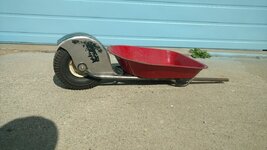
Tractor Drifting is a good time!
Its way better than talking about
A
cement is a
binder, a substance used for construction that
sets, hardens, and adheres to other
materials to bind them together. Cement is seldom used on its own, but rather to bind sand and gravel (
aggregate) together. Cement mixed with fine aggregate produces
mortar for masonry, or with
sand and
gravel, produces
concrete. Concrete is the most widely used material in existence and is behind only water as the planet's most-consumed resource.
[2]
Cements used in construction are usually
inorganic, often
lime or
calcium silicate based, which can be characterized as
non-hydraulic or
hydraulic respectively, depending on the ability of the cement to set in the presence of water (see
hydraulic and non-hydraulic lime plaster).
Non-hydraulic cement does not set in wet conditions or under water. Rather, it sets as it dries and reacts with
carbon dioxide in the air. It is resistant to attack by chemicals after setting.
Hydraulic cements (e.g.,
Portland cement) set and become
adhesive due to a
chemical reaction between the dry ingredients and water. The chemical reaction results in mineral
hydrates that are not very water-soluble and so are quite durable in water and safe from chemical attack. This allows setting in wet conditions or under water and further protects the hardened material from chemical attack. The chemical process for hydraulic cement was found by ancient Romans who used
volcanic ash (
pozzolana) with added lime (calcium oxide).
The word "cement" can be traced back to the Ancient Roman term
opus caementicium, used to describe masonry resembling modern concrete that was made from crushed rock with burnt lime as binder. The volcanic ash and pulverized brick supplements that were added to the burnt lime, to obtain a
hydraulic binder, were later referred to as
cementum,
cimentum,
cäment, and
cement. In modern times, organic polymers are sometimes used as cements in concrete.
World production is about four billion tonnes per year,
[3] of which about half is made in China.
[4][5] If the cement industry were a country, it would be the third largest carbon dioxide emitter in the world with up to 2.8 billion tonnes, surpassed only by China and the United States.
[6] The initial
calcination reaction in the production of cement is responsible for about 4% of global CO
2 emissions.
[7] The overall process is responsible for about 8% of global CO
2 emissions, as the
cement kiln in which the reaction occurs is typically fired by coal or
petroleum coke due to the luminous flame required to heat the kiln by radiant heat transfer.
[8] As a result, the production of cement is a major contributor to
climate change.
 that's the same exact number I came up with